Wizz Air adds Starlink WiFi in first for European ultra-low-cost airlines

4 min read
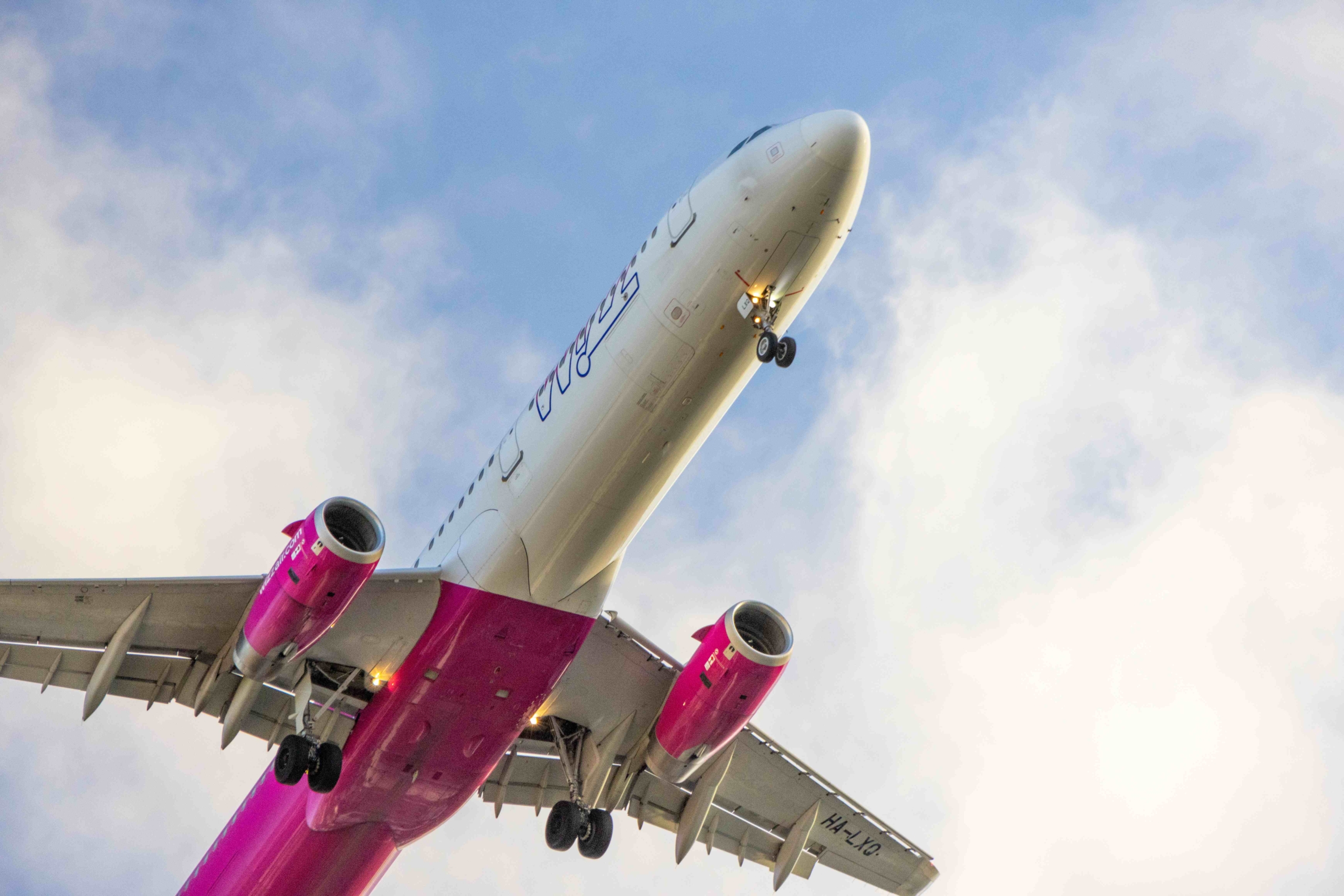
Wizz Air will offer Starlink satellite internet across its fleet from 2027, becoming the first European ultra-low-cost carrier to commit to the SpaceX-operated in-flight connectivity system.
The Hungarian carrier said the move will bring high-speed internet to passengers on its low-cost flights, marking a notable shift for a sector that has traditionally been cautious about the cost of onboard WiFi.
Wizz Air has not disclosed the financial terms of its agreement with Starlink or confirmed whether the service will be free, paid, or linked to one of its existing fare or membership products.
Wizz Air to bring Starlink to low-cost flights
The Starlink rollout is expected to begin in 2027 and will eventually cover Wizz Air’s fleet, giving passengers access to satellite-based internet on the airline’s short and medium-haul network.
Starlink’s aviation product uses a constellation of low-Earth-orbit satellites to provide higher-speed, lower-latency connectivity. The system has become an increasingly visible passenger experience upgrade, particularly as more carriers move towards free or faster onboard internet.
RIP Airplane Mode. @Starlink onboard internet is coming to WIZZ IN 2027. pic.twitter.com/tGi5ptuIgg
— Wizz Air (@wizzair) June 8, 2026
Onboard connectivity has often been seen as difficult to justify in the ultra-low-cost sector, where ancillary revenue and aircraft utilisation are central to the business case.
The airline hasn’t set out how the service will be priced for passengers. Most airlines offering Starlink are doing so on a free basis, offsetting the cost through advertising and loyalty benefits. However, as a low-cost airline with tight margins, Wizz Air may well look to monetise the service.
Which airlines are choosing Starlink for inflight connectivity?
| Airline / group | Starlink commitment / status |
|---|---|
| Wizz Air | Plans to offer Starlink WiFi across its fleet from 2027, making it the first European ultra-low-cost carrier to commit to the system. |
| United Airlines | Plans to equip more than 1,000 aircraft, including mainline and regional aircraft, with free Starlink WiFi. |
| American Airlines | Has announced Starlink for more than 500 narrowbody aircraft, with rollout expected from early 2027. |
| Southwest Airlines | Plans to equip around 300 aircraft with Starlink-powered WiFi by the end of 2026, subject to equipment supply. |
| Alaska Airlines | Has publicly selected Starlink as part of its inflight connectivity upgrade plans. |
| Hawaiian Airlines | One of Starlink’s earliest commercial airline customers, offering free high-speed WiFi on equipped aircraft. |
| JSX | Early Starlink aviation customer, using the system on its semi-private regional flights. |
| Qatar Airways | Already operating Starlink on some Boeing 777 aircraft, with rollout planned across its Boeing 777 and Airbus A350 fleets. |
| IAG | Parent company of British Airways, Iberia, Aer Lingus, Vueling and Level has announced Starlink for more than 500 aircraft. |
| Air France | Has announced free Starlink WiFi across all cabins, with rollout beginning from 2025. |
| Lufthansa Group | Reported Starlink rollout across group airlines including Lufthansa, Austrian Airlines, Brussels Airlines, SWISS, ITA Airways, Air Dolomiti, Edelweiss, Eurowings and Discover Airlines. |
| Emirates | Has announced plans to install Starlink across its active fleet. |
| Hanjin Group airlines | Reported group deal covering Korean Air, Asiana Airlines and low-cost affiliates Air Busan, Air Seoul and Jin Air. |
| WestJet | Has announced Starlink WiFi through a partnership with TELUS. |
| Air New Zealand | Has announced a Starlink onboard WiFi partnership. |
| airBaltic | An early European Starlink airline customer, with plans to equip its Airbus A220 fleet. |
| SAS | Has announced Starlink as part of its onboard connectivity upgrade plans. |
| Virgin Atlantic | Has announced free fleet-wide Starlink WiFi. |
| Air Canada | Has announced Starlink for at least part of its fleet, including regional aircraft. |
| flydubai | Has selected Starlink as its inflight connectivity provider. |
| Gulf Air | Reported as a Starlink airline customer in early 2026. |
| ZIPAIR Tokyo | Early low-cost, long-haul Starlink adopter associated with the system since 2023. |
First European ultra-low-cost carrier to choose Starlink
Wizz Air is not the first low-cost airline globally to turn to Starlink, with carriers such as Southwest Airlines and ZIPAIR Tokyo also moving to adopt the system. However, it is being billed as the first European ultra-low-cost carrier to commit to the SpaceX in-flight connectivity product.
This puts Wizz on the opposing side of a high-profile industry debate.
Ryanair chief executive Michael O’Leary has previously argued that Starlink does not fit his airline’s low-cost model, citing the cost of installing the equipment, the potential drag and fuel-burn impact of antenna installations, and uncertainty over whether enough passengers would pay for WiFi on short sectors.

O’Leary previously estimated that adopting Starlink could cost Ryanair up to $250 million per year, including additional fuel costs. Starlink executives have disputed Ryanair’s fuel-burn assumptions, arguing that the impact of the system is much lower than the airline claimed.
The disagreement underlined a wider challenge for in-flight connectivity providers. Full-service airlines may treat fast WiFi as a brand differentiator, but low-cost carriers need a clearer route to recovering the cost through passenger payments, partnerships or ancillary revenue.
Wizz Air’s decision to integrate Starlink into its operations suggests it has found such a route. Passengers will finally be able to fly on cheap trips in Europe while staying connected, although at what cost remains to be seen.
Featured image: João Macedo / stock.adobe.com