


Surviving Starlink: Why GEO inflight connectivity is not dead yet

7 min read
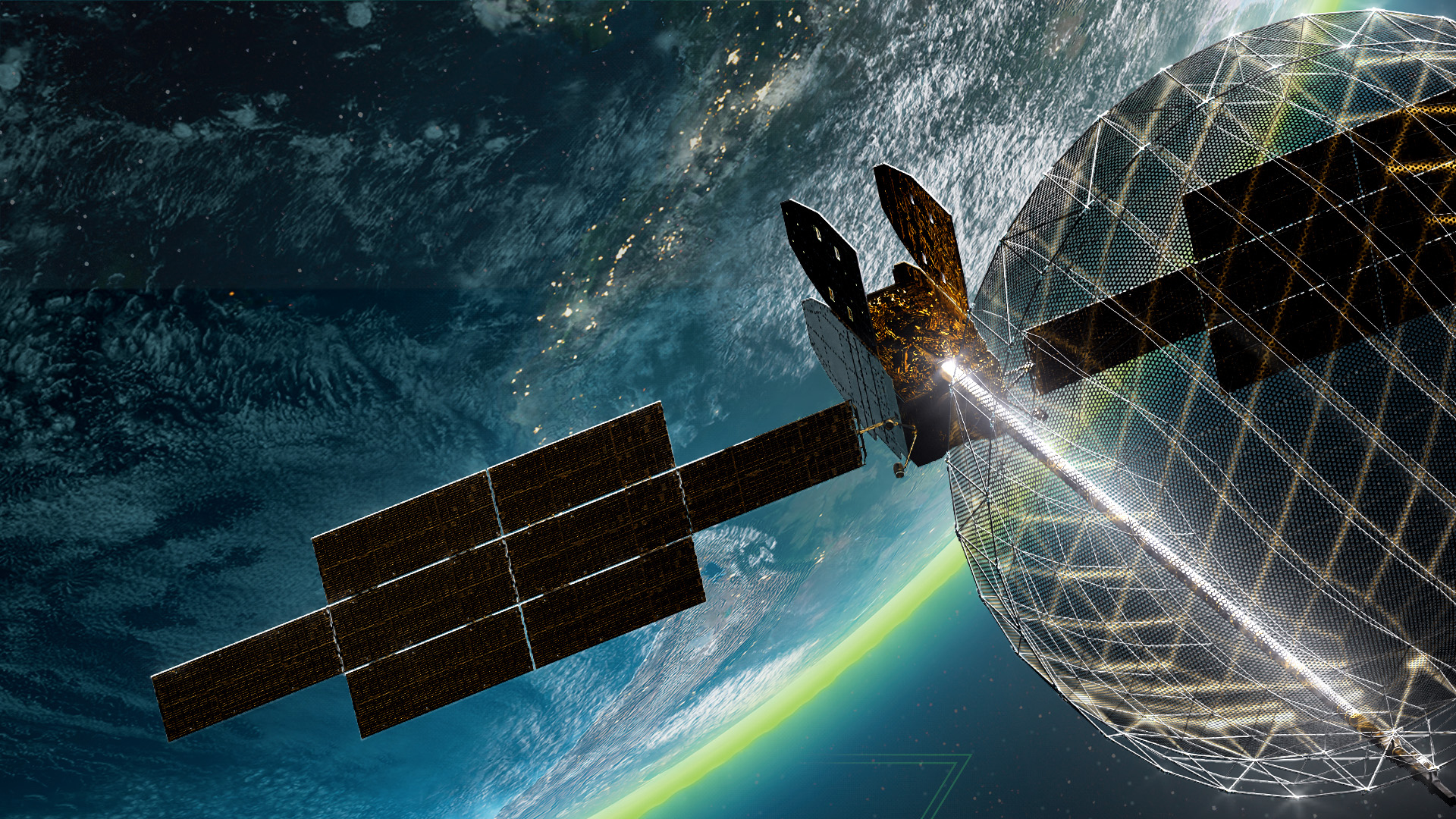
Airlines are rushing toward low Earth orbit connectivity.
Increasing numbers of airlines are adopting Starlink for onboard WiFi, from Emirates to American Airlines. Delta surprised the market by choosing Amazon’s Leo, but while the brand name is different, the LEO decision is not.
But what about the satellite architecture that aviation has relied on for decades: geostationary orbit, or GEO? One of the major providers of such services is Viasat, powering some 200 airlines and over 20,000 aircraft with connectivity every day.
Don Buchman, President of Aviation at Viasat, seems unflustered by the exodus of airlines. He told AGN, “We’ve always known competition was coming,” but argued that perhaps the LEO dream would not live up to the hype, long term.
“We knew we had an advantage, but we also knew that advantage was never going to stay static,” Buchman said. “It’s a large, attractive market, so of course it’s going to attract large players. All we can focus on is execution.”
Why GEO still matters in inflight connectivity
Buchman’s case for GEO starts with a simple premise: inflight connectivity usually fails when passenger demand exceeds the capacity that’s available.
“The failure mechanism of any inflight connectivity system is really the same,” he said. “It’s when you have more demand than supply. Supply means capacity.”
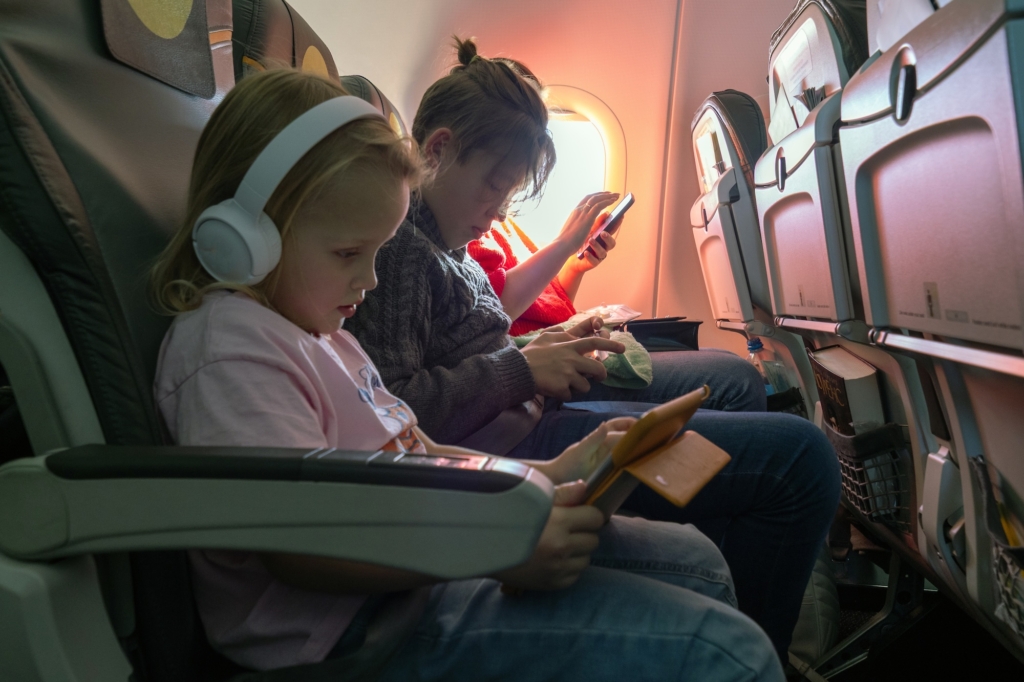
That demand is becoming more intense and more uneven. Passengers are no longer just checking email or browsing static web pages. They are watching video, scrolling short-form content, using cloud-based tools and expecting the same kind of always-on connection they have on the ground.

“The world has changed,” Buchman said. “Back when IFC began, TikTok didn’t exist, Netflix was barely a thing, and now short-form video is dominating. We can’t predict exactly where the internet will go next, but we know it will become more embedded in our lives and there will be more demand for data.”
Airline demand is also “peaky”, he said. Passengers log on after takeoff, before meals, after meals and after waking up on long-haul flights. Hub banks and route networks concentrate demand even further.
That is where Buchman believes GEO still has a structural advantage. Because GEO satellites remain fixed relative to the Earth, capacity can be concentrated over regions and routes where demand is highest.
“With GEO, you can point capacity almost perfectly to where the demand is,” he said. “That gives you much more efficiency for the capital you’ve invested in the satellite.”

LEO satellites, by contrast, are constantly moving. Buchman was careful to say that it is “not a knock” on LEO, but a consequence of physics.
“If I have satellites flying over the South Pole, the southern oceans or other low-demand areas, that capacity is kind of wasteful,” he said. “You can only use the capacity when the satellite is over the region.”
That distinction matters because, according to Buchman, video remains the dominant driver of onboard traffic.
“Video is typically more than half of all traffic — often 50, 60, even 70%,” he said. “But video is not really latency sensitive. Once you get to the first frame, you’re watching the video. What matters then is congestion and whether there is enough capacity.”
This sits at the heart of Viasat’s counterargument to the current LEO momentum. Lower latency is useful, but not every passenger application needs it. For high-volume streaming, Buchman believes GEO can deliver the experience more efficiently.
Viasat’s GEO gets an upgrade
Viasat’s defence of GEO is not simply that existing geostationary satellites still work. Buchman argues that GEO itself is changing.
Older GEO systems relied on fixed beams laid across geographic areas. Aircraft passed from one beam to another, and operators had to decide in advance how much capacity to place in each region.
ViaSat-3 changes that model. These satellites introduce dynamic beam-forming technology designed to move capacity more intelligently around the network.
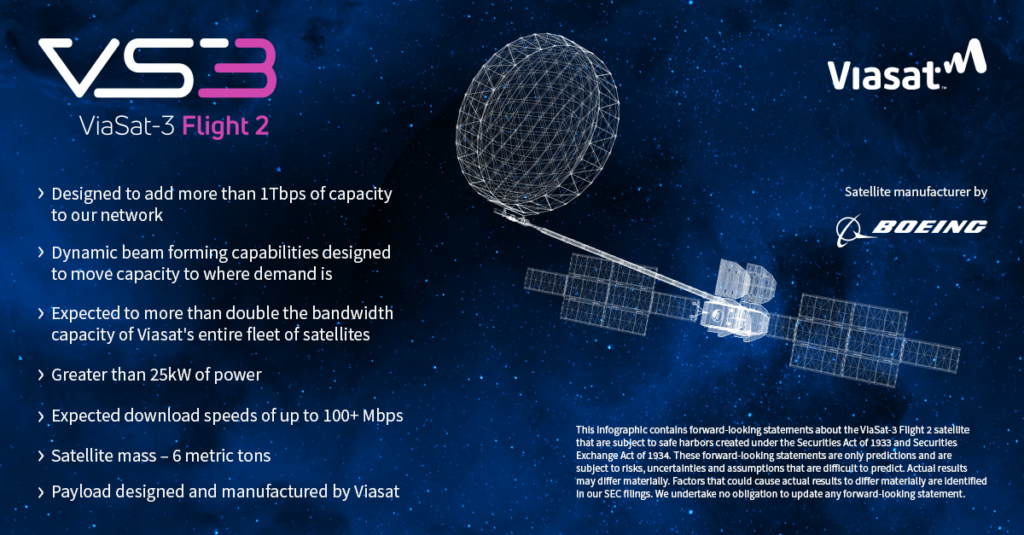
“The satellite tracks the airplane instead of the airplane tracking the satellite,” Buchman said.
He described the system as a major shift in how capacity is allocated to aircraft.
“Each aircraft gets its own beam,” he said. “If it’s flying from London to New York, it has one beam following it as it flies. The capacity follows the airplane.”
For passengers and crew, Buchman said the result should be a more reliable and consistent experience. For Viasat, it means bandwidth can be used more efficiently because capacity follows demand rather than sitting stranded in areas where no aircraft need it.
“It gives you perfect demand-supply matching,” he said.
The system is controlled through ground-based beam forming, with the ground network communicating with the satellite in real time. Viasat describes ViaSat-3 as designed to shift capacity across its coverage area and deliver bandwidth “where and when it’s needed most,” including for mobility markets such as aviation.
Buchman said the important passenger benefit is not the technology itself, but the fact that it should make the connection feel more dependable.
“What the user gets is a reliable, always-on connection,” he said. “They don’t have to think, is it working or not working? It’s just working.”
Viasat’s answer to Starlink is multi-orbit
Despite being a traditionally GEO company, Viasat is also preparing for LEO.
The company has partnered with Telesat to integrate Telesat Lightspeed into its multi-orbit services portfolio across aviation, maritime, enterprise and defence markets. That agreement gives Viasat access to LEO capacity without building its own constellation.
Buchman said Viasat’s new Aera phased-array antenna is being designed to connect to GEO and LEO networks simultaneously. The idea is not to force an aircraft to choose between one orbit and another, but to route traffic intelligently across both.
“Our new antenna is multi-orbit,” he said. “You’re going to get the best of both worlds.”
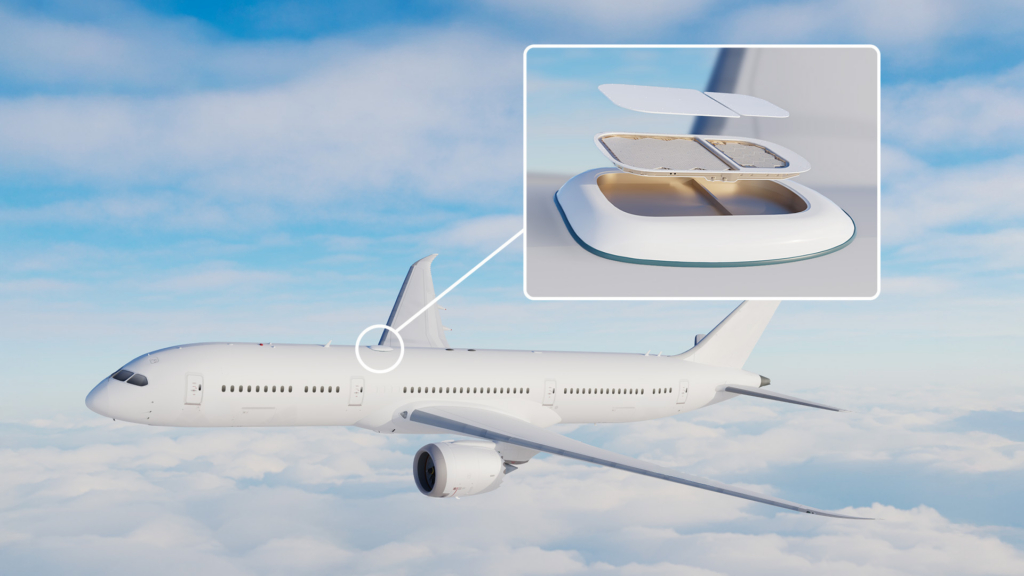
The practicalities are simple. Video traffic can remain on GEO because it needs sustained capacity more than ultra-low latency. Gaming, interactive applications and some web traffic can move over LEO when latency matters more.
“I’m not going to put video over LEO,” Buchman said. “I’m going to put it over GEO, because you have a much better cost of delivery and you’re not affecting the experience. But if you’re playing a latency-sensitive game, that traffic can go over LEO.”
Even web browsing could be split, he suggested, with the first packets sent over LEO to make a page feel responsive and the heavier delivery handled over GEO.
For passengers, that decision-making would be invisible. Someone watching a film, browsing the web or playing a game would not need to know which satellite network was carrying which part of the traffic.
“Speed tests don’t tell you everything”
Buchman also pushed back on the way inflight Wi-Fi is often marketed.
New connectivity systems tend to arrive with headline speed claims. LEO providers in particular have leaned heavily into lower latency and high download speeds as proof of superior passenger experience.
But Buchman said raw speed tests do not always reflect how well a system works in real life.
“You can get a really good speed test and your service quality is really poor,” he said.
For passengers, he argued, the question is not whether the connection produces an impressive megabit-per-second number in a test. It is whether the applications they want to use actually work.
“How many times are you on your phone, moving from tower to tower, and if it’s working, do you go and check the speed?” he said. “No. You just keep using it.”

That is the thinking behind Viasat’s Internet Quality Experience, or IQE, benchmark. Rather than judging performance only by speed, IQE is intended to measure reliability and application-level experience.
“We’re trying to measure what matters,” Buchman said. “Can you get done what you need to get done? Speed tests are insightful, but they don’t tell you everything.”
That could become a more important argument as inflight connectivity matures. Airlines may initially market speed, but passengers are likely to judge the product on consistency: whether video streams, messages send, calls connect and work applications function throughout the flight.
The next inflight connectivity battle may be reliability, not speed
The inflight connectivity market is being shaped by the rise of LEO, but Viasat is betting the longer-term battle will be more complicated.
Buchman’s message to airlines is that the future will not be decided by orbit alone. It will be decided by which networks can deliver enough capacity, in the right places, at the right economics, while making the passenger experience feel effortless.
“We just have to keep doing what we’re doing and not give them a reason to change,” he said. “If we deliver on the experience, the market is going to pick. I think we’re going to win our fair share.”
Featured image: Viasat
Sign up for our newsletter and get our latest content in your inbox.


More from

October 4, 20264 min read


