Russia’s Sarmat ICBM declared operational in 2023 remains in testing, report finds

4 min read

Yesterday, Dallas Analytics published another analysis of the delays of Russia’s next-generation nuclear ICBM, which can be thought of as the opposite number of the US Air Force’s upcoming LGM-35A Sentinel.
Whereas the US Air Force is openly admitting its Sentinel is delayed from 2027 into the early 2030s, Russia is claiming its missile entered service years ago, even though it remains in testing.
Russia’s new ICBM declared operational in 2023 remains in testing
Using leaked official Russian documents, Dallas Analytics concluded that Russia declared its new RS-28 “Sarmat” (“Satan II” in some Western media) heavy intercontinental ballistic missile (ICBM) operational in September 2023, even though it remains under testing as of mid-July 2026.
🚨Russia declared the RS-28 Sarmat – its newest nuclear-armed ICBM – "on combat duty" in 2023. Internal defence-industry files obtained by Dallas Analytics tell a different story.
— Dallas Analytics (@dallas_analytic) July 27, 2026
A strategic weapon called operational faster than its own factories could document, price or deliver… pic.twitter.com/BrmVUUVatI
The publication writes, “The claim was neither the first nor the last of its kind: Vladimir Putin had promised the first Sarmat regiment on alert ‘by late 2022’ as far back as April 2021, and again pledged deployment ‘this year’ in February 2023.”
According to the Kremlin’s English-language website, the Sarmat is a silo-based, stationary ICBM being developed to replace the Soviet-era Voyevoda system.
It claims the new Sarmat improves on the range, payload, launch readiness, and countermeasure capabilities. The ICBM is being developed by the Academician V. Makeyev State Rocket Centre.
My thanks to @MT_Anderson for providing this Planet Labs imagery and allowing me to publish it with comments.
— MeNMyRC (@MeNMyRC1) September 21, 2024
As is readily apparent, the RS-28 Sarmat test was a complete failure. The missile detonated in the silo leaving a massive crater and destroying the test site. The… https://t.co/FuKIaTNFVs pic.twitter.com/AuIpQRrDLa
In May 2026, Russia announced another successful test flight of the Sarmat, adding, “We will now proceed with placing the missiles on combat standby duty.”
Dallas Analytics wrote, “A system declared operational in 2023 was, in 2026, still being test-fired towards acceptance.”
Why the Sarmat ICBM has been delayed
The report asserts that the Sarmat’s delays are being inflicted not by sanctions or engineering but by Russia’s own bureaucracy. It says it is supported by a supply chain where every link depends on a single qualified supplier with no substitute.
💥 Russia: Putin's latest intercontinental ballistic missile RS-28 Sarmat (Satan II) failed spectacularly at the Yasnoe cosmodrome test site in Orenburg region. pic.twitter.com/B0fFROGHnv
— Igor Sushko (@igorsushko) November 28, 2025
One issue has been the practice of officials certifying work as complete that had not yet been completed. This creates a gap between what exists on paper and what exists in reality.
For example, in 2024, Vladimir Verteletsky, Head of Directorate within the Department of the Russian MoD for State Defence Order, was investigated by the Investigative Committee of Russia (ICR).
The ICR stated, “In 2022, Verteletsky signed off on work that had not actually been completed under a research and development contract awarded as part of a state contract.”

It is not possible to explain all the details here, but Dallas Analytics identifies three failures: documentation, logistics, and price.
Regarding that last failure, the report writes, “Every delivery hung on a fixed price the parties never set.”
A recurring theme in Russia
Announcing a system to be operational years before it is, is nothing new in Russia. However, there is nuance; Russia may routinely exaggerate its capabilities, but it still has capable systems.
AGN has previously reported how its Oreshnik intermediate-range ballistic missile (IRBM) is used primarily for signaling rather than for battlefield effects. Oreshnik is available in very low (likely single-digit) numbers and has been used without warheads. It appears to have missed its targets by kilometres.
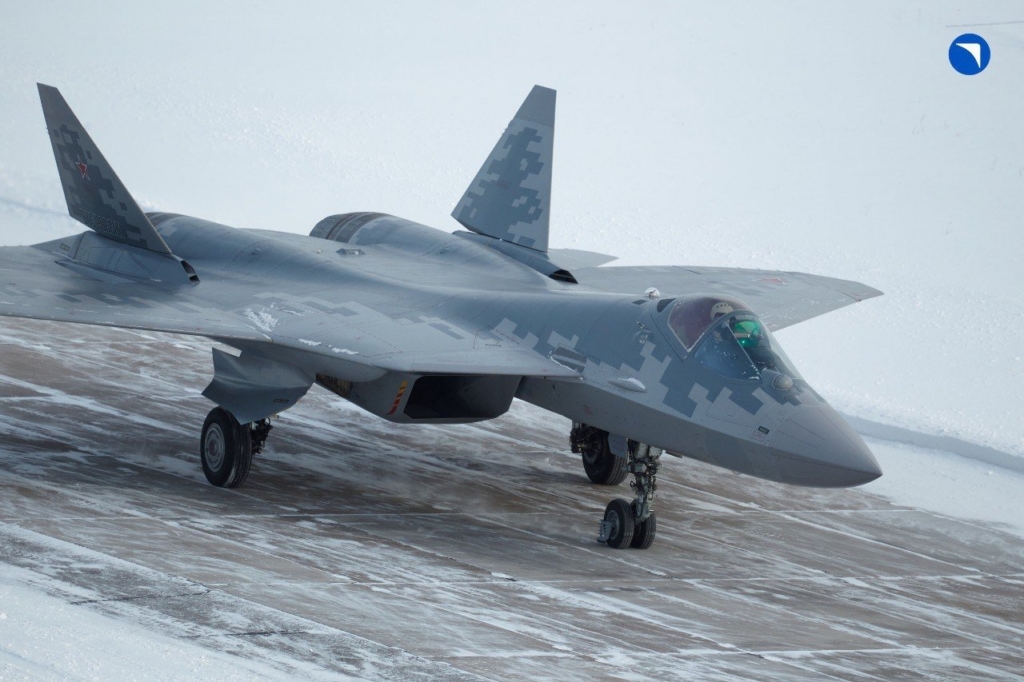
Other parallels can be seen with Russia continuing to focus on production of its Su-35S six years after the Su-57 Felon entered service.
It appears a modern Su-35S air superiority fighter lost an air battle with an old Ukrainian ex-Dutch/Danish F-16 in July. These F-16s are original 1970s/1980s builds and were last updated in the early 2000s. The specifics of the battle are unclear.

The Felon is produced at a low rate and is believed to be more exposed to sanctions and is known to have been delivered lacking key systems. While not aviation, Russia’s much-paraded next-generation T-14 Armata tank (officially entered service in 2024) has been sidelined for the entire 4.5-year-long war.
Sign up for our newsletter and get our latest content in your inbox.




More from


October 13, 202612 min read