Inside Northrop Grumman’s digital overhaul of E-2D Advanced Hawkeye maintenance

7 min read
The E-2D Advanced Hawkeye is often described as the eyes and ears of a carrier strike group.
But as the aircraft takes on a growing role in modern naval warfare, Northrop Grumman is also focused on a less visible challenge: keeping the fleet available, mission-ready and operating at peak effectiveness.
The company is introducing a suite of digital sustainment tools that combine augmented reality, virtual reality, predictive analytics and machine learning to change how the E-2D is maintained, repaired and upgraded.
The work forms part of a broader modernisation strategy designed to improve the aircraft’s capability while reducing downtime across one of the US military’s most heavily tasked platforms.
Why E-2D Advanced Hawkeye sustainment matters to the US Navy
The E-2D occupies a unique place in the US Navy’s inventory.
Equipped with the APY-9 radar housed inside its distinctive rotating rotodome, the aircraft serves as an airborne battle management and command platform capable of tracking thousands of targets across air, land and maritime domains.
It also acts as a key node within the Navy’s cooperative engagement architecture, linking aircraft, ships and ground forces across long distances.
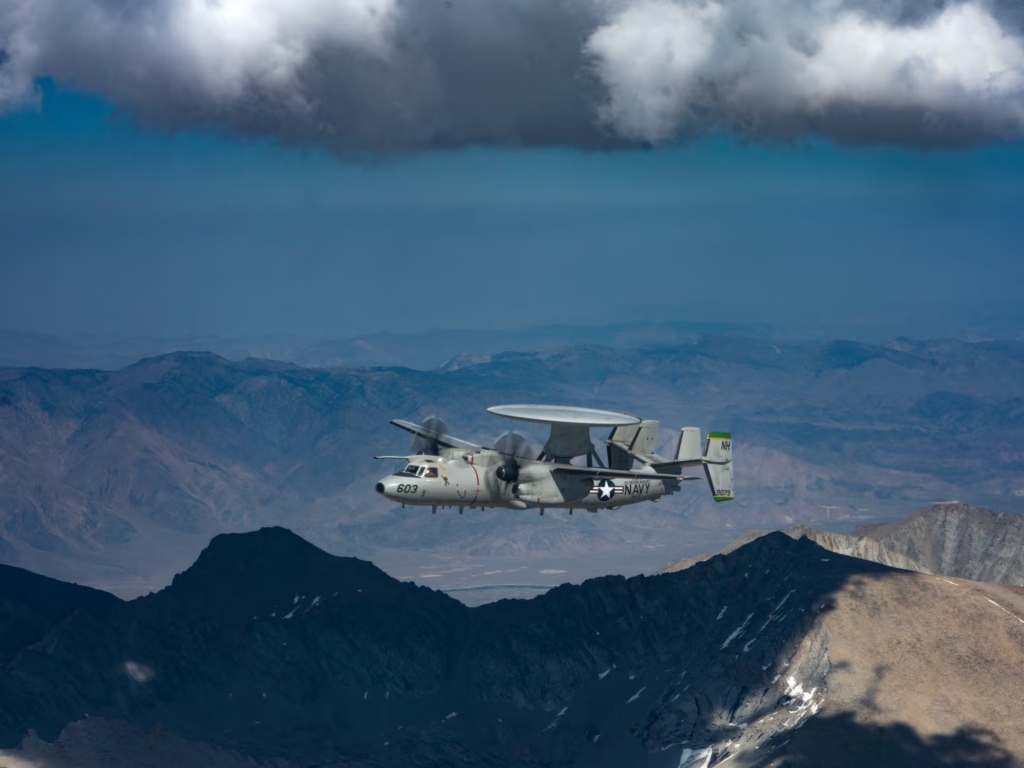
Over the past decade, the Hawkeye fleet has undergone a series of major upgrades. These have included improvements to the APY-9 radar, satellite communications systems, aerial refuelling capability, data fusion architecture, sensor performance and counter-electronic attack functions.
Northrop Grumman is now preparing the next major update to the aircraft, known as Block II. This will introduce avionics architecture improvements, cybersecurity enhancements and new human-machine interface capabilities aimed at reducing crew workload and improving situational awareness.
But capability upgrades alone do not guarantee operational readiness.
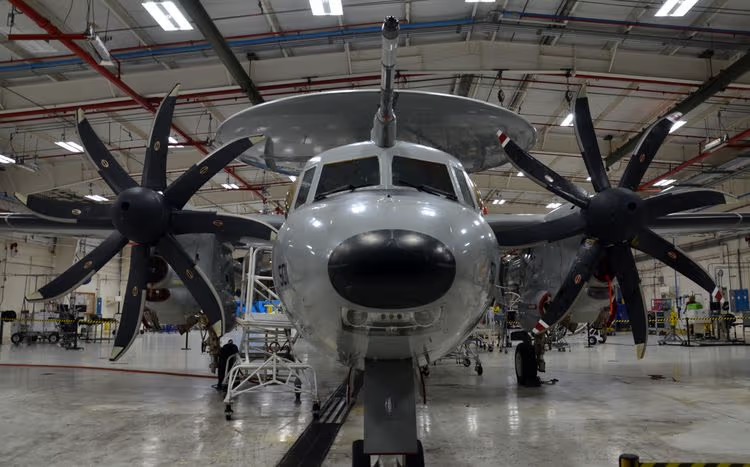
The aircraft remains one of the most heavily used assets in US military service. Every hour spent on the ground for maintenance affects fleet availability and operational planning. That has pushed Northrop Grumman to look beyond traditional sustainment methods.
How AR, VR and AI are changing E-2D maintenance
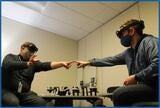


The technologies behind Northrop Grumman’s sustainment work perform different roles.
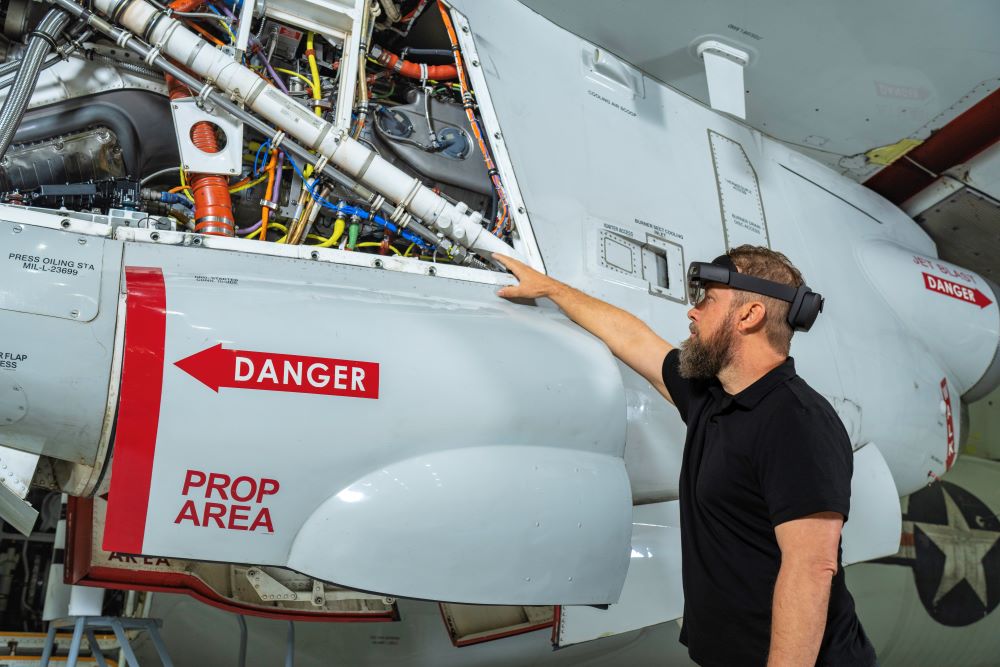
Augmented reality, or AR, places digital information over a technician’s view of the aircraft, allowing them to see instructions, system layouts and maintenance data while working on the platform.
Virtual reality, or VR, creates a digital replica of the aircraft and its systems, giving crews the opportunity to practise maintenance procedures in a realistic environment before carrying them out on an operational aircraft.
Artificial intelligence and machine learning work in the background, analysing maintenance records and fleet data to identify faults, spot trends and help engineers find problems more quickly.
Together, the technologies are intended to help maintenance teams spend less time troubleshooting and more time returning aircraft to service.
Northrop Grumman’s Armor tool brings AR to aircraft maintenance
At the centre of the company’s sustainment work is a system known as Armor.
Developed by Northrop Grumman, the augmented reality tool combines predictive analytics with fleet performance data to provide engineers with guidance during inspections and repairs.
Using tablets or AR headsets, technicians can access animated maintenance instructions and visual overlays, allowing them to inspect systems virtually before beginning physical work.
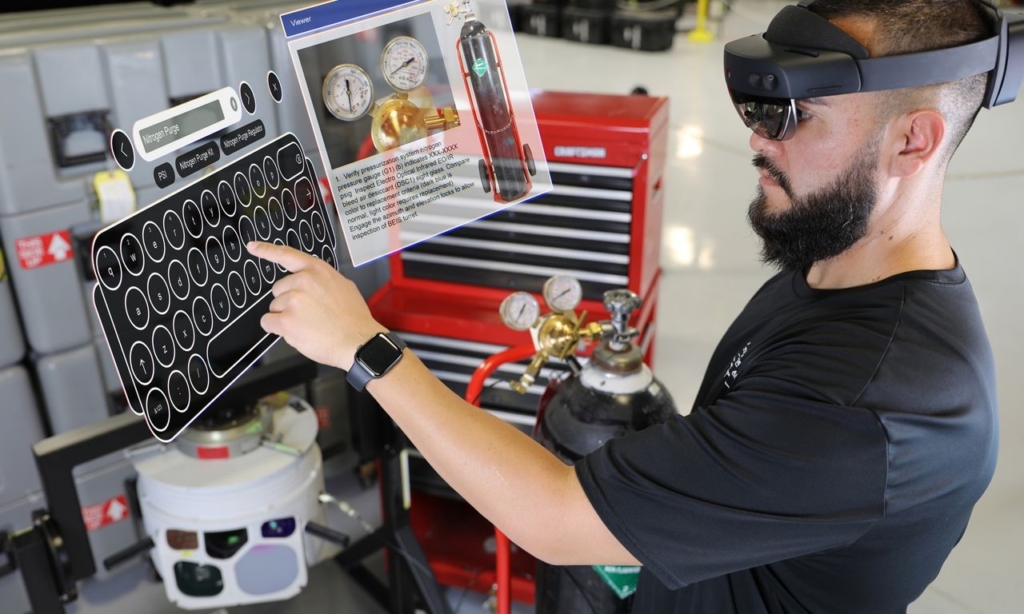
“Armor can reduce training and labour time, keeping the aircraft operational in hours instead of weeks,” said Kenney Crooks, Northrop Grumman fellow, product support.
Rather than relying only on technical manuals and maintenance records, technicians receive real-time visual information linked to aircraft usage patterns and previous maintenance history.
Northrop Grumman has already used augmented reality across parts of its manufacturing operations, where digital overlays help engineers visualise complex systems before work begins.
Engineers working on satellite assembly programmes, for example, have used the technology to visualise wiring routes, installation sequences and component locations in three dimensions, reducing errors and shortening production times.
Northrop Grumman believes the same approach can improve sustainment operations for military aircraft.
According to the company, Armor can reduce training and labour requirements sufficiently to return aircraft to service in hours rather than weeks in some maintenance scenarios.
VR training has cut E-2D repair times by up to 75%, Northrop Grumman says
Training is another area where Northrop Grumman sees potential gains.
Traditional maintenance instruction often requires access to aircraft, specialised equipment and dedicated training facilities. For complex systems buried deep inside an aircraft, hands-on training opportunities can be limited.
The company’s virtual reality training environment is designed to address those constraints.
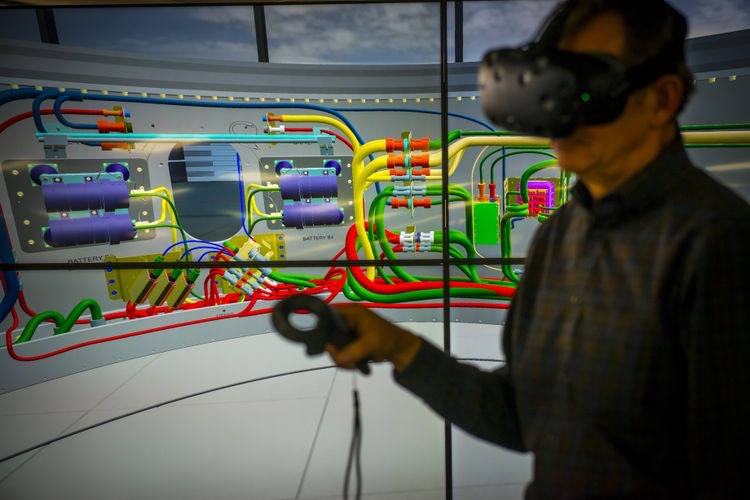
Maintenance personnel are immersed in interactive 360-degree digital environments where they can practise procedures on difficult-to-access components without needing physical hardware.
The simulations allow technicians to work through maintenance tasks repeatedly before carrying them out on operational aircraft.
Northrop Grumman says VR training has reduced repair times by as much as 75% while improving technician confidence and task performance during real maintenance activities.
The approach also lowers the logistical burden associated with transporting equipment or aircraft systems between training locations.
For a fleet expected to remain in service for decades, those efficiency gains can translate directly into increased aircraft availability.
E-2D LITE uses machine learning to reduce maintenance rework
One of the more significant developments is the use of machine learning.
Northrop Grumman’s engineering teams in Melbourne, Florida, and Redondo Beach, California, have developed the Learning Intelligence Tools Ecosystem, known as LITE.
The system applies machine learning algorithms to maintenance data to identify root causes of technical problems more quickly than conventional troubleshooting methods.
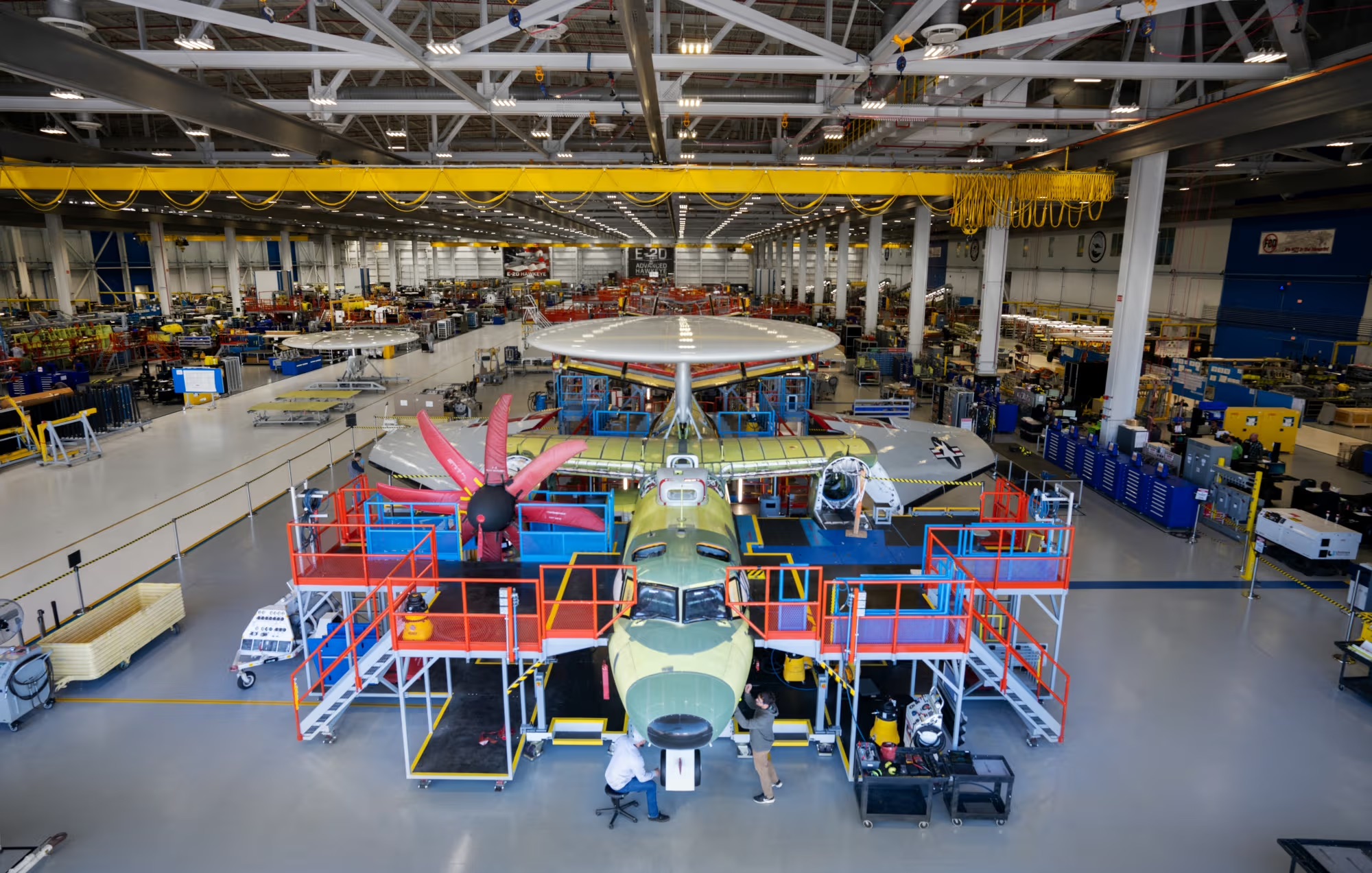
The tool has already produced measurable results.
Within the E-2D’s radar pressurisation and cooling system, LITE reduced maintenance rework by 67%. According to the company, this eliminated weeks of testing and significantly shortened return-to-service timelines.
The value of the system is not limited to a single subsystem.
Modern military aircraft generate large volumes of operational and maintenance data. The challenge is turning that information into decisions before faults develop into larger problems.
LITE reflects a wider trend across defence aviation towards predictive maintenance, where data analysis is used to anticipate failures and optimise maintenance schedules before aircraft become unavailable.
Digital sustainment joins the E-2D Block II modernisation roadmap
The sustainment work is taking place alongside broader upgrades already planned for the Hawkeye fleet.
In 2023, Northrop Grumman received a contract to modernise cockpit and mission systems for the E-2D as part of preparations for the Block II configuration.
The programme aims to improve mission effectiveness while introducing new architecture and computing upgrades that will support future capabilities.
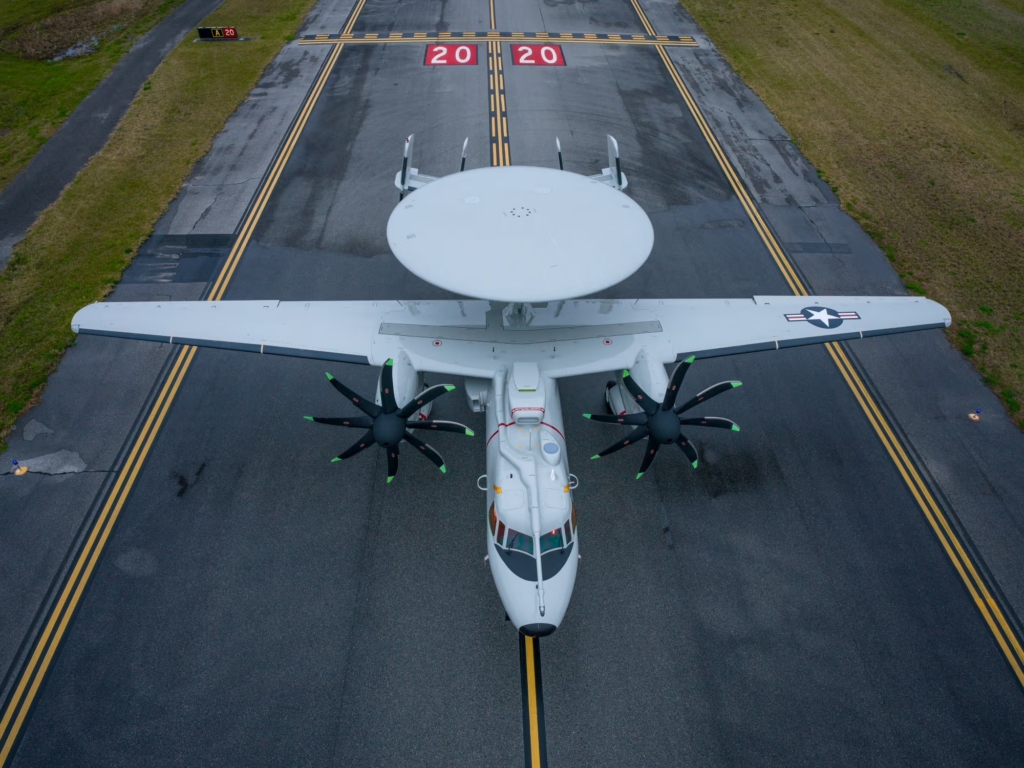
The Block II standard is expected to deliver enhanced computing capacity, increased electronic storage, cybersecurity improvements and upgrades to flight and mission systems.
The objective is not simply to add new capabilities, but to ensure the platform remains relevant against increasingly sophisticated threats and networked warfare requirements. Northrop Grumman views digital sustainment as part of that process.
The company has deployed more than 1,000 AR solutions across its programmes and is applying lessons learned from the E-2D effort to other major platforms, including the F-35 Lightning II and the B-2 Spirit.
Across more than 30 million square feet of manufacturing and sustainment operations, digital tools are increasingly being used to accelerate maintenance, improve training and reduce operational disruption.
Readiness is becoming the E-2D’s next battlefield advantage
For decades, military aircraft modernisation was largely measured by radar performance, weapons integration or sensor upgrades.
Today, readiness has become just as important. An aircraft that spends less time in maintenance and more time available for operations offers an advantage of its own.
For the E-2D Advanced Hawkeye, which remains central to US Navy carrier operations and increasingly important to allied air and missile defence networks, sustaining that readiness is becoming part of the mission.
Northrop Grumman’s latest work suggests that the future of aircraft maintenance may depend as much on digital tools, predictive analytics and immersive training environments as it does on spanners and toolboxes.
Featured image: Northrop Grumman
Sign up for our newsletter and get our latest content in your inbox.


More from

October 17, 20265 min read


October 17, 20264 min read