


Baltic Air Policing explained: How NATO protects the skies over the Baltic Sea

4 min read
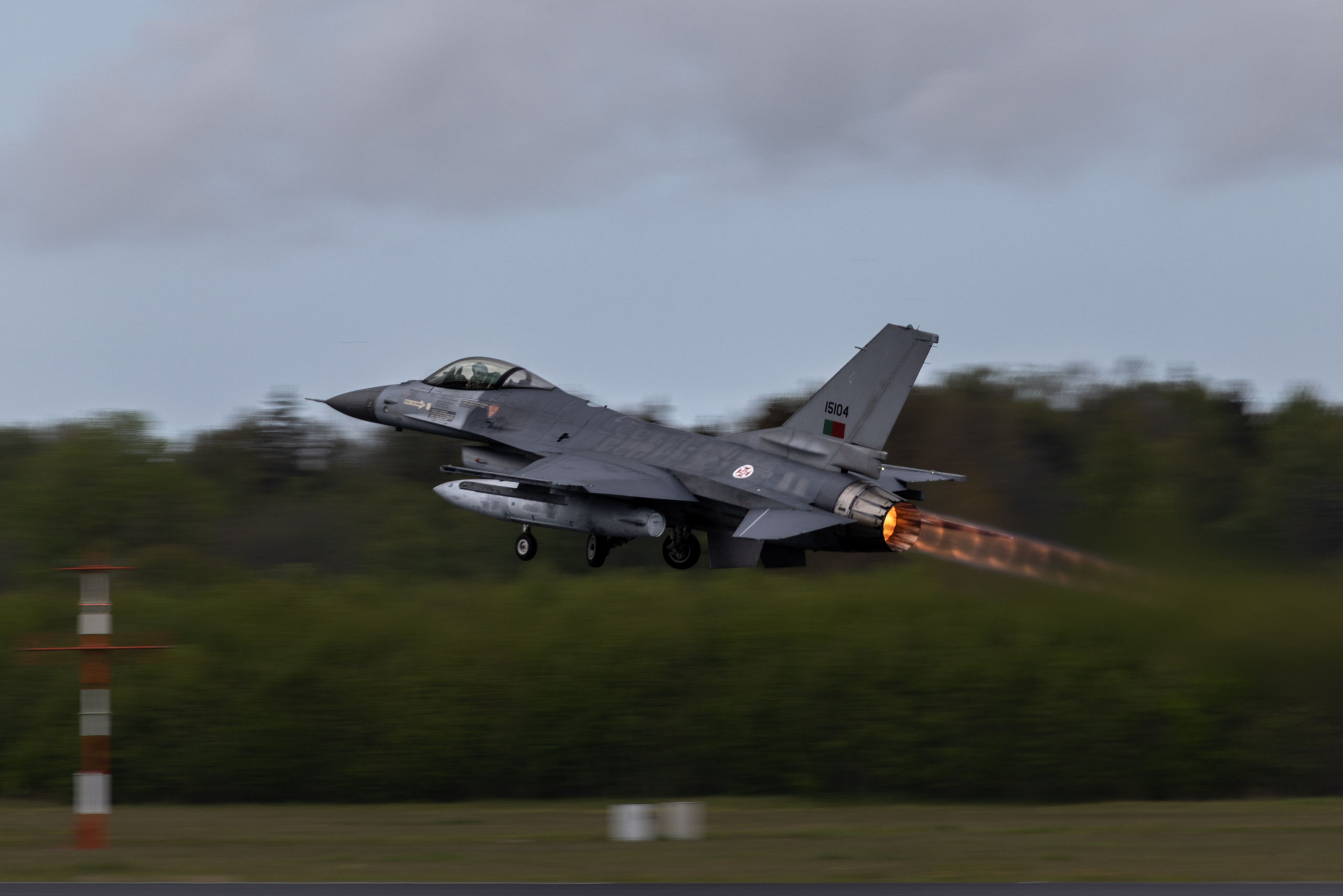
A series of recent incidents has brought renewed attention to the NATO Baltic Air Policing mission. In recent months, French Rafales have intercepted Russian military aircraft during a surge in activity over the Baltic Sea, Polish MiG-29s escorted a Russian plane flying ‘dark’, and NATO fighters have, for the first confirmed time, shot down a drone after it entered Latvian airspace.
The operations highlight the increasingly varied demands placed on the Allied mission protecting NATO’s eastern flank.
But what exactly is the Baltic Air Policing mission, how does it work, and what happens between an unidentified aircraft appearing on radar and NATO fighters scrambling to intercept it?
What is NATO Baltic Air Policing?
The NATO Baltic Air Policing mission was established in 2004 after Estonia, Latvia and Lithuania joined the Alliance. Unlike most NATO members, the three Baltic states do not have fighter aircraft of their own to protect their airspace.
Instead, NATO allies rotate fighter jets to the region to identify unknown aircraft and respond to potential airspace threats approaching or operating near NATO airspace. The mission keeps Allied fighter aircraft on Quick Reaction Alert (QRA), ready to launch within minutes.
NATO describes Air Policing as a purely defensive mission, carried out to ensure the security of NATO airspace across the eastern flank.
Why is Baltic Air Policing in the spotlight?
Although Baltic Air Policing has operated continuously for more than two decades, the security environment has changed since Russia’s full-scale invasion of Ukraine in 2022.
Many of the Russian aircraft intercepted by NATO operate to and from the Russian enclave of Kaliningrad. According to NATO, they often approach or fly near NATO airspace without using transponders, communicating with Air Traffic Control or having filed a flight plan – prompting Allied fighters to launch identification and interception missions.
On 29 May, French 🇫🇷 Rafale fighter aircraft deployed to Baltic Air Policing scrambled from Šiauliai Air Base 🇱🇹 to intercept and identify two Russian 🇷🇺 Su-30 aircraft over the Baltic Sea.
— NATO Air Command (@NATO_AIRCOM) June 2, 2026
NATO fighter aircraft deployed under Eastern Sentry routinely scramble to help maintain… pic.twitter.com/kSeyQQYgn5
In June 2026, French Rafale fighter jets deployed to Lithuania were scrambled 11 times in a single week amid a surge in Russian military flights over the Baltic Sea.
The intercepted Russian aircraft included transport planes such as the Ilyushin Il-18 and Antonov An-12, alongside combat and reconnaissance aircraft including the Sukhoi Su-24 and Antonov An-30.
In the same month, French NATO fighter jets also shot down a drone that had entered Latvian airspace. It was the first confirmed case of NATO aircraft intercepting and destroying a drone over Latvia as part of the Baltic Air Policing mission.
Today, NATO Baltic Air Policing fighter jets have shot down a foreign unmanned aerial vehicle (drone) over the Latgale region. The National Armed Forces report the drone entered Latvian airspace as a result of Russian electromagnetic warfare.
— Ministry of Defence of Latvia 🇱🇻 (@MoD_Latvia) June 8, 2026
More information:… pic.twitter.com/zeFXNCbZZz
In November 2025, Italian Eurofighter Typhoons intercepted a Russian “Black Pearl” Tu-134 over the Baltic for the first time since 2020.
Italy, Finland and Sweden also scrambled fighter jets in September 2025 after three Russian MiG-31 Foxhound fighter jets breached Estonian airspace. The aircraft were flying with transponders switched off, no flight plans filed, and made no effort to communicate with Estonian air traffic control.
The aircraft protecting NATO’s Baltic Skies
The aircraft deployed depend on which NATO nation is leading each rotation. Recent Baltic Air Policing deployments have included:
- Eurofighter Typhoon – operated by the UK, Spain, Germany and Italy.
- Dassault Rafale B – deployed by the French Air and Space Force during its 2026 rotation.
- F-16 Fighting Falcon – deployed by Allied air forces including Portugal and Romania.
Regardless of aircraft type, each detachment maintains NATO’s Quick Reaction Alert capability throughout its deployment.
How does NATO Baltic Air Policing work?
Baltic Air Policing operates 24 hours a day, seven days a week.
Ground-based radar and surveillance systems continuously monitor airspace before passing information to NATO’s Combined Air Operations Centres (CAOCs), which assess each situation and decide whether fighter aircraft should be launched.
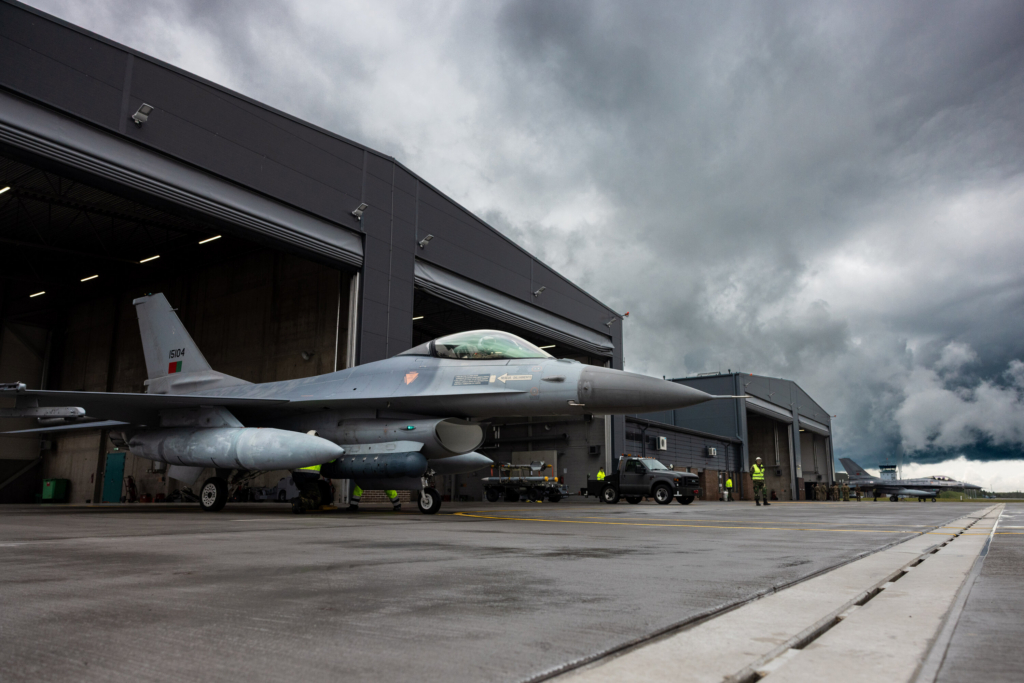
If an aircraft cannot be positively identified – for example because it is not communicating with civilian air traffic control, has not filed a flight plan or is flying without an active transponder – the CAOC can order an Alpha Scramble. This requires pilots to take off and be airborne within minutes. They then identify, monitor and, where necessary, escort the aircraft.
Where is the mission based?
The mission is primarily based at Šiauliai Air Base in Lithuania. A second operating location at Ämari Air Base in Estonia was added in 2014, while Lielvārde Air Base in Latvia can support deployments when required.
Allies take turns deploying to the bases for four months at a time. The air forces of Lithuania, Latvia and Estonia also provide command-and-control infrastructure, logistics and personnel to support the mission.
Which countries take part in NATO Baltic Air Policing?
More than 17 Allied nations have taken part since the mission began. This includes the UK, France, Italy, Spain, Portugal, the Netherlands, Romania, Belgium, Germany and Poland.
Sign up for our newsletter and get our latest content in your inbox.


More from


October 17, 20264 min read





