


US Air Force urged to move beyond KC-46 tankers as study backs blended-wing aircraft

7 min read
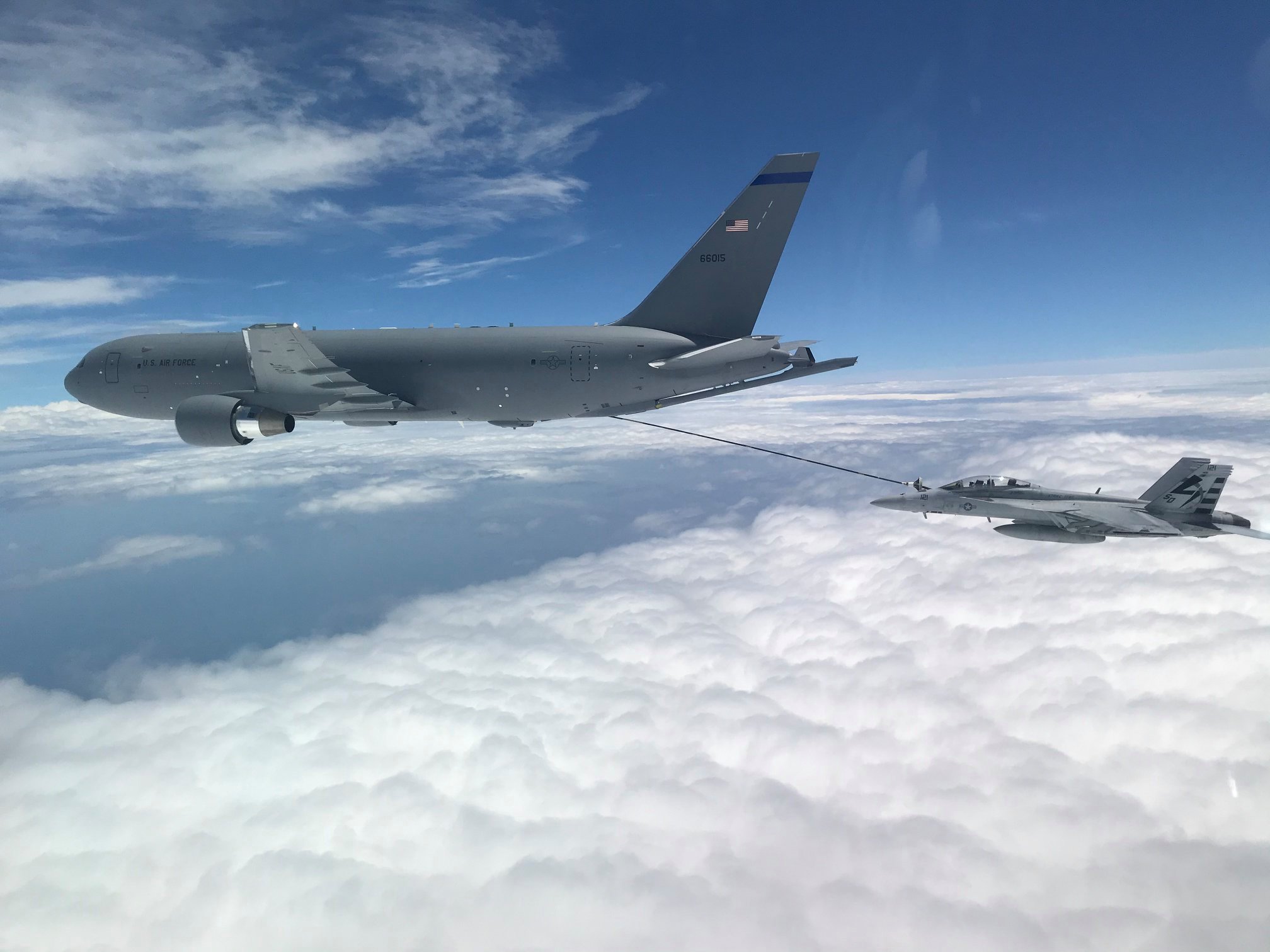
The US Air Force should reconsider plans to continue buying Boeing KC-46A tankers and invest instead in a new generation of blended-wing-body aircraft capable of carrying more fuel over much greater distances, according to a new study that challenges the service’s long-term aerial refuelling strategy.
The Hudson Institute report argues that a medium-sized blended-wing-body (BWB) tanker could refuel more than twice as many groups of combat aircraft as the KC-46A, or support them at more than twice the distance. It also estimates that acquiring and operating 250 such aircraft could save $15.5 billion over 30 years compared with an equivalent fleet of KC-46As.
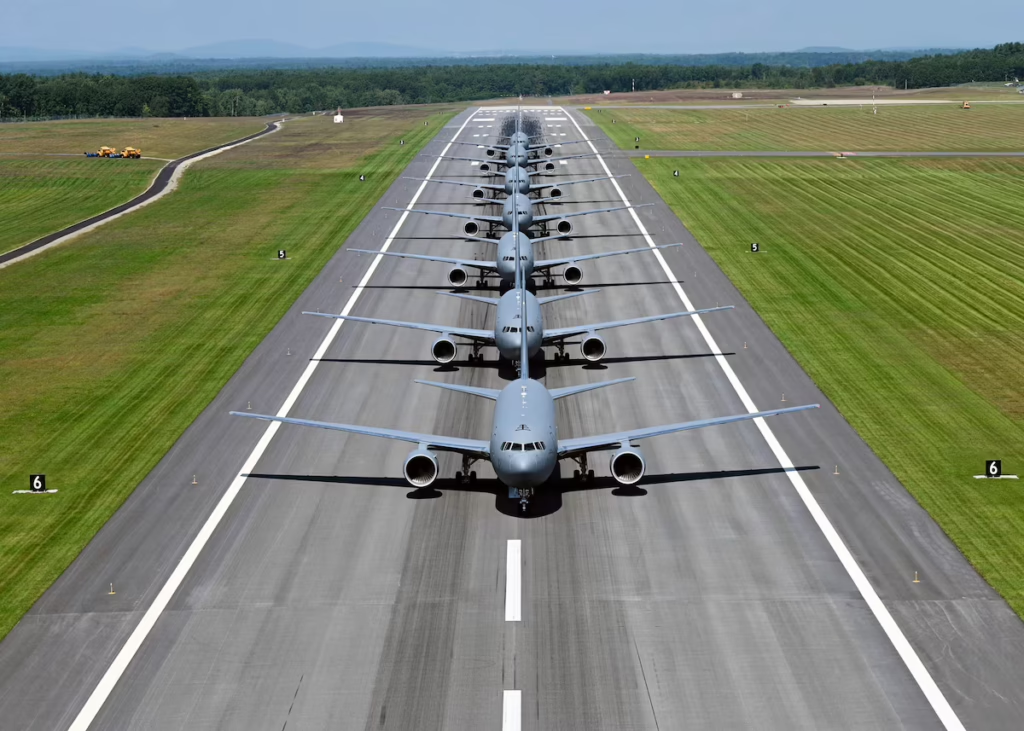
The findings come as the Air Force faces the costly task of replacing its ageing KC-135 Stratotankers while deciding whether to extend production of the KC-46A Pegasus.
Published on 27 October, the report, Resilient Reach: Redesigning Aerial Refueling for Contested Global Operations, was written by Hudson Institute researchers Timothy A. Walton and Shane Dennin.
Their argument is straightforward: replacing old tankers with more aircraft of similar range may not solve the Air Force’s future refuelling problems.
“The medium-range KC-46A has performed well in contemporary operations and would play an important role in any conflict,” the researchers acknowledge.
But they conclude that the aircraft lacks the range, fuel delivery capacity and survivability needed to sustain large-scale operations across vast distances, particularly when tankers must operate from bases far from the aircraft they support.
The recommendation is an independent research proposal, not an official Air Force procurement opinion.
Why aircraft shape matters
A conventional tanker has a long cylindrical fuselage with wings attached. A blended-wing-body aircraft takes a different approach, merging the fuselage and wings into a broad, continuous lifting surface.
The shape reduces aerodynamic drag and improves efficiency, potentially allowing an aircraft to carry substantial fuel loads over longer distances without consuming as much fuel itself.
That distinction matters enormously in aerial refuelling.
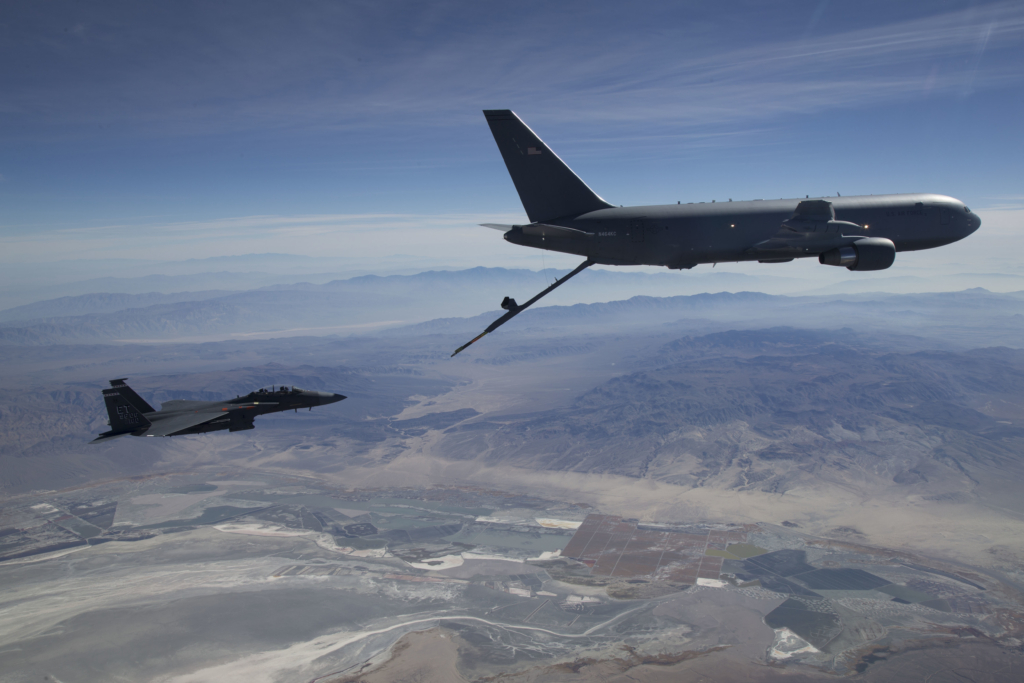
A tanker must burn fuel to reach its assigned refuelling point, transfer fuel to other aircraft and retain enough to return safely to base. The farther it flies, the less fuel remains available to deliver.
The Hudson researchers found that this limitation becomes particularly severe when conventional tankers are required to support operations thousands of miles from their bases.
A purpose-built BWB tanker could change that calculation.
According to the study, the blended-wing-body tanker could deliver substantially more fuel than the KC-46A on long-distance missions. In some scenarios requiring large fuel transfers, the researchers calculated an advantage of up to five times.
That does not mean a BWB carries five times as much fuel in every situation. The advantage depends on mission distance and the amount of fuel required by receiving aircraft.
The researchers also examined the Airbus A330 MRTT+, but concluded that its somewhat greater range did not eliminate the same underlying limitations.
Fewer tankers could do more work
The report’s most striking findings concern how many aircraft would be needed to support a particular operation.
Using simulations of 32 mission scenarios across the Pacific, North America, Europe and the Middle East, the researchers compared the KC-46A, A330 MRTT+, medium BWB and two smaller tanker concepts designed to operate closer to potential threats.
Across the representative missions, the medium BWB required approximately 30% fewer aircraft than the KC-46A.
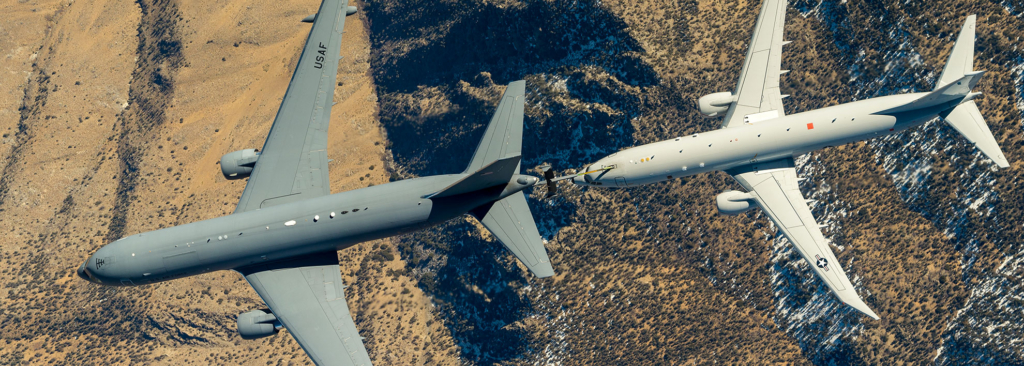
In one simulated deployment across the Pacific, moving an equivalent military force took 30 days using KC-46As but only 13 days with medium BWBs.
Another comparison examined the number of airfields capable of supporting sustained refuelling operations. Under one modelled scenario, the BWB could operate from 90 suitable airfields, compared with 31 for the KC-46A.
The difference is largely attributable to the BWB’s longer range, which would allow it to operate from more distant bases without relying heavily on other tankers.
That reliance is known as force extension. One tanker refuels another to increase the second aircraft’s reach. Although useful, the process consumes additional fuel and ties up aircraft that could otherwise support fighters, bombers or transport aircraft.
The researchers argue that a longer-range BWB could reduce this dependence and give commanders considerably more flexibility in choosing operating bases.
They also believe a dedicated refuelling aircraft could be cheaper to acquire and operate than a multi-role tanker such as the KC-46A, which is designed to transport passengers, cargo and aeromedical patients as well as fuel.
Those cost advantages remain estimates based on the researchers’ modelling rather than demonstrated performance from an operational BWB tanker.
JetZero offers a glimpse of what comes next
The Air Force has already taken steps to explore blended-wing-body technology.
In 2023, it awarded California-based aircraft developer JetZero a contract to build and test a full-scale BWB demonstrator in partnership with Northrop Grumman.
The aircraft is scheduled to make its first flight by the end of 2027.
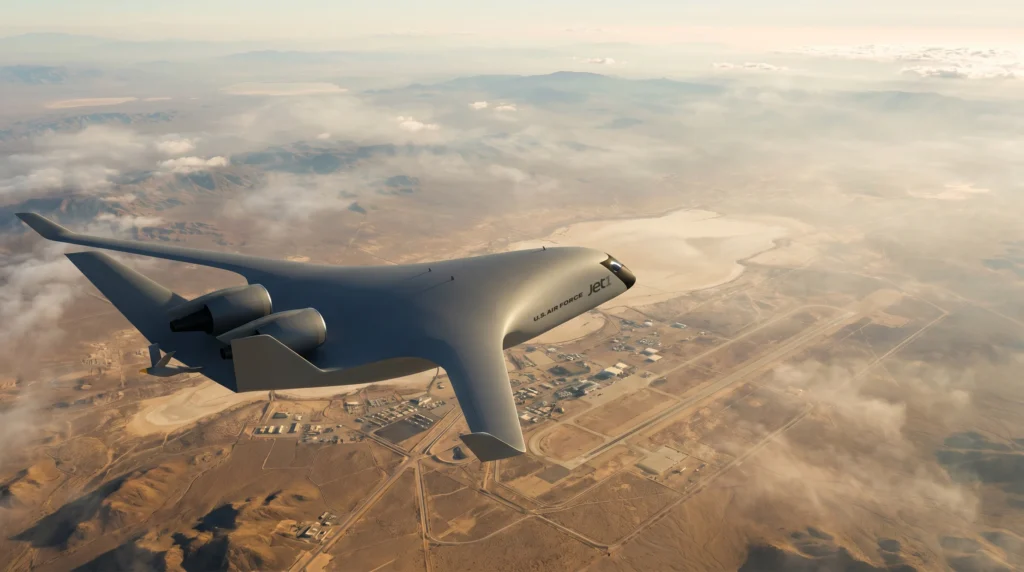
Although JetZero’s demonstrator is not the specific tanker examined in the Hudson study, the programme could provide valuable evidence about the aerodynamic and manufacturing advantages of the configuration.
The Air Force’s interest reflects the potential applications of blended-wing technology beyond aerial refuelling, including military transport and commercial aviation.
JetZero is not alone in pursuing the concept.
Boeing, Airbus, Lockheed Martin, Northrop Grumman and Natilus are among the manufacturers that have investigated blended-wing aircraft. Boeing’s earlier medium BWB concept provides the basis for the representative aircraft illustrated in the Hudson report.
The researchers note that improvements in aircraft design tools and composite manufacturing have made blended-wing configurations more economically practical than when the concept was first developed decades ago.
Commercial interest has also increased because of the potential to reduce fuel consumption and improve the economics of carrying passengers and freight.
A successful demonstrator, however, would be only one step towards an operational military tanker.
Such an aircraft would still need to accommodate aerial refuelling equipment, meet demanding reliability and maintenance requirements, and demonstrate that it can operate effectively from suitable military and civilian airfields.
Why the KC-46A is not being written off
The Hudson Institute is not calling for the immediate retirement of the KC-46A.
The Pegasus remains central to the Air Force’s tanker modernisation programme, and the report acknowledges its contribution to current operations.
Its concern is that continued purchases could eventually leave the service with a large fleet of aircraft that share the same fundamental range limitations.
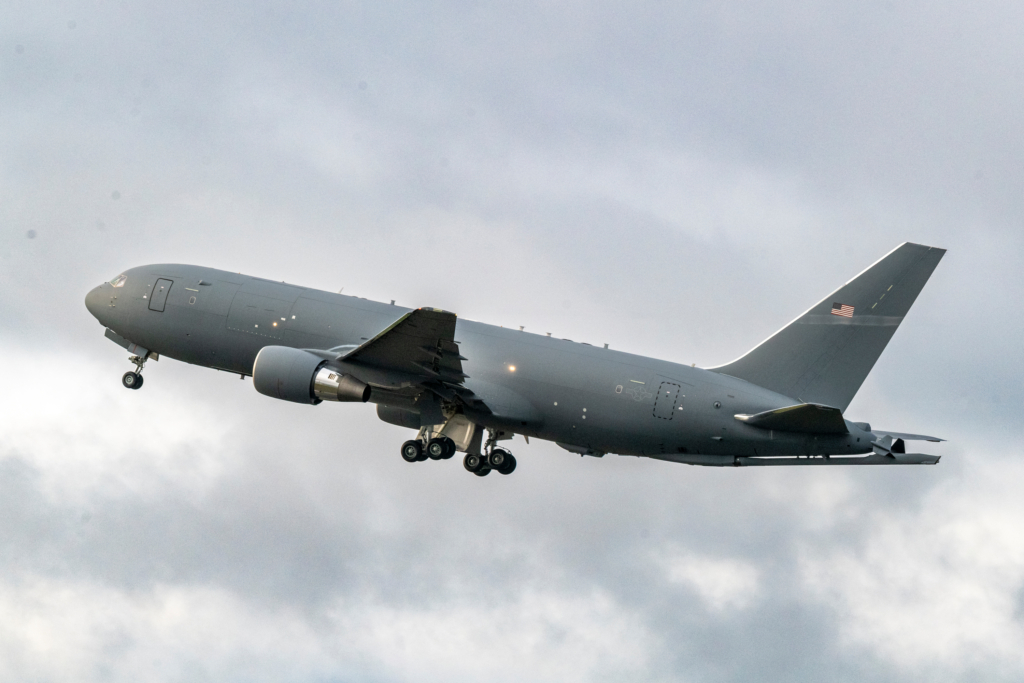
The report notes that the Air Force plans to field at least 185 KC-46As, with the possibility of expanding the fleet to 260 or more through additional purchases.
It warns against allowing the convenience of continuing an established production programme to determine the composition of the future tanker fleet.
“A tanker fleet of KC-46As alone is insufficient to win in conflicts that require long-range, contested refueling operations,” the authors state.
Their alternative would involve reducing some planned KC-46A follow-on purchases and redirecting funding towards development of a medium BWB tanker.
One of the study’s proposed fleet plans, combining existing tanker procurement with the introduction of BWBs, was estimated to cost $15.5 billion less over 30 years than a plan relying exclusively on further KC-46A purchases. The researchers calculated that it would also provide 58% more fuel offload capacity.
The study argues that such a transition could be financed within projected annual funding levels, although developing an entirely new aircraft would introduce technical, financial and scheduling risks.
More than a question of buying new aircraft
The researchers also caution that even a more efficient tanker cannot solve every problem facing the Air Force.
Existing aircraft need better communications, situational awareness and defensive systems. Airfields require improved fuel storage, distribution facilities and protection against attack.
The study recommends that a future medium BWB be designed from the outset to accommodate advanced defensive equipment, potentially allowing it to operate somewhat closer to threats than conventional tankers.
This could reduce the distance fighters and other aircraft must travel to receive fuel, leaving more time and fuel available for their missions.
The proposed survivability advantages, however, depend on capabilities that have yet to be demonstrated on a full-scale BWB tanker.
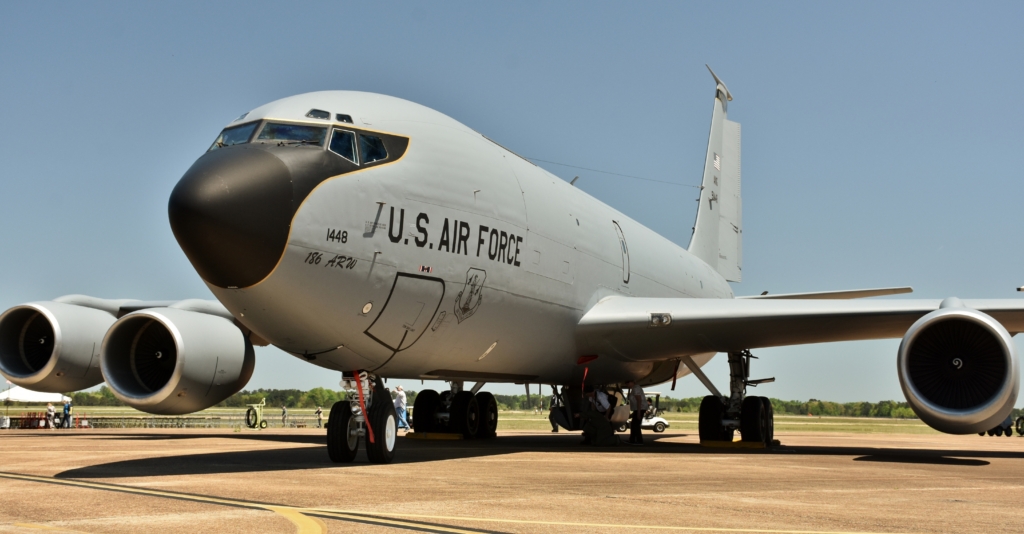
The report also recognises a difficult procurement dilemma. Delaying the development of a new tanker would prolong dependence on the KC-135, some of which could approach 100 years of age before retirement under current projections.
Continuing to purchase KC-46As offers a more established route to replacing those aircraft, but could leave the Air Force facing the same operational constraints for decades.
The researchers believe the service should avoid making that trade-off by default.
Their findings do not establish that a blended-wing tanker is ready to replace the KC-46A. They do, however, present a case for developing one while the Air Force still has time to shape its future refuelling fleet.


