


First KC-46A tanker arrives in Israel boosting long-range strike capability

3 min read
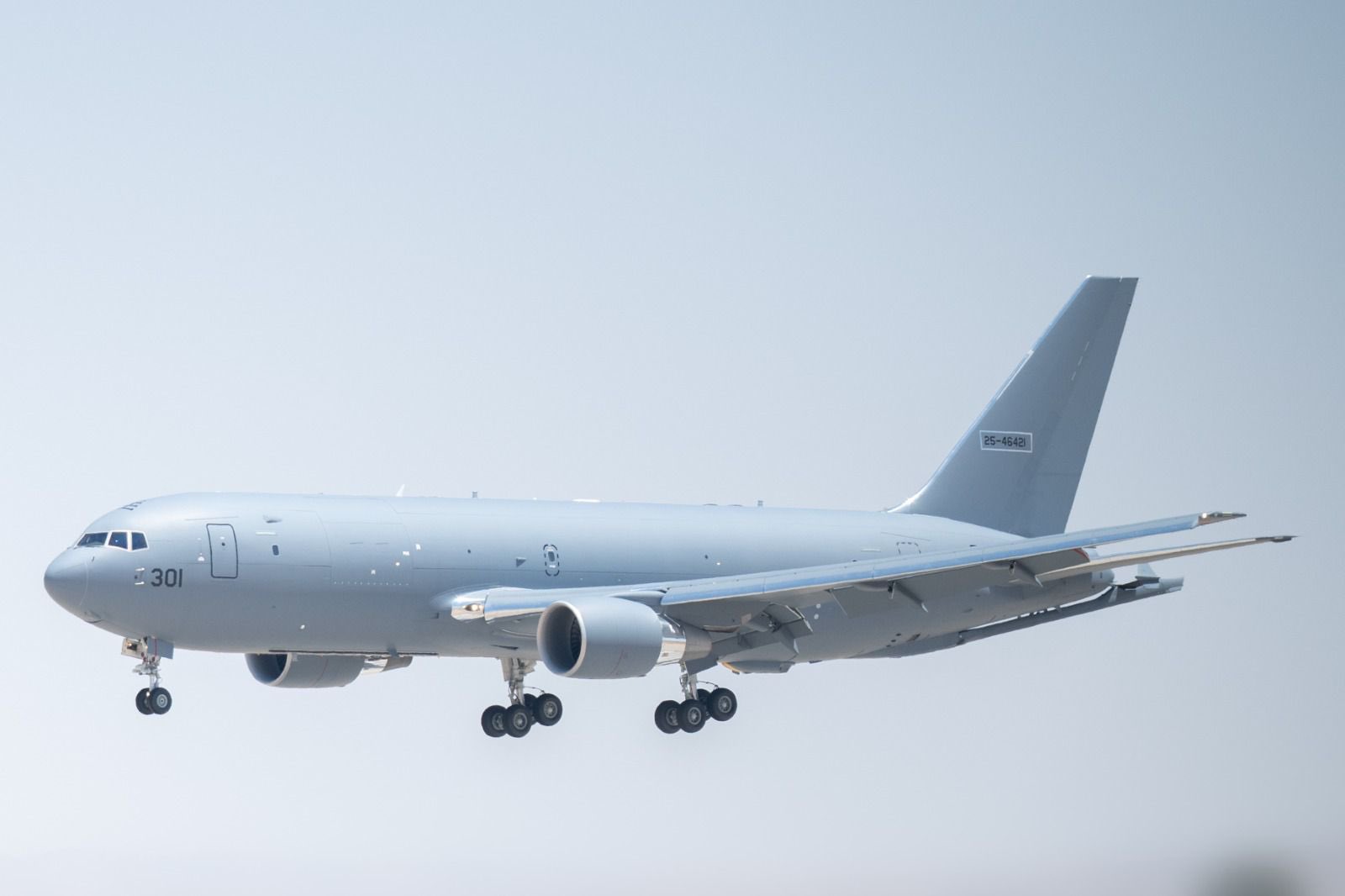
The Israeli Air Force (IAF) has received the first of at least six KC-46A tankers that will significantly boost its ability to sustain air operations across the Middle East. The aircraft is to be equipped with Israeli systems, and it is unclear when it will enter operational service.
The Israeli Air Force has received its first KC-46A tanker
Earlier in May, AGN reported that the first Israeli KC-46A Pegasus tanker had completed its maiden flight in the US. Yesterday, that aircraft flew across the Atlantic and arrived in Israel.
Today, the Israeli Air Force is adding the capabilities of the “Gideon”, the most advanced operational refueling aircraft in the world.
— Israeli Air Force (@IAFsite) May 27, 2026
Its arrival marks a true leap forward in the Israeli Air Force’s ability to expand its operational range, extend the duration of operational… pic.twitter.com/LII80CKF30
It is the first of six KC-46 “Gideon” refuelling aircraft the Israeli Air Force has ordered from the United States.
The aircraft was inaugurated at Israel’s sprawling Nevatim Airbase in the Negev desert and was attended by IDF Chief of Staff Lt. Gen. Eyal Zamir and the Israeli Air Force chief Maj. Gen. Omer Tischler.
The Israeli Air Force posted, “Its arrival marks a true leap forward in the Israeli Air Force’s ability to expand its operational range, extend the duration of operational flight time, and maintain the IDF’s qualitative advantage in the years ahead.”

Israel has a history of heavily modifying purchased US aircraft with its own domestically developed systems. Notably, the IAF added that it will soon be “equipped with the most advanced systems.”
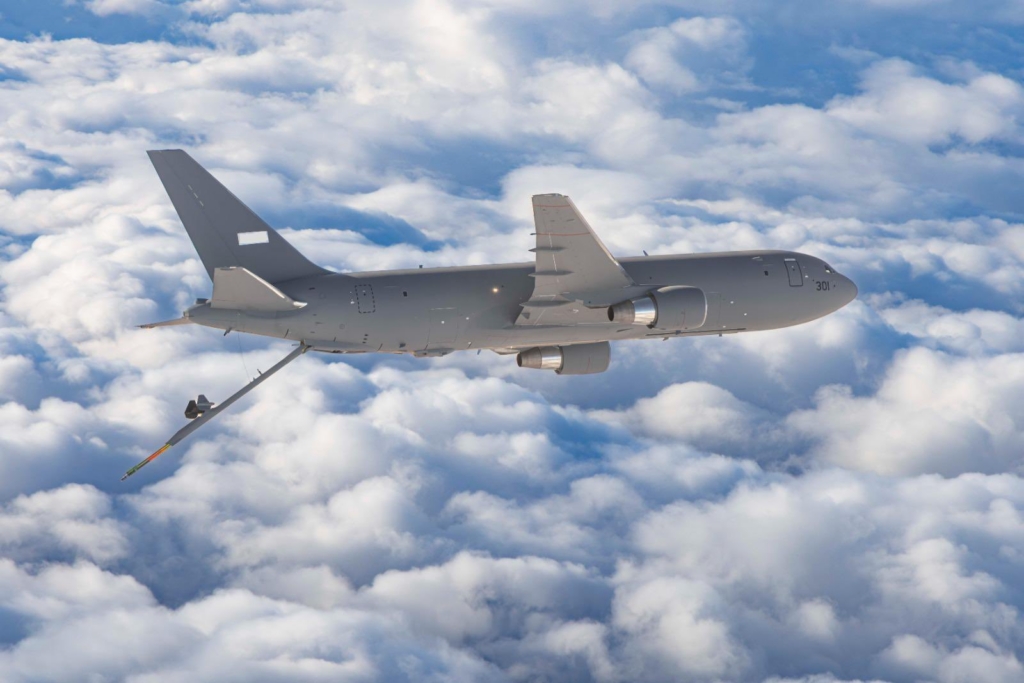
The older Boeing 707/KC-135 can be understood as quasi-commercial airliners converted to tankers; the KC-46 is derived from the commercial 767, but is more of a purpose-built military aircraft with networking, self-defence systems, sensors, and more.
The central role of Israel’s tanker fleet
The Pegasus can carry 212,000 lbs (around 96,000 kg) of fuel, which is a 15% increase over the older Boeing 707 Re’em tankers. It is also much more fuel efficient, allowing it to offload even more fuel.
מטוס ה"גדעון" הגיע לבסיס נבטים https://t.co/Jp4to8kHEO pic.twitter.com/d88IxdCq9h
— איתי בלומנטל 🇮🇱 Itay Blumental (@ItayBlumental) May 27, 2026
These are set to replace Israel’s ageing fleet of Boeing 707 refuelling aircraft that Israel relied on heavily during its 2025 and 2026 campaigns against Iran.
Israel has also been reliant on its tankers to strike Houthi targets in Yemen and the controversial decision to strike Hamas leadership in Qatar in 2025.
Its 2026 air campaign also heavily relied on the US Air Force KC-135R (derived from Boeing 707) tankers that were stationed at Tel Aviv Airport. During 2026’s Operation Roaring Lion, the IAF carried out over 10,800 separate strikes on over 4,000 targets with around 8,500 sorties.
These campaigns saw the destruction of Iran’s legacy tankers and any ability to project airpower. Israel destroyed one Iranian Boeing 707 tanker in 2025 and the world’s only surviving KC-747 tanker in 2026. It is unclear if Iran has any tanker aircraft remaining.
The US’s highly modified military Boeing 767 tanker
Israel and Japan are the only countries to have purchased the US’s Boeing 767-based refuelling aircraft, although other countries, like India, are purchasing used commercial 767s and converting them to tankers.
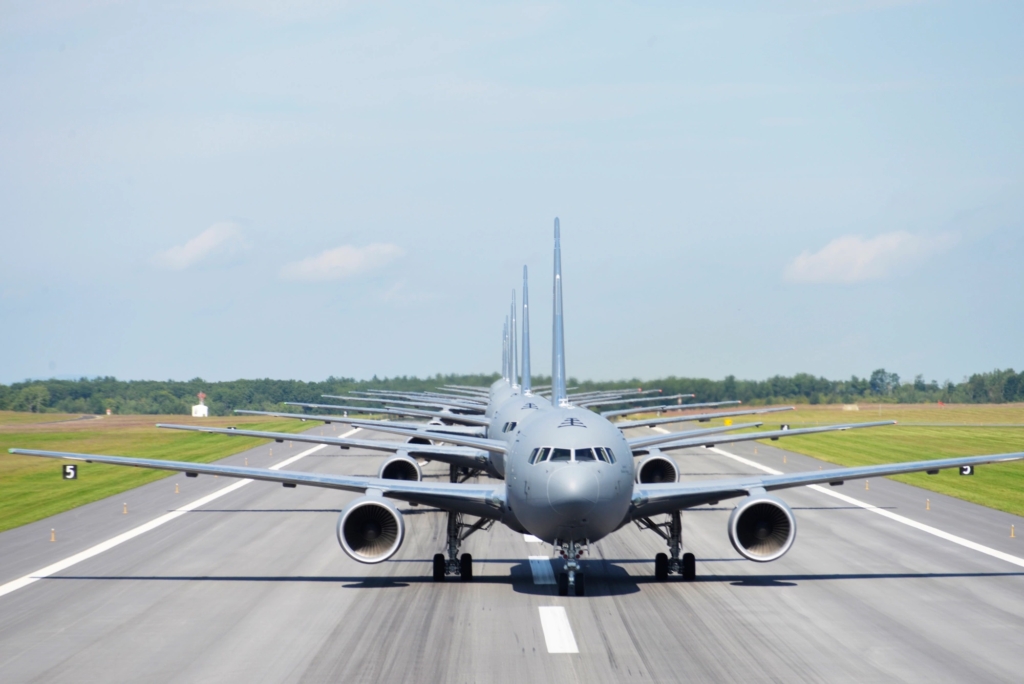
Israel’s KC-46s have been purchased with funding from US Foreign Military Financing (FMF). Israel currently receives around $3.8 billion in annual US military aid that needs to be used to purchase US-made systems.
Purpose-built KC-46s are heavily modified for military use, including EMP hardening, structural reinforcement, PW4000 engines (instead of CF6 engines), and an armoured cockpit. Converted 767s are tankers with KC-46 features and are generally not intended for the threat environments the KC-46 is built for.
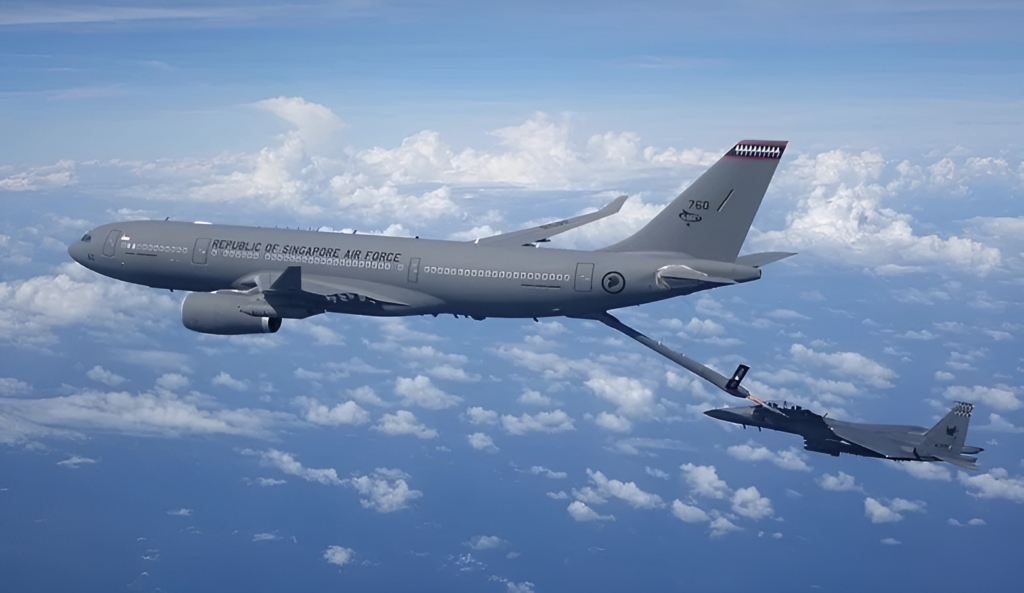
The primary competitor of the KC-46 is the European A330 MRTT, which is based on the A330-200. These are typically considered more operationally mature and have a wider customer base, although quantities are lower due to the massive orders of the USAF.
Photo: Israeli Air Force


