


Learjet 60 crash: How thunderstorms affect aircraft at cruising altitude

4 min read
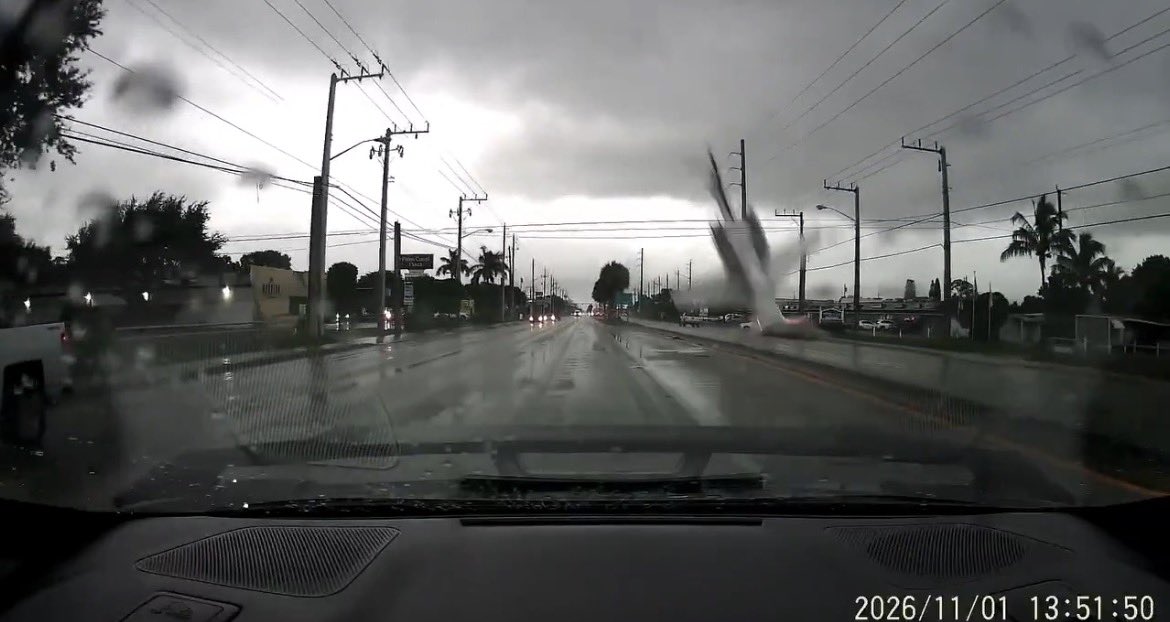
The crew of the Learjet 60 that crashed in Florida on 1 November reported icing, turbulence and increasing precipitation before the aircraft entered a steep descent, killing all nine people aboard.
The jet was flying from Austin, Texas, to North Eleuthera in the Bahamas. According to Flightradar24’s review of air traffic control recordings, the crew requested a climb from around 35,000 feet to 37,000 feet before reporting a rapid descent and an overspeed condition.
Weather analysis published by MyRadar places a developing thunderstorm near the aircraft’s flight path. Its analysis suggests the storm grew from approximately 33,000 feet to 48,300 feet between 12:36 p.m. and 12:56 p.m., a period spanning the accident.
We’ve reviewed radar and temperature data surrounding the crash of N722BD. This loop depicts the rapid vertical development of a convective cell, which lofted plentiful moisture. The aircraft entered this cell at 12:47-48 p.m., encountering severe icing and turbulence. https://t.co/7qzeOsLAYO
— MyRadar Weather (@MyRadarWX) November 2, 2026
Those measurements do not establish the storm’s precise height when the Learjet encountered it. They do, however, illustrate why cruising altitude does not necessarily put an aircraft above the weather.
How thunderstorms affect aircraft at cruising altitude
Thunderstorms develop vertically, with powerful rising air currents carrying moisture high into the atmosphere. Their tops can extend above the cruising altitudes of commercial airliners and business jets.
Within and around these clouds, aircraft can encounter turbulence, strong updrafts and downdrafts, hail and icing. Rapid changes in airflow can alter an aircraft’s airspeed, angle of attack and flight path, placing additional demands on its flight controls and crew.
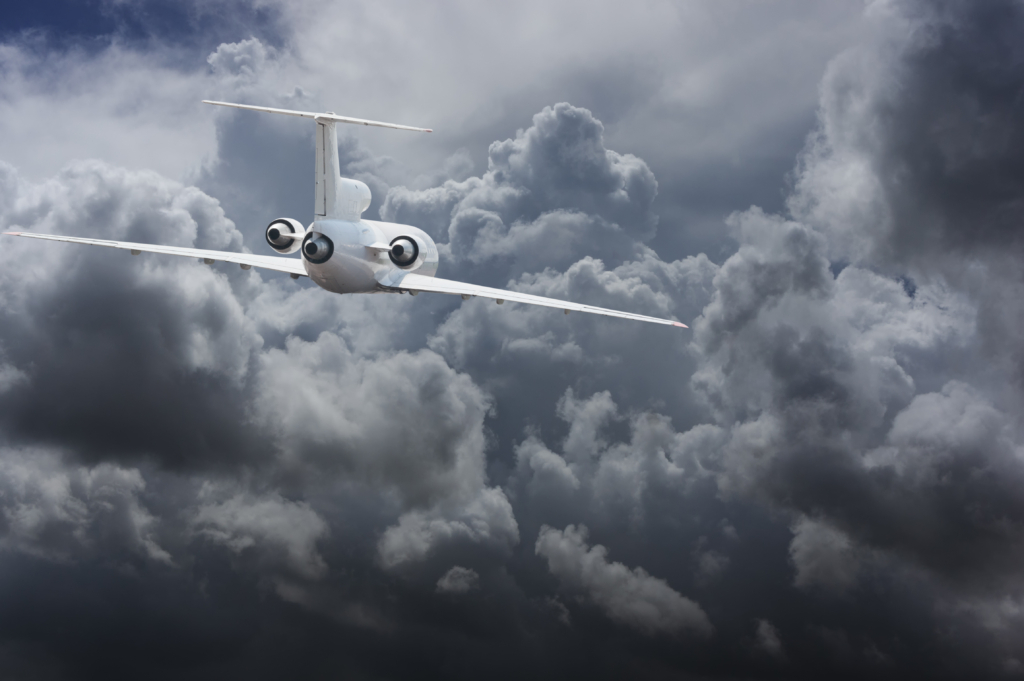
In severe encounters, turbulence can cause substantial changes in attitude and altitude. Extreme turbulence can impose loads capable of damaging an aircraft. However, neither a nearby storm nor a subsequent dive establishes that structural damage occurred.
Weather radar also has limitations. It primarily detects precipitation rather than directly displaying every hazardous air movement. A weak return does not necessarily mean smooth or harmless conditions, particularly near the upper parts of a storm.
FAA guidance consequently emphasises avoiding thunderstorms, rather than using radar to find a route through them. Datalink weather imagery is intended for broader route planning, not close-range manoeuvring between rapidly changing storm cells.
Why icing can still threaten aircraft at altitude
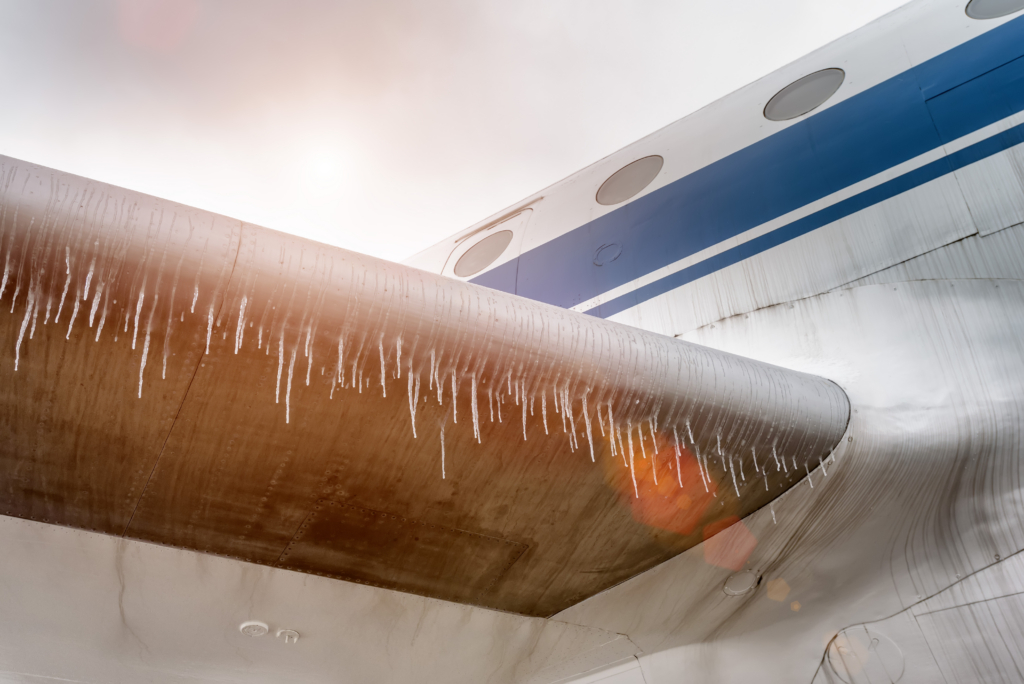
Conventional airframe icing occurs when supercooled liquid droplets strike an aircraft and freeze. Clear ice forms when the water spreads before freezing, producing a relatively transparent deposit that can change the shape of an aerodynamic surface.
The resulting loss of performance is not simply about added weight. Ice can disrupt airflow, reduce lift, increase drag and cause a wing or tail surface to stall at a lower angle of attack than it would when clean.
At very low temperatures, however, the type of moisture matters. Below approximately −40°C, conventional supercooled-liquid-water icing becomes physically unlikely, and ice crystals become the more relevant concern.
Ice crystals generally do not accumulate on cold external surfaces in the same way as liquid droplets. But in high concentrations, they can partially melt and accumulate within warmer parts of turbine engines or affect heated sensors. They can also be difficult for conventional airborne weather radar to detect.
The Learjet crew’s icing report therefore warrants investigation, but it does not establish what accumulated, where it formed or whether it affected control.
What is Mach tuck, and how does it differ from icing?
Mach tuck is a high-speed aerodynamic effect, not a form of icing.
As an aircraft’s Mach number increases, airflow over parts of its wing can become supersonic even while the aircraft itself remains below the speed of sound. Shock waves develop, and changes in the pressure distribution can shift the wing’s effective lifting force rearwards, creating a nose-down pitching tendency.
Associated airflow separation can also produce buffet and affect handling. Aircraft are designed with operating limits and control systems to manage their high-speed characteristics, but exceeding those limits can make recovery more difficult.
The Learjet crew reported overspeed during the descent. That makes its speed history relevant, but overspeed alone does not establish that Mach tuck occurred, or whether excessive speed preceded or followed the initial loss of control.
NTSB investigation will examine the sequence
The National Transportation Safety Board is investigating and is expected to provide an update at a briefing in West Palm Beach on 2 November.
Investigators will need to establish how the aircraft’s flight path, weather exposure and any aerodynamic or mechanical problems developed together. The crew’s reports and available tracking data describe a rapidly escalating emergency; they do not yet explain its cause.


