


New IAF chief puts Tejas and stealth fighters at centre of plan to rebuild combat strength

8 min read

India’s new Air Force chief has made restoring the service’s depleted fighter strength his top priority, placing the Tejas Mk1A, the larger LCA Mk2 and the country’s planned fifth-generation stealth fighter at the centre of his modernisation plans.
Air Chief Marshal Ashutosh Dixit, who took charge as the 29th Chief of the Air Staff on 1 November, said the Indian Air Force (IAF) would pursue indigenous aircraft, weapons and sensors while rebuilding its combat squadrons towards their authorised strength.
“The Tejas Mk-1A and Mk-2, AMCA (a fifth-generation stealth fighter jet), and Indian weapons and sensors are our highest priority,” Dixit said in his first public comments after assuming command.

“We will fight with Indian solutions, and we will hold them in numbers that meet our operational demands. Our responsibility is to fight and win, but most importantly it is to deter conflict through credible air power.”
His remarks come as the IAF faces one of its most difficult fleet renewal periods in decades. Ageing aircraft are being retired, replacements have been delayed and several of the fighters expected to form the backbone of the future fleet remain years away from operational service.
Dixit has inherited an air force operating around 29 fighter squadrons against an authorised strength of about 42. The shortage has become increasingly pressing as India seeks to maintain its combat capability along its borders with China and Pakistan.
“Every squadron, every radar, every air defence unit along with each and every air warrior must be ready to respond at a moment’s notice,” Dixit said. “Restoring our combat strength towards the sanctioned level will be my foremost task.”
Tejas Mk1A deliveries remain the immediate challenge
The most urgent requirement is getting the Tejas Mk1A into operational service in sufficient numbers.
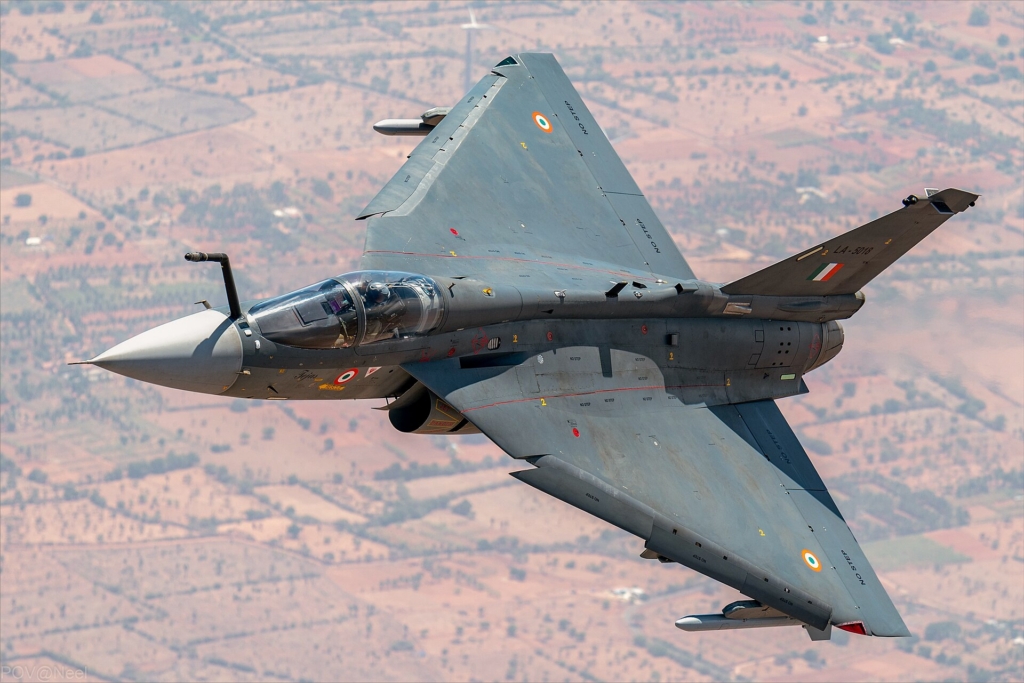
Developed by Hindustan Aeronautics Limited (HAL), the single-engine fighter is an improved version of the original Tejas, incorporating an active electronically scanned array radar, upgraded electronic warfare equipment and improved weapons capability.
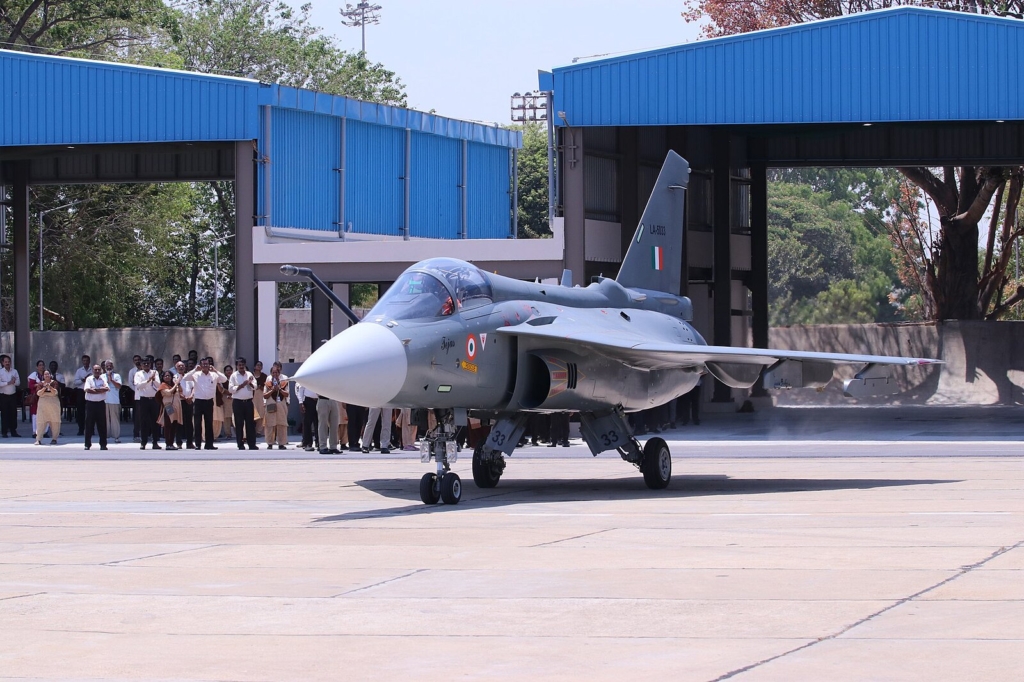
India has ordered 180 Mk1A aircraft under two contracts. The aircraft are intended to replace ageing fighters and provide the IAF with a larger fleet of domestically manufactured combat jets.
Deliveries, however, have fallen behind schedule, partly because of interruptions in the supply of GE Aerospace F404-IN20 engines from the United States.
In February, HAL said five Mk1A fighters were ready for delivery after meeting key contractual requirements. Another nine aircraft had been built and flown but were awaiting engines.
The delays have exposed a problem that extends beyond aircraft manufacturing. Even when airframes are available, the IAF needs a reliable supply of engines, spare parts and maintenance facilities to keep them operational.
As Aerospace Global News reported in April, GE Aerospace and the IAF signed an agreement to establish an F404 engine repair and overhaul facility in India. The IAF will own and operate the depot, while GE will provide training, equipment and technical support.
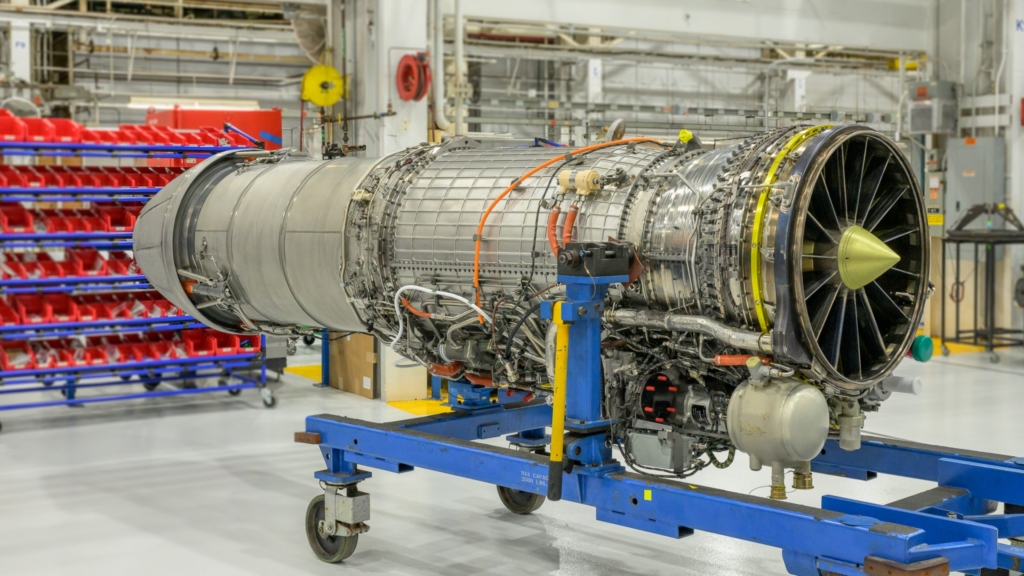
The arrangement is intended to reduce the need to send engines overseas for major repairs and improve the availability of the Tejas fleet.
The Mk1A is therefore the programme most likely to influence the IAF’s squadron strength in the near term. The larger Mk2 and AMCA remain development projects.
LCA Mk2 targets first flight in 2027
India’s next step is the LCA Mk2, a substantially larger and more capable aircraft than the existing Tejas.
The medium-weight fighter is being developed by the Aeronautical Development Agency (ADA) and HAL to eventually replace aircraft such as the Jaguar, Mirage 2000 and MiG-29.
According to current planning, the oldest Jaguars are expected to begin retiring between 2028 and 2031, with the upgraded DARIN III aircraft likely to remain operational slightly longer.
To avoid a sudden drop in squadron strength, the IAF is now considering extending the service life of its Mirage 2000 fleet beyond its original retirement timeline.
“Initially expected to retire around 2035, the aircraft may now remain operational until 2038 or even 2039, providing a critical buffer as newer aircraft enter service,” an official at the Ministry of Defence had informed AGN recently.
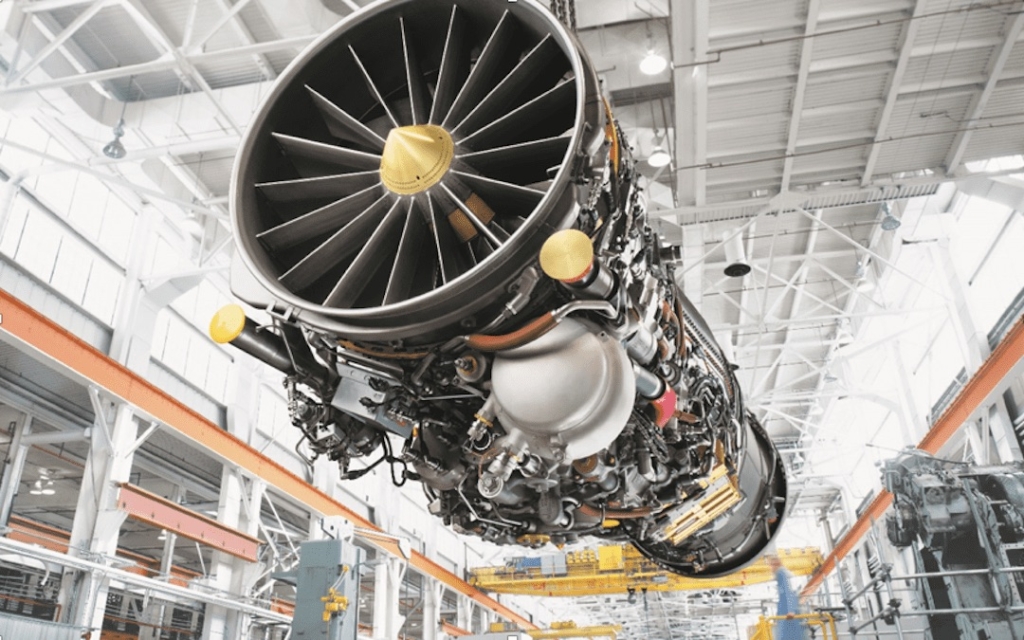
Unlike the Mk1A, which uses the GE F404 engine, the Mk2 will be powered by the more powerful GE F414 engine. It is designed to carry heavier weapons loads, operate over longer distances and undertake a wider range of air combat and strike missions.
The aircraft is expected to incorporate an indigenous Uttam active electronically scanned array radar, an infrared search-and-track system and Indian-developed weapons. The programme has not yet reached its first flight.
Defence Secretary Rajesh Kumar Singh recently indicated that the Mk2 prototype is expected to fly between June and September 2027, reflecting a slippage of several months in the development schedule.
That timetable is important, but a successful first flight would mark the beginning of flight testing rather than the aircraft’s entry into service. The prototype would still have to undergo extensive trials before production aircraft could be delivered to operational squadrons.
The IAF is therefore unlikely to receive meaningful numbers of Mk2 fighters in time to resolve its immediate squadron shortage.
India’s stealth fighter aims for 2028 first flight
The Advanced Medium Combat Aircraft (AMCA) is the most ambitious of India’s three indigenous fighter programmes.
Designed as a twin-engine, fifth-generation aircraft, the AMCA is intended to combine stealth characteristics with advanced sensors, electronic warfare systems and the ability to carry weapons internally.

Internal weapon bays are particularly important because weapons carried beneath an aircraft increase its radar signature. The AMCA will also have external hardpoints for missions where carrying a larger weapons load takes priority over remaining difficult to detect.
The initial version is planned to use GE F414 engines, while a later variant is expected to incorporate a more powerful engine developed in India.
Defence Secretary Singh has indicated that the first AMCA prototype is scheduled to fly in September 2028.The programme is still at the stage of selecting an industrial partner to build its prototypes.
As AGN reported in September, three private-sector teams were competing for the development and production contract after the bid deadline was extended to 30 October.
Tata Advanced Systems is competing independently, while Larsen & Toubro has partnered with Bharat Electronics and Dynamatic Technologies. A third consortium comprises Bharat Forge, BEML and Data Patterns.
The selected company will work with ADA to build five flying prototypes and a structural test article. The programme envisages an extensive flight-test campaign before the aircraft can enter production.
The timetable leaves a substantial gap between the IAF’s immediate requirement for more fighters and the arrival of an operational Indian stealth aircraft.
Falling squadron numbers increase pressure on procurement
The scale of that gap was highlighted by Dixit’s predecessor, Air Chief Marshal A.P. Singh, shortly before his retirement.
As AGN reported in October, Singh said the IAF needed to induct between 36 and 40 fighters annually over the next few years to rebuild its combat strength.
“We need to induct two fighter squadrons every year. That means anything between 36 and 40 aircraft should be produced and inducted,” he said.
He also acknowledged that India might have to consider additional foreign fighters if its indigenous programmes slipped further.
“We may have to look at other fighter platforms in case of delays in AMCA fifth-gen and other programmes to fill in the gaps,” Singh told reporters.
Russia has offered India the Su-57 fifth-generation fighter, although Singh said no decision had been taken.

The proposed purchase is intended to help address the squadron shortage while domestic fighter production expands. Negotiations have yet to produce a final contract.
AGN previously reported that access to sensitive Rafale software had emerged as a point of disagreement between India and France. The issue concerns India’s ability to integrate indigenous weapons and modify certain aircraft systems without depending entirely on the manufacturer.
The IAF’s challenge is therefore not simply choosing between Indian and foreign fighters. It must obtain enough aircraft quickly while building a domestic industry capable of producing, maintaining and upgrading them over several decades.
New chief outlines VAYU modernisation plan
Dixit has set out his priorities under a framework called VAYU ( also means AIR in Hindi language), covering vigilance and readiness, self-reliance, innovation and unity of effort.
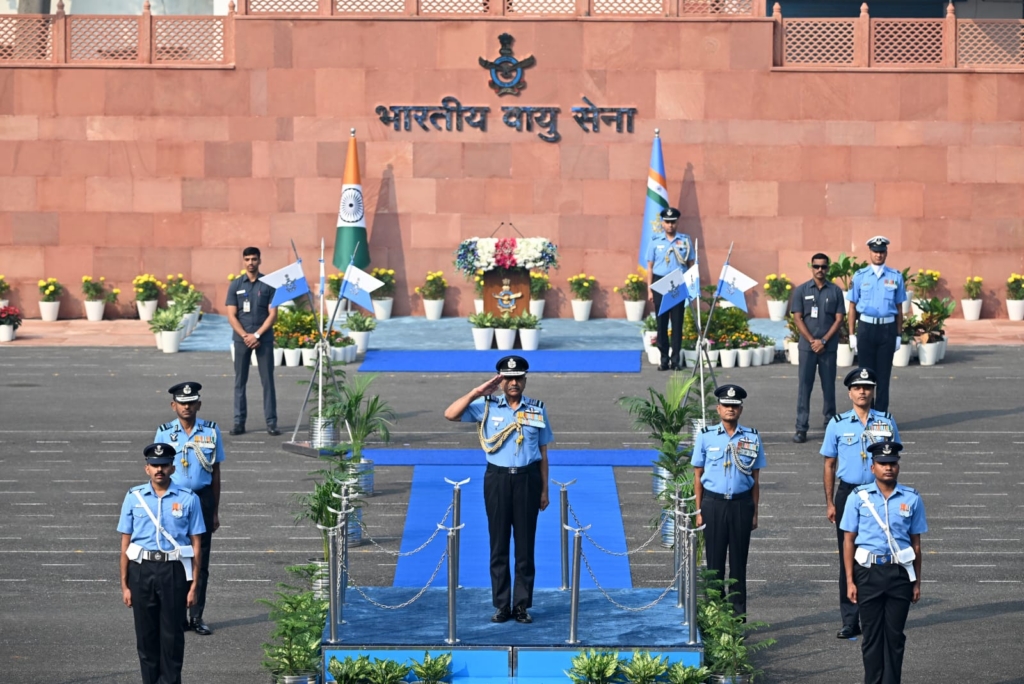
The plan includes greater use of artificial intelligence in command-and-control systems, stronger counter-drone defences, improved maintenance and closer operational coordination with the Army and Navy.
“U stands for unity of effort,” Dixit said. “In step with the vision of JAI — Jointness, Aatmanirbharta and Innovation — we will plan and fight as one alongside our Army, our Navy and our national agencies.”
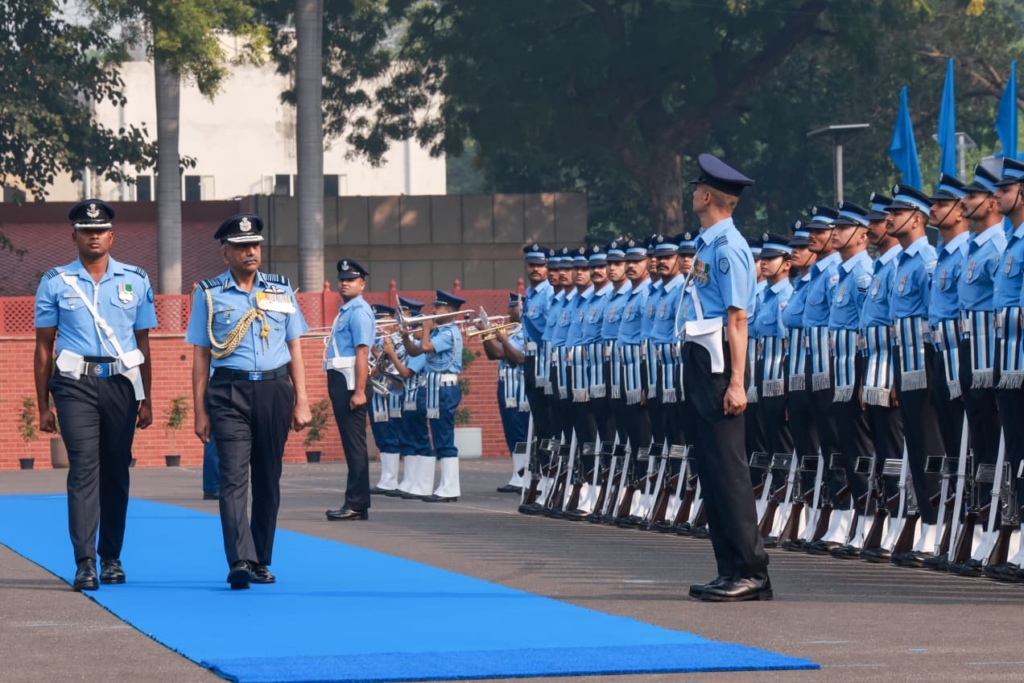
An experimental test pilot and qualified flying instructor with more than 3,500 flying hours, Dixit has served as Vice Chief of the Air Staff, commander of Central Air Command and Chief of Integrated Defence Staff to the Chairman Chiefs of Staff Committee.
His immediate test will be the pace at which new fighters reach operational squadrons.
Sign up for our newsletter and get our latest content in your inbox.


More from


November 2, 20264 min read


