


Russia loses 13 military aircraft in five weeks, mostly on the ground

4 min read
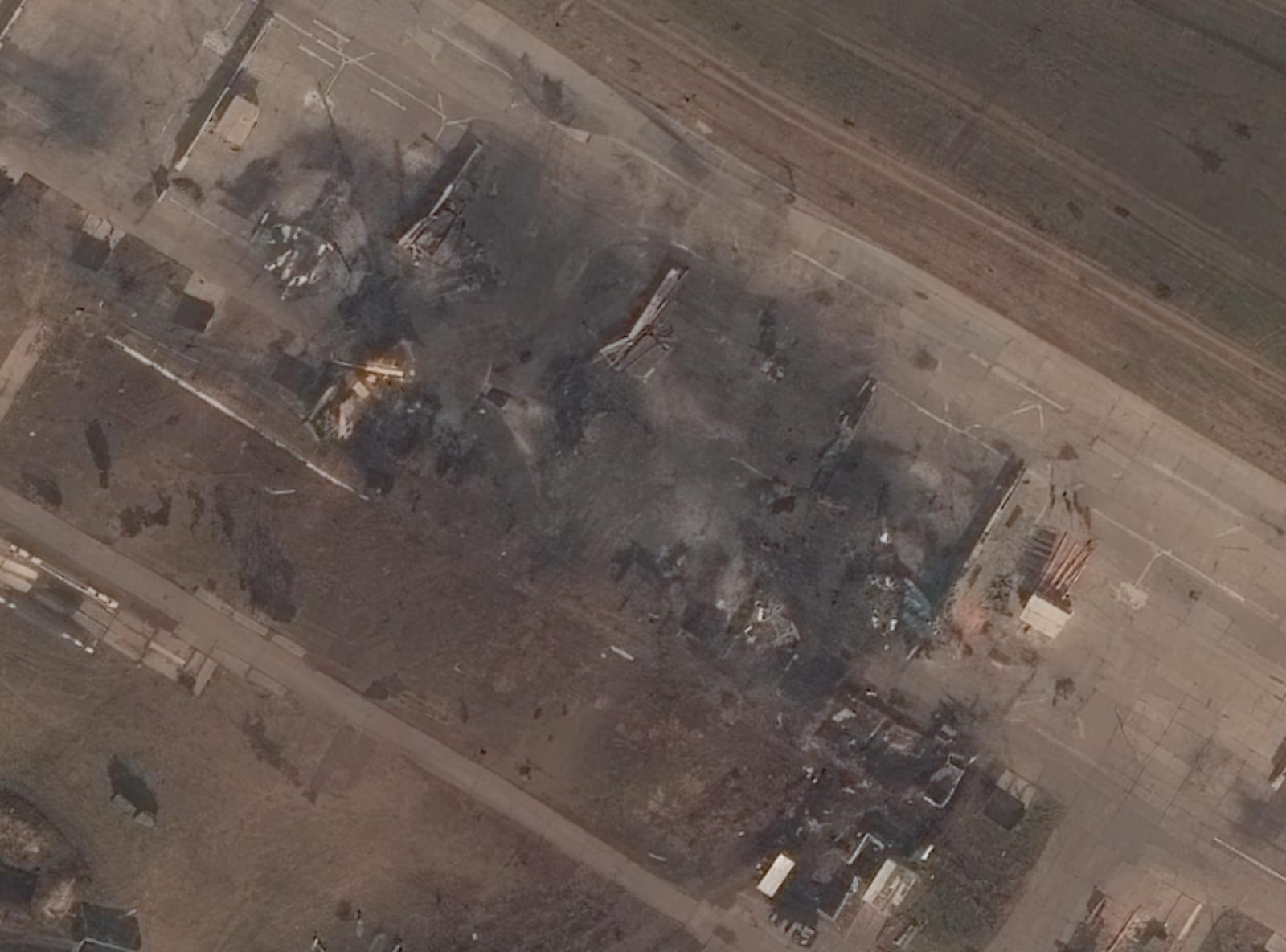
The last month has been particularly painful for the Russian Air Force, with Ukraine stepping up its ability to rapidly target Russian fighter jets on the ground, coming alongside a series of accidents. Over the last month, Russia appears to have lost around 13 modern fighter jets and a rare bomber, with several more damaged.
Around half of these are Russia’s Su-34 fighter-bomber, which has emerged as a workhorse of the Russian Air Force. Ukraine estimates Russia has around 140 examples in service.
Russia’s terrible month for aviation
In late September, Ukraine destroyed a Russian Tu-95MS bomber on the ground and soon after destroyed what appears to be a Su-35S air superiority fighter and a Su-34 fighter-bomber while parked.
In mid-October, AGN reported that Ukraine claimed to have destroyed four Russian Su-34s and damaged two more. Satellite imagery appeared to confirm four losses, with the two damaged (if they existed) towed away.
On the 29th of October, satellite imagery confirmed Ukraine had carried out another attack on Russia’s Marinovka Air Base, destroying one, perhaps two Su-34s.
| Date | Combat aircraft type — destroyed | Damaged | Location |
| 29 Sep 2026 | 1x Tu-95MS | — | Near Ukrainka air base, Amur region |
| 4 Oct 2026 | 1x Su-34; 1x Su-35 | — | Khanskaya air base, Adygea |
| 14–15 Oct 2026 | 4x Su-34 | 2x Su-34 (unconfirmed) | Borisoglebsk air base, Voronezh region |
| 21 Oct 2026 | 2x Su-30SM | 1x Su-30SM | Kaliningrad region |
| 29 Oct 2026 | 2x Su-34 | — | Marinovka air base, Volgograd region |
| 29 Oct 2026 | 1x Su-57 | — | Akhtubinsk air base, Astrakhan region |
| 30 Oct 2026 | 1x Mi-8 helicopter | — | Luhansk region |
| Total | 13 | 3 |
Also on the 29th, satellite imagery appears to show a Su-57 burned down under unclear circumstances at Akhtubinsk air base.
The 21st was a bleak day with two Su-30MS fighter jets crashing. One Russian Naval Aviation Sukhoi Su-30SM crashed near Timofeevka, while another went down in Kaliningrad. Both crashes were captured on video.
Later images appear to show a Russian Su-30MS fighter jet with a badly damaged wing, suggesting the Kaliningrad incident was a mid-air collision that damaged the second aircraft.
Finally, on the 30th of October, Ukrainian drones destroyed a Russian Mi-8 helicopter after it landed.
The emerging Neptune-D long-range strike
Perhaps what is most concerning for Russia is not the losses in themselves, but Ukraine’s improving capability to effectively target aircraft on the ground in a timely manner.
Marinovka airfield is over 400 kilometres from Ukraine, demonstrating how far the Neptune strikes can be carried out.
Ukraine claims the latest Neptune-D variant has a range of up to 1,000 kilometres, which is 3.5x that of the original anti-ship missile that sank the Moskva flagship. Demonstrated ranges for the Neptune-D are now up to 600 kilometres.
Two Su-34 wrecks are clearly visible (red arrows), while the remains of two other, destroyed in the middle, have already been partially cleared by a crane (yellow). Apparently two sets of mangled wings (green) form the destroyed Su-34s have been moved next to protective barriers. https://t.co/nxCIs2Xp4u
— The Military Watch (@MarcinRogowsk14) October 15, 2026
At the start of 2026, AGN reported on a newly compiled compilation of Ukrainian drone strikes on Russian aircraft in Crimea. While impressive, these aircraft were often old Soviet-era aircraft (e.g., Su-24s), and some may have been decommissioned aircraft left as decoys.
The aircraft lost in the last few weeks are from Russia’s core modern fleet of fighter jets.
The intense strain on the Russian Air Force
Russia’s air force is currently under enormous operational strain, with the noted Russian Telegram channel, Fighter-Bomber, claiming Russian fighters are flying “thousands” of flight hours each year.
Peacetime flight hours for fighter jets are around 200 hours, and the airframe design life for modern Russian fighter jets is reported to be around 6,000 to 8,000 flight hours.
If Russia can’t find an effective way to counter Ukraine’s increasingly successful strikes, then it may have to pull its fighter further back from the front. This will decrease its response time and loiter time, while increasing its flight hours.
On 21 October 2026, a Russian Naval Aviation Sukhoi Su-30SM crashed near Timofeevka, Chernyakhovsky Raion, Kaliningrad Oblast, Russia. Both crew members ejected. https://t.co/w9O2Cd2UBI
— The Military Watch (@MarcinRogowsk14) October 21, 2026
Another impending issue for Russia is that Sweden is expected to start transferring 16 older Gripen C/D fighter jets to Ukraine in the coming months. These are reported to be coming with the MBDA Meteor air-to-air missile, which is considered one of the best in service.
The Meteor is expected to significantly increase the range at which Ukrainian fighter jets will be able to engage Russian fighters.
Sign up for our newsletter and get our latest content in your inbox.


More from

November 2, 20264 min read


