


Learjet 60 crash: What is a horizontal stabiliser, and why is it essential to flight?

4 min read
Following yesterday’s tragic crash of a Learjet 60 in Florida, attention is turning to a piece of the aircraft that appears to be missing in the harrowing crash footage.
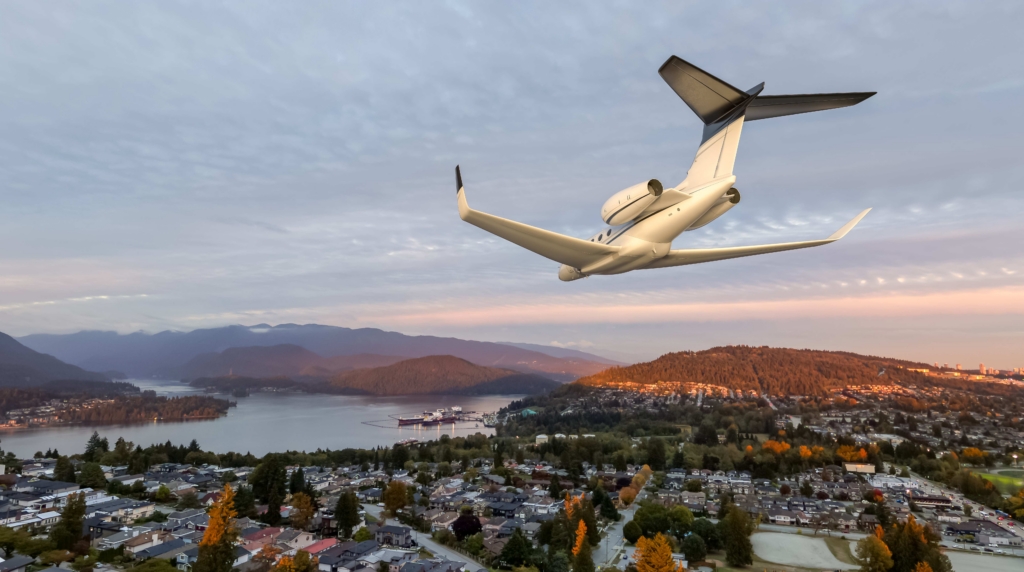
The horizontal stabiliser is a small, wing-like surface that sits on the tail and keeps the aircraft in balance. On the Learjet 60, it sits at the top of the vertical tail fin, forming the crossbar of the aircraft’s distinctive T-tail.
For any conventionally configured aircraft, this piece of the tail is absolutely essential to safe and controlled flight. While the wings provide lift, the horizontal stabiliser is how pilots maintain and control the angle of the aircraft’s nose.
How a horizontal stabiliser works
To understand the role of a horizontal stabiliser, it helps to think of an aircraft as a seesaw that pivots around its centre of gravity.
Forces acting on the wings, fuselage and engines can affect the aircraft’s pitch – the angle of its nose in relation to the horizon. Adding a horizontal stabiliser creates an additional aerodynamic force a long way to the rear of that pivot, balancing out these forces.
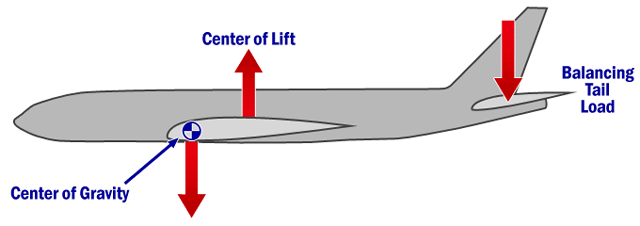
In normal flight conditions, the force generated by the horizontal stabiliser pushes the tail downwards, counterbalancing the nose-down tendencies of aircraft. It also helps control and alleviate unwanted changes in pitch caused by disturbances such as turbulence.
The tail assembly, also known as the rear empennage, has inbuilt control surfaces pilots can use to maintain safe progress of the flight. The vertical stabiliser features the rudder, which controls the side-to-side movement of the plane, or yaw. The horizontal stabiliser has elevators, which control the pitch up and down.
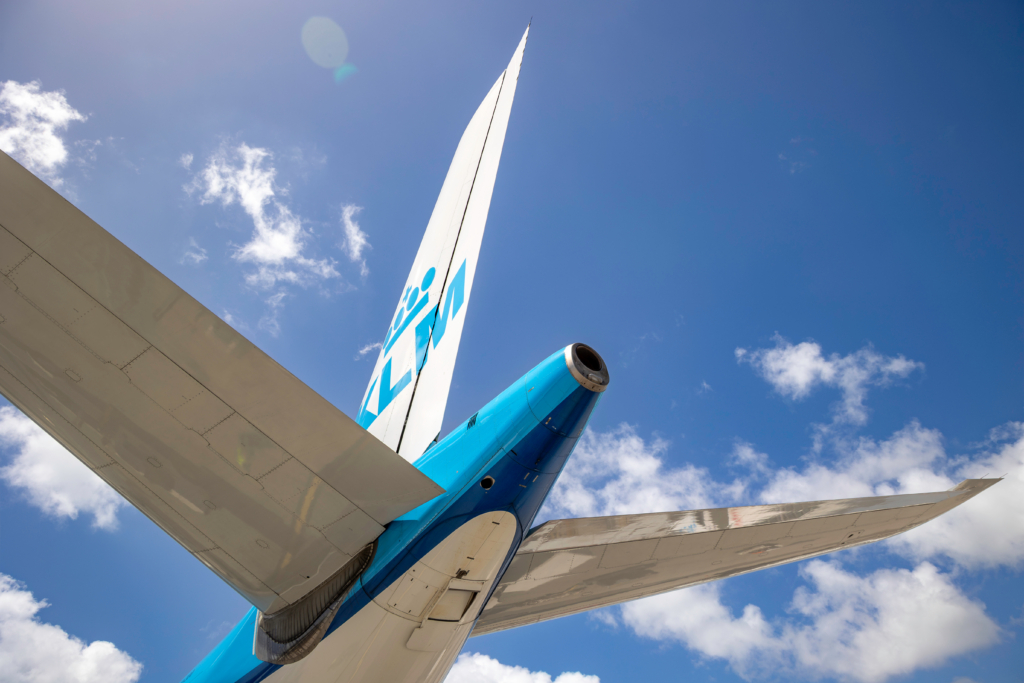
Most aircraft have a horizontal stabiliser, although they may look very different. Modern commercial planes like the Boeing 737 and Airbus A320 have a conventional stabiliser, located at the base of the vertical stabiliser. But older aircraft and some private jets have a T-tail stabiliser, positioned at the top of the vertical stabiliser.
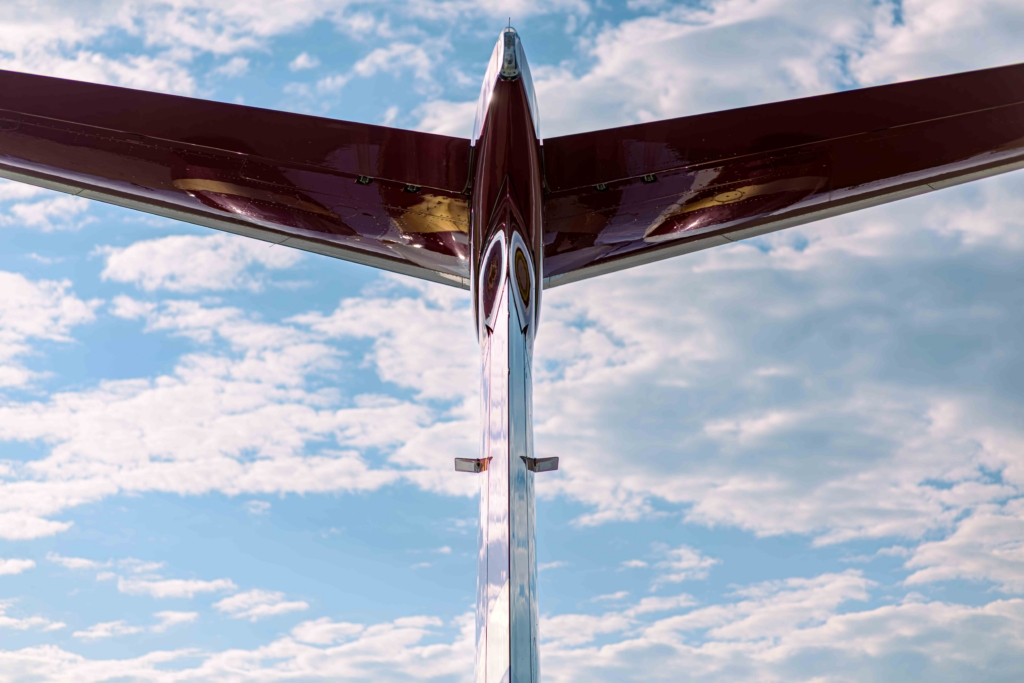
Wherever it is located, this part of the aircraft is vital to controlled flight. If it becomes stuck, malfunctions or tears off, the consequences can be disastrous.
What happens when an aircraft loses its horizontal stabiliser?
A damaged or malfunctioning horizontal stabiliser can lead to anything from a manageable trim failure to an immediate and total loss of control. It all depends on what’s happened to that piece of tail and whether it can still produce a balancing force.
If the part suddenly disappears or becomes detached, the nose of the aircraft can pitch down sharply. With no elevators to use, the pilots may lose the pitch-control authority needed to recover.
An example of this was the tragic crash of a Dan Air Boeing 707 in 1977, where the right side horizontal stabiliser detached from the empennage on approach to the airport at Lusaka, Zambia. Eyewitnesses saw a large piece of the tail separate, and the aircraft immediately pitched nose down and impacted the ground, killing all six on board.
In some cases, the stabiliser doesn’t need to detach entirely for the results to be disastrous. In 2000, an MD-83 operating Alaska Airlines Flight 261 suffered a failure of the jackscrew that controlled the elevators in the horizontal stabiliser. The resulting loss of control caused an unrecoverable dive; the aircraft impacted the Pacific Ocean, and all 88 people on board lost their lives.
There have also been incidents involving issues with the horizontal stabiliser where trim has jammed or run away, or ice has affected its functionality.
What happened to the horizontal stabiliser in the Learjet 60 Florida crash?
Observers have noted that the footage from the Learjet crash appears to show the horizontal stabiliser missing. The aircraft had reported moderate turbulence prior to the dive, but that doesn’t necessarily mean the stabiliser separated in flight.
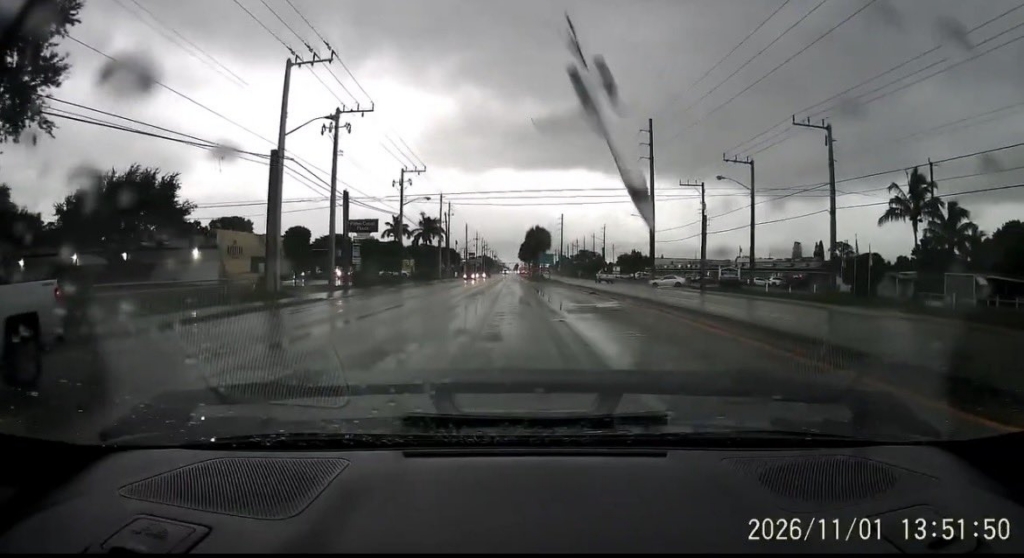
The reported turbulence and the pilot’s mention of icing to air traffic control could have resulted in a weather related upset that was unrelated to the missing stabiliser. What we do know is that the aircraft plummeted to the ground very fast, with Flightradar data suggesting speeds of more than 32,000 feet per minute at its peak. Such extreme speeds could have resulted in a separation of the horizontal stabiliser on descent.
Had the horizontal stabiliser failed, detached or otherwise malfunctioned in flight, a sudden nose down dive would be a likely outcome, but it doesn’t necessarily explain why this accident occured. Should this be the case, there is a chance investigators will find this part of the aircraft away from the crash site, somewhere along the flight path.
Of course, there is also the possibility that the low resolution dashcam footage of the crash just didn’t capture the horizontal stabiliser due to the speed of the crash. A thin surface such as this could be difficult to distiguish in such footage.
It is now the job of the air crash investigation team to establish the cause of the incident. The complete destruction of the wreckage on impact will make that job harder, but flight data recorders, cockpit voice recorders and other data will add valuable evidence to the outcome of this tragic event.
Sign up for our newsletter and get our latest content in your inbox.


More from


November 2, 20264 min read


