Where are the USAF’s retired KC-10 Extenders now – and how many could fly again?

5 min read
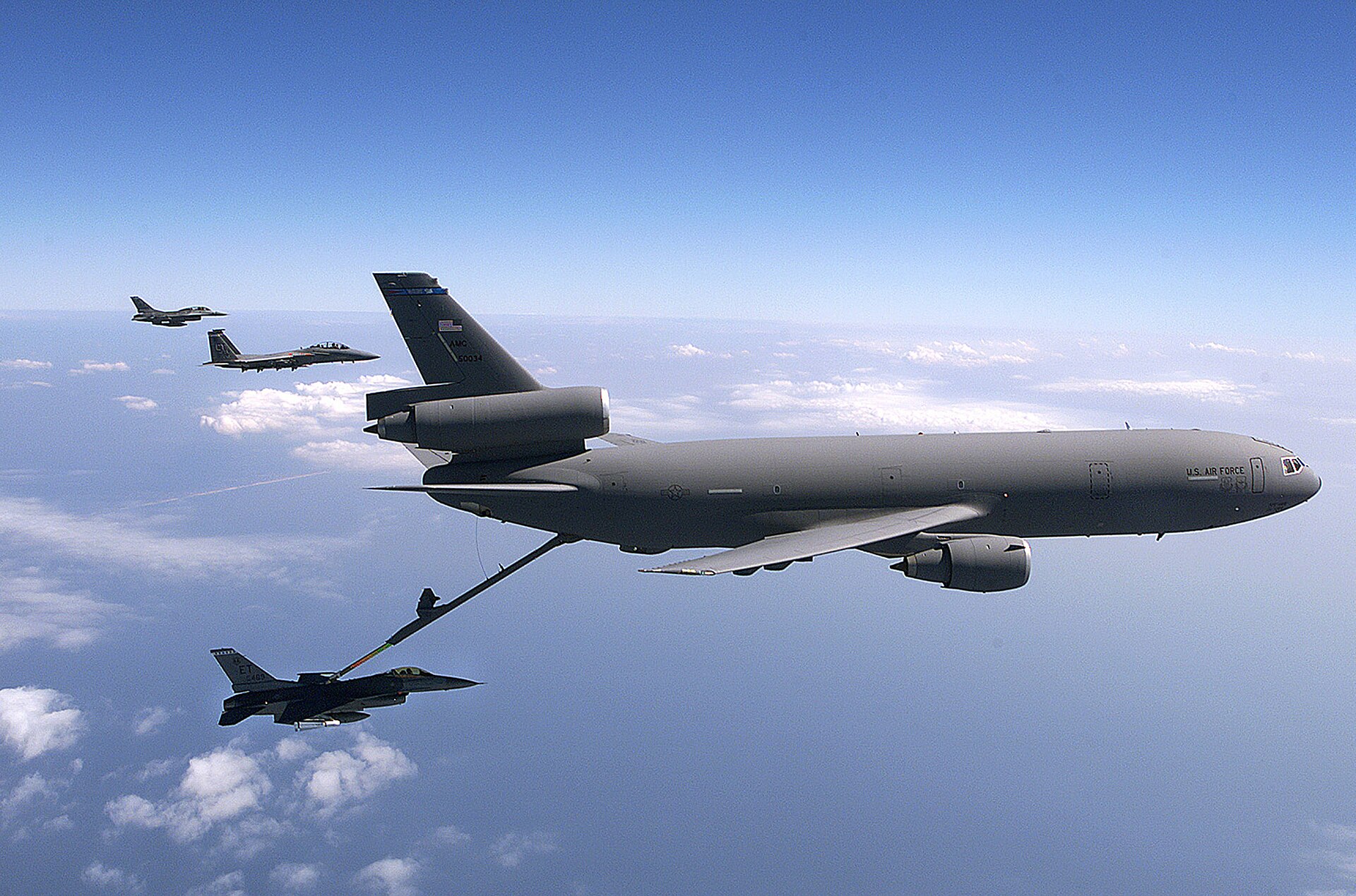
The US Air Force retired its last KC-10 Extender in September 2024, ending more than four decades of KC-10 operations. While most retired KC-10 aircraft were sent to storage at Davis-Monthan Air Force Base, several former USAF KC-10s could return to service with Omega Air or a North African military operator.
Ten former USAF tankers have been registered to private aerial refuelling company Omega Air. A separate proposal could see up to four more USAF aircraft transferred to a North African operator.
The renewed interest in the fate of the KC-10 fleet follows the return to flight of former USAF KC-10A 86-0034, now registered N82247, on 20 October 2026.
As AGN previously reported, the aircraft departed the 309th Aerospace Maintenance and Regeneration Group (AMARG) facility at Davis-Monthan Air Force Base in Arizona and flew to San Antonio, Texas.
It was the first confirmed flight of a retired USAF KC-10 under civilian ownership. The aircraft had been in storage since May 2023.
Why was the KC-10 retired?
The KC-10 Extender was developed from the McDonnell Douglas DC-10 and entered USAF service in 1981. The tanker combined strategic airlift capability with aerial refuelling, allowing it to support long-range combat and transport operations worldwide.
The Air Force retired the KC-10 as part of its fleet modernisation programme, replacing the aircraft with the Boeing KC-46A Pegasus.
What happened to the USAF’s 59 surviving KC-10 Extenders?
The USAF received 60 McDonnell Douglas KC-10A Extenders between 1979 and 1987. One aircraft was destroyed in a ground fire at Barksdale Air Force Base in Louisiana in 1987, leaving 59 in the fleet.
The USAF began retiring the KC-10 in 2020, as it introduced the Boeing KC-46A Pegasus. The final operational Extender departed Travis Air Force Base in California on 26 September 2024.
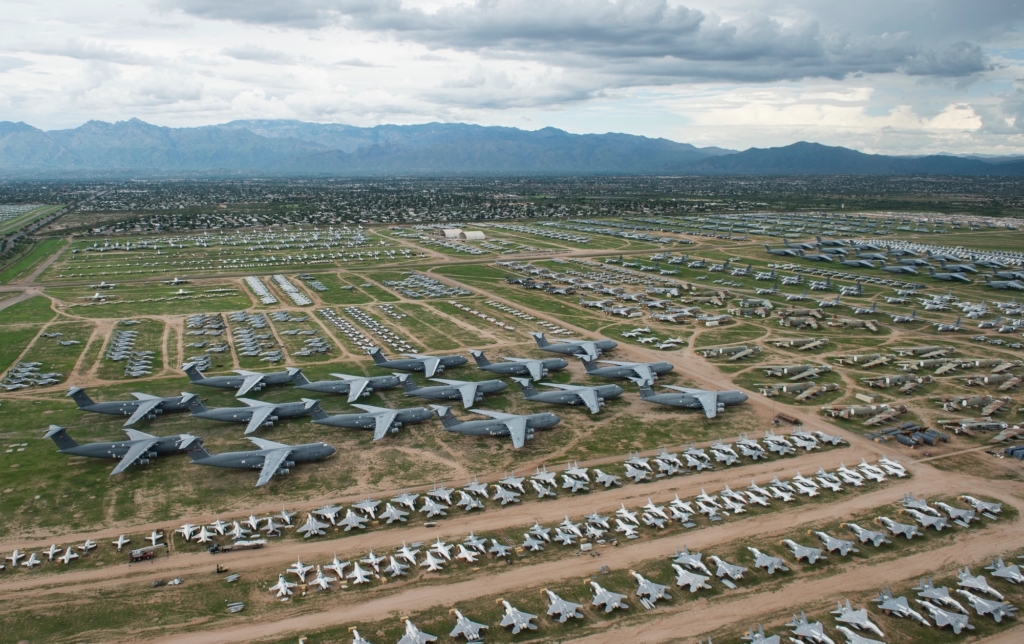
Most retired KC-10s were sent to AMARG at Davis-Monthan, where military aircraft are stored, maintained for potential future use, dismantled for parts or prepared for disposal.
Not every aircraft is in the same condition. Some have been stripped of equipment, while others have been preserved for possible restoration. A small number have also been retained for museum display.
Which ten former USAF KC-10s has Omega Air acquired?
Omega Air, a US company that provides contracted aerial refuelling services, acquired ten former USAF KC-10s following a government auction in 2025.
The US General Services Administration offered ten aircraft for sale in April 2025, with bidding closing on 6 May.
The aircraft were offered in non-flyable condition. Each was missing one wing-mounted engine and its aerial refuelling boom, which was removed to support the remaining USAF fleet.
The FAA aircraft registry identifies ten McDonnell Douglas DC-10-30F aircraft registered to Omega Air Inc., based in Selma, Texas, during September and October 2026.
The registrations and corresponding manufacturer serial numbers are:
| Civil registration | Manufacturer serial number | Registration date |
|---|---|---|
| N8209 | 48209 | 29 September 2026 |
| N8205 | 48205 | 29 September 2026 |
| N8222 | 48222 | 29 September 2026 |
| N8310 | 48310 | 29 September 2026 |
| N8306 | 48306 | 30 September 2026 |
| N9218 | 48218 | 30 September 2026 |
| N8249 | 48249 | 1 October 2026 |
| N8308 | 48308 | 1 October 2026 |
| N82247 | 48247 | 6 October 2026 |
| N8201 | 48201 | 9 October 2026 |
Source: FAA aircraft registration records. Manufacturer serial numbers are distinct from USAF military serial numbers.
N82247 has been confirmed as former USAF KC-10A 86-0034. The remaining nine civilian registrations have not yet been independently matched to their former USAF tail numbers.
The FAA records confirm the aircraft are registered to Omega, but do not provide information on their airworthiness or whether they are being restored for operational service.
When will Omega Air’s KC-10 tankers return to service?
Omega already operates DC-10-derived aerial refuelling aircraft, including former Royal Netherlands Air Force KDC-10s. Its existing fleet provides an operational and maintenance base for the larger KC-10 programme.
The flight of N82247 on 20 October demonstrated that at least one retired KC-10 could be returned to flying condition after several years in storage.
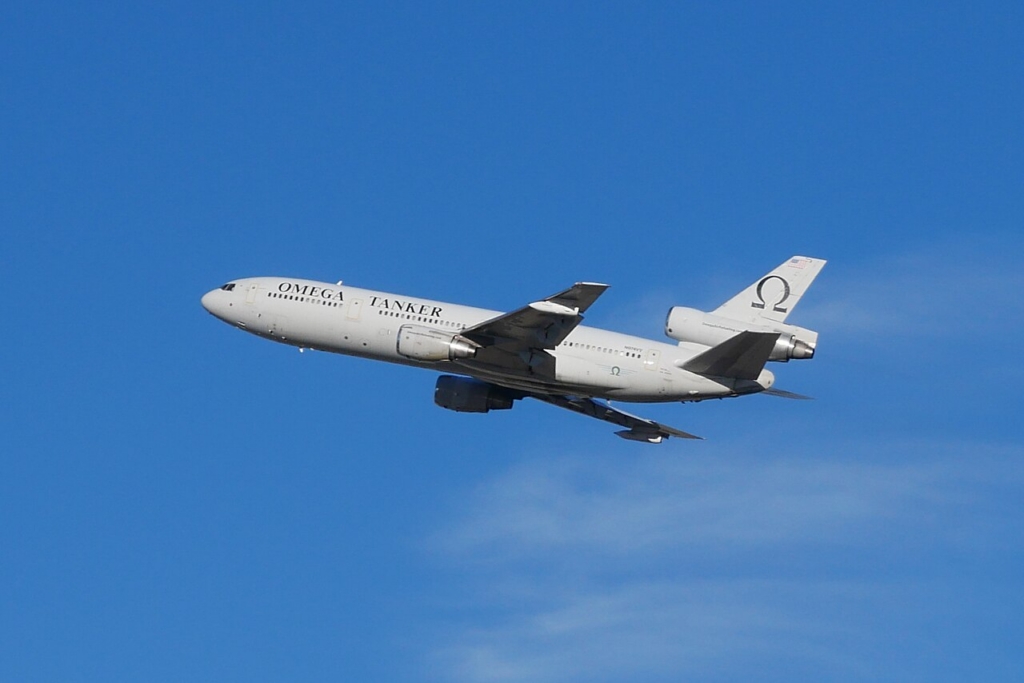
However, the aircraft flew without its original aerial refuelling boom. Its return to flight does not mean it is ready to conduct operational refuelling missions.
Omega has not publicly confirmed a restoration schedule for the remaining nine aircraft, identified which aircraft will fly next or said how many it intends to return to commercial refuelling service.
The company could restore more aircraft or keep some for spare parts.
Could four more KC-10 Extenders return to service in North Africa?
A separate US government proposal could see up to four retired KC-10s returned to military service for an unnamed North African operator.
On 7 October 2026, the US Air Force Life Cycle Management Centre issued a request for information seeking contractors capable of regenerating and supporting the aircraft.
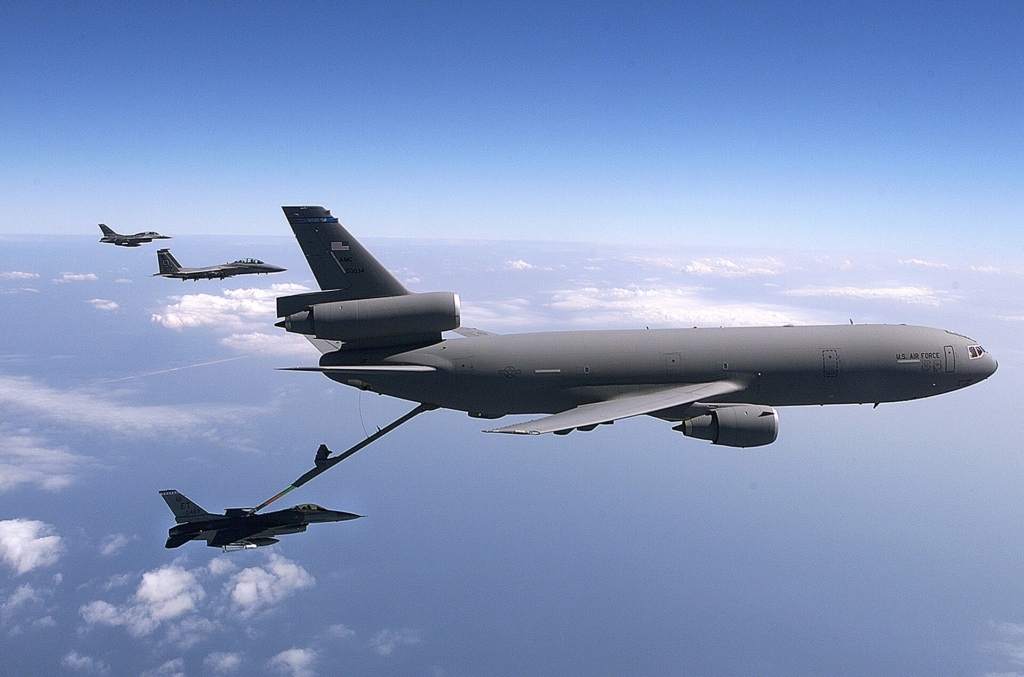
The contracting notice, updated on 27 October, calls for aircraft restoration, depot-level maintenance, flight clearance, international delivery, crew and maintenance training, and contractor logistics support.
The proposed sustainment programme would run for three to five years.
The aircraft would be transferred under the US Excess Defence Articles programme, which allows surplus US military equipment to be supplied to foreign partners.
The prospective recipient has not been officially identified. Egypt and Morocco have been mentioned as possible candidates by the War Zone and other reports, but the US Air Force describes it only as a North African partner.
How many retired USAF KC-10s could eventually fly again?
Of the 59 KC-10s that survived their USAF careers, one is confirmed to have returned to flight under civilian ownership.
Omega’s ten-aircraft acquisition means at least some of these USAF KC-10 tankers could fly again. The North African proposal could restore up to four more aircraft to service.
However, the number of KC-10 tankers that will actually fly again is still unknown.
The aircraft have spent years in storage. Restoring them will require engines, maintenance work, replacement components and, for aerial refuelling operations, suitable refuelling equipment. The cost of that work could determine how many are restored and how many are scrapped for spare parts.
For now, N82247 is the only former USAF KC-10 confirmed to have flown again. The type’s future will depend on whether Omega returns another aircraft to flight and whether the USAF proceeds with the proposed North African transfer.