US F-16 fighters set to carry new hypersonic Blackbeard missile

4 min read
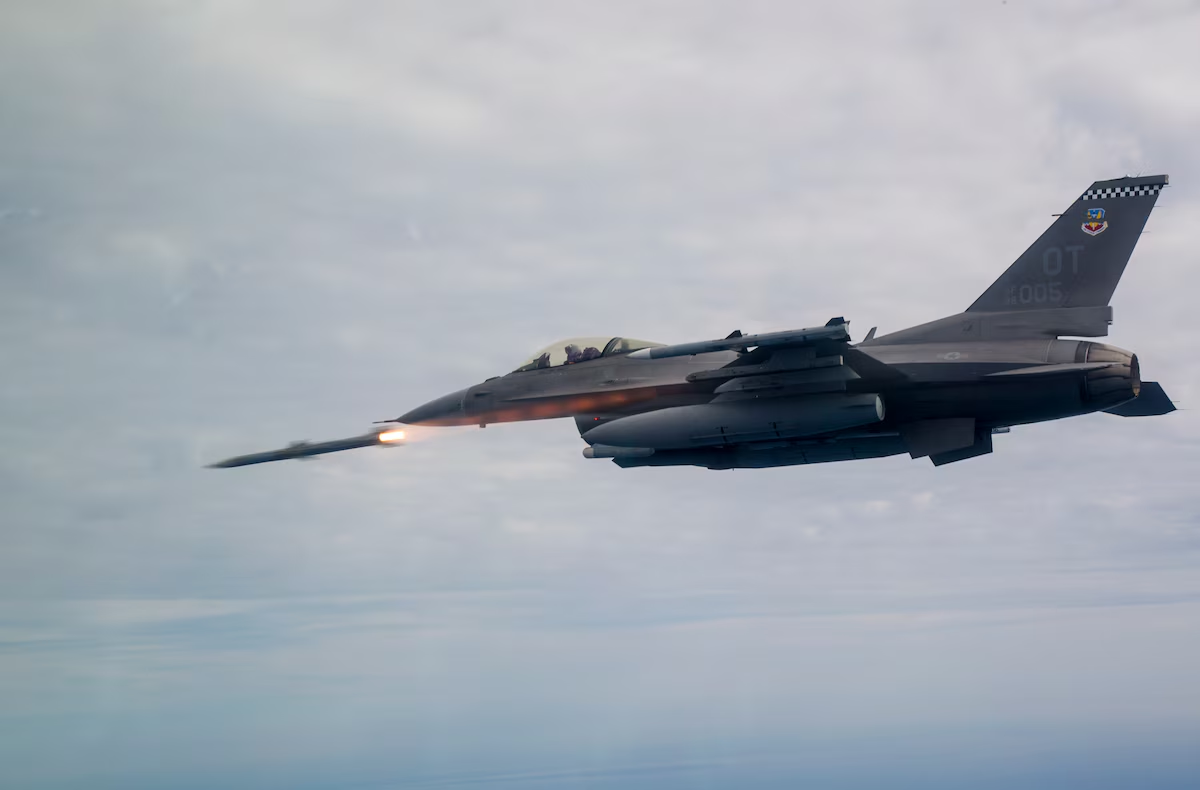
The US Air Force has awarded a contract to integrate the new, low-cost Blackbeard hypersonic missile into its large F-16 fleet. The USAF and Navy are currently racing to develop and integrate multiple hypersonic missiles into their fighter jets amid a wider race with China and other countries.
Air Force follows Navy to integrate Castelion onto F-16 fleet
Yesterday, the US defence-tech company, Castelion, posted that it “has been awarded a contract modification to its existing work with the Air Force Research Laboratory to begin Blackbeard integration activities with the F-16.”
No value, timeline, or other details were provided, although it builds on earlier Air Force and AFRL investments that had totaled at least $37.2 million by September. This was for the continued development of Blackbeard, a low-cost, mass-producible hypersonic missile. Work for these prior contracts runs through June 2028.
The F-16 is a US Air Force 4th-generation workhorse that doesn’t need to carry munitions internally like the F-35 to preserve its stealth profile. Its ability to carry missiles externally makes integration more straightforward. That said, current USAF Blackbeard work also covers F-35A compatibility.
Castelion has been awarded a contract modification to its existing work with the Air Force Research Laboratory to begin Blackbeard integration activities with the F-16. We are grateful to the Air Force for their trust. Aim High. https://t.co/UerIcDG6Jx
— Castelion (@Castelion) October 26, 2026
Castelion is a venture capital-backed defence startup founded in 2022. The decision to integrate the missile into the Fighting Falcon fleet heralds a major step in the Air Force’s effort to incorporate hypersonic missiles onto its platforms.
The announcement comes as the Air Force also awarded a $694 million contract to Lockheed Martin to commence production of the hypersonic Air-Launched Rapid Response Weapon.
The USAF’s current hypersonic weapons portfolio includes Castelion’s Blackbeard, Lockheed Martin’s AGM-183A ARRW and the Raytheon/Northrop Grumman Hypersonic Attack Cruise Missile (HACM), although the three weapons occupy different roles.
Castelion’s new low-cost Blackbeard hypersonic missile
The high cost of many hypersonic weapons has been a major obstacle to procuring them in large numbers and limits their practical use cases to high-value and generally time-sensitive targets.
Affordability and production capacity are important elements of the Pentagon’s approach to make hypersonic missiles practical for a greater depth of use cases.
Blackbeard is being developed as a hypersonic, low-cost rocket-powered, boost-glide strike weapon with a nearly 500-mile strike range.
Castelion claims it is being designed for both maritime and land targets and promises to “significantly increase magazine depth and expand the lethal reach of naval aviation.”
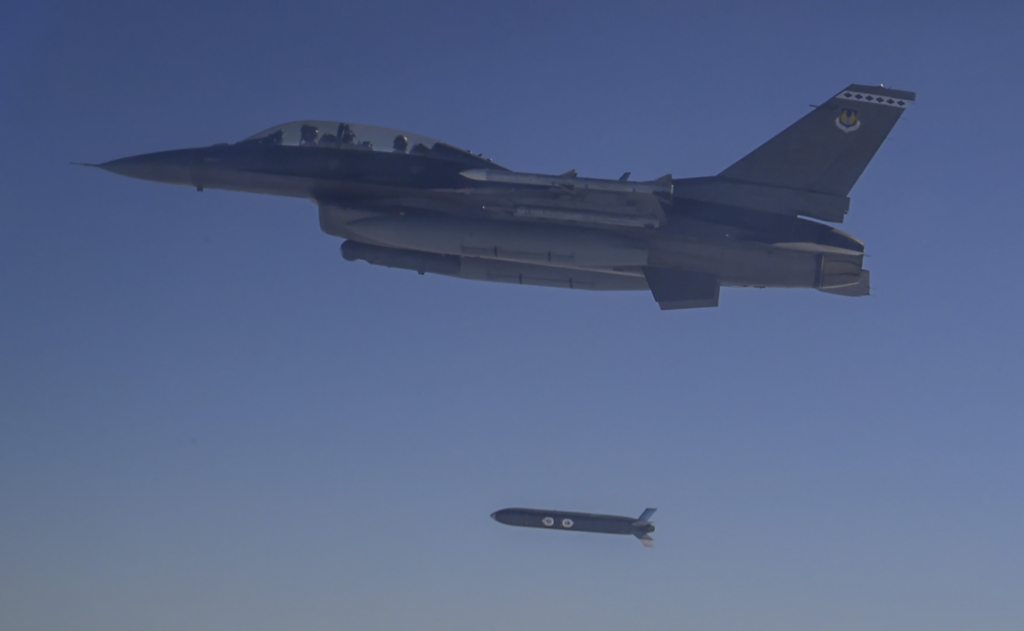
Blackbeard has been developed with investment from the US Navy, US Army, and US Air Force, as well as with private investment. Its development includes vertical integration and commercial manufacturing methods to allow Castelion to better control the cost of producing the missiles.
The missiles are to be built at Castelion’s facility in Rio Rancho, New Mexico.
Interest from the US Navy
The Air Force contract is not the first the company has received for its Blackbeard missile. In September, it reported it had received a production delivery order from the US Navy, with a total value of up to $200 million, to manufacture, assemble, test, and deliver an initial lot of Blackbeard Hypersonic Weapons.
The Air and Space Forces Magazine reports that the Navy is seeking to integrate the missile with its fleet of F/A-18 Super Hornets. The Navy’s Air Test and Evaluation Squadron 23 conducted carriage and separation tests of the new missile in September, validating its compatibility with the fighter jet.
Blackbeard is going into production. The U.S. Navy has awarded Castelion a production order valued at up to $200 million for an initial lot of Blackbeard Hypersonic Weapons, following the 50 EOC rounds ordered in June. Engineered from day one for the production line. Grateful to PAE(A) for the trust and the urgency. https://t.co/qyAnQa0crz
— Castelion (@Castelion) September 14, 2026
Castelion also won a $105 million contract to integrate Blackbeard into the Super Hornets in April 2026. In June, the Navy signed a contract worth $23.4 million for 50 early operational capability pre-production prototype Blackbeard missiles.
Meanwhile, the US Army is funding development, integration, and testing of a ground-launched version (Blackbeard GL). This is to be compatible with existing HIMARS (M142) launchers as an interim solution.