

Watch: US Army launches 18-drone swarm out of a robot vehicle in live-fire test

3 min read
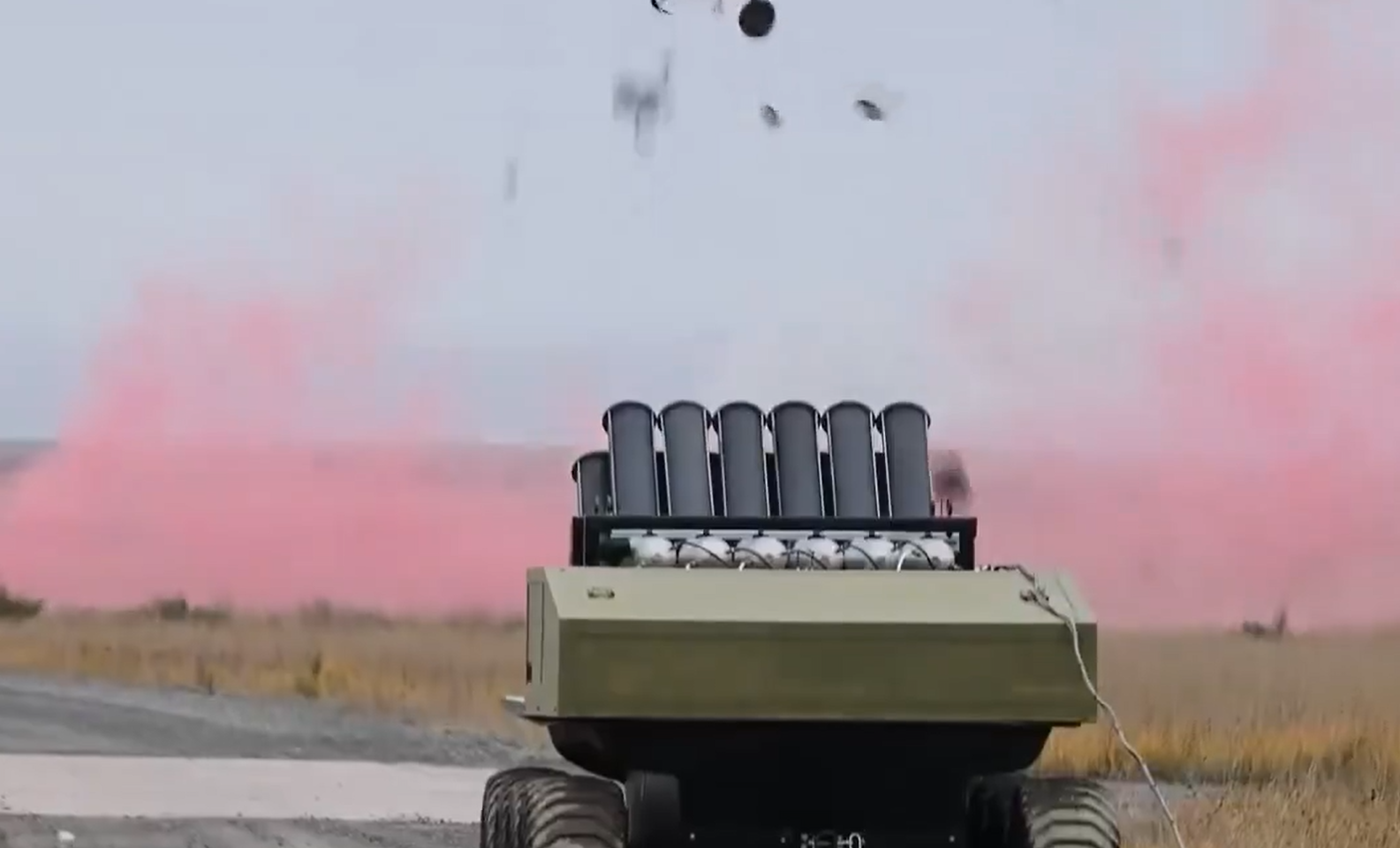

The US Army conducted a live-fire technology demonstration at Grafenwoehr Training Area in Germany with its new R3NEGADE unmanned ground vehicle (UGV).
The demonstration took place on 12 November, with a video showing the UGV launching a drone swarm of 18 small FPV-type drones. The R3NEGADE UGV resembles something of a diminutive multiple rocket launcher.
The live-fire exercise was carried out by the DEVCOM Armaments Center, U.S. Army Europe and Africa, and the 7th Army Training Command under the Remote Rapid Response Autonomous Contingency Team (R3ACT).
In its statement, the US Army said the demonstration was to “evaluate emerging unmanned air and ground capabilities.”
The US Army said in a post, “The future fight does not stay on the drawing board. At Grafenwoehr, #DEVCOM, USAREUR-AF, and #7thATC put emerging unmanned air and ground capabilities to the test during a live-fire demonstration.”
The Army demonstration explored how drones and unmanned ground vehicles could help its soldiers strike targets from greater distances and give commanders more affordable options, while keeping their soldiers safer.
WATCH: The U.S. showcased next-generation warfare capabilities during an exercise in Germany, launching a drone swarm from an unmanned ground vehicle. https://t.co/hVuAgSM1CP
— Breaking911 (@Breaking911) November 17, 2026
How the Army used the UGV containerised FPV drone launch system in exercises
Much of the purpose of the exercise was to explore how emerging technology can work alongside existing Army weapons. The exercises saw the drones dropping smoke, striking targets individually, and working together to conduct coordinated attacks.
In the live-fire sequence, a TRV-150 drone dropped smoke onto a target. This was followed by a group of drones launched from the HIV3 swarm drone launcher mounted on the R3NEGADE UGV.
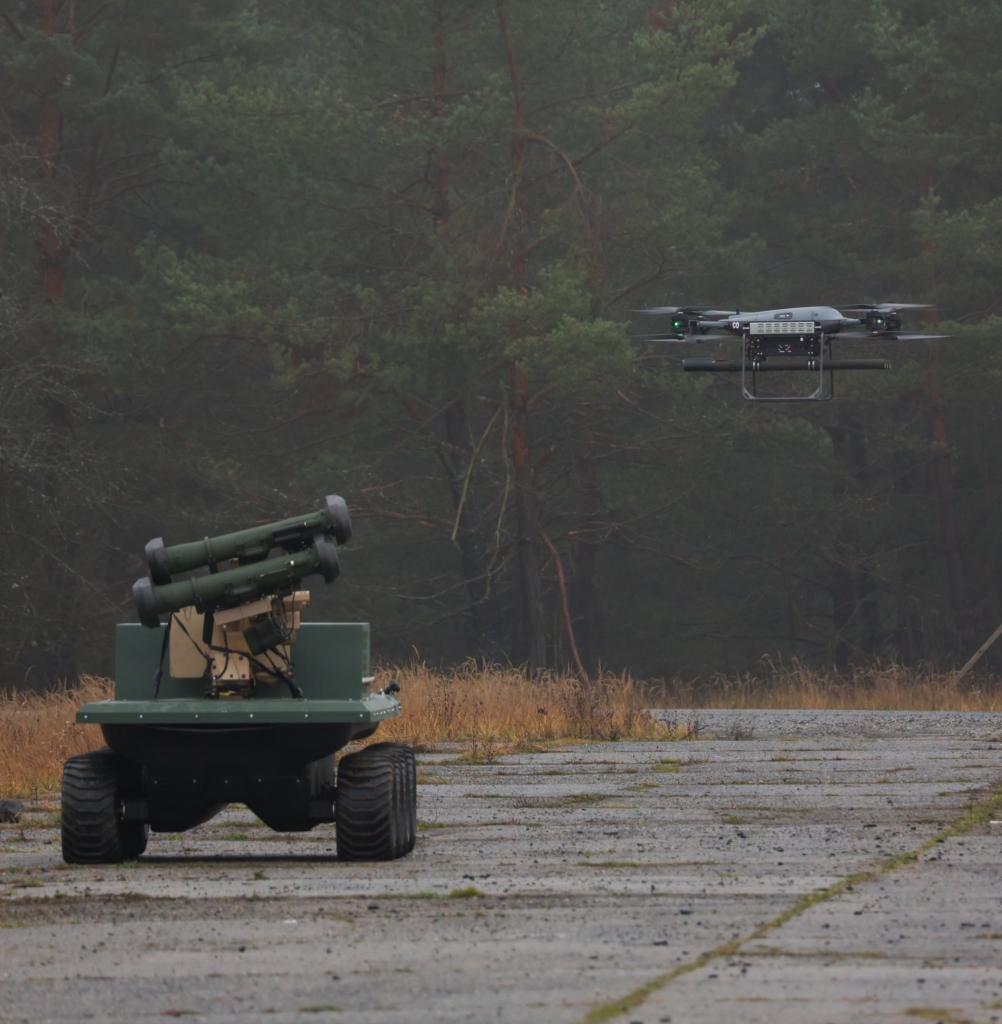
The drones conducted autonomous strikes on the target with soldiers in the loop of the first-person-view (FPV) drones. A second R3NEGADE UGV used a system equipped with two Javelin anti-tank missiles.
The Army adds, “The demonstration also included a static display of a TRV-400 aircraft equipped with the developmental FIR3FLY anti-armor capability. The aircraft was part of a containerized system designed to explore how drones could be stored and remotely deployed when needed.”
While the Army did not identify the contractors, the TRV-150 is built by Malloy Aeronautics (UK) and is the US version of the T-150. The contractor for the UGV was also undisclosed, and it is treated as a developmental/evaluation system built around commercial components.
The backdrop of the Ukrainian war
Overshadowing the demonstration is the widespread use and rapid iteration of UGVs and drones in Ukraine. The country has been an early and highly visible adopter of battlefield UGVs for missions including resupply, casualty evacuation and drone deployment.
Ukraine is using them for MEDEVAC, assault, resupply, launching drones, and making up for an overall disadvantage in infantry manpower relative to Russia. Ukraine’s production of UGVs is currently “skyrocketing.”
Ukraine’s embrace of UGVs can be partially seen as borne of necessity to preserve its manpower, while Russia continues to treat its infantry as expendable.
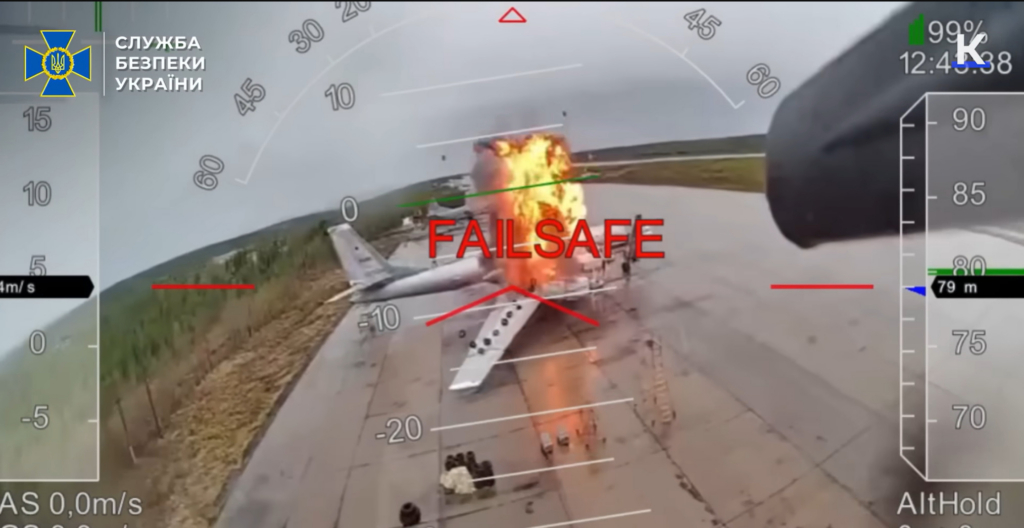
The US Army’s R3NEGADE UGV test may also be reminiscent of Ukraine’s highly successful 2025 Operation Spiderweb against Russia’s strategic bomber force.
While the basic concept is there of using a ground-based carrier to move FPVs closer to the target, the Ukrainian strike was conducted using civilian trucks hauling modified trailers.
Sign up for our newsletter and get our latest content in your inbox.