Retired KC-10A rises from US desert boneyard to fly again in commercial sector

5 min read
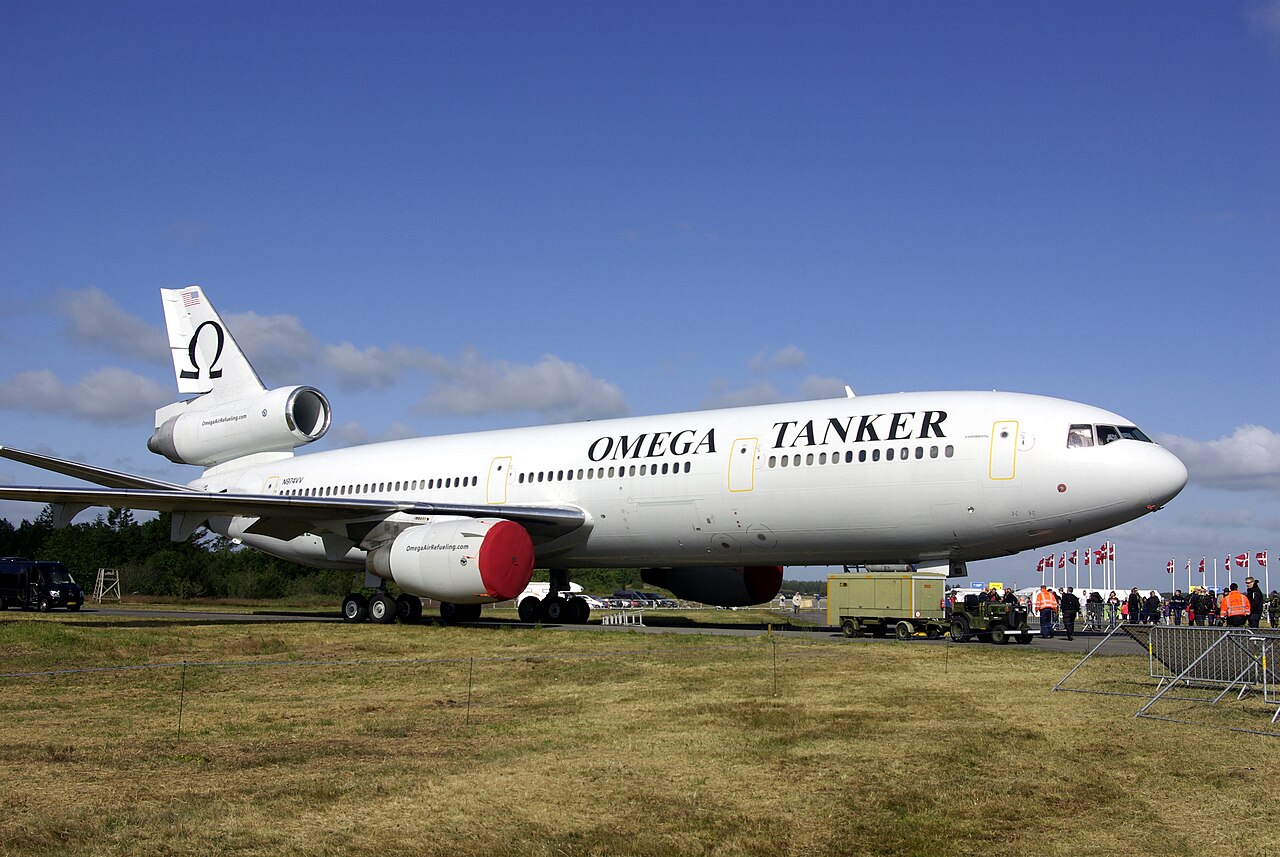
A retired US Air Force (USAF) KC-10A Extender has returned to the skies after spending years in storage at an aircraft boneyard in Arizona. The tanker, formerly designated 86-0034, departed Davis-Monthan Air Force Base on 20 October, beginning a new chapter under private ownership with Omega Air Refuelling.
The aircraft, now registered as N82247, flew to San Antonio International Airport (SAT) in Texas, marking a significant milestone for the company and the retired military tanker fleet.
Its return to flight demonstrates how aircraft once considered destined for museums or spare parts can still have valuable roles in commercial aviation and military support operations.
According to the aviation publication MiGFlug, Federal Aviation Administration (FAA) records identify Omega Air Inc., based in Selma, Texas, as the aircraft’s registered owner. Its registration as a McDonnell Douglas DC-10-30F was issued on 6 October 2026, just over two years after the USAF completed the retirement of its KC-10 fleet.
From military service to the aircraft boneyard
The KC-10 Extender was developed from the civilian DC-10 airliner and adapted to provide aerial refuelling capabilities for the US military. Its combination of three engines, substantial fuel capacity, and versatile refuelling equipment made it an important asset for supporting aircraft on long-distance missions.
The USAF received 60 KC-10s, with deliveries beginning in 1981. One aircraft was destroyed in a ground fire at Barksdale Air Force Base in 1987, leaving 59 to continue serving the fleet.
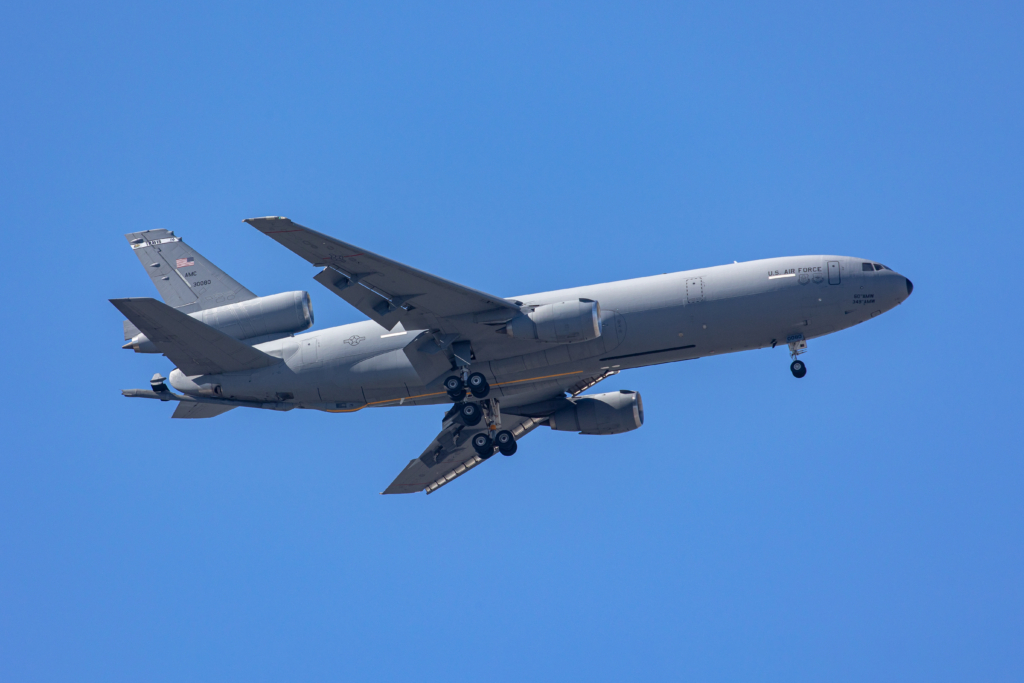
Retirement began in July 2020, when aircraft 86-0036 became the first KC-10 to leave operational service and fly to the 309th Aerospace Maintenance and Regeneration Group (AMARC) at Davis-Monthan.
The process concluded on 26 September 2024, when the final operational Extender departed Travis Air Force Base in California for storage.
The fleet was retired as the USAF transitioned towards newer tanker capabilities, including the KC-46A Pegasus. However, the departure of the last KC-10 did not necessarily mean the end of the aircraft’s usefulness.
In 2025, ten retired KC-10s were offered for auction through the US General Services Administration. They were sold in non-flyable condition and without their refuelling booms. The aircraft also lacked one wing-mounted engine, meaning buyers faced substantial work before any could return to the air. For N82247, that restoration effort has now resulted in a successful departure from the Arizona storage facility.
Omega Air Refuelling expands its fleet
The aircraft’s new owner, Omega Air Refuelling, is an established contractor providing aerial refuelling services to the US military.
Rather than replacing military tankers in combat operations, companies such as Omega support training, testing and ferry flights, allowing military aircraft to concentrate on operational duties.
Omega already operates former Royal Netherlands Air Force KDC-10 tankers, acquired in 2019, alongside other tanker aircraft.
Adding a former US Air Force KC-10 gives the company another airframe derived from the DC-10 family, an aircraft type with which it has considerable experience.
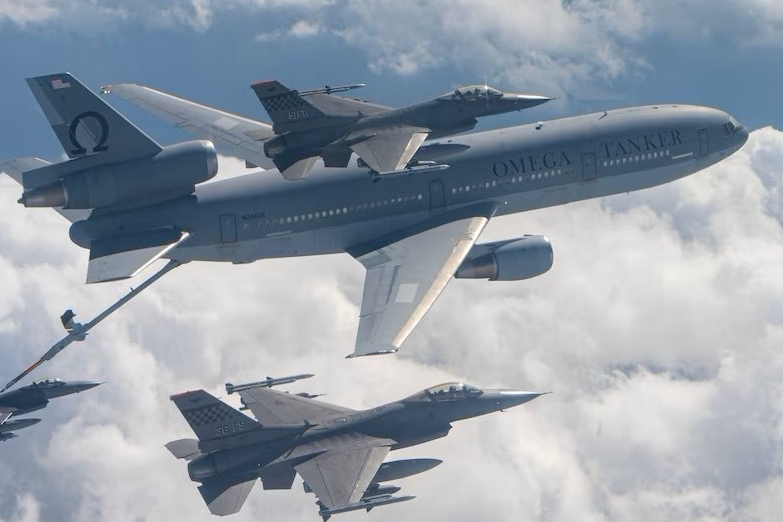
One particularly important feature of the KC-10 is its original ability to refuel aircraft using both a central boom and a hose-and-drogue system. This combination allows it to support different types of receiver aircraft, including those associated with the US Air Force, Navy and Marine Corps.
Omega has demonstrated the value of its boom-equipped tankers in recent years. In March 2024, one of its KC-10s refuelled a B-52 bomber and an MC-130J aircraft over the Pacific.
n April 2025, another refuelled a C-17 Globemaster III over California. These missions highlight the potential value of the KC-10 platform in contractor-operated refuelling services.
A challenging return to flight
The return of N82247 is particularly noteworthy because the aircraft was not simply waiting in storage in an immediately flyable condition. The ten KC-10s auctioned in 2025 were offered without their refuelling booms and with one wing-mounted engine missing from each aircraft.
Restoring an aircraft to flight under these circumstances requires significant technical work, inspections and coordination to ensure it meets the necessary airworthiness requirements.
The aircraft’s departure from Davis-Monthan therefore represents more than a change of ownership: it demonstrates that at least one retired Extender has successfully completed the work required to fly again.
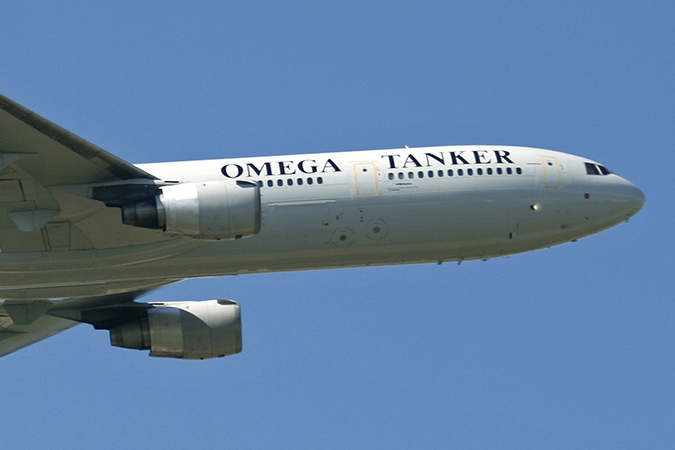
However, the aircraft’s return should not be confused with a full restoration of its original military capabilities. N82247 departed without its refuelling boom, and Omega has not publicly outlined its complete plans for the aircraft. A boom could potentially be installed again if future contracts require it.
Reports have also indicated that Omega acquired a group of retired KC-10 airframes, although the company’s precise intentions for the remaining aircraft have not been publicly confirmed.
A future beyond military retirement
The KC-10’s story may extend beyond Omega’s commercial operations. In October 2026, reports also indicated that the USAF was seeking industry interest in reactivating up to four stored KC-10s for an unidentified North African partner through the foreign military sales programme.
This possibility highlights the continuing relevance of older tanker aircraft in a world where aerial refuelling remains essential to military aviation.
Reactivating stored aircraft can present substantial challenges, but established designs may still offer useful capabilities when the cost and technical requirements make restoration practical.
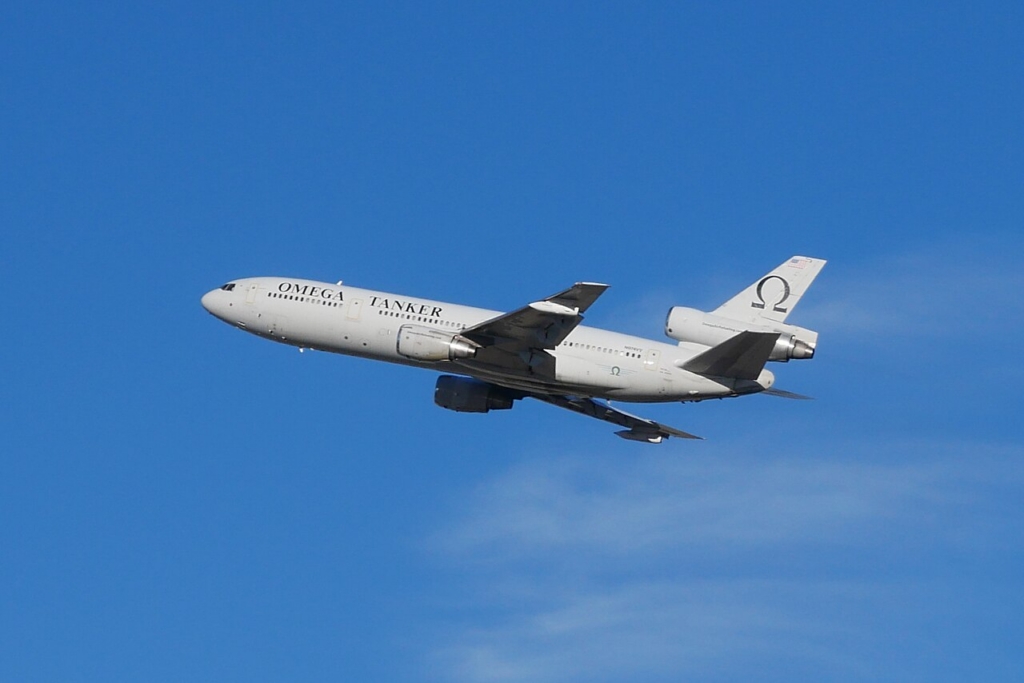
For Omega Air Refuelling, N82247 provides an opportunity to expand a fleet built around supporting military aviation. Its existing experience with DC-10-derived tankers gives the company a foundation for operating the aircraft, although its eventual mission profile will depend on its configuration and contractual requirements.
The departure of N82247 from Davis-Monthan Air Force Base is therefore a striking example of an aircraft finding a second life after military retirement.
Once part of a fleet that supported USAF operations around the world, the former 86-0034 has left the Arizona desert under a new registration and a new owner.