Indian startup Nalwa Aero successfully flight-tests box-wing electric aircraft
Indian startup Nalwa Aero has successfully flight-tested its scaled box-wing electric vertical take-off and landing (eVTOL) aircraft, demonstrating hovering and forward flight using electric propulsion and…

7 min read
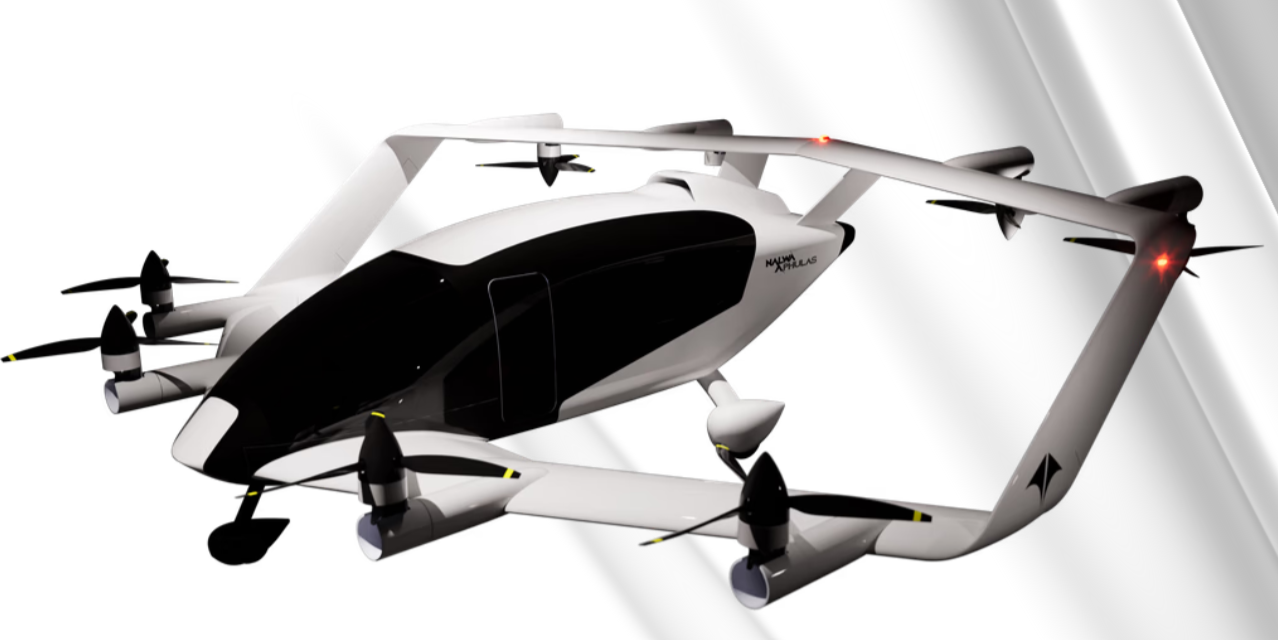
Indian startup Nalwa Aero has successfully flight-tested its scaled box-wing electric vertical take-off and landing (eVTOL) aircraft, demonstrating hovering and forward flight using electric propulsion and an all-tilting-rotor system.
The tests mark the first successful flights of the company’s unconventional aircraft design, which it hopes to develop into a five-seat platform for passenger transport, air ambulances and cargo operations.
The company, based in India’s northern state of Punjab, said the preliminary trials demonstrated that its unusual wing arrangement could support both vertical and forward flight, an important early step towards developing a full-sized aircraft.
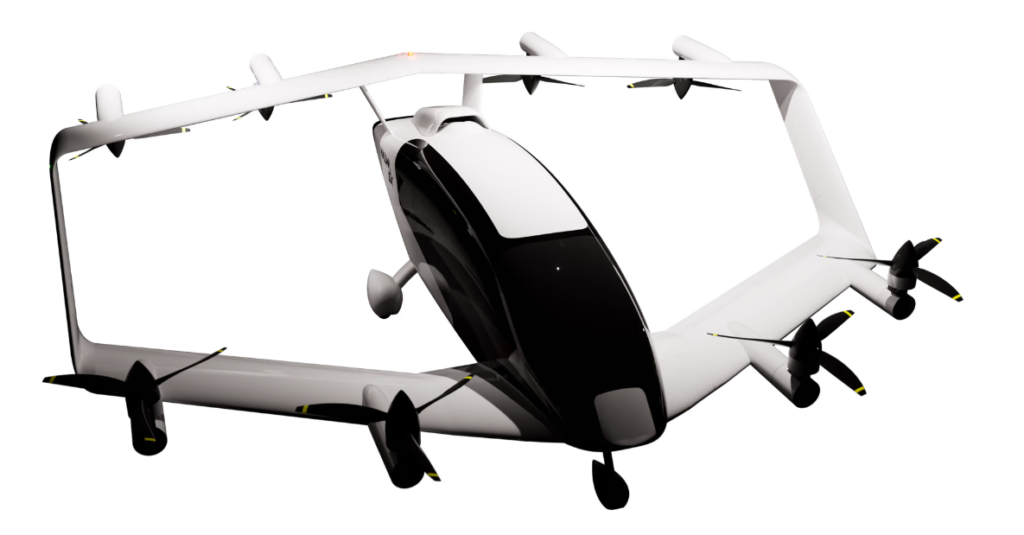
Unlike most emerging electric air taxis, Nalwa Aero is pursuing a box-wing configuration in which the front and rear wings are connected at their tips, creating a closed structure around the aircraft. The design is intended to improve aerodynamic efficiency while providing the structural strength needed for a relatively large electric aircraft.
Founder and chief executive Kuljeet Singh Sandhu announced the successful flights on LinkedIn, describing the achievement as the culmination of years of development, setbacks and redesigns.
“They said it was impossible. We believed otherwise. Today, we made it fly!”, Sandhu wrote.
“We believe this represents a WORLD-FIRST achievement – successfully demonstrating an electric Box-Wing eVTOL aircraft with this unique all-tilting-rotor configuration, not previously achieved anywhere in the world, to this scale.”
The company has not disclosed the precise dimensions of the scaled aircraft, the number of flights completed or the duration of the trials. The demonstration remains an early development milestone rather than a flight of the proposed passenger-carrying aircraft.
India’s Civil Aviation Minister K. Ram Mohan Naidu welcomed the development after meeting Sandhu and Nalwa Aero chief technology officer Nelson Salas, who briefed him on the company’s progress.
“With such deep-tech innovations, we can transform urban mobility through flying taxis, air ambulances and even cargo flights, opening up exciting new possibilities!” the minister said.
What makes Nalwa Aero’s aircraft different?
The company’s aircraft draws on an aerodynamic concept explored more than a century ago by German scientist Ludwig Prandtl, whose research helped establish the foundations of modern aerodynamics.
A conventional aircraft generally has a single main wing, with a separate tailplane providing stability and control. Nalwa Aero’s box-wing arrangement uses two lifting surfaces connected at their outer ends.
The configuration is intended to reduce some of the aerodynamic losses associated with conventional wings, particularly the vortices generated at their tips. It could also provide structural advantages by distributing loads through the connected wings.
For an electric aircraft, aerodynamic efficiency is particularly important because battery weight and energy storage remain major limitations on range.
Nalwa Aero says preliminary internal studies suggest its design could deliver up to 40% greater aerodynamic efficiency than selected conventional aircraft configurations.
That figure has not yet been independently validated through full-scale flight testing. The company has described it as a potential improvement in certain aerodynamic parameters, rather than a demonstrated 40% increase in aircraft range.
The second unusual feature is the propulsion system.
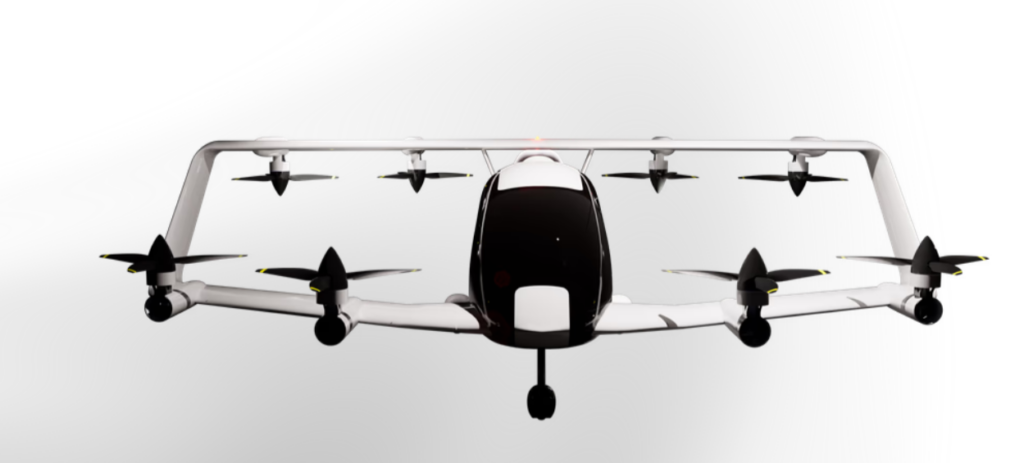
Nalwa Aero’s proposed full-sized aircraft uses eight tilting rotors distributed across its front and rear wings. These provide vertical thrust for take-off and landing before changing orientation to propel the aircraft forwards.
In simple terms, the aircraft is designed to lift off like a helicopter and then fly forwards using its wings to generate lift.
This transition is one of the most demanding parts of tiltrotor aircraft development. The flight-control system must manage changing airflow and forces as the rotors tilt and the wings progressively take over the job of supporting the aircraft.
The successful demonstration of hovering and forward flight on the scaled model gives Nalwa Aero an opportunity to evaluate how the configuration behaves outside computer simulations.
However, the company has not specified whether the trials included a complete transition between vertical and wing-borne flight.
A five-seat aircraft with ambitious performance targets
Nalwa Aero is developing a larger aircraft under its Aphulas programme, with plans for passenger, emergency medical, cargo and defence applications.
The company lists a maximum take-off weight of 4,000 kg and a payload capacity of 1,000 kg for the proposed platform.
Its published performance targets include a cruising speed of 350 km/h, an all-electric range of 450 km and an endurance of approximately 90 minutes.
The company also envisages a hybrid hydrogen-powered version capable of travelling more than 1,500 km.
The aircraft is also intended to incorporate fly-by-wire flight controls, autonomous capabilities and flight-envelope protection. Fly-by-wire systems replace direct mechanical connections between the pilot’s controls and the aircraft’s control surfaces with electronic commands processed by computers.
Nalwa Aero says the platform could be reconfigured for different missions, including carrying passengers, transporting patients, delivering cargo and supporting emergency response operations.
For countries such as India, the company sees potential applications in regions where road journeys are slow or where conventional aviation infrastructure is limited.
What happens before an aircraft’s first flight?
Although the moment an experimental aircraft leaves the ground attracts the most attention, much of the work takes place before it ever flies.
Engineers developing a new aircraft must first establish whether its structure, propulsion system and flight controls will behave as expected.
The process normally begins with extensive computer modelling, including aerodynamic simulations and structural calculations.
For a design such as Nalwa Aero’s, engineers will evaluate how the connected wings carry loads, how airflow changes around the tilting rotors and how the aircraft responds when thrust is redirected.
Structural testing is used to establish whether wings, joints and other components can withstand expected flight loads.
Ground vibration testing can then help engineers identify the natural frequencies at which different parts of an aircraft vibrate. This is particularly important because certain combinations of aerodynamic forces and structural vibration can produce flutter, a potentially destructive phenomenon.
Flight-control systems also undergo extensive testing before they are trusted in the air.
Engineers commonly use hardware-in-the-loop simulations, feeding artificial flight conditions into the control computers to see how they respond to changes in attitude, wind and equipment failures.
For an electric tiltrotor aircraft, particular attention is paid to the motors, batteries, power distribution and the mechanisms that rotate the propulsion units.
Ground runs allow engineers to check motor performance, electrical loads, cooling and vibration while the aircraft remains secured.
Before the first flight, the development team also reviews test results, resolves significant anomalies and establishes the conditions under which the aircraft can be flown safely.
The company’s successful preliminary flights nevertheless provide the first reported airborne evidence that its experimental configuration can generate controlled vertical and forward flight.
Founder recalls years of setbacks
For Sandhu, the first flights carried particular significance after years spent developing the aircraft.
In his LinkedIn announcement, he recalled leaving Canada to pursue the project in India and described the difficulties the team encountered.
“A century-old aerodynamic vision. Years of failures, sacrifices, and perseverance. And today, a historic milestone for Indian aviation,” he wrote.

Sandhu said CTO Salas, who has more than 28 years of aircraft development experience, also relocated from the United States to India with his family to join the programme.
“We faced failures, doubts, financial challenges, redesigns, and countless sleepless nights,” Sandhu said.
“And when I watched our aircraft lift off the ground, I didn’t just see a machine flying. I saw every failure, every sleepless night, every sacrifice, and every reason we refused to give up,” Sandhu said.
Nalwa Aero is registered under India’s Department for Promotion of Industry and Internal Trade and says its aircraft systems are being designed and developed domestically.
The company is pursuing both civilian and tactical applications, with a particular emphasis on aircraft capable of operating without conventional runways.
Regulatory approval and the road ahead
Nalwa Aero says it received Design Organisation Approval from India’s Directorate General of Civil Aviation (DGCA) in June 2025 for eVTOL aircraft in the five-seat-and-above category.
Its application for type certification was subsequently accepted in January 2026.
These steps allow the company to advance through the regulatory development process, but they do not mean the proposed passenger aircraft has been certified to enter service.
Before commercial operations can begin, Nalwa Aero will need to demonstrate the safety and performance of its full-sized design through further ground and flight testing.
That includes validating its propulsion system, flight controls, batteries, structural integrity and handling characteristics across the aircraft’s intended operating envelope.
The company has not yet announced a confirmed date for the first flight of its full-scale aircraft or a timetable for certification and commercial deliveries.