


Why does Somalia want JF-17 fighter jets when its biggest enemy has no air force?

4 min read

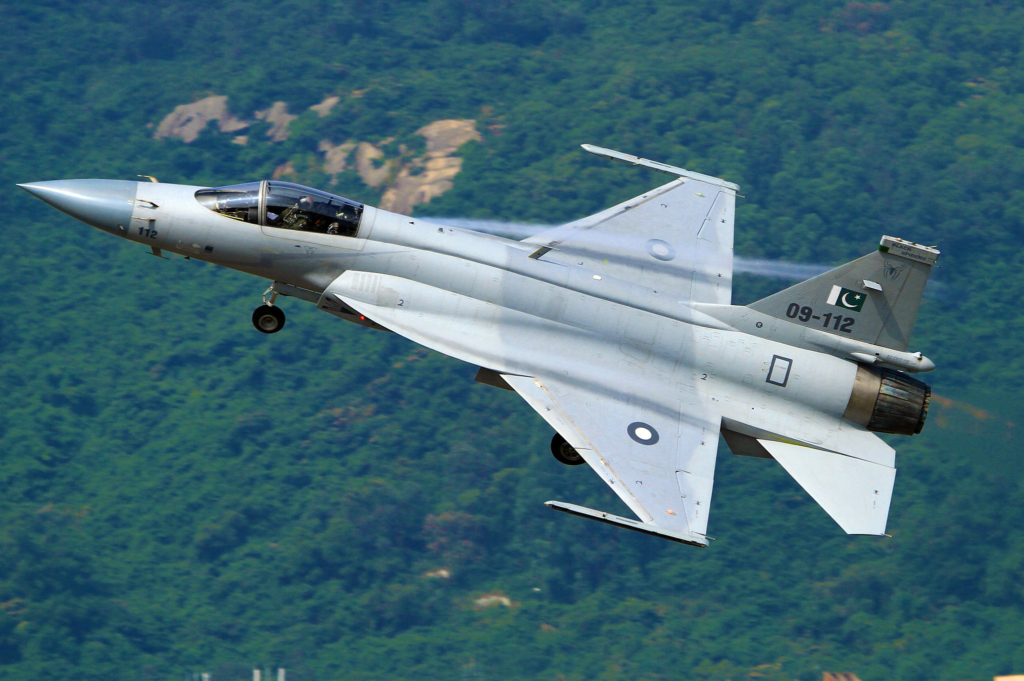
Reporting suggests that Somalia is set to order Sino-Pakistani JF-17 “Thunder” light multirole fighter jets. For the Thunder, Pakistan is the primary operator, with Myanmar (Burma), Nigeria, and Azerbaijan also now operating the type.
The move raises questions about how useful they will be for Somalia and its struggle against al-Shabaab. Considering the rapidly evolving geopolitical context of the Horn of Africa, it may be less about al-Shabaab and more about a complex web of alliances and the desire for state-building.
Reports Somalia will purchase JF-17s
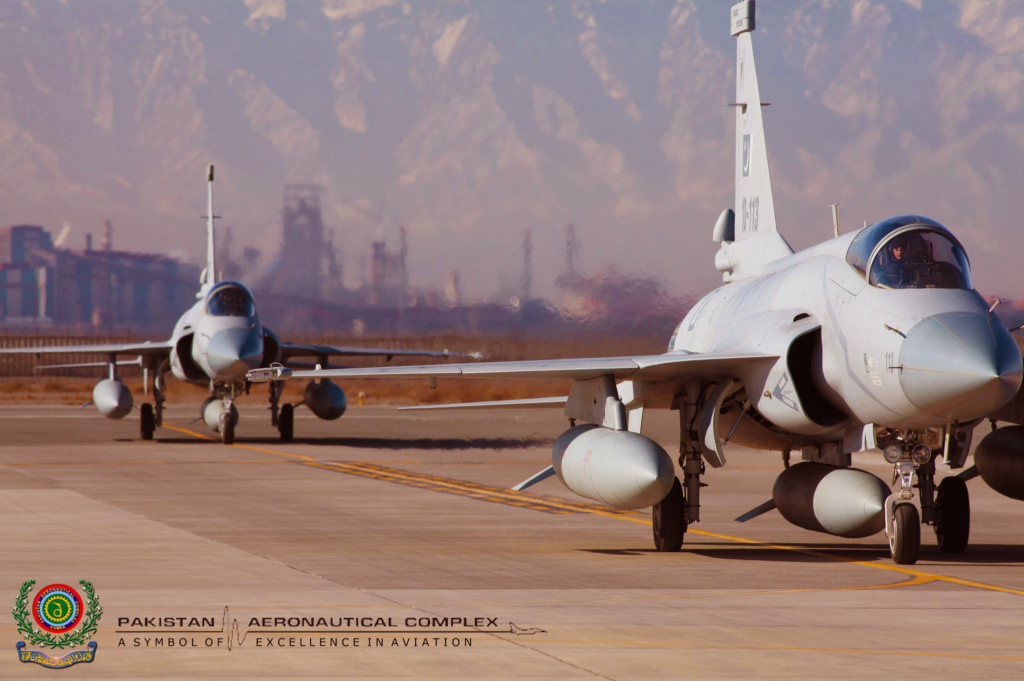
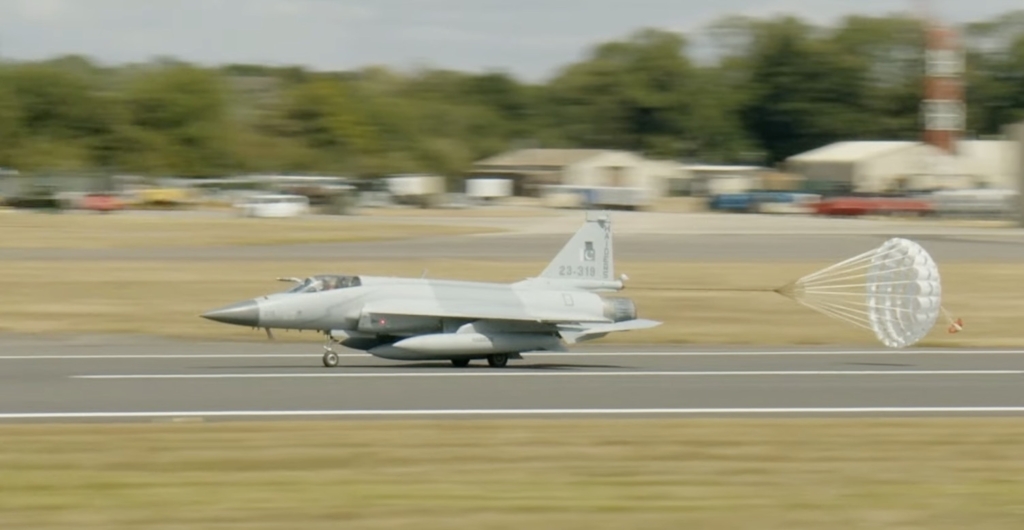
The JF-17 Thunder has become a popular low-cost, lightweight fighter jet on the market. China and Pakistan co-developed and produce it, with Pakistan typically leading exports.
The Turkish account, TRHaber, posted on X (formerly Twitter) last week, “Somalia has completed a defence agreement with Pakistan that includes the supply of JF-17 Thunder multirole combat aircraft as part of modernising and rebuilding its air force.
It adds, “This follows Turkish defence agreements with Somalia (including F-16 deployments) and strengthens Somalia’s layered air-defence architecture.”
Turkish media reported Somalia had agreed to purchase an unspecified number of JF-17s, with the details unclear. Earlier reporting suggested 24 Block III JF-17s for $900 million. This has not been confirmed.
The geopolitical context of Somalia
Somalia has found itself in a larger geopolitical struggle and is aligning with Saudi Arabia, Sudan’s SAF, Turkey, Egypt, Ethiopia, and Pakistan. Pakistan’s involvement is partially via its close relationship with Saudi Arabia.
On the other side is breakaway Somaliland, the UAE, Israel, Somalia’s Puntland region, Sudan’s RSF, India to some extent, and possibly Eritrea. Multiple independent and overlapping conflicts are currently tearing through the region.
Alignments are fluid and complicated and are not as simple as “friend vs foe.” Alignments can also vary by specific region of interest.
Somalia’s primary security challenge is the extremist group al-Shabaab, which maintains substantial territorial influence and conducts insurgent and terrorist attacks across central and southern Somalia.
But in the context of the fighter jet deal, the usefulness of the JF-17s against al-Shabaab is arguably somewhat misleading.
In January 2026, AGN reported Saudi Arabia was discussing converting around $2 billion in Saudi loans to Pakistan into a JF-17 purchase. In February, Somalia and Saudi Arabia signed a military cooperation MoU, although the details have not been disclosed.
In August, Pakistan, Saudi Arabia, and Turkey signed the Makkah Joint Defence Agreement, with Pakistan signing its own defence cooperation agreement that month. In September, a senior Pakistan Air Force delegation went to Mogadishu to discuss rebuilding the Somali Air Force.
The JF-17 is arguably overkill for al-Shabaab
For Somalia, if it wants to rebuild a fighter jet fleet, the JF-17 would be a logical choice because it is relatively low cost and the Block III offers significant capabilities. But for an insurgency like al-Shabaab, the fighter is arguably overkill; light attack aircraft or various drones are perhaps a better fit.
Mohamed Osman, writing for The Times of Israel, says, “The JF-17 was designed for air defence, high-speed interception, and conventional strike missions. Those capabilities have value in a traditional interstate conflict, but they are poorly matched to tracking small militant units or protecting convoys.”
It is possible to interpret its desire to purchase the JF-17 as a state-building and sovereignty capacity. In 2025, Israel became the first country to recognise Somalia’s de facto Somaliland as independent.
Since then, rumours have circulated that countries like the UAE, Ethiopia, and India would follow suit and recognise it, but this hasn’t materialised.
For Pakistan, it means selling more fighter jets, while Saudi Arabia works to counter the UAE in the Horn of Africa, secure waterways in the Red Sea/Gulf of Aden, provide financial assistance to Pakistan, and counter the UAE.
Somewhat revealing is a Somali report that says Somalia’s 2025 security budget was only around $255 million. This suggests Somalia would be hard-pressed to finance a $900 million programme independently, equal to 3.5 years of its entire security budget.
While there is no public evidence that Saudi Arabia is financing the Somali purchase, its possible involvement is worth watching, especially given earlier reporting about Saudi Arabia converting Pakistani loans.
Besides Somalia, other countries reportedly interested in the jet are the eastern Haftar-dominated Libyan National Army, Somalia, Bangladesh, Indonesia, and others.
The potential sale of JF-17s to the Libyan National Army is also part of the greater geostrategic game shaping the region.





