Bangladesh weighs JF-17 fighter jets as Pakistan steps up defence outreach

5 min read

Bangladesh is actively exploring the possible acquisition of the Pakistan- and China-developed JF-17 Thunder fighter jet, following high-level talks between the air force chiefs of the two countries in Islamabad.
According to Pakistan’s military media wing, the Inter-Services Public Relations (ISPR), Air Chief Marshal Hasan Mahmood Khan of the Bangladesh Air Force held detailed discussions with his Pakistani counterpart, Air Chief Marshal Zaheer Ahmed Babar Sidhu, during a senior-level visit on Monday, January 5.
While official statements emphasised cooperation and goodwill, the most consequential element of the engagement was the discussion surrounding a possible procurement of the JF-17 Thunder fighter aircraft.
The Bangladeshi delegation was accorded a guard of honour and taken on tours of key operational and technological facilities, underlining the seriousness with which Islamabad is pursuing deeper defence ties with Dhaka.
JF-17 fighter discussions signal shift in Bangladesh’s defence relationships
The timing of the visit is significant. Bangladesh is navigating a sensitive phase in its external relations following political changes in Dhaka and a period of strain in ties with neighbouring India.
Against this backdrop, Islamabad’s outreach is being viewed as part of a broader effort to position itself as an alternative defence partner in South Asia.
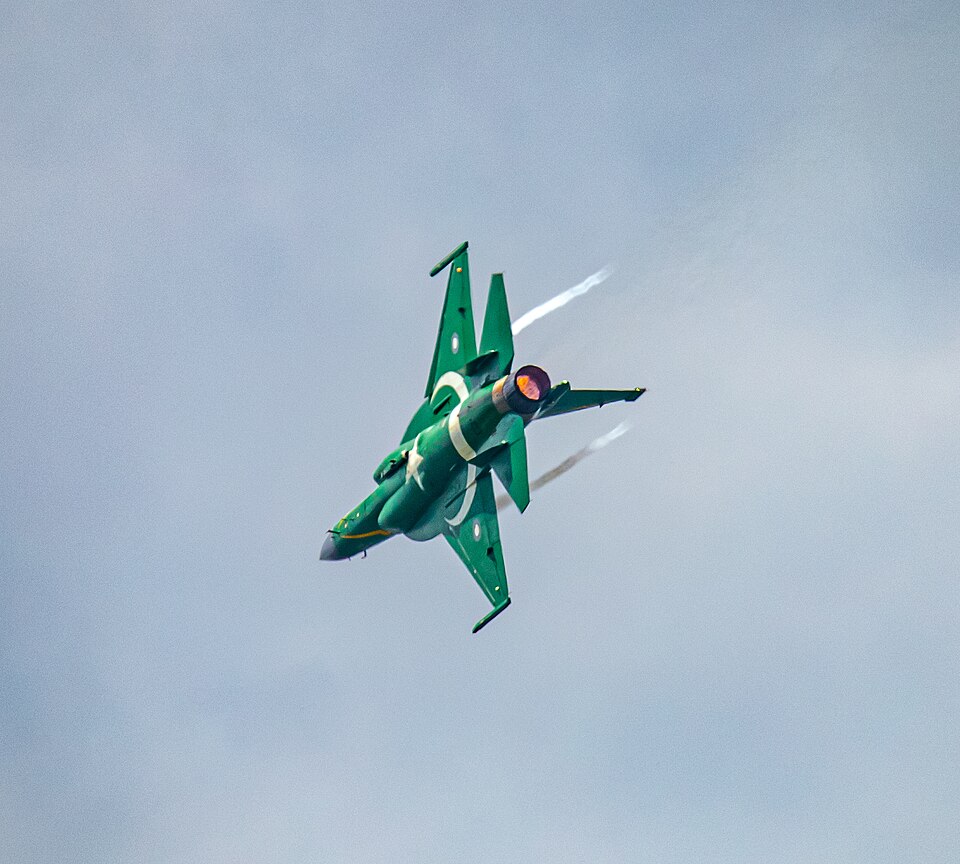
According to the ISPR statement, the two sides held “detailed discussions” on the prospects of acquiring the JF-17 Thunder, a lightweight multirole fighter that Pakistan has increasingly promoted as a cost-effective option for air forces seeking modern capabilities without the price tag of Western platforms.
For Bangladesh, which operates an ageing combat fleet and faces budgetary constraints, the aircraft could offer a pathway to incremental modernisation rather than a wholesale leap.
Pakistan pitches JF-17 fighters with training and air defence support
Beyond the fighter itself, Pakistan’s pitch appears deliberately comprehensive. The Pakistan Air Force chief outlined a framework of support ranging from basic and advanced flying training to specialised courses at PAF institutions.
He also assured the visiting delegation of fast-tracked delivery of Super Mushshak trainer aircraft, another platform that has become a mainstay of Pakistan’s defence exports.

The Bangladeshi air chief, the statement said, expressed interest in Pakistan’s operational experience, particularly in sustaining ageing aircraft fleets. He also sought assistance with integrating air defence radar systems to strengthen Bangladesh’s aerial surveillance network, an increasingly critical requirement as regional airspace grows more congested and contested.
JF-17 exports underpin Pakistan’s growing defence industry push
The visit included tours of the National ISR and Integrated Air Operations Centre, PAF Cyber Command and the National Aerospace Science and Technology Park.
For Pakistan, showcasing these facilities forms part of a wider narrative that its aerospace sector has matured beyond licence assembly into a credible, export-oriented industry.
At the centre of that ecosystem is the Pakistan Aeronautical Complex, where the JF-17 is assembled with extensive Chinese inputs.
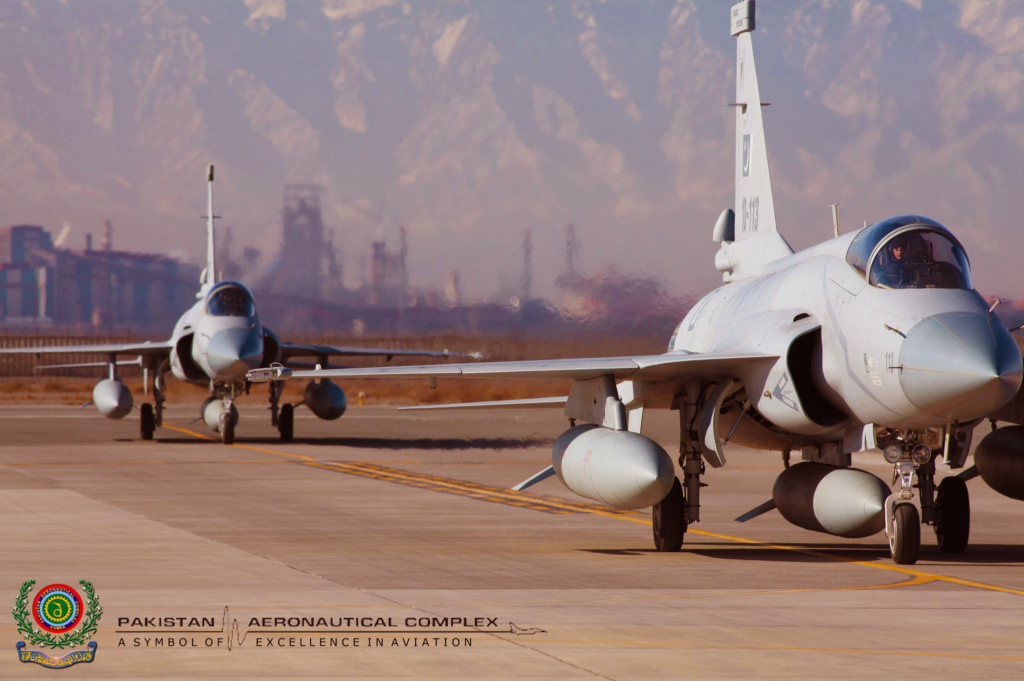
The fighter has become Pakistan’s flagship military export, and 2025 has been a banner year. Islamabad has secured a $4.6 billion agreement with Azerbaijan for 40 JF-17C Block III aircraft and confirmed another major deal with Libya’s eastern-based forces, covering both fighters and trainers.
These contracts have given fresh momentum to Pakistan’s ambition to expand into markets across Africa, the Middle East and Asia. Officials see defence exports not only as a growing revenue stream, reportedly approaching $10 billion in 2025, but also as a tool of strategic influence.
JF-17 emerges as alternative to Rafale and Eurofighter for Bangladesh
Until last year’s political upheaval, Bangladesh’s fighter modernisation plans appeared to be moving in a Western direction. Air force planners had been assessing European platforms as potential replacements for a fleet that remains heavily reliant on ageing aircraft, including around three dozen Chengdu F-7 fighters and a small number of legacy MiG-29s.
Among the leading contenders was the Dassault Rafale, with officials examining a phased approach that would begin with used aircraft from French inventories before transitioning to new-build jets upgraded to the F4 standard.
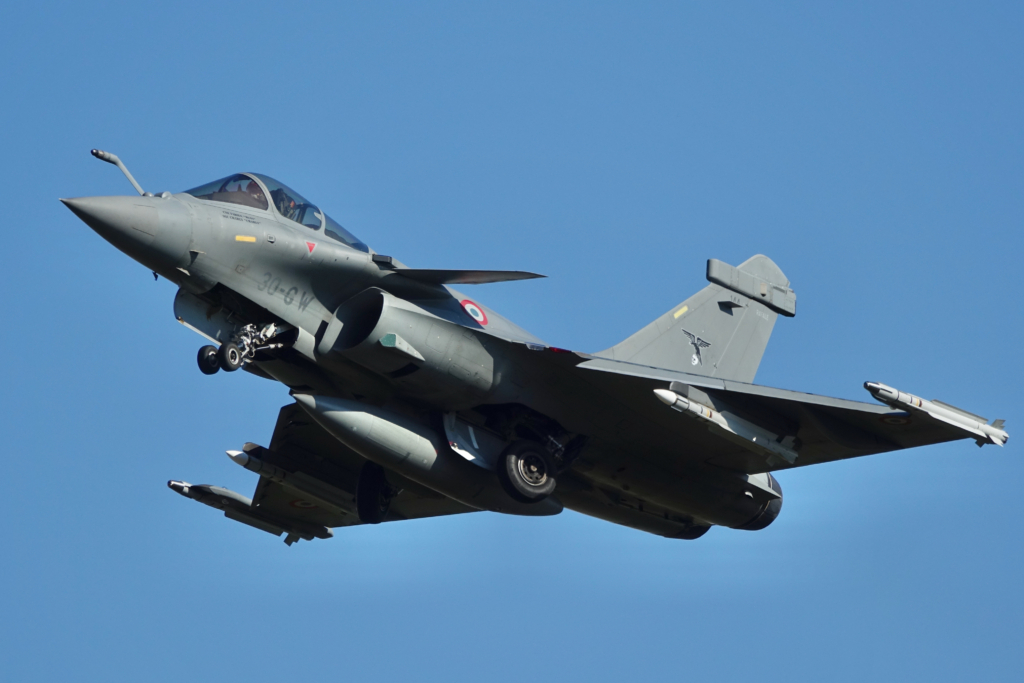
Those discussions stalled after the abrupt political transition in August 2024, when the prime minister left the country, effectively freezing several high-value defence negotiations.
Attention then shifted to the Eurofighter Typhoon, backed by Italy’s Leonardo. Last May, Bangladesh’s air chief visited Italy to review the aircraft and engage with senior industry and military officials, with follow-on discussions continuing through diplomatic channels.
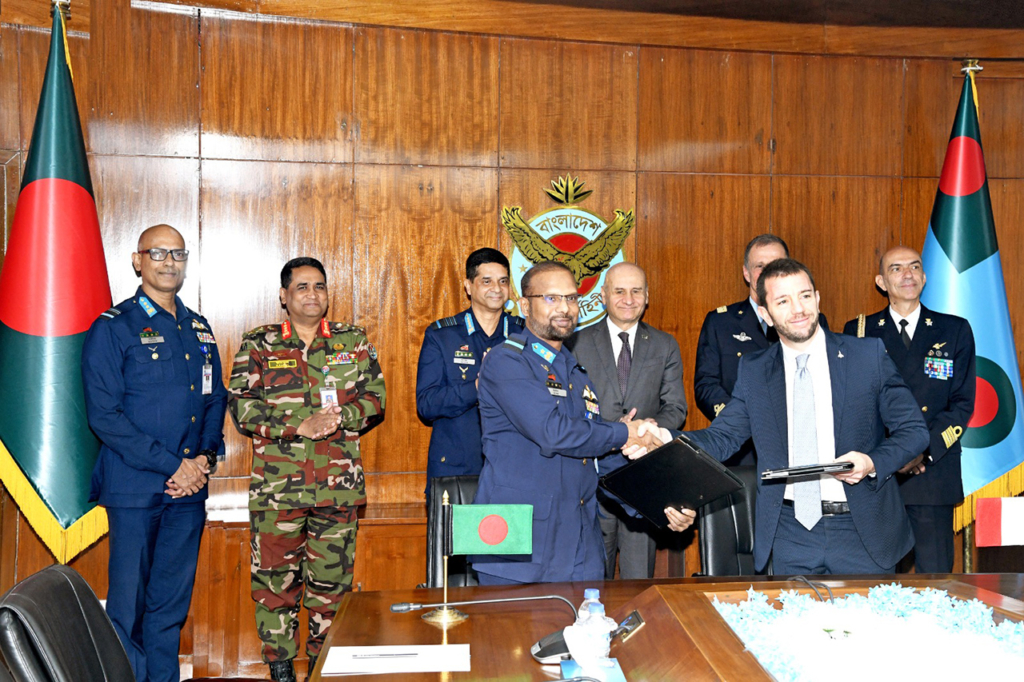
That process gained tentative political backing following the installation of a caretaker government led by Nobel laureate Muhammad Yunus, which signalled in-principle approval for acquiring multirole combat aircraft and associated air defence systems.
Why air forces are choosing the JF-17 Block III
The Block III variant of the JF-17 features an active electronically scanned array radar and compatibility with China’s long-range PL-15E air-to-air missile.
While it does not match the stealth or sensor fusion of fifth-generation aircraft, its balance of cost, capability and relatively low sustainment burden has found favour with air forces priced out of platforms such as Rafale or Eurofighter.
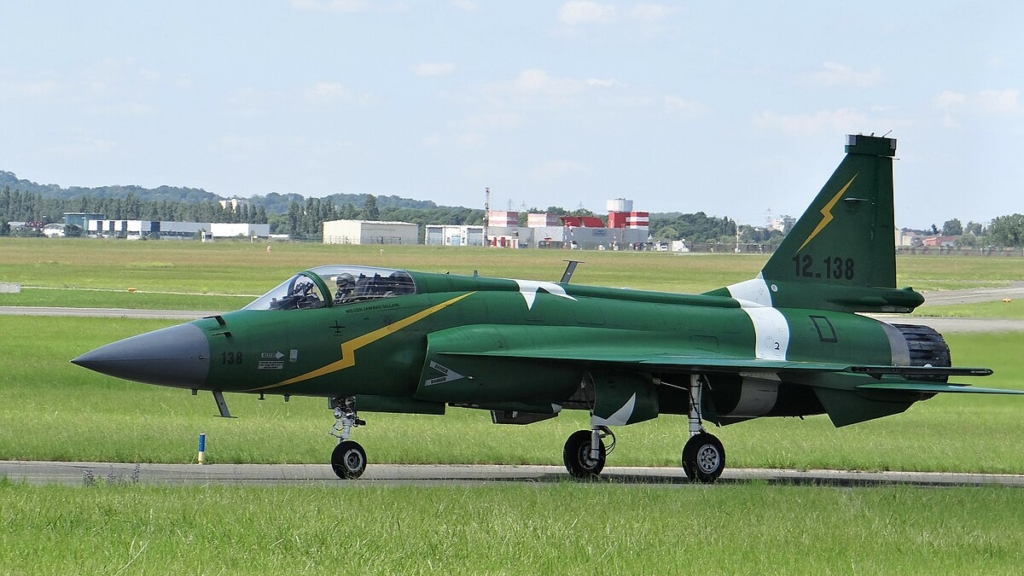
Pakistan has worked to demonstrate the aircraft’s operational credibility through international exercises, long-range deployments, including flights to Saudi Arabia, and appearances at major Gulf airshows.
Whether Bangladesh ultimately proceeds with a JF-17 purchase remains uncertain. Fighter acquisitions are shaped as much by politics and long-term strategy as by performance and price.
For New Delhi, the implications extend beyond aircraft numbers. In South Asia’s tightly interlinked strategic environment, combat aircraft deals often reflect broader shifts in alignment. Pakistan’s renewed defence outreach to Bangladesh, anchored by the JF-17, will therefore be watched closely as a potential indicator of evolving regional dynamics.
Featured image: Okonkwo john / Wikimedia