


From Hercules to KC-390: NATO’s airlifters assemble for Falcon Leap

6 min read
Five different families of tactical transport aircraft are flying together over the Netherlands for Falcon Leap 2026, putting NATO crews through an interoperability test that ranges from dropping heavy equipment and supplies to delivering paratroopers from one another’s aircraft.
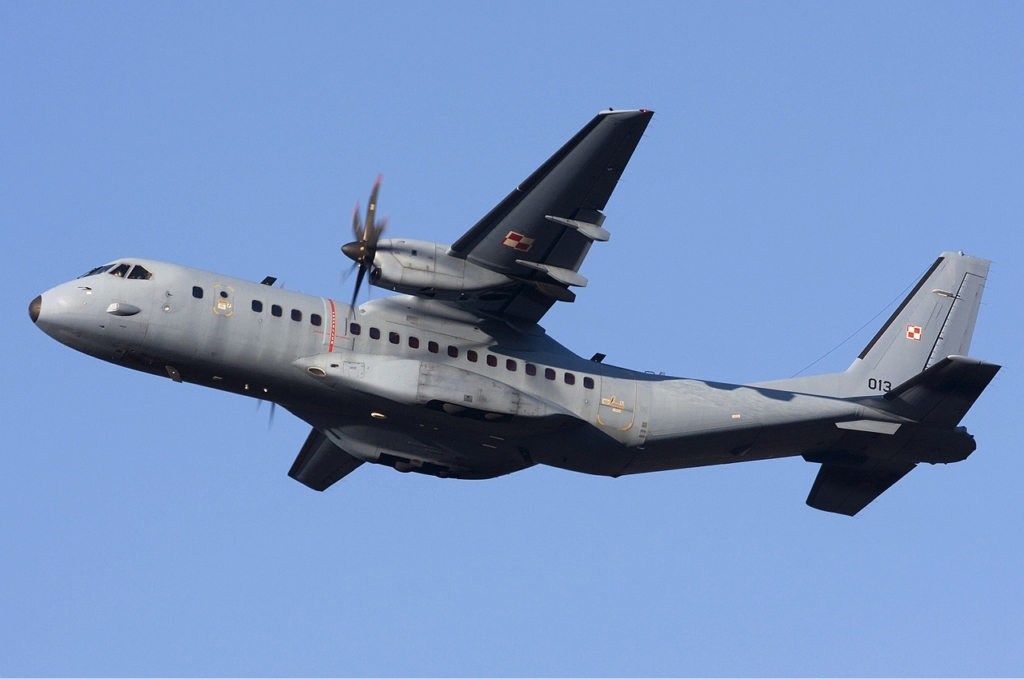
Eleven nations are taking part in the exercise, which runs from 7 to 18 September from Eindhoven Air Base. The aircraft include the Airbus A400M, Lockheed Martin C-130 Hercules, Airbus C-295M, Leonardo C-27J Spartan and Embraer KC-390M.
Germany and the UK are contributing A400Ms, while Portugal is bringing its KC-390M. Poland and Spain are flying C-295Ms, and Romania is contributing a C-27J. The Hercules remains the most numerous type: Greece, Italy, the Netherlands, the United States and Sweden are all taking part with C-130 variants.
That mix is central to Falcon Leap. Crews and airborne troops are not simply training with their own aircraft. They are practising how to move personnel and cargo using aircraft, equipment and procedures from other participating nations.
The Dutch Ministry of Defence said the aim is to improve cooperation by training with personnel, equipment and aircraft from different countries.
Five transport types bring different airlift capabilities to the same exercise
The aircraft gathering at Eindhoven spans different generations and sizes of tactical airlift.
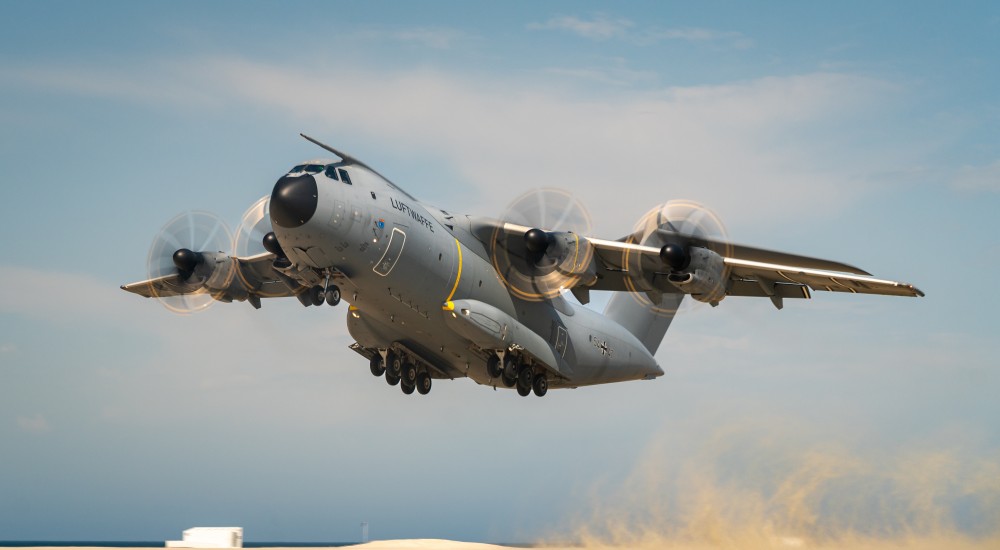
At the heavier end are the British and German A400Ms. The four-engined turboprop can combine strategic range and payload with tactical operations, including airdrops and operations from austere airfields.
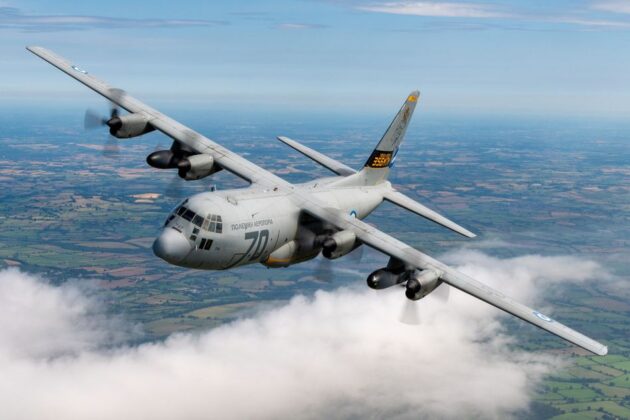
The C-130, by contrast, represents the longest-serving aircraft family at Falcon Leap. Five of the 11 participating countries are operating Hercules variants during the exercise, underlining the type’s continuing place in European and NATO tactical airlift fleets.
This year also brings a notable newcomer. Sweden is participating in Falcon Leap for the first time and has sent a C-130 Hercules.
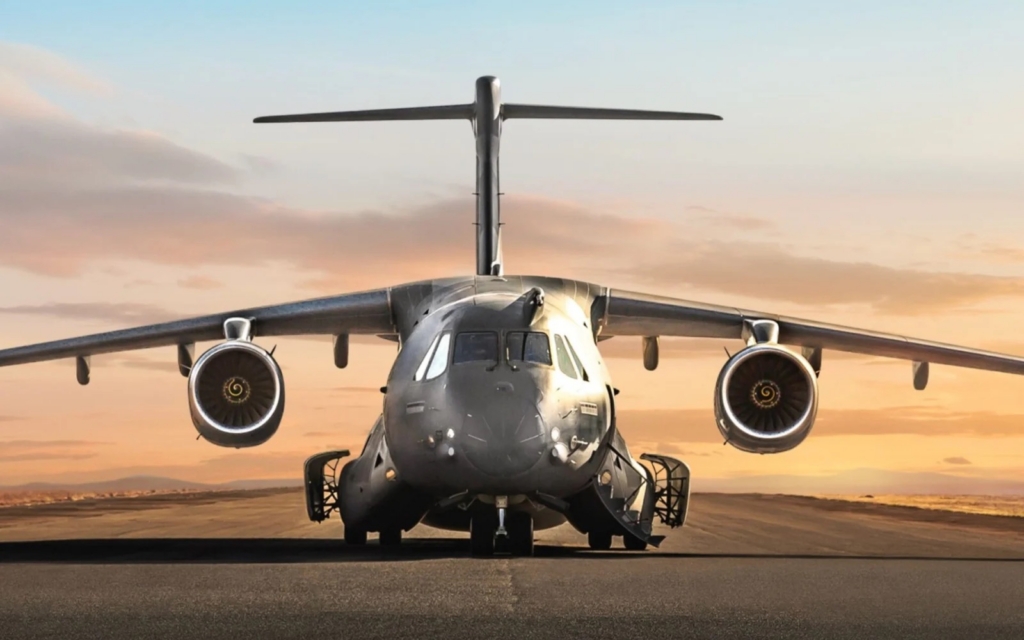
Portugal brings the newest transport design in the line-up. Its twin-jet KC-390M is being introduced to replace the Portuguese Air Force’s C-130 fleet. The aircraft is designed for troop and cargo transport, airdrop, medical evacuation and air-to-air refuelling missions.
Its presence alongside five Hercules operators offers Falcon Leap a snapshot of a broader transition in military airlift. Portugal is already moving to the KC-390, while several European operators continue to rely on the C-130.
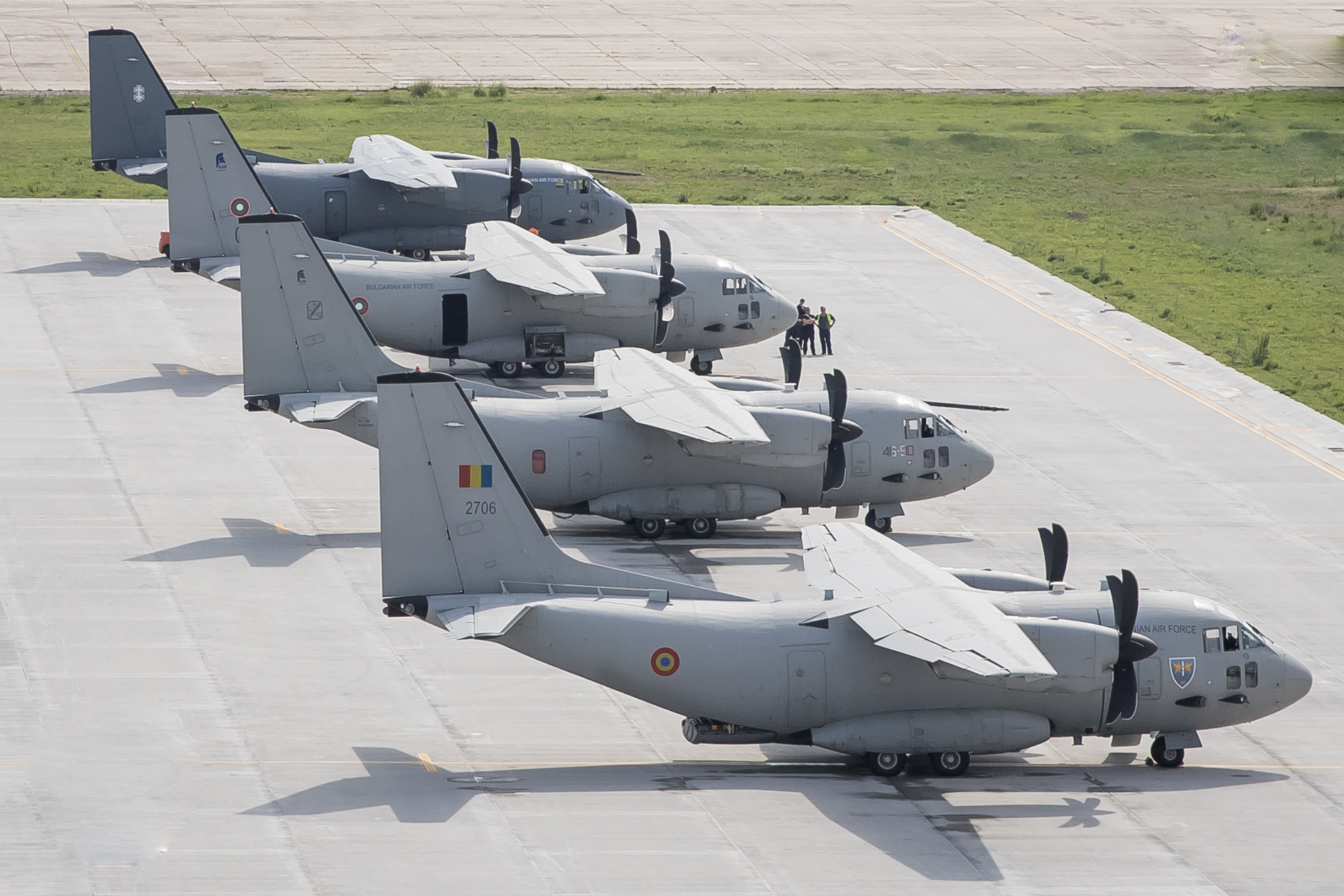
The smaller C-295Ms from Poland and Spain and Romania’s C-27J Spartan complete the mix. Both types are suited to lighter tactical transport duties and operations where larger airlifters may not be required.
For Falcon Leap, however, the point is less a comparison between aircraft than making the different fleets work together.
Crews will switch between nations as cargo and paratroopers are dropped
The exercise combines cargo airdrops with airborne operations.
Heavy equipment and supplies are delivered using the Container Delivery System. Specialists from the Royal Netherlands Army’s 11 Airmobile Brigade prepare and secure the loads so they can be released safely by parachute from the transport aircraft.
Paratroopers are also dropped from aircraft belonging to different participating nations, requiring troops and aircrews to work with equipment and procedures that may differ from those used at home.
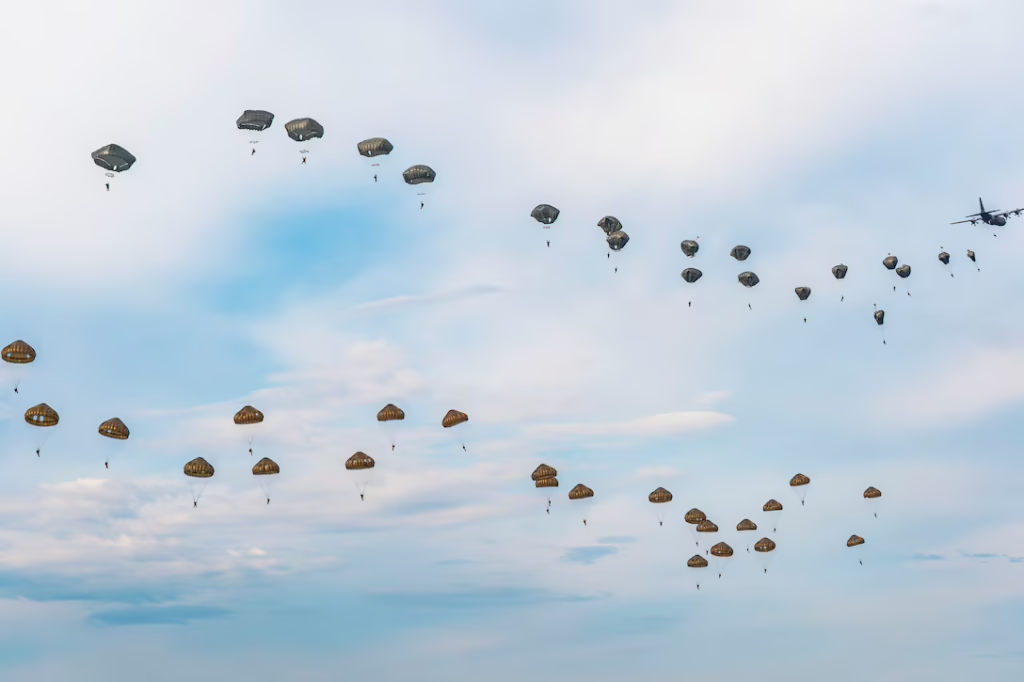
Falcon Leap is organised by 11 Airmobile Brigade, with transport aircraft from the Royal Netherlands Air Force’s Air Mobility Command operating alongside the international participants.
The Netherlands is joined by Germany, Greece, Italy, Poland, Portugal, Romania, Spain, Sweden, the UK and the US.
Training flights are being conducted in two daily blocks, expected between 13:00 and 17:00 and between 19:00 and 23:00. Aircraft will operate at low altitude during parts of the exercise, although the Dutch defence ministry is withholding exact parachute drop times and locations for safety reasons.
Falcon Leap ends with a return to the battlefields of Operation Market Garden
Falcon Leap concludes with a direct link to the airborne operation fought over the Netherlands 82 years ago. On 19 September, participating forces will join the annual commemoration of Operation Market Garden at Ginkel Heath near Ede, including a commemorative parachute drop.
Operation Market Garden began on 17 September 1944 as an ambitious Allied attempt to break through the Netherlands and open a route into Germany. The plan combined two operations: Market, a mass airborne assault to seize a chain of bridges, and Garden, a ground advance from Belgium intended to link up with the airborne forces.
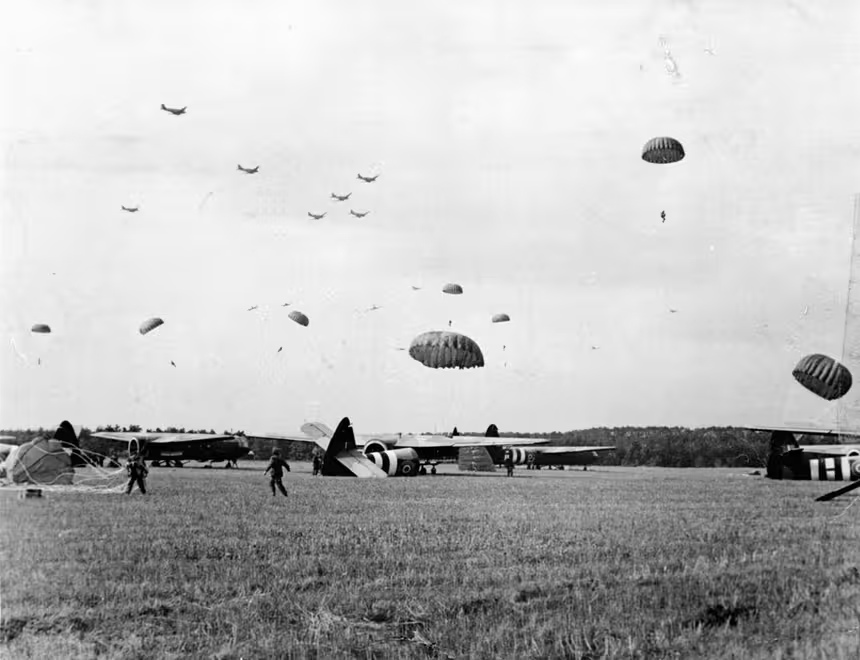
The objective was to secure the corridor running through Eindhoven and Nijmegen to Arnhem. Capturing the bridges would allow Allied ground forces to cross the Rhine, bypass the heavily defended Siegfried Line and potentially gain access to Germany’s industrial Ruhr region. Allied commanders hoped the offensive could accelerate the end of the war in Europe.
The scale was enormous. Around 35,000 troops and 6,320 aircraft were involved in the airborne operation, while some 100,000 troops and 22,000 armoured vehicles were allocated to the accompanying ground offensive.
The US 101st Airborne Division was assigned bridges between Eindhoven and Veghel, while the US 82nd Airborne Division was tasked with securing crossings around Grave and Nijmegen. The British 1st Airborne Division was sent to capture the Rhine bridges at Arnhem, supported by the Polish 1st Independent Parachute Brigade.
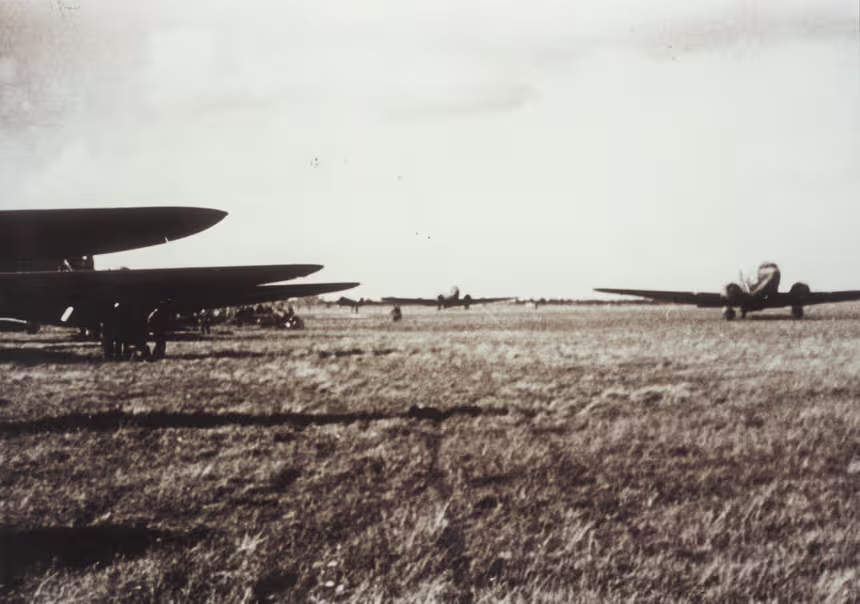
The operation initially made progress, but the ground advance was slowed by German resistance and the airborne forces around Arnhem became increasingly isolated. At Nijmegen, troops of the US 82nd Airborne Division crossed the Waal under heavy fire on 20 September and helped capture the railway and road bridges. By then, however, there were insufficient ground forces available to immediately continue the advance towards Arnhem.
The situation farther north was already critical. British troops holding the northern end of Arnhem’s road bridge were short of ammunition, food and water. German forces eliminated the last British resistance at the bridge on 21 September, while fighting continued around Oosterbeek.
The surviving Allied troops at Oosterbeek were eventually ordered to withdraw. During the night of 25–26 September, about 2,400 men attempted to cross back over the Rhine under artillery cover. The Dutch defence ministry records that 2,163 reached the southern bank that night, with another 250 later escaping with help from the Dutch resistance.
Market Garden failed to secure the final crossing at Arnhem and is generally regarded as an unsuccessful operation, although Allied Supreme Commander Dwight Eisenhower later described it as partially successful. The fighting nevertheless shifted the front deeper into the Netherlands, to the Nijmegen area.
Falcon Leap’s closing parachute drop therefore takes place against a very specific historical backdrop. Eighty-two years after thousands of Allied aircraft and airborne troops crossed the Netherlands during Market Garden, crews and paratroopers from 11 nations will gather at Ginkel Heath to commemorate those who took part.


