


Exclusive: Inside Affinity Flying Training Services as it prepares for the future of UK military pilot training

6 min read
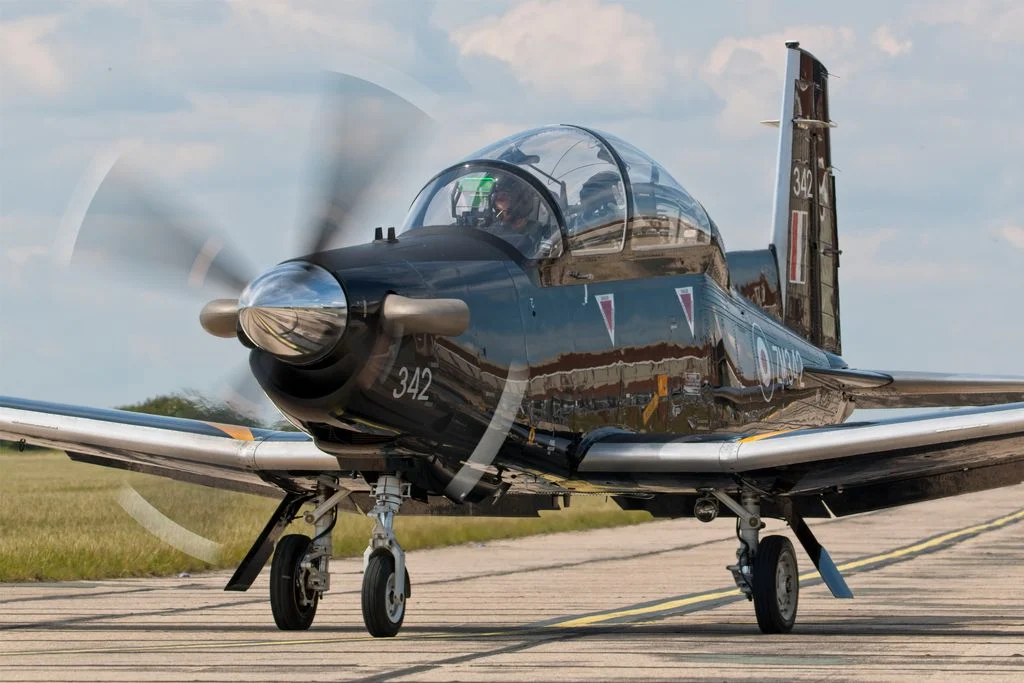
Affinity Flying Training Services is in discussions with the UK Ministry of Defence over the potential acquisition of four additional Texan T-6C aircraft as it prepares for the next phase of UK military flying training.
The possible fleet expansion comes as the company approaches 100,000 flying hours, having marked 10 years of operations supporting the UK Military Flying Training System (UKMFTS) in February.
From its headquarters at RAF Cranwell in Lincolnshire, Affinity provides aircraft, maintenance, engineering and operational support for the elementary, basic and multi-engine training of pilots entering the Royal Air Force, Royal Navy and Army Air Corps.
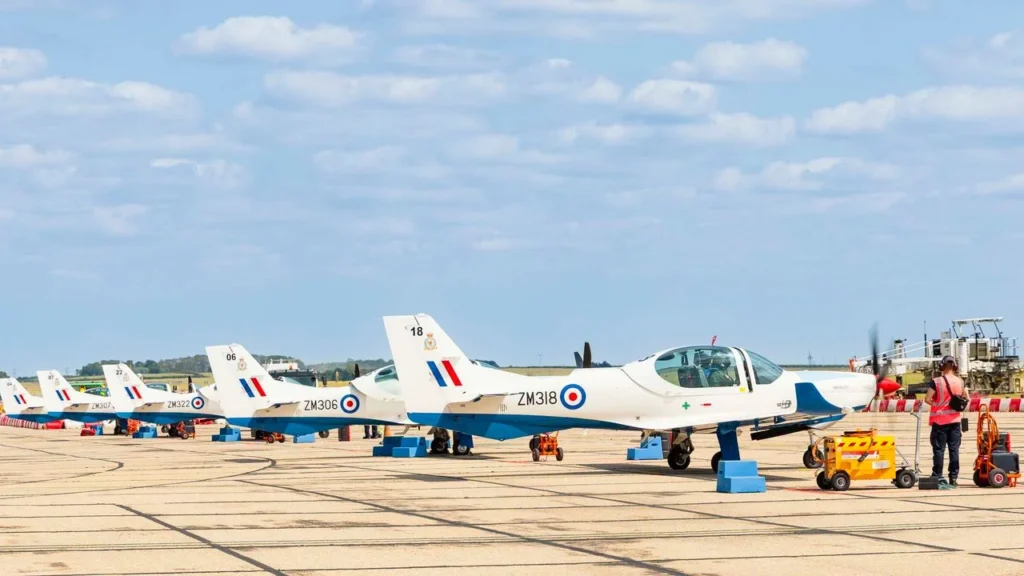
Its current fleet comprises 42 aircraft across three types, operating from RAF Cranwell, RAF Barkston Heath and RAF Valley.
Aerospace Global News was invited to RAF Cranwell to meet the people behind the operation and learn how Affinity is preparing to train the next generation of UK military pilots.
How Affinity Flying Training Services came about
Affinity’s journey can be traced back to 2008, when Ascent Flight Training was awarded a major contract to deliver training for UK military pilots and aircrew.
Established as a joint venture between Lockheed Martin and Babcock International, Ascent was set up to deliver flying training to pilots and aircrew from the three services of the UK Armed Forces as part of a Private Finance Initiative.
Affinity entered the picture in 2013, when it submitted a bid to provide and support the fixed-wing aircraft required for the programme. Its proposal centred on three aircraft types serving different stages of flying training:
- The Grob 120TP Prefect – for elementary flight training (EFT)
- The Beechcraft T-6C Texan – for basic flight training (BFT)
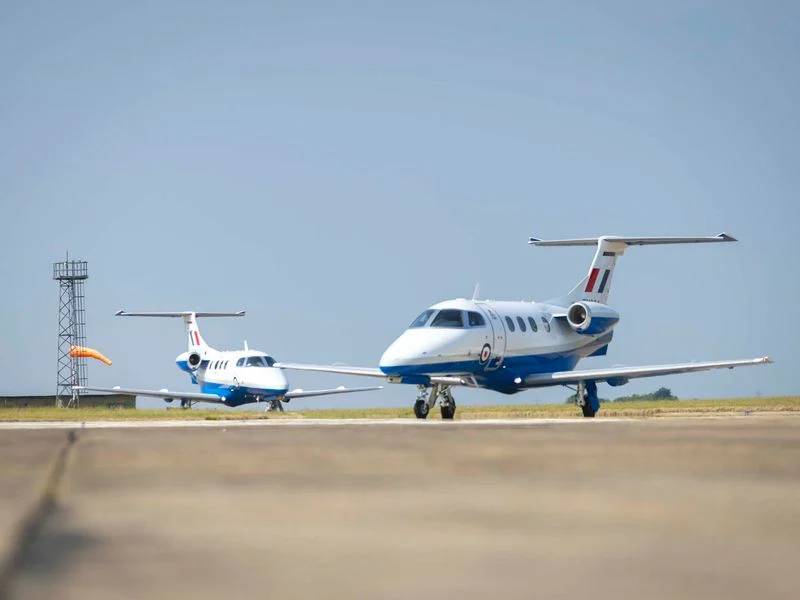
- The Embraer Phenom 100 – for multi-engine pilot training (MEPT)
While Ascent would manage and deliver the training system, Affinity would provide the aircraft and the engineering and operational support required to keep them available.
Ascent selected Affinity as its preferred partner for the Fixed Wing Training Package in 2014. Under the contract, Affinity would provide aircraft maintenance and support through to 2033 at Cranwell, Barkston Heath and Valley.
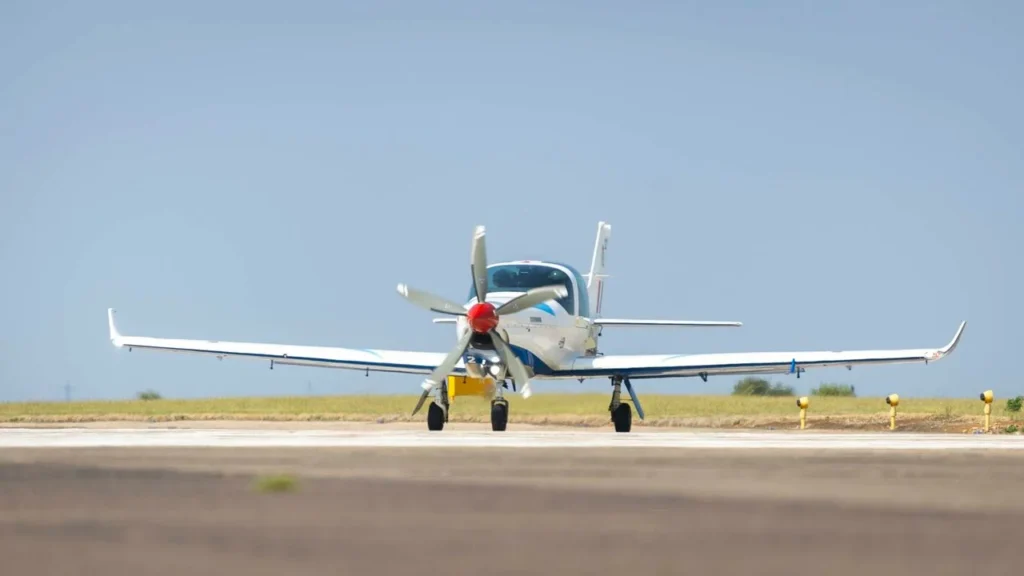
February 2016 marked Affinity’s operational launch, with the company committed to delivering the initial fleet of 38 new aircraft by November 2018.
By the end of its first year, Affinity had completed new maintenance facilities at Cranwell and Valley. The first Phenoms arrived at Cranwell in 2017, while Prefect training began at Barkston Heath.
The final Phenom arrived in 2018, and all 10 original Texans were delivered to RAF Valley. Full service delivery across the three fleets was achieved in 2019.
A subsequent contract added four more Texan T-6Cs, together with additional support equipment and spares, taking the Texan fleet at RAF Valley to 14 and Affinity’s overall fleet to 42 aircraft.
February 2026 marked the company’s tenth anniversary of operations, as it closed in on 100,000 flying hours supported under UKMFTS.
Affinity Flying Training Services today
Affinity now holds UK Civil Aviation Authority Part-145 maintenance and Part-CAMO approvals, alongside approvals from the Military Aviation Authority.
The company is a joint venture between US engineering and technology group KBR and Elbit Systems and employs more than 200 people across its three UK sites.
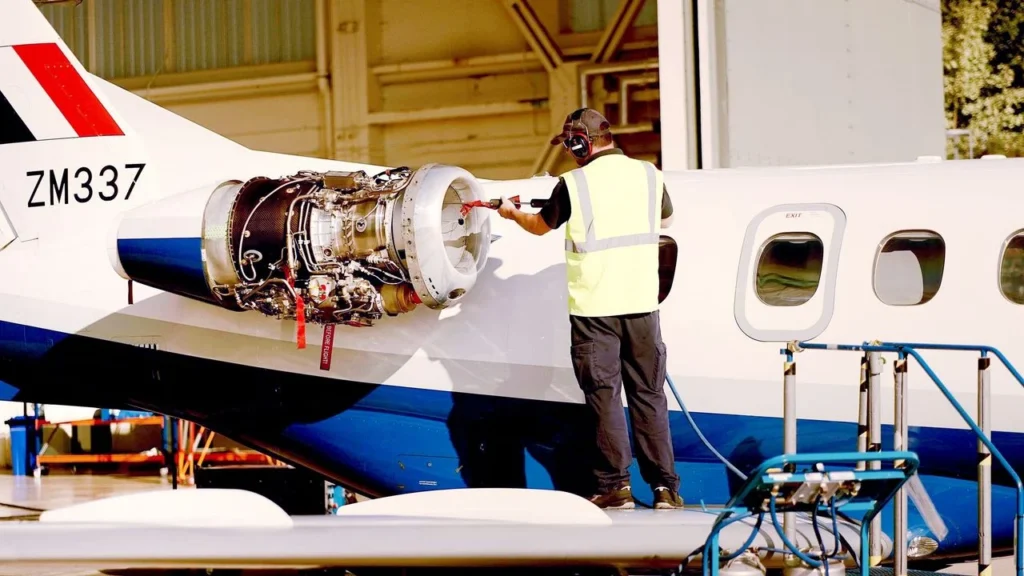
Most maintenance on the 42-aircraft fleet is undertaken in-house. Certain components are returned to their manufacturers for specialist work, including the Pratt & Whitney Canada engines powering the Phenoms.
Iain Chalmers, Affinity’s managing director and a former RAF Tornado squadron commander, said the organisation had come a long way during its first decade.
Although there were lessons to learn during its start-up phase, he said Affinity had since established an efficient and reliable operation. The company reports a dispatch reliability of 98% across its fleet, supporting Ascent’s training requirements under UKMFTS.
Operating only three aircraft types has allowed Affinity to build considerable expertise across each fleet, Chalmers said.
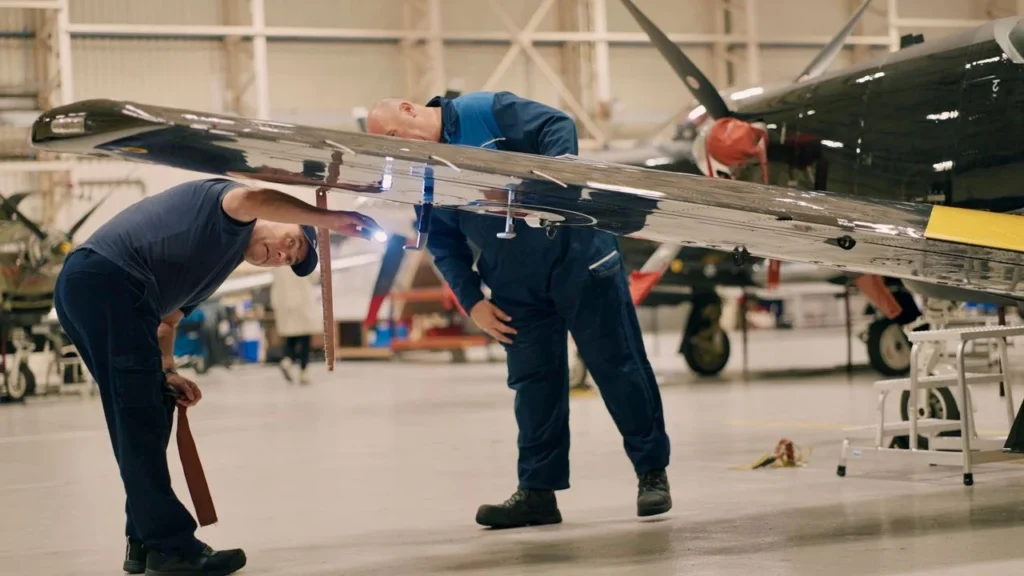
Because the aircraft were acquired new, they also retain substantial useful life. The Texans, for example, are expected to have a service life of around 20 years and have yet to reach the halfway point.
Chalmers acknowledged that Affinity had previously faced challenges recruiting suitably qualified engineers. However, the company now has a full complement of licensed engineers and mechanics, with relatively low staff turnover.
“What we do here is important to our staff,” Chalmers said. “We have spent a great deal of time and effort building a culture where everyone feels part of a team and enjoys coming to work.
“That is important to us as a management team as we strive to deliver the best service we can to our customers.”
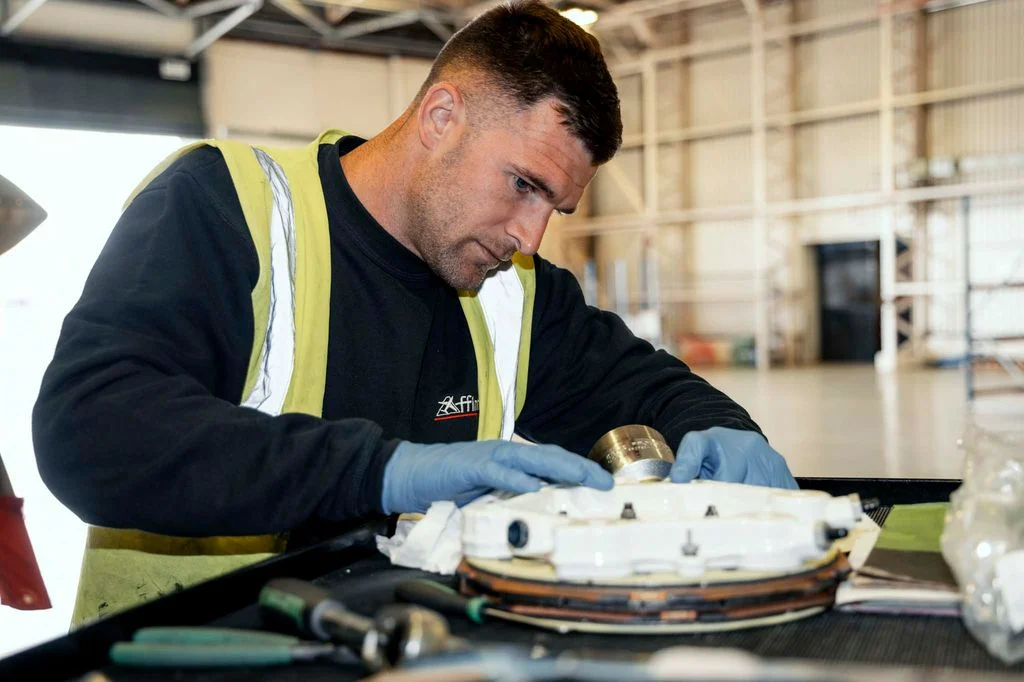
Alex Davison, Affinity’s business director, said the company had maintained a continuous focus on attracting and retaining skilled people.
Recruitment can be challenging because of the locations of its two Lincolnshire sites and RAF Valley in Anglesey. Affinity has sought to overcome that through competitive remuneration, internal development programmes and its emphasis on workplace culture.
Former RAF engineers make up an important part of the workforce, but Affinity also employs engineers from civilian backgrounds, creating a broader mix of experience and skills.
Davison said former service personnel adapted particularly well to an organisation supporting UKMFTS and working closely with the Ministry of Defence.
Affinity considers future military training requirements
Although focused on delivering its current programme, Affinity and Ascent are also examining how the UK’s military flying training requirements could evolve.
The recently published Defence Investment Plan commits £360 million to the full recapitalisation of the Jet Training System, including new jets for a modernised fast-jet training system and to replace the ageing Hawk aircraft used by the Red Arrows.
The wider plan includes continued investment in Typhoon and F-35, as well as £8.6 billion for the Global Combat Air Programme and £300 million to begin developing Collaborative Combat Aircraft.
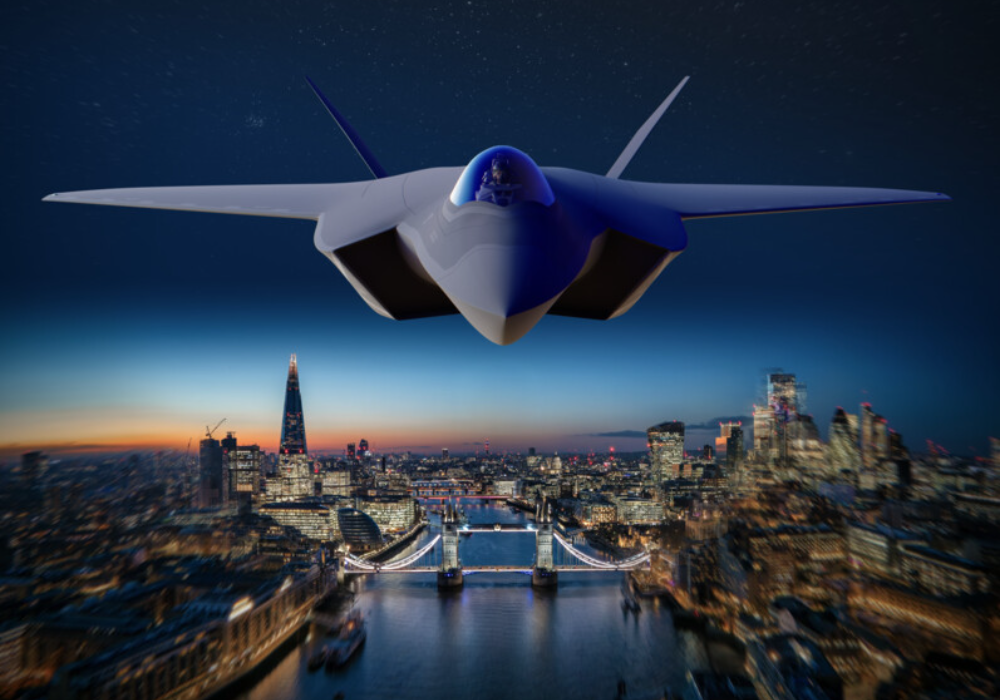
Chalmers said the increasing sophistication of crewed and uncrewed aircraft would reinforce the need for highly trained personnel capable of operating advanced systems.
While the Armed Forces will make greater use of uncrewed aircraft, he does not expect demand for foundational flying training to diminish.
The future training system is instead likely to incorporate greater levels of automation, augmented reality and synthetic training alongside live flying.
Against this backdrop, Affinity is considering acquiring a further four Texan T-6Cs to increase its basic flying training capacity. The company is discussing the proposal with the Ministry of Defence, although no timetable has been agreed.
The additional aircraft would take Affinity’s Texan fleet to 18 and its overall fleet to 46 if the plan proceeds.
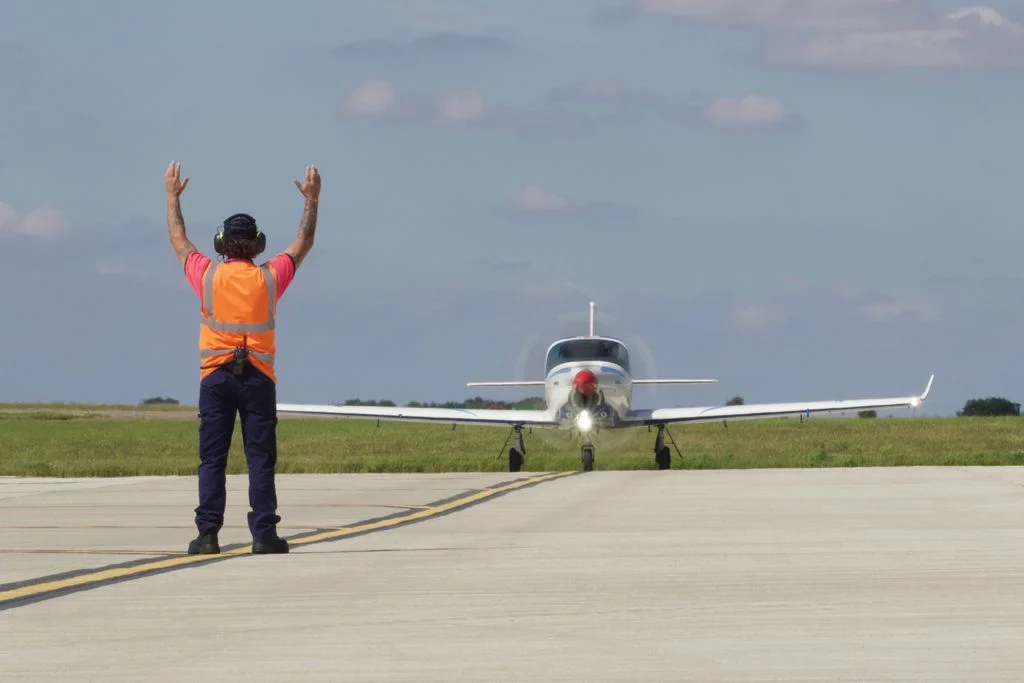
Affinity’s current agreement with Ascent runs until 2033. Chalmers said he expected a competition for the follow-on requirement, rather than the existing agreement simply being extended.
However, the company is already looking beyond the existing contract. Its decade of work with Ascent, experience supporting military training and growing engineering capability could all position it to compete for future programmes.
Preparing to train tomorrow’s pilots
Affinity is well placed to complete its existing UKMFTS commitments, but the shape of military flying training beyond 2033 is still developing.
New aircraft, increased use of synthetic environments and changing relationships between pilots and autonomous systems will place different demands on training providers.
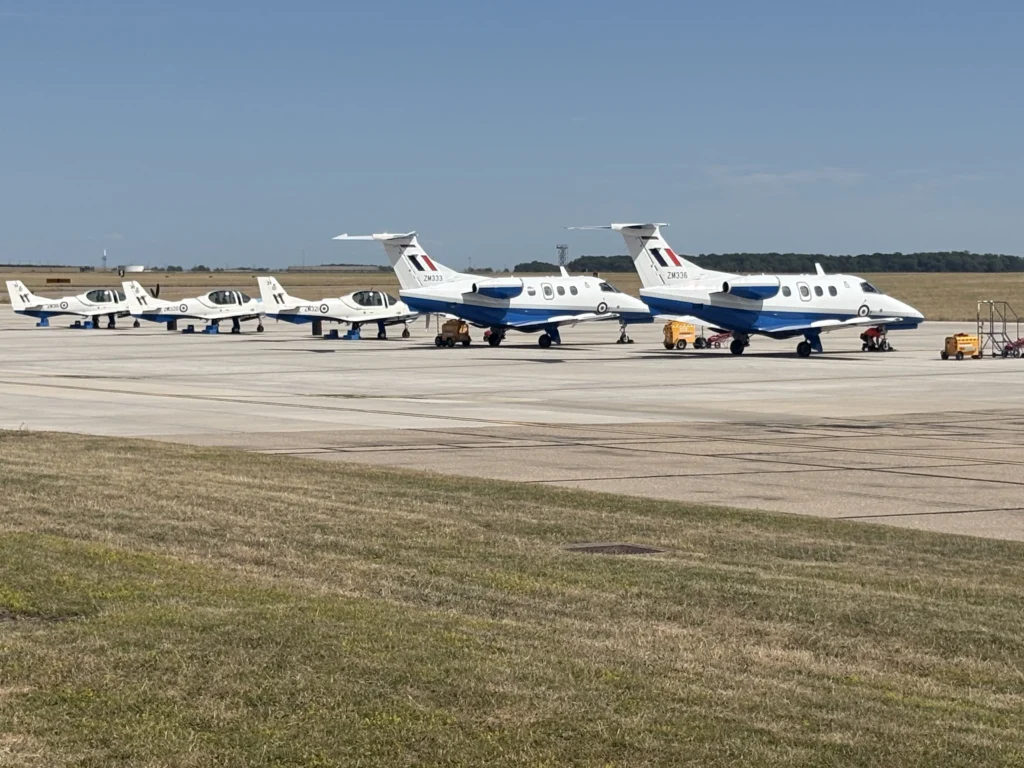
By 2033, Affinity will have accumulated 17 years of operational experience supporting UK military flying training.
Whether that future involves more Texans, new training aircraft or a greater role for synthetic systems, the company is positioning itself to remain part of the UK’s military pilot training pipeline.
Featured image: Affinity Aviation Solutions


