


Vueling’s A320 shark skin plans advance as IAG backs MAKO

4 min read
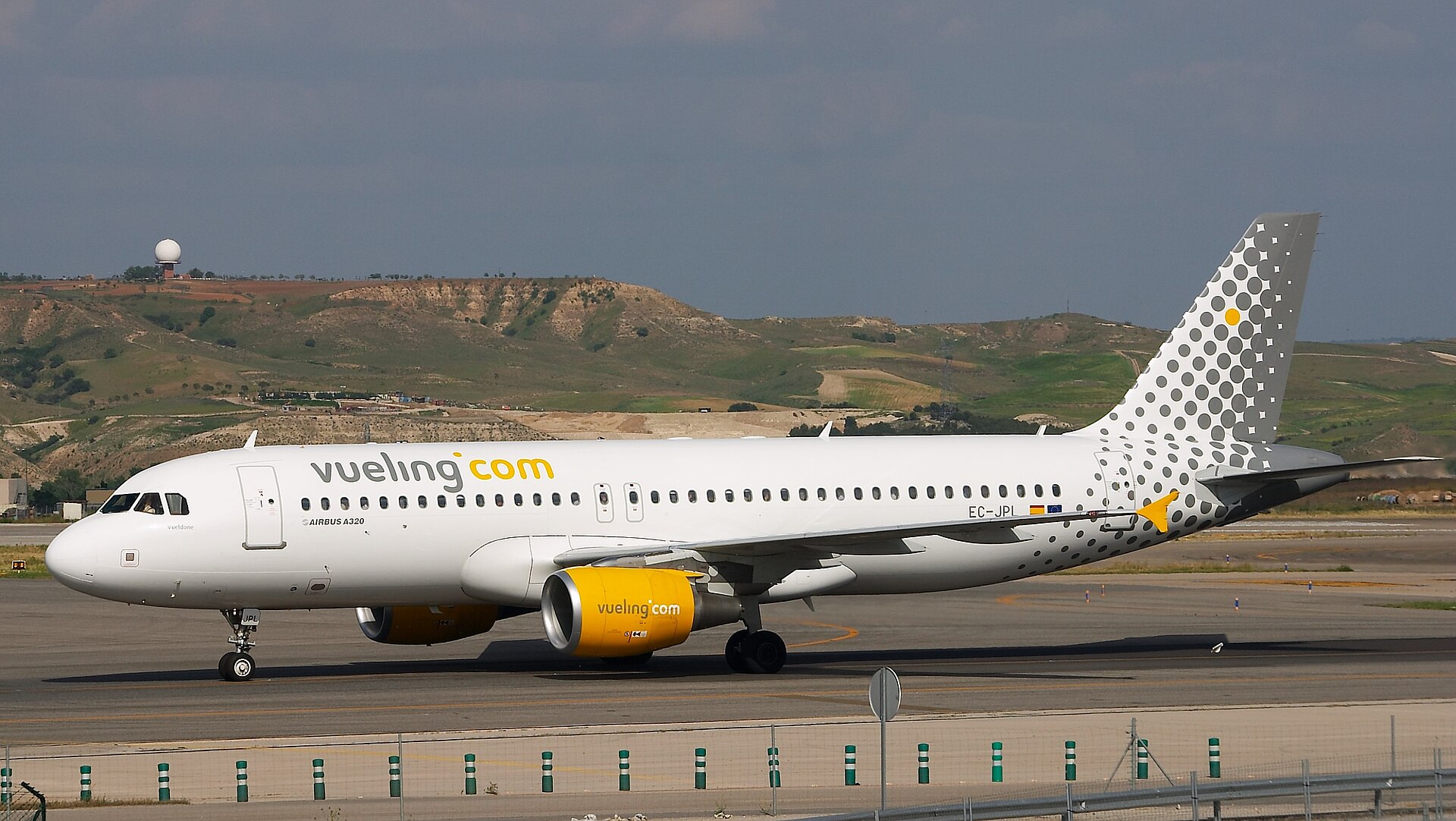
Vueling‘s plans to become Europe’s first airline to deploy shark-skin-enabled drag-reduction technology on the Airbus A320 have advanced after its parent company, International Airlines Group (IAG), invested in Australian aerospace startup MAKO (formerly MicroTau) as part of an AU$28 million (US$20 million) Series A funding round.
The investment will help MAKO complete certification of its Flightfilm technology, scale manufacturing and begin delivering orders already secured from commercial and defence customers.
For Vueling, which signed a Letter of Intent with MAKO—then operating as MicroTau—in 2025, the funding brings the airline one step closer to installing the technology on its Airbus A320 family fleet, subject to regulatory approvals.
Funding accelerates certification
Virescent Ventures led the Series A round, which included participation from IAG’s venture capital arm, IAGi Ventures, as well as Zero Infinity Partners, Grok Ventures, Skip Capital, IP Group and TreeArc.
According to MAKO, the company will use the new capital to:
- Complete certification in Australia, Europe and the United States
- Expand manufacturing capacity
- Deliver existing commercial and defence pre-orders
- Accelerate the global rollout of Flightfilm
“We’re flight-proven, manufacturing-ready, and have commercial and defence customers lined up,” said MAKO CEO Henry Bilinsky. “This funding accelerates MAKO’s mission as we complete certification, deliver to those customers, and scale production for the global aviation fleet.”
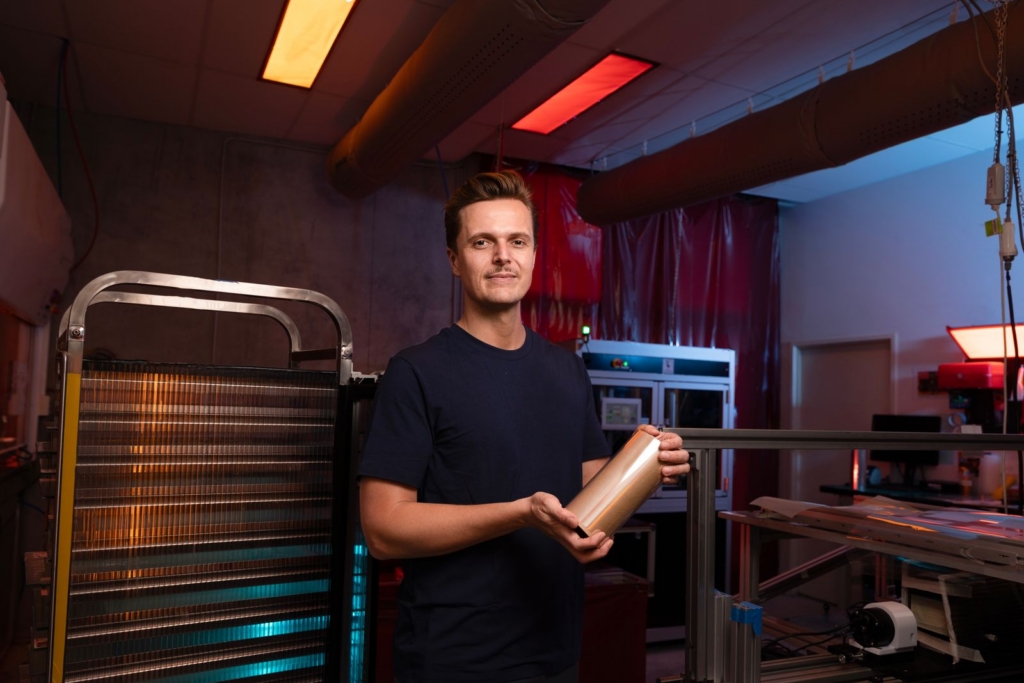
The company says rising fuel prices have made efficiency technologies increasingly attractive because fuel remains airlines’ second-largest operating cost, after labour.
In its announcement, MAKO states that “certification for Flightfilm on the Airbus A320 is expected within the year, together with the manufacturing approvals necessary to supply certified parts to commercial airline customers.”
Vueling became MAKO’s first European airline partner
Although MAKO’s latest funding announcement does not specifically name Vueling, the airline previously announced plans to trial the fuel-saving film in May 2025 and become the first airline in Europe to support certification of shark-skin-inspired coating.
“This innovation not only supports our goal of improving fuel efficiency but also reinforces our commitment to reducing our CO2 emissions through forward-thinking solutions,” said Franc Sanmartí, Director of Sustainability at Vueling at the time of the announcement. “Our partnership with MicroTau will be an important part of how we achieve our sustainability goals both in the short and long term.”

The IAG carrier signed a Letter of Intent to work with MAKO on certifying Flightfilm with the European Union Aviation Safety Agency (EASA), with plans to deploy the technology across its Airbus narrowbody once it gains Special Type Certificate (STC) approval.
“IAG is planning to test the technology later this year with one of our airlines, with the potential to scale across others,” Raza Ali, Managing Partner of IAGi Ventures, said in the recent announcement of the MAKO funding round. “We believe it can improve efficiency and deliver both substantial cost efficiencies and emission reductions, while aligning with our innovation mission to transform aviation by testing and scaling high-impact emerging technologies.”
How shark skin reduces drag
Flightfilm is a thin adhesive surface with microscopic riblets that mimic the texture of shark skin.
The tiny grooves help smooth airflow over an aircraft’s surface, reducing skin-friction drag without requiring structural modifications to the airframe.
“Normally, turbulent air near a surface swirls around chaotically, dragging against it and creating friction,” the company explains in a fact sheet. “Riblets elevate this turbulent air towards their tips, keeping it from scrubbing hard against the surface.” The result is reduced friction drag, improving aircraft fuel efficiency.
The film can be installed during scheduled maintenance checks, making it relatively straightforward for airlines to adopt once certified.
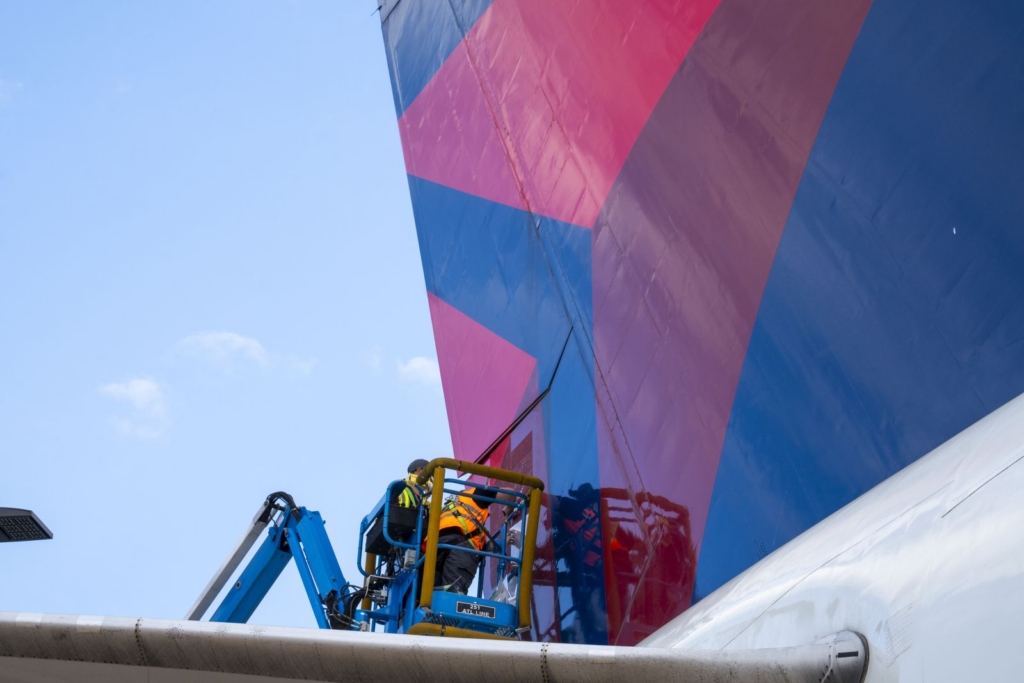
MAKO says the technology can deliver drag reductions of up to 4%, depending on aircraft type and the amount of surface covered.
According to the company, the film will save approximately 100,000 gallons of jet fuel annually on an Airbus A320, which is equivalent to approximately $330,000 in fuel costs and approximately 1,000 tonnes of carbon emissions each year.
Flight testing continues
MAKO’s Flightfilm technology has already undergone flight testing on a Lockheed Martin C-130J Super Hercules operated by the US Air Force, resulting in a net drag reduction of over 4%. The company is under contract with the US Air Force for additional testing on the Boeing C-17 Globemaster III.
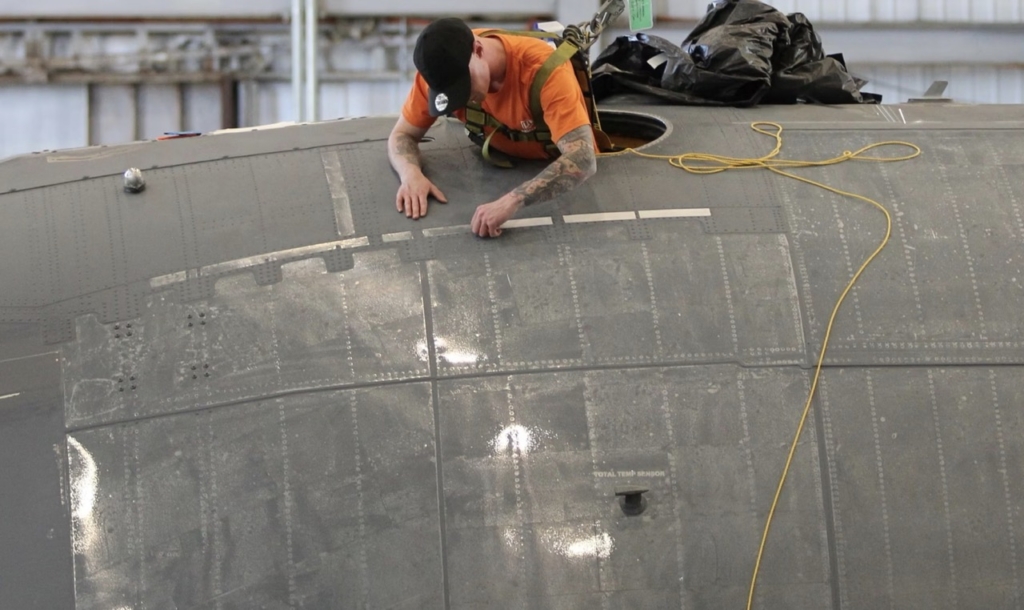
In commercial aviation, MAKO is also collaborating with Delta Air Lines through its Sustainable Skies Lab and has announced plans for further airline trials in the Asia-Pacific region.
The approach is similar to Lufthansa Technik and BASF’s AeroSHARK surface film, which has already entered commercial service on Boeing 777 aircraft. Austrian Airlines reported a 0.7% reduction in drag from its one-year AeroSHARK trial on four of its 777s, with savings of 930 tons of fuel, valued at $1 million, and a reduction of approximately 3,000 tons of CO2.
With fresh funding secured and certification work accelerating, Vueling’s ambition to become Europe’s launch airline for MAKO’s shark-skin-inspired technology is closer to being accomplished.
Featured Image: Usuario:Barcex | Wikimedia Commons
Sign up for our newsletter and get our latest content in your inbox.


More from

September 6, 20264 min read
September 6, 20264 min read


