Airbus Beluga ST joins Aeroscopia as first of its kind to go on public display

4 min read
One of aviation’s most distinctive aircraft is about to become a museum exhibit.
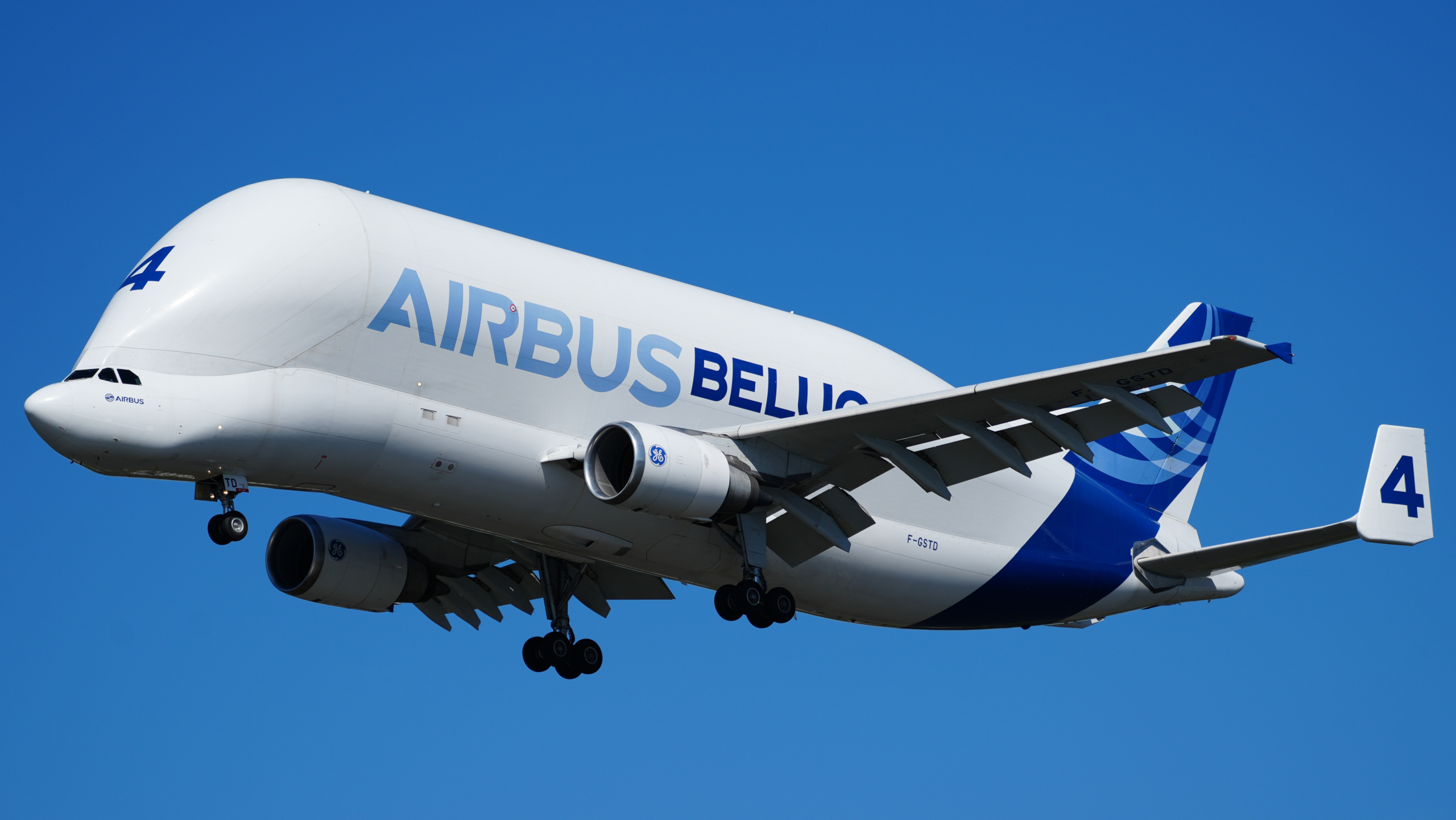
Airbus Beluga ST No. 4, registered F-GSTD, will be unveiled at Toulouse’s Aeroscopia museum on 24 June before opening to visitors the following day, becoming the first and only example of the Beluga ST on permanent public display anywhere in the world.
While the aircraft’s retirement from active service is not new, its arrival at Aeroscopia marks the first time the public will be able to closely examine an aircraft that spent three decades performing one of the most important yet least visible roles in European aerospace.

For much of its working life, the Beluga operated largely behind the scenes, carrying oversized aircraft components between Airbus production facilities across Europe.
The aircraft helped enable Airbus’ multinational manufacturing model, allowing production sites spread across Europe to function as a single integrated industrial system.
It rarely attracted the attention given to passenger airliners or military aircraft, but without it Airbus would have struggled to build the industrial network that helped transform the company into one of the world’s largest aerospace manufacturers.
The Airbus Beluga: Connecting Europe’s aircraft factories
The Beluga was born out of a uniquely European challenge. Only five Beluga ST aircraft were built.
Unlike many aircraft manufacturers, Airbus developed a production model in which major sections of an aircraft were built in different countries before being brought together for final assembly.
Wings were produced in the United Kingdom, fuselage sections in Germany, tail structures in Spain and final assembly carried out in France.
Moving these oversized components quickly and efficiently became increasingly important as Airbus production rates expanded.
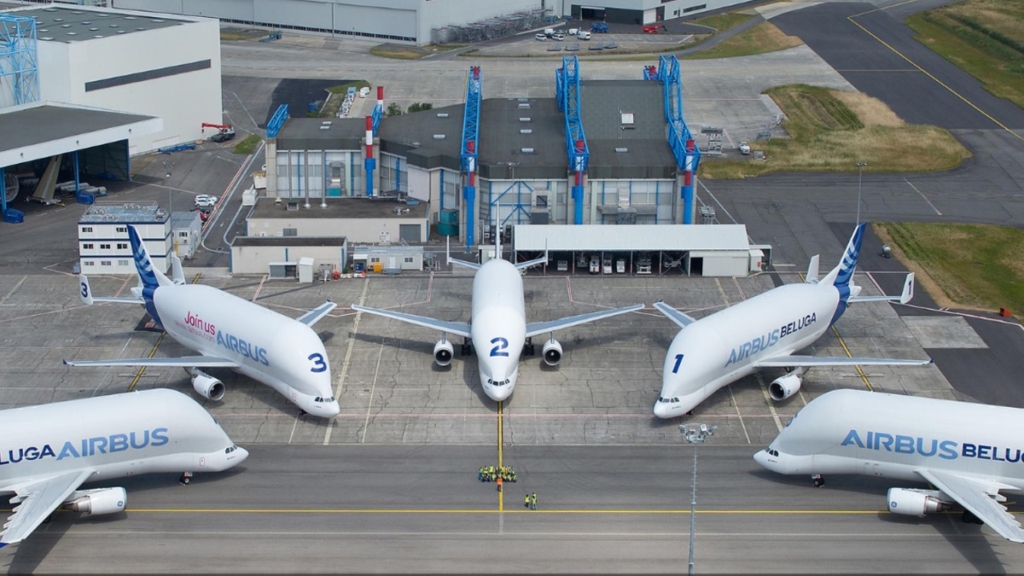
Over the years, the fleet carried everything from wings and fuselage sections to cockpit assemblies and major structural components for programmes including the A320 family, A330, A340 and later the A350.
Initially, Airbus relied on the ageing Super Guppy transport aircraft, a heavily modified cargo aircraft originally developed to carry components for the American space programme.
By the late 1980s, however, Airbus required a larger and more capable transport solution.
The answer was the A300-600ST Super Transporter, better known as the Beluga.
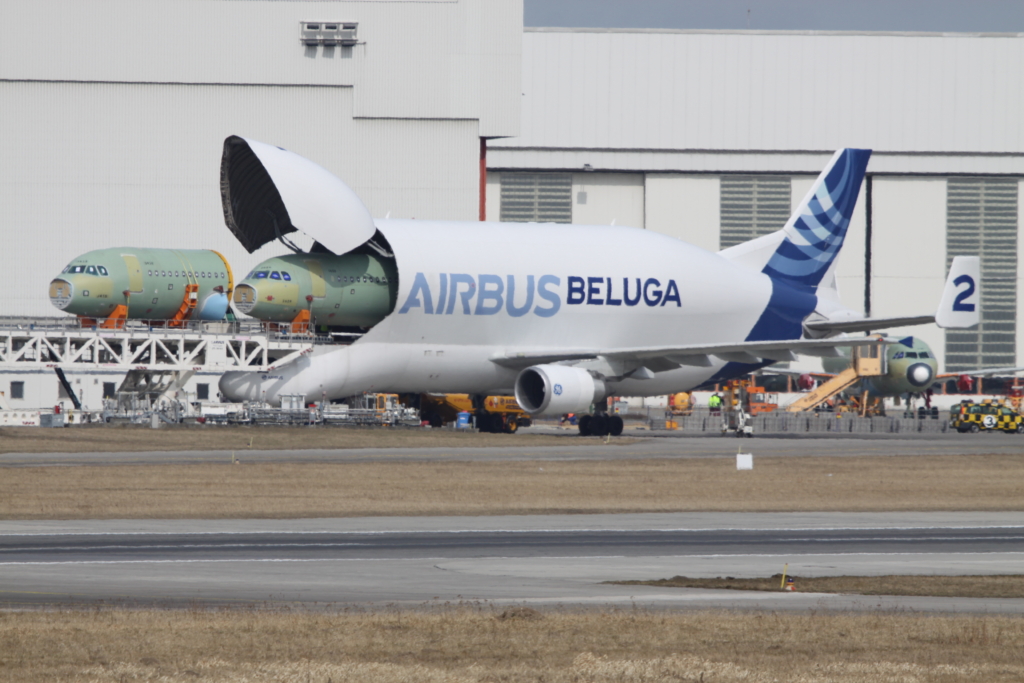
Based on the Airbus A300 airliner, the aircraft featured an enormous cargo compartment mounted above a lowered cockpit, allowing large aircraft sections to be loaded through a front cargo door. Its distinctive shape quickly earned comparisons with the Arctic beluga whale, giving the aircraft the nickname that would eventually become its official identity.
The aircraft became one of the most recognisable sights in European aviation.
Despite operating primarily within Airbus’ industrial network, its unusual appearance made it an instant favourite among aviation enthusiasts whenever it appeared at airshows or airports outside its normal routes.
Why Airbus replaced the Beluga ST with the BelugaXL
As Airbus production expanded and newer aircraft programmes entered service, the company eventually needed greater transport capacity.
That requirement led to the development of the BelugaXL, a larger successor based on the Airbus A330-200.
The BelugaXL entered service in 2020 and offered significantly greater cargo volume, allowing Airbus to transport larger A350 components and support increasing production demands.
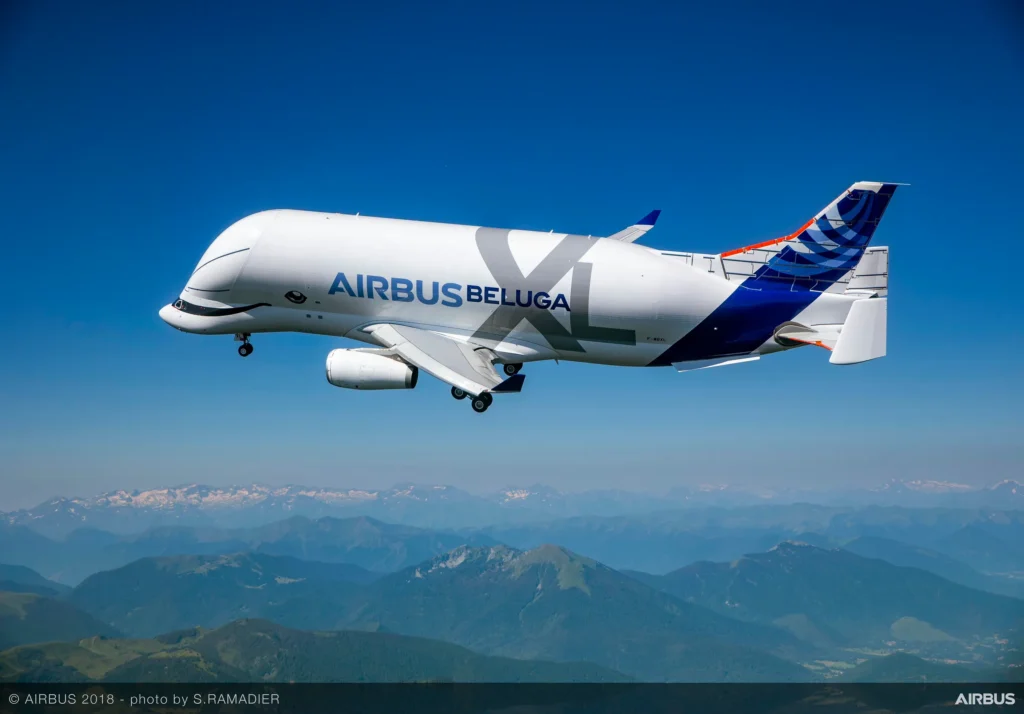
With six BelugaXL aircraft now operating across Airbus’ logistics network, the original Beluga ST fleet gradually completed its final missions and entered retirement.
Airbus had initially explored commercial opportunities for the retired aircraft through Airbus Beluga Transport, a venture aimed at carrying oversized cargo for external customers.
Although the aircraft successfully transported a variety of industrial loads, the project was eventually discontinued.
The company subsequently began looking for long-term homes that would preserve the aircraft’s legacy while allowing future generations to understand its role in aerospace history.
Aeroscopia is the natural home for the Airbus Beluga
The selection of Aeroscopia carries particular symbolism.
Located beside Toulouse-Blagnac Airport, the museum sits at the heart of Airbus’ historic home base and already houses several aircraft closely linked to European aviation history.
Among its exhibits are Concorde, the Airbus A300B and other aircraft that helped shape the development of modern commercial aviation.
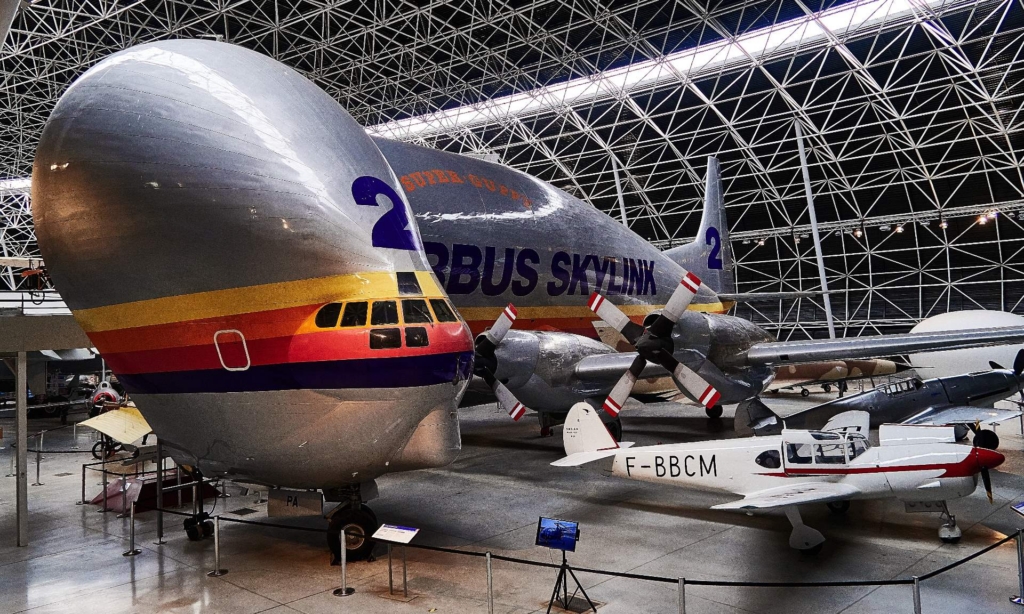
The arrival of Beluga ST No. 4 adds another important chapter to that story.
Unlike Concorde, which symbolised speed and technological ambition, or the A300, which launched Airbus into the commercial airliner market, the Beluga represented something different: the industrial backbone that allowed the company to grow.
Visitors attending the special unveiling event on 24 June will get the first opportunity to see the aircraft in its new setting before it officially opens to the public on 25 June.
Preserving the legacy of an Airbus manufacturing icon
The Beluga never carried airline passengers and rarely appeared in aviation headlines.
Its retirement marked the end of an era for Airbus manufacturing. Its arrival at Aeroscopia ensures that the aircraft’s contribution will not be forgotten.
For visitors to Toulouse, it provides an opportunity to stand beneath a machine that helped build one of the world’s most successful aerospace companies.
Featured image: MarcelX42 | Wikimedia Commons
Sign up for our newsletter and get our latest content in your inbox.


More from


October 13, 202612 min read