Dassault tests Rafale collaborative combat capability with NAMIB electronic warfare payload

5 min read
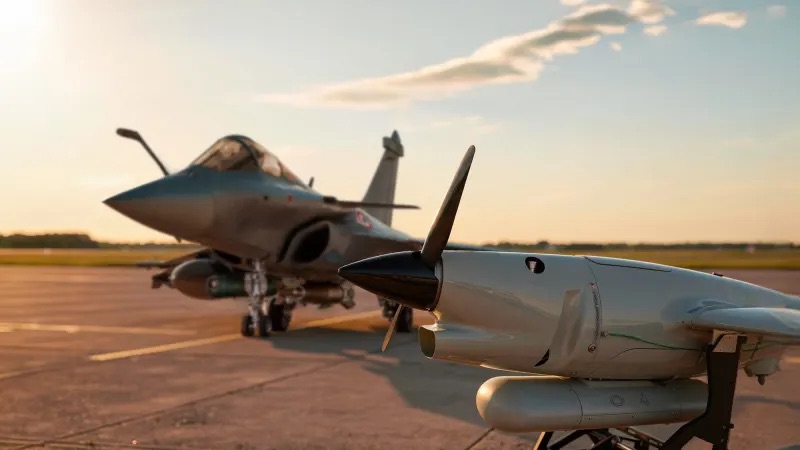
Dassault Aviation and Harmattan AI have demonstrated a new collaborative combat capability in which an uncrewed aircraft detected and geolocated an enemy radar before transmitting the target’s location to a Rafale F4 fighter for a simulated strike.
The demonstration involved NAMIB, an electronic warfare payload jointly developed by the two companies under a strategic partnership announced earlier this year.
Mounted on an unmanned aerial system, the payload detected electromagnetic emissions from an air-defence radar located several dozen kilometres away, calculated its position and transmitted the coordinates to the Rafale, which then simulated an engagement.
The trial is the latest example of how combat aircraft are being paired with autonomous systems to extend their reach into contested airspace while reducing the need for crewed platforms to operate close to enemy air-defence networks.
Demonstration focused on detecting and locating hostile radar emissions
Electronic warfare has become one of the defining features of modern air operations, particularly as integrated air-defence systems become more capable and more widely deployed.
NAMIB has been designed to detect, identify and geolocate electromagnetic emissions, particularly those generated by radar systems.
According to Dassault Aviation, the payload can be carried by a range of unmanned platforms, from small quadcopters to larger fixed-wing tactical drones with longer endurance.
During the flight demonstration, the unmanned aircraft remained responsible for the electronic surveillance task while the Rafale received the target location through its mission system.
Although no weapon was fired, the exercise demonstrated the ability to transfer targeting information from an autonomous platform to a crewed combat aircraft during a mission.
The development of NAMIB began in January 2026 as part of Dassault Aviation’s collaboration with Harmattan AI to explore autonomous capabilities for future air combat operations.
Rafale F4 expands its role in networked combat operations
The demonstration also highlighted one of the principal objectives of the Rafale F4 standard, which places greater emphasis on connectivity and collaborative operations.
Rather than relying solely on the aircraft’s own sensors, the F4 architecture has been designed to receive and share information with other platforms operating across the battlespace.
That allows the fighter to exploit data collected by unmanned systems, ground forces and other networked assets to improve situational awareness and shorten the time between detecting a threat and responding to it.
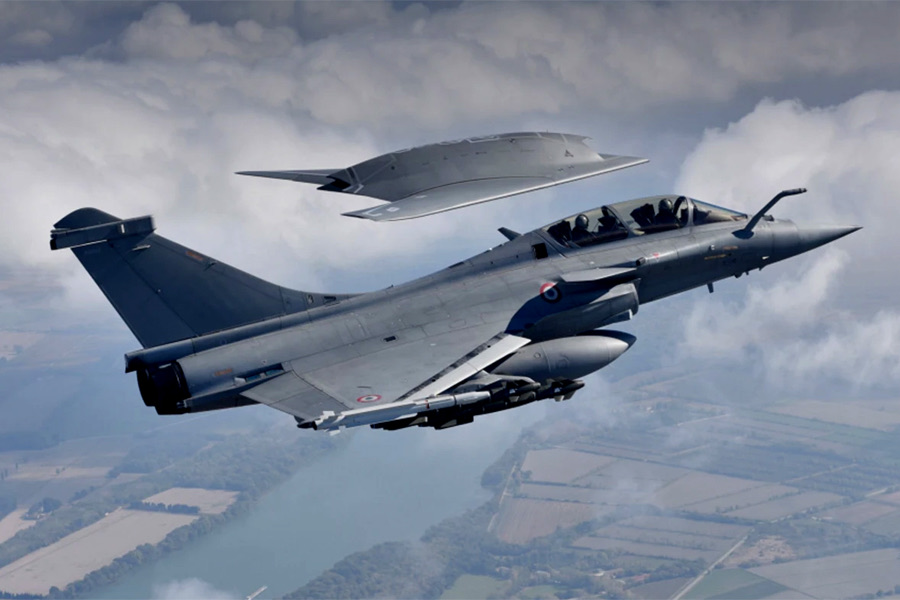
Dassault said the trial demonstrated the Rafale’s ability to integrate data from new operational systems while supporting what it describes as a “high-low mix” of capabilities, where advanced combat aircraft operate alongside lower-cost autonomous platforms performing specialist missions.
“This flight demonstrates the Rafale’s real and tangible multi-domain collaborative combat capabilities. The F4 standard architecture enables seamless communication with a very broad range of operational assets, including ground forces, allowing it to effectively leverage new capabilities, such as NAMIB’s electromagnetic detection and geolocation functions”, said Eric Trappier, Chairman and CEO of Dassault Aviation.
“It also provides another illustration of the Rafale’s continuous adaptation to evolving operational requirements, and, in this case, to ‘high-low mix’, that is, the combination of highly sophisticated systems with autonomous and expendable effectors,” he added.
The concept reflects a broader shift in military aviation, where crewed fighters increasingly operate as part of a wider network rather than as standalone platforms.
Autonomous systems are taking on higher-risk missions
Using unmanned aircraft for electronic warfare offers several operational advantages.
Instead of sending a fighter aircraft into the range of enemy air-defence systems to search for radar emissions, a smaller and less expensive unmanned platform can perform the task while the crewed aircraft remains at a safer distance.
If the drone identifies a radar site, the information can be passed immediately to other aircraft or command centres, allowing decisions to be made without exposing high-value platforms unnecessarily.
The approach has gained increasing attention in recent years as armed forces seek to combine advanced fighters with autonomous systems capable of carrying out reconnaissance, electronic warfare and strike support missions.
The ability to distribute sensors across multiple platforms also makes it more difficult for an adversary to disrupt operations by targeting a single aircraft.
Demonstration reflects wider changes in air combat
Dassault’s latest trial comes as air forces around the world invest in collaborative combat technologies.
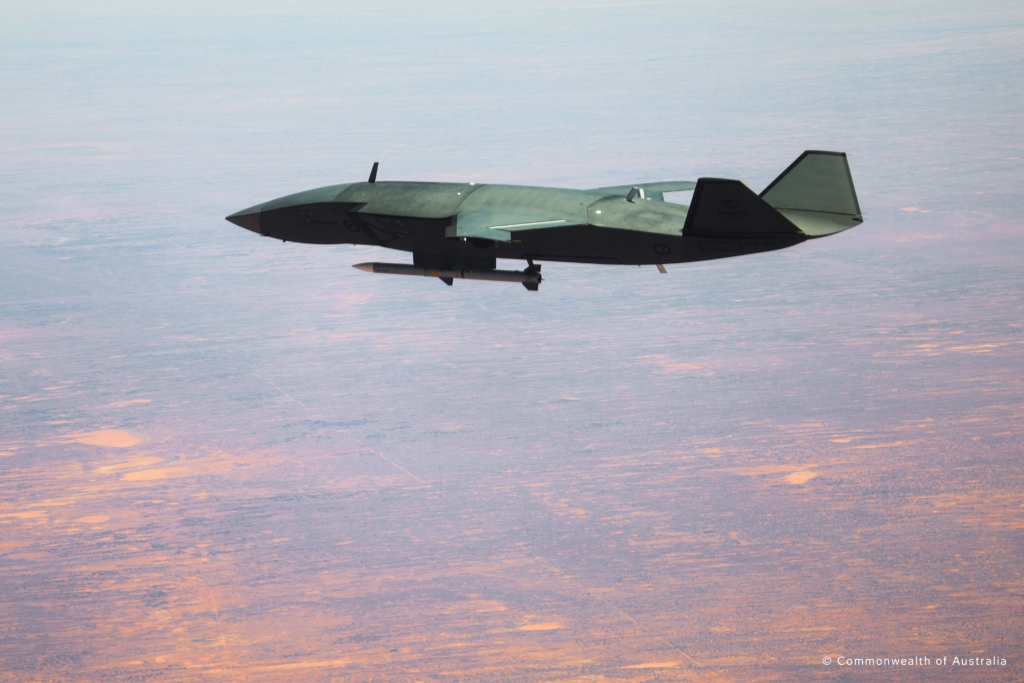
The United States is developing Collaborative Combat Aircraft to operate alongside crewed fighters, while Europe’s Future Combat Air System (FCAS) includes plans for remotely operated carriers working with next-generation combat aircraft. Australia has also demonstrated similar concepts through Boeing’s MQ-28 Ghost Bat programme.
Although the platforms differ, the underlying objective is similar: combining crewed aircraft with autonomous systems that can undertake tasks considered too dangerous or too costly for front-line fighters operating alone.
Electronic warfare is one of those missions, particularly against increasingly sophisticated surface-to-air missile networks.
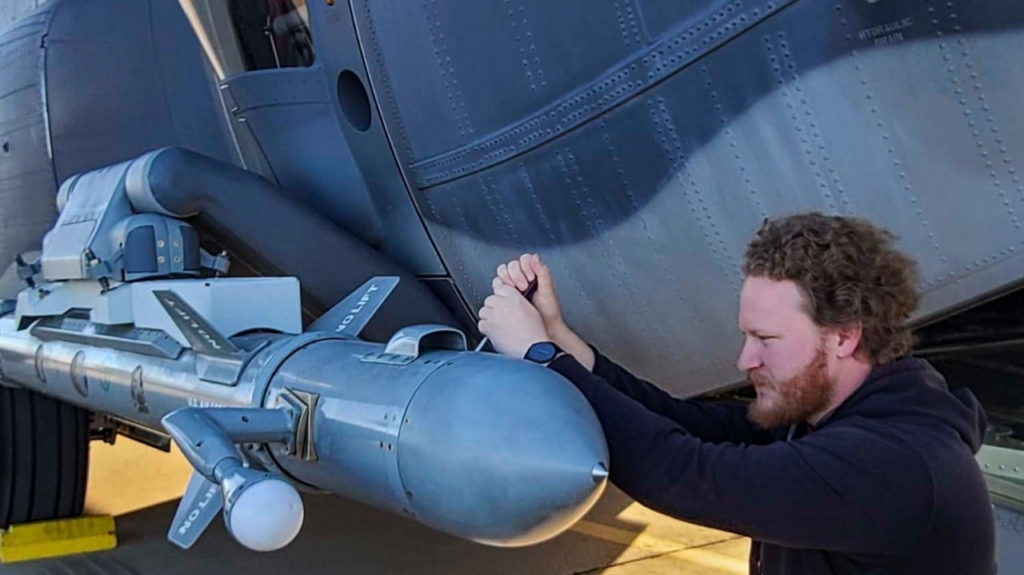
“Electronic warfare has become a decisive factor in achieving operational superiority. Through NAMIB, we are demonstrating that these capabilities can now be deployed on lightweight autonomous systems operating close to the threat,” said Mouad M’Ghari, Co-Founder and CEO of Harmattan AI.
“This achievement highlights the complementary strengths of Dassault Aviation and Harmattan AI, combining decades of experience in air combat systems with our expertise in autonomy and embedded intelligence. Together, we are demonstrating that it is possible to accelerate the integration of disruptive technologies for the benefit of the armed forces and lay the groundwork for the collaborative combat architectures of tomorrow.”
Partnership brings together established and emerging defence technologies
The two companies say the partnership is intended to accelerate the integration of autonomous capabilities into future combat operations.
While the demonstration focused on a single mission, it illustrates how air combat is evolving beyond individual aircraft towards networks of crewed and uncrewed systems sharing information in real time.
For future operations, the ability to detect a threat with one platform and engage it with another is likely to become an increasingly important element of air power.