


Upgraded Ghost Bat: Boeing reveals what is changing on the MQ-28 CCA

8 min read
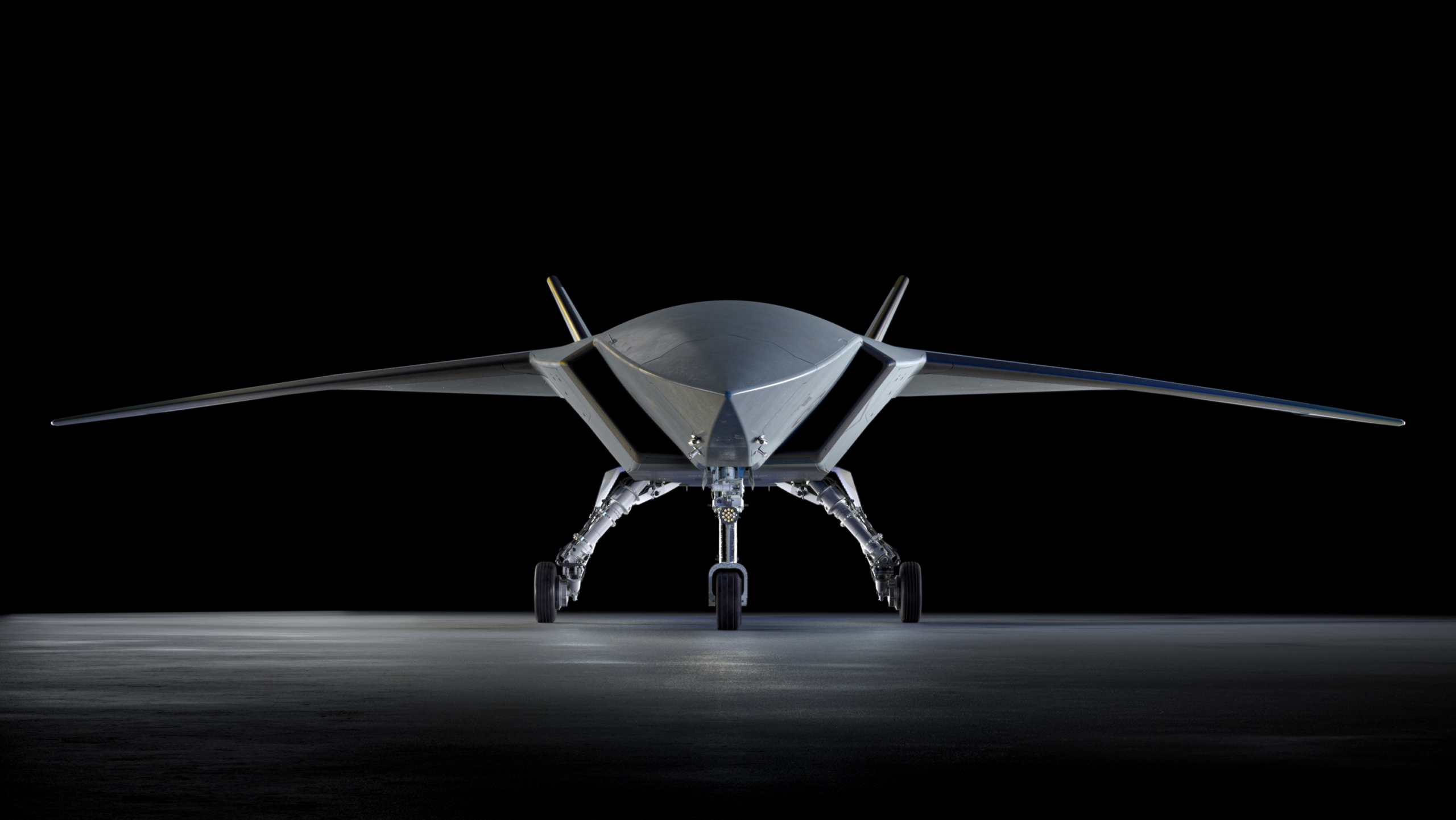
Boeing has revealed a major capability upgrade for its MQ-28 Ghost Bat collaborative combat aircraft (CCA). The suite of new enhancements for the Block 3 configuration will significantly expand its range, payload capacity, connectivity, and combat potential.
The new MQ-28 Block 3 – an enhanced version of one of the most mature CCA platforms currently in development – was unveiled by Boeing Australia and Germany’s Rheinmetall during the ILA Berlin Air Show on 10 June.
✅ >25% larger wing
— Boeing Australia (@BoeingAustralia) June 10, 2026
✅ Increased fuel and payload capacity
✅ Beyond Line of Sight capability
✅ Internal weapons stations for greater mission configurability
MQ-28 Ghost Bat enhancements deliver flexibility, range and capacity advancements.
More: https://t.co/IPZLUy5Qub pic.twitter.com/7EK5fUD11h
These new enhancements were announced as Boeing confirmed that Diehl Defence and Rohde & Schwarz have partnered with Rheinmetall to offer the Ghost Bat to the Bundeswehr, Germany’s armed forces.
Boeing pitches MQ-28 Ghost Bat to Germany
Boeing eyes Germany as a crucial export customer for the Ghost Bat, and a key stepping stone into a potentially lucrative European CCA market, with the firm aiming to deliver the first MQ-28s to the Luftwaffe by 2029 if selected.
The company is specifically offering the new MQ-28 Block 3, the third design iteration of the innovative CCA platform, to the German Air Force.
Developed in partnership with the Royal Australian Air Force (RAAF), the Ghost Bat was originally conceived as an uncrewed ‘Loyal Wingman’ aircraft capable of teaming with crewed platforms, such as the F-35A Lightning II, F/A-18F Super Hornet, EA-18G Growler and E-7A Wedgetail, through the manned-unmanned teaming (MUM-T) concept.
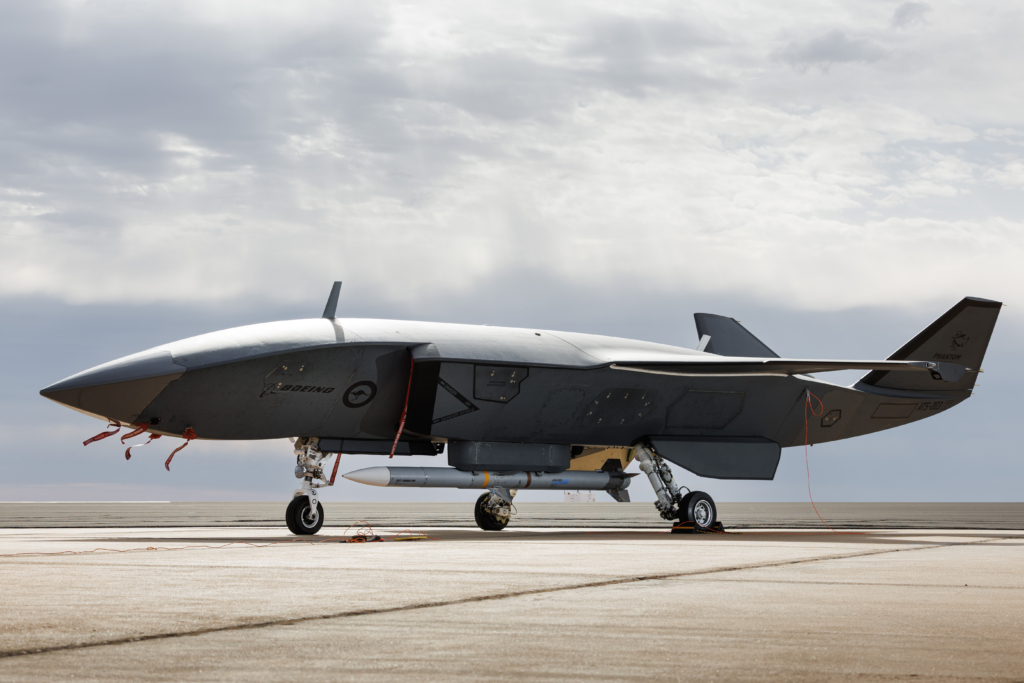
The type leverages artificial intelligence (AI) technology and a modular mission system in the nose of the aircraft, which can be removed and swapped with different payloads to accommodate different taskings, such as air combat, electronic warfare (EW) and armed reconnaissance operations.
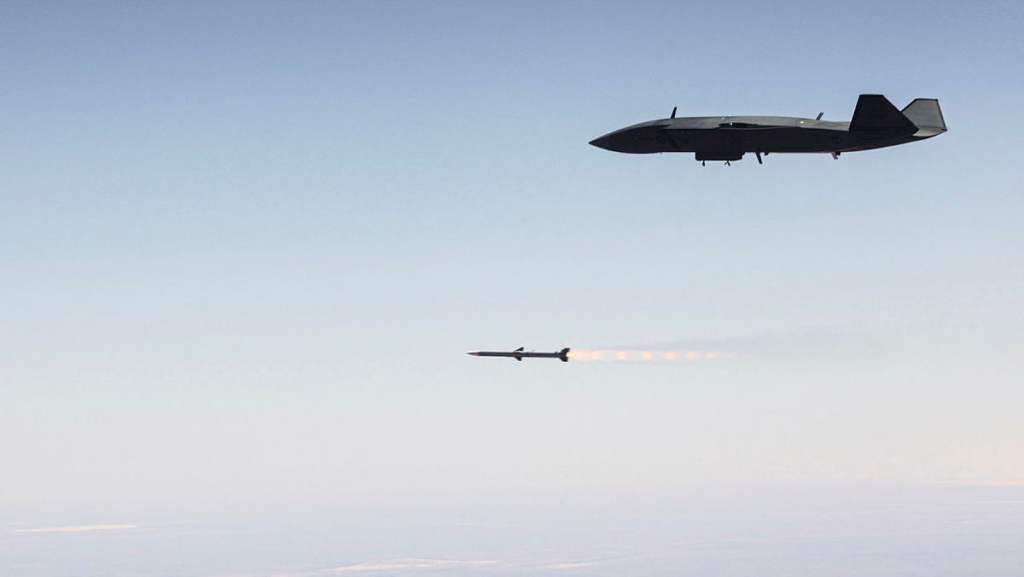
An MQ-28 is seen loaded with an AIM-120 AMRAAM during Trial Kareela 25-4 at RAAF Base Woomera, South Australia, on 8 December 2025. This image offers a useful comparison between the size of an AIM-120 and the Ghost Bat. Image: Australian Department of Defence/AC Ivan Smotrov
Three versions of the MQ-28 now exist. Earlier Block 1 and Block 2-configured Ghost Bats have completed more than 150 test missions in Australia and the US since the platform’s first flight on 27 February 2021. Eight MQ-28 Block 1 aircraft, configured as pre-production prototypes, have already been acquired by Canberra.
Meanwhile, the first nine improved MQ-28 Block 2 aircraft are now being built and are viewed as early operational examples of the platform that will help pave the way for Initial Operational Capability (IOC).
Boeing MQ-28 Ghost Bat gets a new wing
One of the most significant changes in the Block 3 configuration is a wing redesign that increases the CCA’s wingspan by more than 25%. Boeing says the larger wing substantially boosts fuel capacity and payload volume, enabling the aircraft to carry approximately 2,000lb more fuel, mission equipment and stores.
The redesign also increases the Ghost Bat’s maximum take-off weight from 10,000lb (4,535kg) to 12,000lb (5,443kg), although Boeing has not yet detailed whether any propulsion changes are planned to support the higher MTOW.
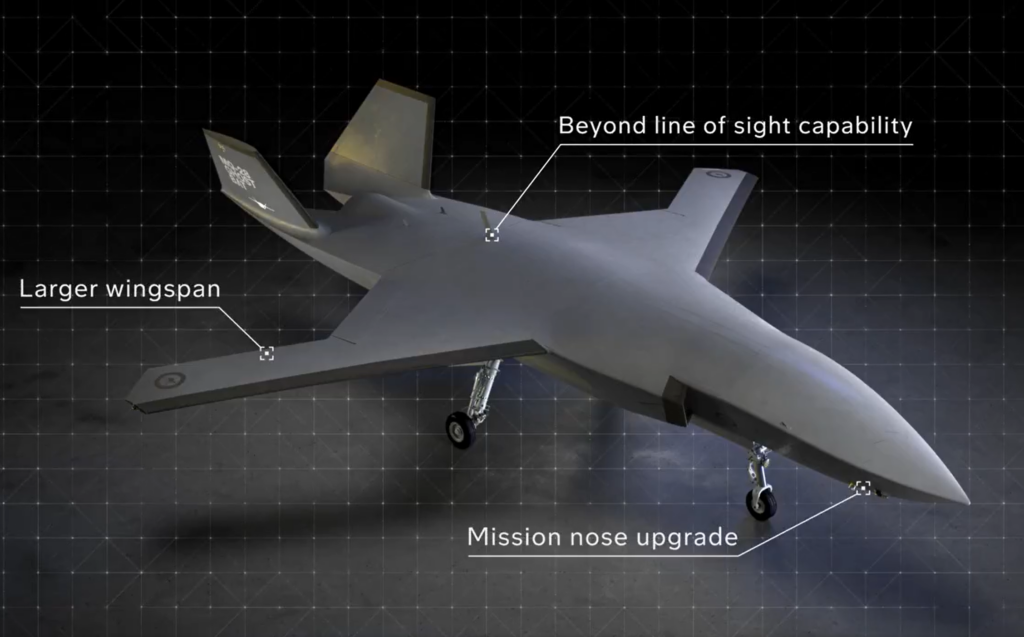
Glen Ferguson, Boeing’s MQ-28 Global Program Director, outlined how the MQ-28’s Block 3 configuration will increase operational flexibility.
“That additional capacity gives operators freedom to balance payload and endurance to configure for the mission at hand, whether that means carrying extra fuel for longer-range operations, increasing weapons carriage, or any combination of both.”
This enhancement aims to increase the platform’s overall mission endurance and extend the aircraft’s operational reach, allowing it to better support longer-range air combat and surveillance operations, among other taskings.
The improved aerodynamic design is also expected to enhance flexibility for future mission configurations and export customers seeking longer-range yet adaptable CCA solutions.
Boeing adds BLOS control to MQ-28 Ghost Bat
The new Block 3 configuration also introduces beyond line-of-sight (BLOS) communication links to the Ghost Bat, allowing the platform to be operated at far greater stand-off ranges from a land-based ground control station, another crewed aircraft or a naval warship.
With an effective range of more than 2,000 nmi (3,700 km), the addition of BLOS authority ensures the Ghost Bat can conduct operations independently when not being directly commanded by a nearby crewed aircraft, a role that was always envisaged for the MQ-28.
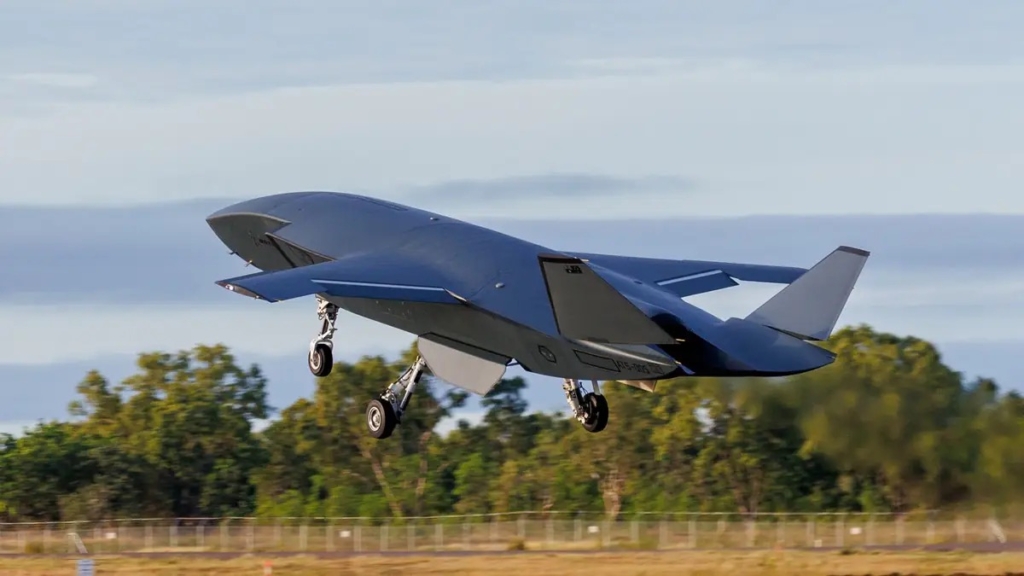
This enhancement also allows operators to command and monitor the aircraft over far greater distances, reducing dependence on nearby control assets and improving overall operational flexibility. It also provides greater resilience for command-and-control (C2) in combat environments degraded by adversary electronic warfare capabilities.
Boeing says the new communications architecture will enable more effective C2 arrangements for future multinational and expeditionary operations. For CCAs, reliable long-range communications are essential because they allow uncrewed systems to operate alongside crewed assets across vast operational areas while remaining connected to combatant commanders and mission networks.
“Inclusion of features such as [the] BLOS capability are a direct result of our learnings to date along with feedback from Air Forces as they understand more about the role and integration of CCAs into joint force operations,” Ferguson said.
MQ-28 Ghost Bat gains internal weapons bays
Perhaps the most notable combat enhancement included with the Block 3 package is the addition of new internal weapons stations, giving the Ghost Bat a more credible weapons-carrying role while helping preserve its low-observable characteristics.
Previous versions of the MQ-28 primarily focused on intelligence, surveillance and reconnaissance (ISR) and MUM-T functions, with the Block 3-standard introducing an ability for the Ghost Bat to carry weapons internally while preserving the aircraft’s low-observable (LO) characteristics.
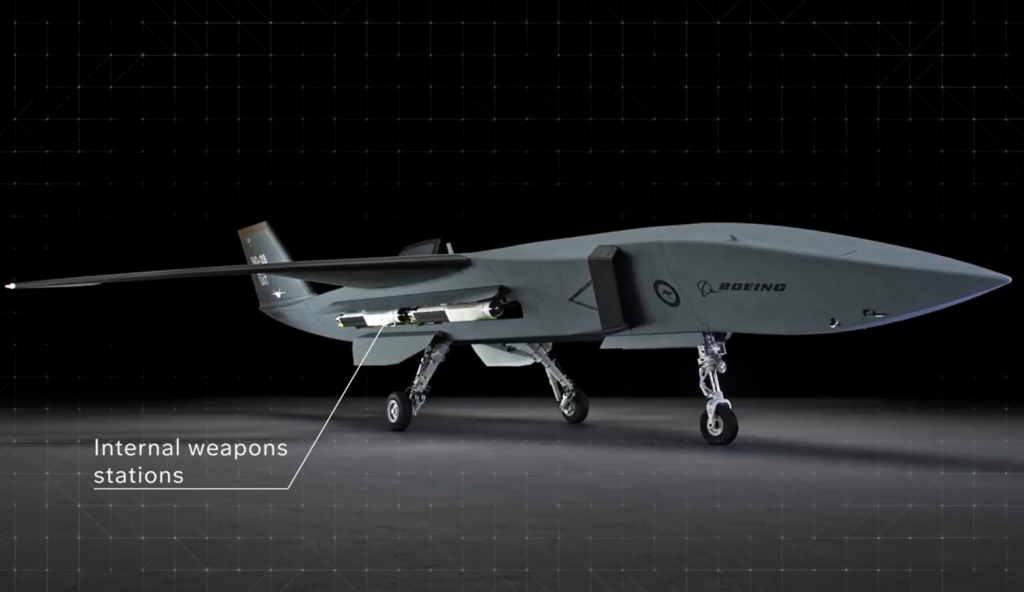
Boeing states that Block 3 aircraft can be configured to carry two AIM-120 Advanced Medium-Range Air-to-Air Missiles (AMRAAMs), becoming the first CCA that is capable of carrying AMRAAMs internally.
Alternatively, up to four Small Diameter Bombs (SDBs) can be carried internally. This includes either the Boeing-made GBU-39/B SDB I or the Raytheon-developed GBU-53/B SDB II, which is also known as StormBreaker.
The Ghost Bat’s ability to carry weapons internally reflects Boeing’s recent effort to prove the stealth characteristics and performance of its pioneering CCA. On 1 June, Boeing revealed it has validated the MQ-28’s LO characteristics through radar cross-section (RCS) testing in Australia, proving that the platform is harder to detect and better able to operate in contested environments.
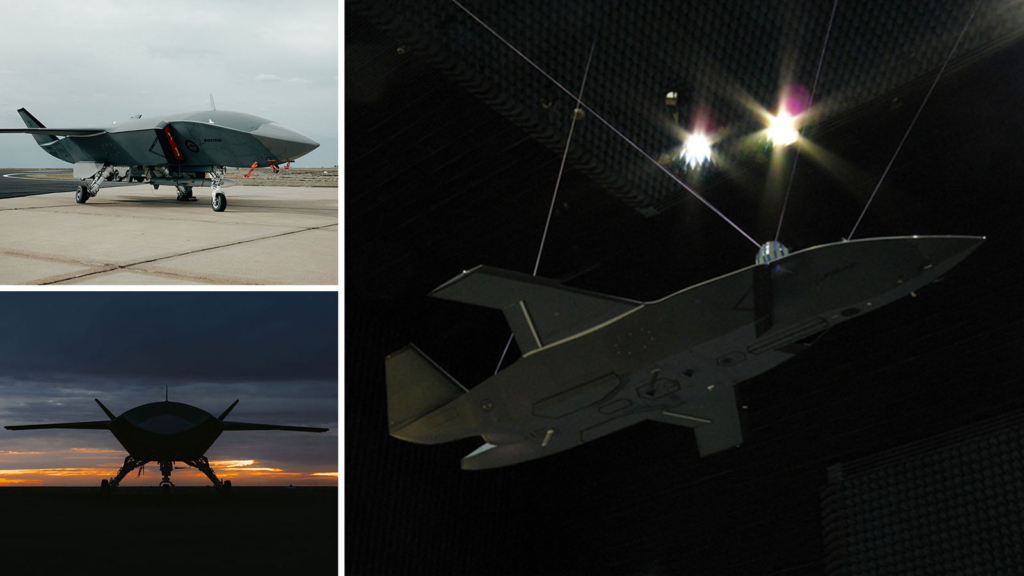
Commenting on this in a press release published on 1 June, Brad Thompson – Director for Boeing Phantom Works Australia – said: “The combination of a highly capable platform, stealth features and advanced autonomy provides unprecedented ability for air forces to extend their mission effectiveness and operational flexibility.”
While Boeing has added two new internal weapons stations, one on each side of the aircraft’s belly, the firm has also added three external weapons stations to the MQ-28 (no doubt facilitated by the larger wing design), adding greater mission flexibility for combat operations.
Testing with an external weapons station has already been completed by Boeing. In late 2025, the Ghost Bat marked a key milestone when it successfully destroyed a target drone using an externally mounted AIM-120 AMRAAM, demonstrating the platform’s growing combat capabilities.
With two internal and three external weapons stations being added with the Block 3 configuration, the MQ-28 could be equipped with up to five AIM-120s or a mixed load of air-to-air/ground (A2A/A2G) weapons. Alternatively, the type could be used as a ‘bomb truck’, carrying as many as seven or eight air-to-ground munitions during strike missions, depending on configuration.
Earlier disclosures about the MQ-28 Block 3 roadmap also indicated the internal weapons bays could accommodate EW payloads and other systems, expanding the aircraft’s utility beyond air-to-air or air-to-ground engagements.
MQ-28 Ghost Bat Block 3 strengthens Boeing’s CCA export pitch
The MQ-28 remains one of the most advanced CCA programmes outside the US and has attracted interest from several nations, including Germany. Boeing’s latest enhancements position the Ghost Bat to compete in a rapidly expanding market for autonomous combat aircraft designed to augment traditional crewed assets, such as multirole fighters.
With larger wings, internal weapons bays, BLOS connectivity and increased payload capacity, the MQ-28 Block 3 represents a significant capability leap.
As global air arms seek affordable force multipliers capable of operating in highly contested environments, Boeing’s latest Ghost Bat roadmap signals an ambitious move toward a new generation of autonomous air combat systems.
Featured Image: This image offers a good first look at the new forward profile of the Block 3-standard MQ-28 Ghost Bat. Its wings are 25% larger, boosting the aircraft’s overall MTOW, range, payload capacity and endurance. Image: Boeing
Sign up for our newsletter and get our latest content in your inbox.


More from


October 25, 20266 min read

October 25, 20265 min read


