Passengers say they want greener flights, but airlines still struggle to sell SAF

9 min read
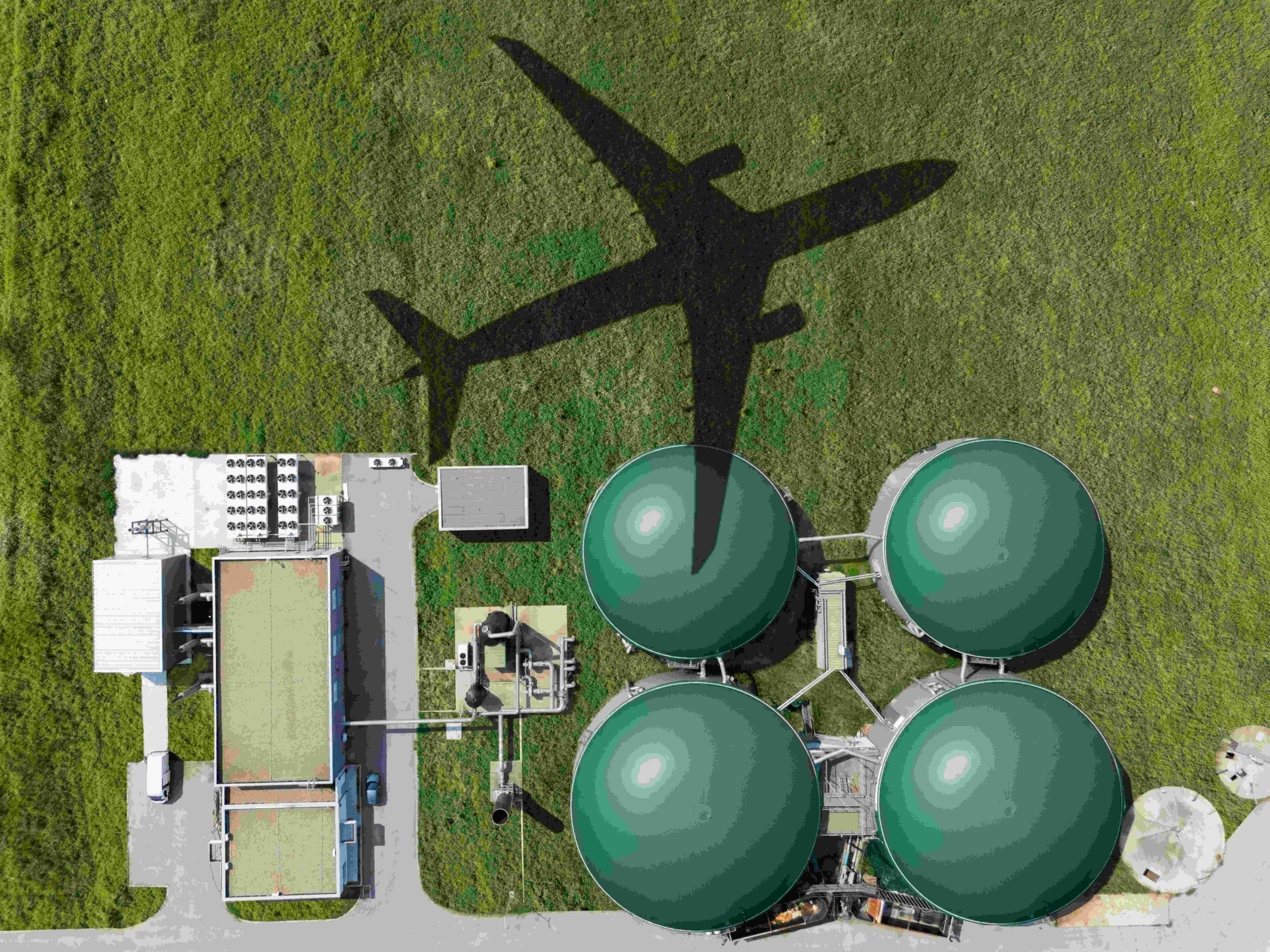
Sustainable aviation fuel is seen as aviation’s most important near-term decarbonisation lever. But if airlines are hoping passengers will voluntarily help pay for it, the evidence is still mixed at best.
At SAF Congress in Amsterdam last week, airline speakers described a difficult commercial reality. Travellers say they care about climate change; many say they want lower-impact ways to fly. But when SAF appears as an optional extra, conversion remains stubbornly low.
And when airlines make the product more visible, they face another problem: how to explain it without falling into greenwashing territory.
The result is a strange contradiction. Airlines need customers, especially corporate buyers, to help create demand for SAF beyond mandated volumes. Yet the more they try to market SAF, the more cautious they have to be.
Voluntary SAF uptake remains low among passengers
Zita Schellekens, SVP at KLM, discussed the airline’s efforts to understand whether passengers are actually willing to pay more for SAF.
“From consumer research, we know that a lot of customers care about climate change,” she said. “They’re concerned about the effects of flying and aviation on climate change, and they do state that there’s a willingness to pay for a more sustainable alternative or solution.”
But stated intent does not always translate into a booking.
“At the same time, we see that our conversion rate for voluntary SAF uptake is between 0.5% and 0.8%,” Schellekens said.
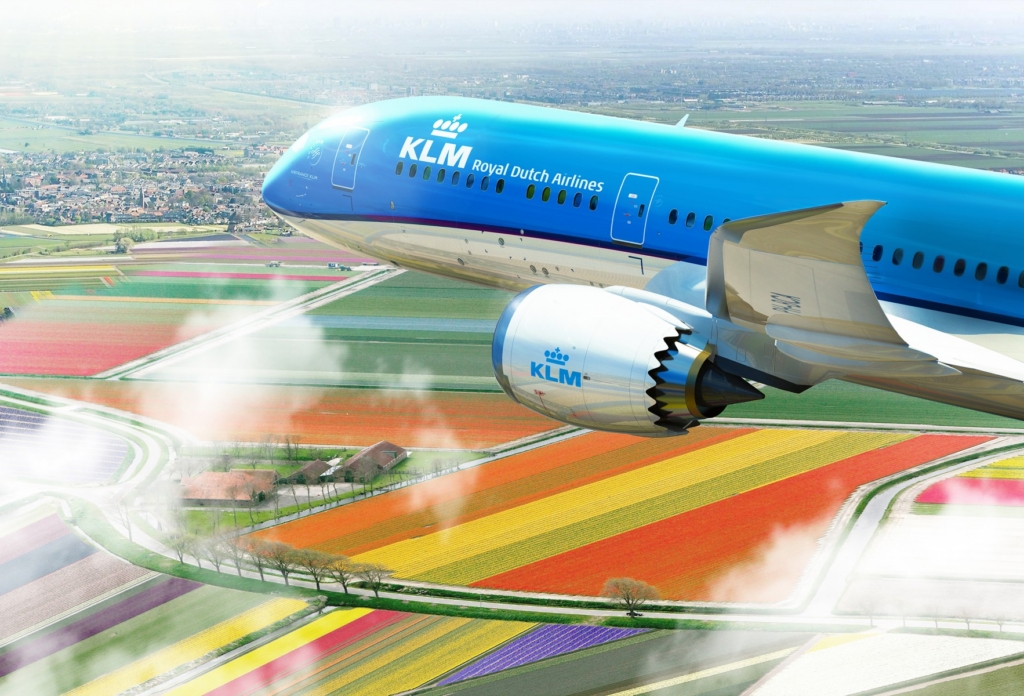
That gap between what passengers say and what they do is one of the most difficult commercial questions in aviation sustainability. SAF is several times more expensive than conventional jet fuel. Mandates are beginning to create baseline demand, but voluntary uptake still matters for airlines seeking to go beyond minimum requirements and stimulate the market.
The problem is that most passengers still make flight choices in a fiercely price-sensitive environment. A customer may care about climate change, but when presented with a booking page, a fare comparison site and a lower-priced competitor, the willingness to pay often weakens.
KLM’s 100% SAF ticket trial showed how fragile demand can be
KLM tried to test that willingness more directly.
The airline ran a trial on selected flights to London City and Hamburg, offering tickets that included a 100% SAF contribution. The fuel itself was not necessarily on the passenger’s specific aircraft, and aircraft are not generally operating with 100% SAF blends, but the ticket structure was designed to test whether customers would pay for the equivalent SAF contribution.
The results were not straightforward.
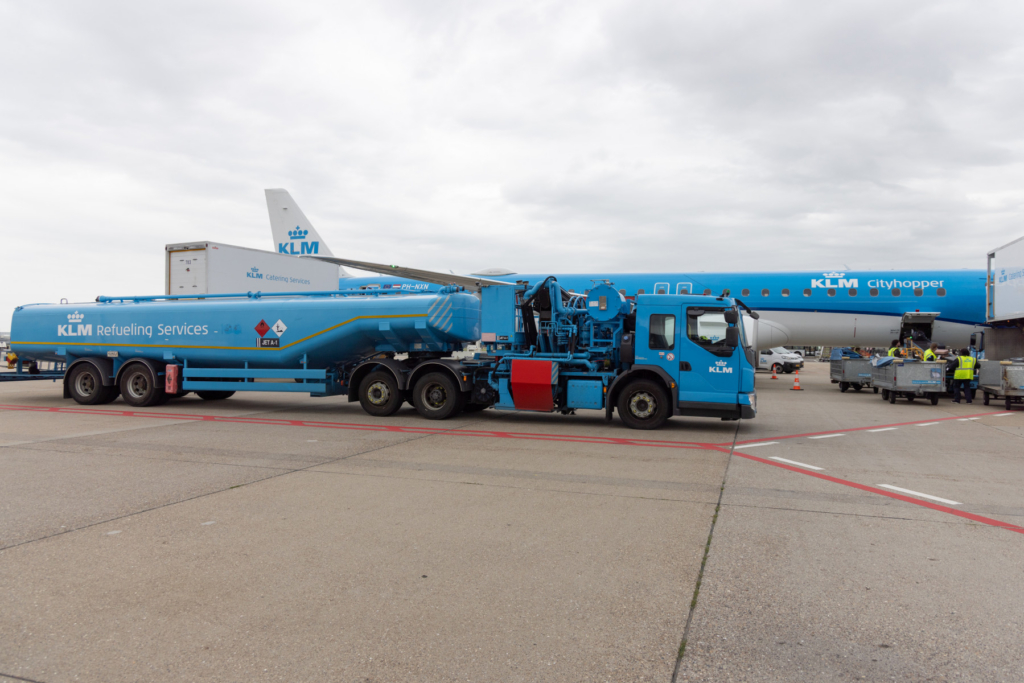
“We decided to do that for a month,” Schellekens said, adding that internally it was “a bit scary” because the airline was adding the price of 100% SAF to the ticket.
She said the increase was “between 20 and 40 euros” on average, depending on the route and ticket. But the outcome was not entirely positive.
Part of the problem was communication. “We didn’t communicate clearly enough,” she said. Some customers simply saw a more expensive ticket and did not understand why it cost more.”
On more well-served routes, some passengers moved to competitors, including British Airways on the London route. Hamburg was less affected, she suggested, because there was less direct competition.
The lesson was not that passengers reject SAF outright. It was more subtle than that. If the product is not clearly understood, and if the customer has a cheaper alternative, SAF becomes just another fare increase.
Greenwashing rules are making SAF harder for airlines to sell
The challenge is made harder by the tightening legal and regulatory environment around aviation sustainability claims.
KLM knows that risk better than most. In 2024, the District Court of Amsterdam ruled that several of the airline’s past environmental claims were misleading. Across Europe, airlines are now facing much closer scrutiny over the way they talk about offsets, SAF, emissions reductions and climate-related products.
The scrutiny is understandable; the environmental benefits of SAF depend on lifecycle emissions, feedstock, production pathway, accounting method and scale of use. But panellists argued that the current climate around green claims can also make it harder to build voluntary demand for SAF.
Mads Brandstrup, SVP at SAS, captured the frustration neatly.
“How are we able to have a conversation with our customers if we’re not even allowed to say the word green?” he asked.
He said SAS had spent years in discussions with consumer agencies led by the European Commission, including over language used in its customer communications. Even the name of part of the airline’s loyalty programme had to change.
“It was called Conscious Traveller,” he said. “We couldn’t even use the word conscious, so we changed it to Change Makers.”
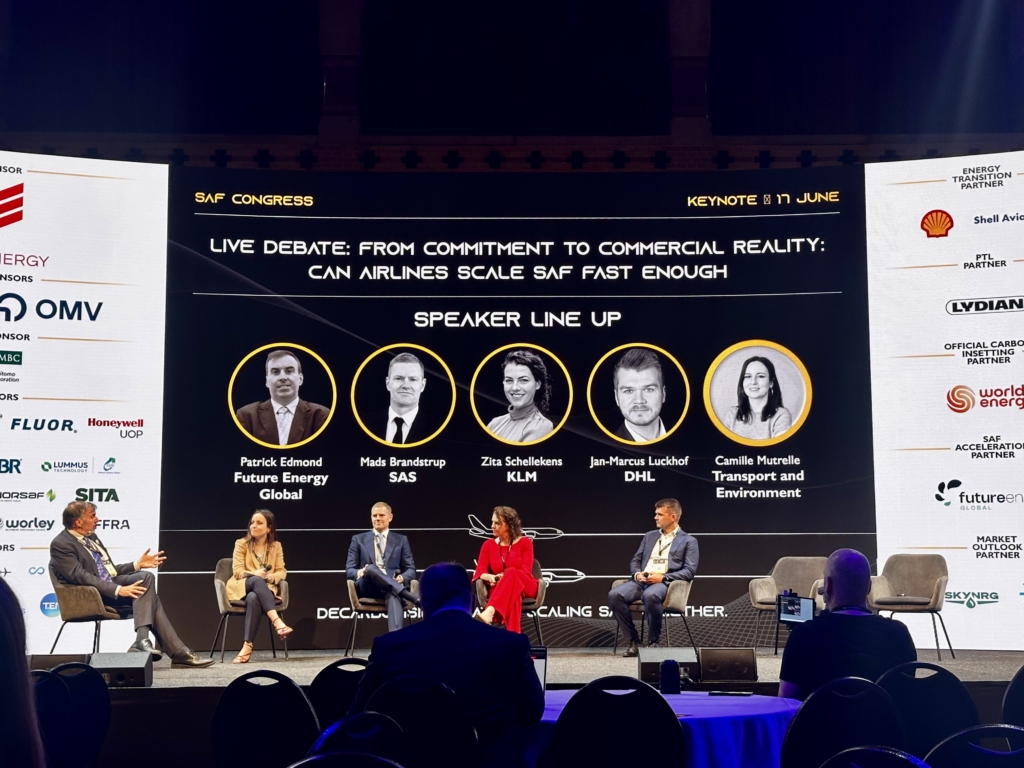
Brandstrup accepted that the aviation industry had learned lessons from earlier overpromising. “We also have to be much more humble about what it is that we are actually suggesting that we are selling,” she said. “The idea, perhaps 10 years ago, to come with these sorts of high-flying promises of what you could do – those days are permanently over, and we’ve learned that lesson the hard way.”
But he added that airlines still need room to communicate credible steps.
“That doesn’t mean that we shouldn’t be allowed to say anything,” he said. “We need to move forward, and we need to move beyond what is mandated.”
SAF communication has become a catch-22 for airlines
The discussion revealed a genuine catch-22 for airlines.
SAF needs demand to scale. But demand is easier to generate when passengers understand what they are buying. And that explanation becomes harder when airlines are wary of using language that might later be challenged as misleading.
Zita Schellekens said the issue had become particularly difficult because SAF remains available in very small quantities.
The court, she said, did not dispute that SAF can offer lifecycle emissions benefits. The problem is that airlines are using relatively little of it today.
“Because you’re using so little of it, you can’t use ‘sustainable’; you can’t name it that way yet,” she said. “And that’s the catch-22. Because we want to increase it, and the only way we can increase it is if people who care about climate change also see it as a credible solution.”
She said the current environment can “suck the energy out of any initiative to engage, excite, and promote a product that we all realise we desperately need to decarbonise aviation”.
SAF is not a silver bullet, and airlines cannot imply that it makes flying emissions-free. But if they cannot explain its benefits in a way customers understand, voluntary demand may remain marginal.
Lufthansa Green Fares show passenger demand can grow
There are signs that some products can gain traction if they are packaged clearly.
Lufthansa Group has continued to use its Green Fares branding, although with detailed explanations of what the product includes. Claudia Huegel, Senior Director at Lufthansa Group, said the company still uses the name because a sustainability-linked product needs to be tangible and recognisable.
“If you want to sell a sustainable product, it needs to be tangible, and you need to identify it somehow,” she said. “Therefore, as you see, we still stick to the name of Green. I cannot say if we can do this forever, but so far we are still allowed.”
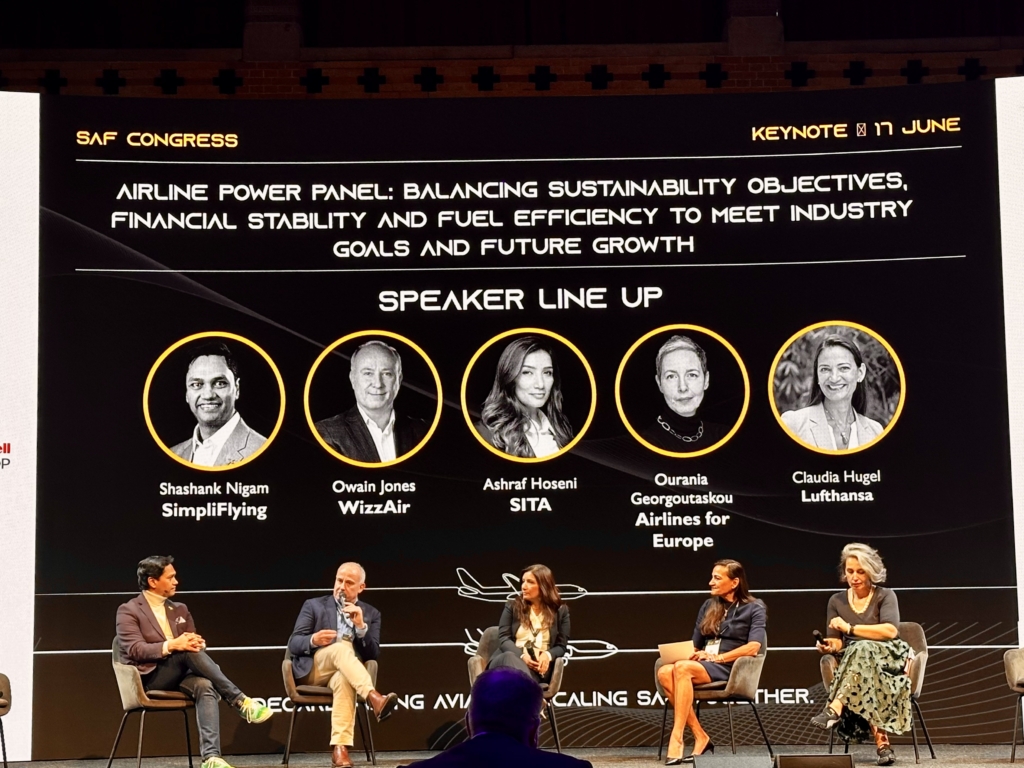
She explained that Lufthansa’s European Green Fares are described as a contribution to future CO2 savings, with 20% of the contribution linked to SAF and 80% to CO2 avoidance or removal through climate projects. For intercontinental fares, she said the split is 10% SAF and 90% climate projects.
The airline has also reported stronger uptake than many voluntary SAF add-ons. Lufthansa Group said earlier this year that more than 5% of its passengers chose a more sustainable travel option in 2025, with more than four million passengers opting for Green Fares since launch.
At the Amsterdam panel, Huegel described the product as “quite a success.”
The relative success of Green Fares, while not directly comparable with KLM’s 100% SAF trial, suggests that passengers may respond better when the sustainability contribution is embedded in a fare family rather than presented as a marginal add-on.
The best nudge may still be off limits
One obvious way to increase participation would be to make SAF contributions the default, then allow passengers to opt out.
Behavioural economics suggests default options matter. People are more likely to remain enrolled in pension schemes, donation settings or other programmes when they have to actively opt out rather than opt in. The same logic could apply to SAF.
Schellekens said she had proposed that approach more than once.
“I think it would work,” she said. “But my legal team tells me that we can’t do it. We’re not allowed to do it.”

For corporate customers, the picture may be more promising. Businesses with emissions reporting obligations or science-based targets may have stronger reasons to pay for SAF certificates or book-and-claim products. But even there, airlines need robust accounting, traceability and documentation to show what has been bought and how it should be reported.
SAF reporting creates new compliance headaches
The passenger problem is also becoming an operational and financial problem.
Ashraf Hoseni, Environmental Strategy Lead at SITA, said sustainability is no longer “a corporate responsibility” but is becoming part of airlines’ core business requirements, largely due to regulation and mandates.
With SAF, Hoseni said, airlines need to understand where they fly, what regulations apply, how much fuel they consume, how much CO2 they produce and where SAF is sourced. The wrong delivery location or documentation can mean an airline pays for SAF but cannot claim the emissions benefit under the relevant framework.
“What we have seen this year with the airlines who have been reporting on ReFuelEU is that they pay for SAF, and then at the end of the year, when they get the documents, they realise that I paid for it, but I couldn’t claim it,” she said.
That matters for passenger and corporate products because customers are not just buying a feeling. They need confidence that the climate benefit is real, traceable and usable for reporting.
Hoseni added that the value of SAF increasingly depends on understanding scope 3 certificates and contributions from corporate customers and passengers.
“You really want to share this cost with your customers and corporate customers and passengers,” she said. But doing that manually “is becoming impossible” because there are too many factors.
Airlines face a triple lock on selling SAF to passengers
Airlines are caught between three pressures. They need voluntary demand to help scale SAF. They need to communicate honestly enough to avoid greenwashing claims. And they need to make the product simple enough that passengers understand why they are being asked to pay more.
That balance is proving extremely difficult.
Passengers may say they want greener flights. The harder question is whether airlines can create SAF products that are clear, credible and compelling enough for them to actually buy.
Featured image: stock.adobe.com
Sign up for our newsletter and get our latest content in your inbox.


More from

October 17, 20265 min read

October 17, 20264 min read