Italy backs wider GCAP expansion as Canada, Germany and Saudi Arabia are named

7 min read


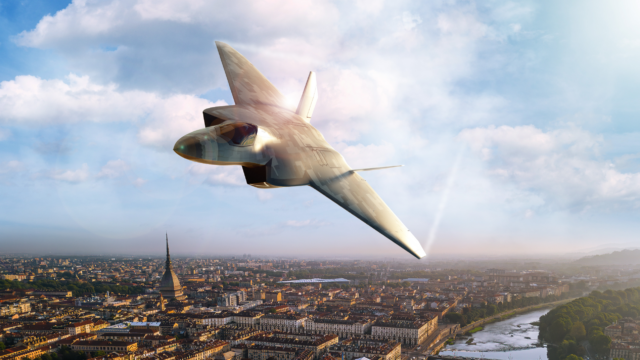
The Global Combat Air Programme (GCAP) could eventually grow beyond Britain, Italy and Japan, as interest in the next-generation fighter project begins to spread beyond its three founding partners.
Italy this week said it would welcome additional countries into the programme, including Canada, Germany and Saudi Arabia, if their participation helps strengthen the project and reduce development costs.
The comments were made by Italian Defence Minister Guido Crosetto on the sidelines of an event in Rome and were first reported by Reuters.
“The country most interested at the moment seems to be Canada as an observer; we are fully open to it,” Crosetto told reporters.
He added that wider participation could make the programme more affordable and broaden its industrial base.
“If Germany or other countries, or Saudi Arabia, were to come in, we would be completely willing, because the more there are, the greater the chances of creating something and bringing down costs,” he said.
The remarks come at a time when Europe’s future combat aircraft landscape is undergoing significant change.
While GCAP continues to move forward towards its goal of fielding a sixth-generation fighter by 2035, the rival Future Combat Air System (FCAS) has been hit by fresh uncertainty following the breakdown of plans for a jointly developed fighter between France and Germany.
Canada, Germany and Saudi Arabia emerge as potential new GCAP partners
GCAP was launched in December 2022 after Britain, Italy and Japan agreed to combine their separate future fighter efforts into a single programme.
The project brings together BAE Systems, Leonardo and Japan Aircraft Industrial Enhancement Co. (JAIEC), which is backed by Mitsubishi Heavy Industries.
The three nations aim to deliver a next-generation combat aircraft capable of replacing the Eurofighter Typhoon in British and Italian service and Japan’s Mitsubishi F-2.
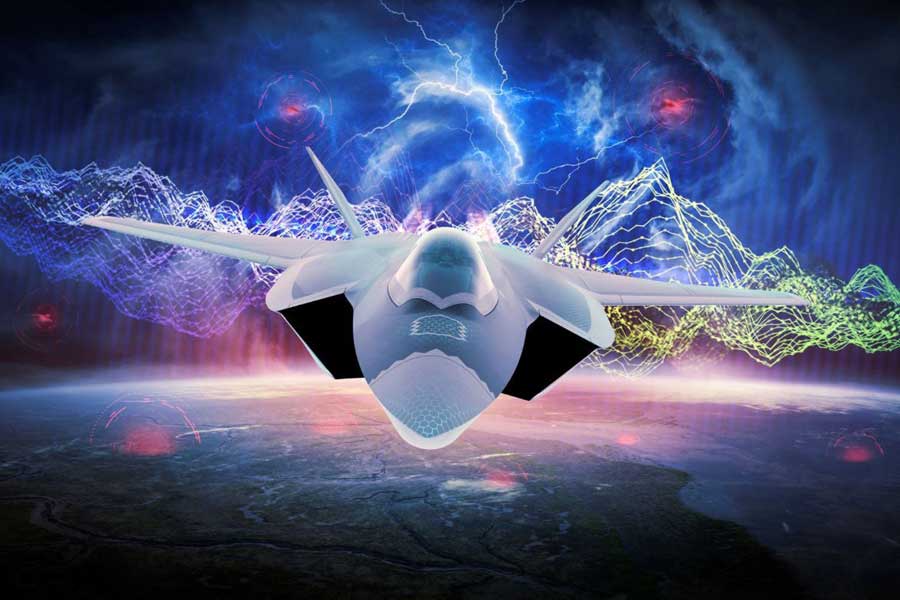
Unlike traditional fighter programmes, GCAP is intended to be more than a single aircraft. The future platform is expected to operate alongside autonomous aircraft, advanced sensors, electronic warfare systems and a highly networked combat architecture.
Work on the programme has accelerated over the past year. The partners have established industrial structures covering aircraft design, propulsion, sensors, communications and mission systems, while maintaining the ambitious target of bringing the aircraft into service by 2035.
For countries seeking access to future combat-air technologies, GCAP increasingly offers an attractive route into a programme that is already moving into its development phase.
Leonardo believes German industry could strengthen GCAP
The prospect of Germany becoming involved gained further attention after comments by Lorenzo Mariani, Leonardo’s chief executive.
Speaking to the Financial Times, Mariani said German participation would inevitably create complications because the existing partners have already agreed on workshare arrangements.
“If you wanted to bring a new nation now, with the same rights as the other three, this would be a little bit disruptive,” he told the newspaper.
However, he argued that the longer-term advantages would outweigh the short-term difficulties.
“The long-term benefits are clear,” Mariani said.

He also expressed support for greater involvement from German industry.
“I would be glad if some of the German industrial complex joined our activities,” he told the Financial Times.
Mariani pointed to the financial realities facing major defence programmes.
“These programmes are always very demanding in terms of investment. Normally, they absorb more than you foresee at the beginning. So having another partner with both money and industrial competence would be good.”
His comments are particularly significant because Leonardo is one of the principal industrial partners in GCAP and is responsible for major elements of the programme’s electronics, sensors and mission systems.
FCAS fighter crisis shifts attention towards GCAP
Interest in GCAP has grown as FCAS struggles to maintain momentum.
Originally launched by France and Germany in 2017, before Spain joined later, FCAS was intended to deliver a family of systems centred on a next-generation fighter aircraft.
The programme also included collaborative drones, advanced sensors and a combat cloud network designed to connect forces across the battlespace.
However, FCAS has faced repeated delays caused by disagreements over leadership, intellectual property rights and industrial responsibilities.
Earlier this month, France and Germany effectively abandoned plans for a jointly developed fighter aircraft after failing to resolve differences between Dassault Aviation and Airbus Defence and Space.

The dispute centred on control of the future fighter. Dassault argued that a single prime contractor should lead the aircraft’s development, while Airbus sought a larger role reflecting Germany’s financial contribution and industrial participation.
Mariani told the Financial Times that the outcome was not entirely surprising.
“You can start politically, but if the industry doesn’t find the right commonalities, the right objectives, the sharing of work, it is really difficult,” he said.
Although parts of FCAS may continue through work on drones, networking and digital combat systems, the programme no longer represents the unified European fighter effort that was originally envisaged.
Expanding GCAP could cut costs, but raises workshare risk
The prospect of additional partners joining GCAP has prompted debate among defence analysts over how far the programme should expand and at what stage.
Supporters argue that new members could bring additional funding, industrial expertise and export opportunities at a time when next-generation combat aircraft programmes are becoming increasingly expensive.
Air Marshal (Retd.) Sir Christopher Harper, a member of the Air and Space Power Group at the Royal Aeronautical Society, believes broader participation could ultimately strengthen the programme.
“An additional partner could bring greater resilience and a more capable end product, while reinforcing the programme’s relevance to European security and enhancing interoperability,” Harper noted in an analysis of the programme in Britain’s World.
At the same time, analysts caution that expansion carries risks. Previous multinational defence programmes have often struggled with disagreements over industrial workshare, technology sharing and programme leadership.

Dr David Jordan, Co-Director of the Freeman Air and Space Institute at King’s College London, warned that bringing in new members could create fresh challenges for the existing partners.
“While diversification may increase funding for research and development, there are risks. Questions of workshare apportionment would be inevitable with more partners.”
The debate is particularly relevant given the difficulties that have dogged FCAS, where disagreements between industrial partners ultimately contributed to the collapse of plans for a jointly developed fighter aircraft.
Japan, meanwhile, continues to place a premium on maintaining the programme schedule. Rena Sasaki, a researcher at Johns Hopkins University School of Advanced International Studies, said Tokyo’s priority remains ensuring that GCAP delivers a replacement for the F-2 on time.
“For Japan, the preferred model is core stability first, selective widening second.”
That balance between expanding the programme and preserving its timetable is likely to become one of the defining questions facing GCAP as interest from potential new partners continues to grow.
Japan wants the GCAP fighter schedule protected for 2035
Any expansion of GCAP would need the support of all three partners, and Japan has generally taken a cautious approach towards admitting new members.
Tokyo sees the programme as central to replacing its ageing F-2 fleet and maintaining its air combat capabilities in an increasingly challenging regional security environment.
Japanese officials have consistently emphasised the importance of avoiding delays and keeping the programme on track for a 2035 entry into service.
That caution reflects lessons learned from previous multinational defence projects, where expanding membership often led to longer decision-making processes and more complicated industrial negotiations.
For now, no formal discussions have been announced regarding new members.
However, the fact that Canada, Germany and Saudi Arabia are all being openly discussed illustrates how much the programme’s position has evolved in just a few years.
What began as a three-nation fighter project is increasingly being viewed as one of the world’s most significant future combat-air programmes, with the potential to attract additional partners as development progresses.
Sign up for our newsletter and get our latest content in your inbox.


More from


October 17, 20265 min read

October 17, 20264 min read