Russia’s fully domestic MC-21 clears key range and take-off performance checks

5 min read
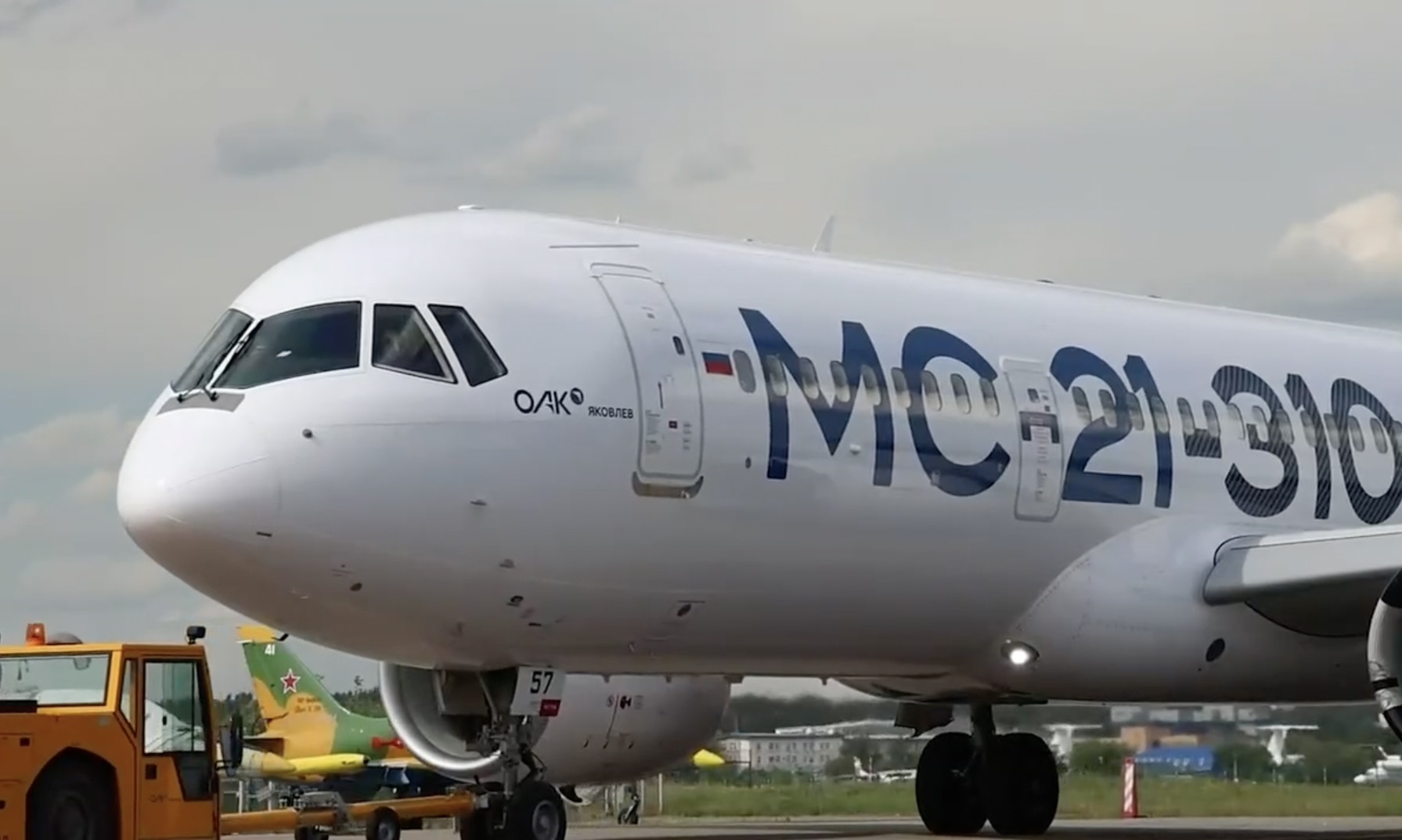
Russia’s import-substituted MC-21-310 narrowbody has demonstrated a range of more than 3,800km with a payload equivalent to 175 passengers, as Yakovlev works to prove that the heavily reworked airliner can meet operational requirements ahead of certification.
The flight demonstration was disclosed by United Aircraft Corporation (UAC) on Telegram on 23 June and involved a fully import-substituted MC-21-310, the latest Russian-built version of the aircraft developed by Yakovlev, part of UAC and state-owned Rostec.
According to UAC, the aircraft flew with a payload corresponding to a two-class, 175-seat cabin, while retaining the regulated fuel reserve required for normal airline operations.
“A range of over 3,800km was recorded with a payload of 175 passengers, ensuring a regulated fuel reserve,” said Vitaly Naryshkin, chief designer of the MC-21, following the flights.
The MC-21 has become one of the clearest tests of Russia’s ability to sustain a modern civil aircraft programme without Western suppliers. The original aircraft was developed with extensive use of imported systems, including Pratt & Whitney engines on the MC-21-300. The MC-21-310 is the Russian-engine version, powered by Aviadvigatel PD-14 turbofans and fitted with domestically produced systems.
MC-21 completes simulated engine-failure take-off test
Alongside the range demonstration, Yakovlev also tested the aircraft’s ability to continue take-off after the simulated failure of one engine.
That doesn’t mean the aircraft took off with one engine already shut down. Instead, it demonstrated the aircraft’s ability to continue safely after a simulated engine failure during the take-off phase, one of the most critical certification requirements for a twin-engine passenger aircraft.
In the accompanying video, Roman Taskaev, director of flight testing at PJSC Yakovlev, said the range mission had been flown to a standard operating profile intended to reflect normal commercial service.
“Today, we completed the task of confirming the aircraft’s range with a normal commercial payload on a fully import-substituted aircraft,” Taskaev said. “The flight was carried out in accordance with the test assignment, and the required parameters were achieved.”
Taskaev said the aircraft landed with the required fuel remaining, including reserves for a diversion to an alternate airfield.
“At the end of the mission, the aircraft had the required fuel remaining, including the navigation reserve and all standard allowances for diversion to an alternate airfield,” he said.
The video also addressed the aircraft’s one-engine-inoperative take-off performance, a critical requirement for twin-engine passenger aircraft.
“The flight also included a simulated continued take-off following the failure of one engine,” said Pavel Sokut, head of the civil aircraft flight-testing department at PJSC Yakovlev.
Explaining the purpose of the demonstration, Sokut added: “Passenger aircraft standards require that the failure of one engine must not have critical consequences at any stage of flight, including during take-off.
“That means the aircraft must be able to continue the take-off on one engine and climb to a safe altitude. For a twin-engine aircraft, this is the most critical parameter limiting maximum take-off weight. That is what was demonstrated.”
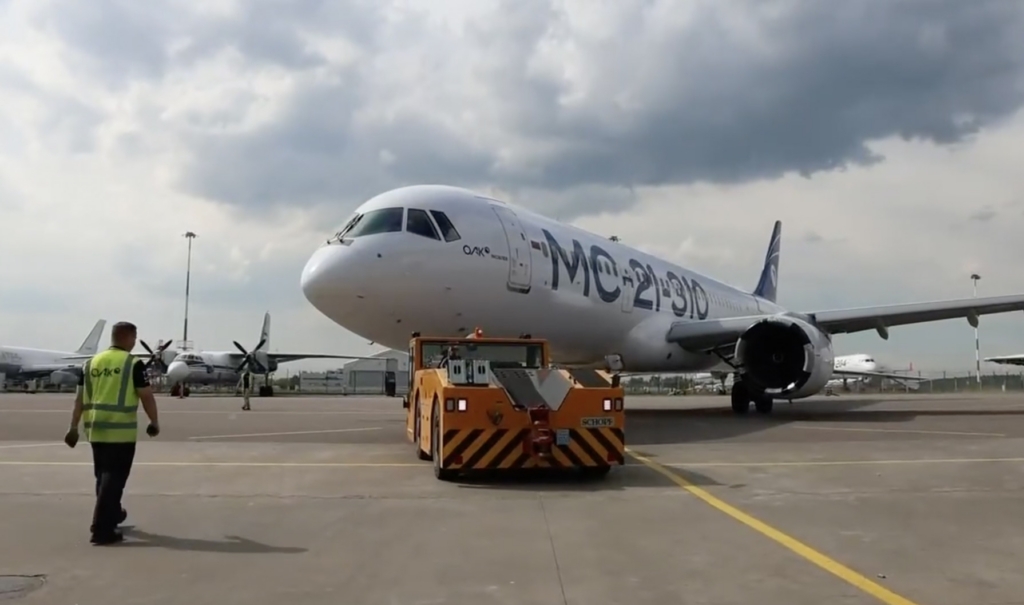
Yakovlev said the take-off distance and climb rate recorded during the flights corresponded to calculated parameters. The company also said it was ready to confirm the results during the aircraft’s upcoming certification tests.
“We are pleased with the results of the flights,” said Anatoly Gaydansky, first deputy managing director and director of the Yakovlev Engineering Centre. “They were carried out with a payload corresponding to a two-class configuration for 175 seats, which we agreed with the customer for the first batch of MS-21 aircraft. We are ready to confirm the results obtained during the upcoming certification tests.”
Why Russia had to domesticate the MC-21
The MC-21 was originally intended to become Russia’s modern answer to the Airbus A320neo and Boeing 737 MAX, with a high-composite wing, modern cabin and a choice of Western or Russian engines.
That plan was upended by sanctions and the collapse of access to Western aerospace suppliers after Russia’s full-scale invasion of Ukraine in 2022. Russia has since had to redesign major parts of its civil aircraft strategy around import substitution, replacing foreign engines, avionics, systems, materials and components with domestic alternatives.
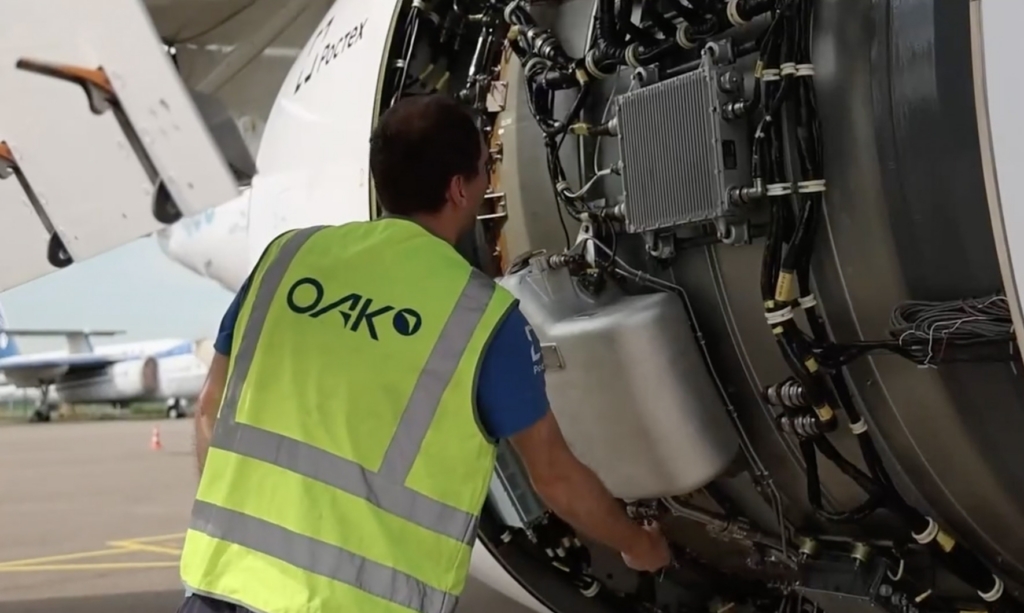
The most significant change on the MC-21-310 is the PD-14 engine. The Russian-built turbofan replaces the Pratt & Whitney PW1400G engines used on earlier MC-21-300 aircraft and has become central to the country’s effort to produce a sanctions-resistant narrowbody airliner.
The wider engine substitution effort is not limited to the MC-21. Russia is also developing the PD-8 for the import-substituted SJ-100 regional jet, replacing the Franco-Russian PowerJet SaM146 engine used on the original Superjet 100.
The PD-8 received its type certificate in early June, according to Russian industry material, marking another step in Moscow’s attempt to rebuild a domestic civil aerospace supply chain. UEC-Saturn has also thanked the Voronezh Aviation Plant, VASO, for its work on PD-8 nacelle components, including nose fairings and cowl flaps.
According to the company, VASO mastered production of these composite units in less than a year, with work spread across preparation and stamping, mechanical assembly and composite production facilities.
For Russia, the recent MC-21 demonstration is therefore about more than one range flight. It is a signal that the country’s domestic narrowbody programme is moving closer to certification after years of delay, redesign and supply chain disruption.
But the claim should still be treated carefully. The flights demonstrated performance against calculated targets, not certified airline service capability. The next question is whether Yakovlev can confirm those results through certification and then move from individual test aircraft to reliable serial production.
Featured image: UAC