Comac begins taxiing tests of shortened C919-600 variant for Tibetan Plateau

3 min read

Comac has begun flight testing of its shortened C919-600 variant that’s intended to service high-altitude airports on the Tibetan Plateau. The aircraft is an alternative to the Airbus A319.
Comac test flies its new shortened C919-600 variant
In January 2026, Aviation Week reported that the shortened variant of the Comac C919, the C919-600, had broken cover for the first time. The aircraft variant had been announced in November 2023 and was pictured at the Shanghai Pudong Airport.
Via ACuriousPLAFan/SDF:
— @Rupprecht_A (@RupprechtDeino) June 20, 2026
„The shortened/plateau variant of the C919, i.e., C919-600 has began taxiing trials. Posted by @老王RR涡扇花动机 on Weibo.“ pic.twitter.com/dayDG9r2bq
Yesterday, Air Data News reported that Comac has begun taxiing tests of the shortened C919-600 variant, referencing images shared on Chinese social media in recent days.
The publication writes that it appears the tests were carried out in Shanghai (where it’s assembled).
Planespotters.net does not have a large amount of information on the aircraft. The C919-600 is listed as having the registration number B-002U, as being 0.5 years old, and is a testbed.
Comac is also developing the stretched C919-800 variant with China Eastern. It is expected to enter service around 2030.
The Comac C919-600 variant
The aircraft is designed to improve its performance in “hot and high” conditions, where the thinner air affects the engine thrust and the aerodynamic lift (requiring longer runways). The target range for the C919-600 is around 3,000 km.
COMAC just showed off the C919-600 prototype…. shortened for high-altitude, spotted Pudong Jan 2026 (B-002U). 140-160 seats, plateau-ready. 40 on order for Tibet Airlines since 2024
— Fahad Naim (@Fahadnaimb) January 22, 2026
Solid niche strategy, not trying to beat giants everywhere at once.
Where do you see COMAC in 10… pic.twitter.com/QXWhBumuHI
The standard variant, the C919-100, has a typical capacity for between 158 and 192 seats. The C919-600 removed six frames from the body fuselage and reduced the weight, and is expected to seat between 140 and 160 passengers.
C919 is a state-backed effort by China to develop a narrowbody airliner able to compete with the Airbus A320 and Boeing 737 families. It is powered by CFM International LEAP-1C engines and completed its first commercial flight in 2023.
As a state-backed program, it has attracted hundreds, perhaps a thousand, orders from Chinese customers. However, exports remain limited as the aircraft is yet to secure EASA certification and FAA certification.

Given the geopolitical realities, it’s questionable if it will ever receive its FAA type certification.
Get the latest aerospace defence news here on AGN.
Built to service high-altitude airports
The Comac C919-600 variant is called the “Plateau” and is being developed jointly by Comac and Tibet Airlines to serve high-altitude airports. The highest airports, like Daocheng Yading Airport, are currently only served by specially uprated and modified A319s.

Air Data News writes, “Tibet Airlines later became the launch customer, ordering 40 C919-600s as part of a large agreement announced during the Singapore Airshow in February 2024.”
The thinner air and mountains make the conditions challenging for commercial aircraft; some Tibetan airports have the longest runways in the world to compensate for the thin air.
The author of this article, recently flew into Bhutan’s Paro Airport in the foothills of the Himalayas in a shortened Airbus A319. He is also flying to Tibet this week in a Boeing 737-500, the shortened variant of the Boeing 737 Classic.
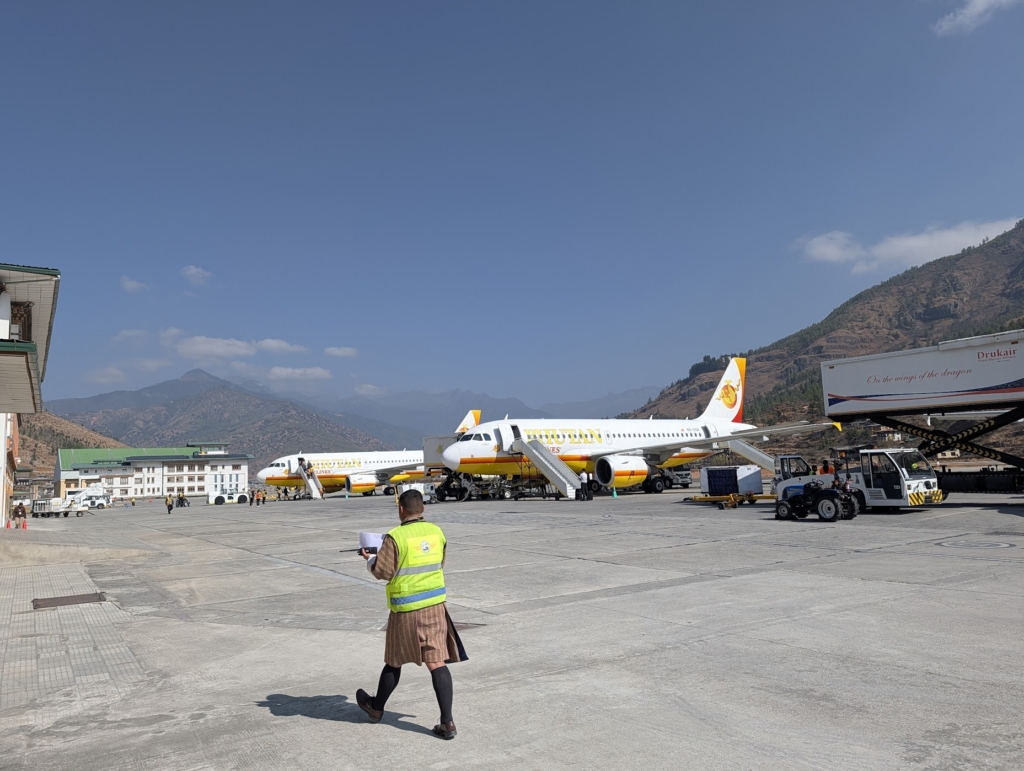
Larger aircraft are challenging at Paro, not so much because of the altitude, but because the aircraft has to weave between the valleys, make a hairpin turn, and clear mountain ridges with little margin for error.
Featured Image: COMAC