


Inside Excalibur: The Boeing 757 helping shape Britain’s future GCAP fighter


While much of the attention surrounding the Global Combat Air Programme (GCAP) focuses on the fighter expected to enter service in the mid-2030s, one of the most important aircraft supporting the effort is not a fighter at all. It is a modified Boeing 757.
Known as Excalibur, the unusual aircraft has become an airborne laboratory for technologies that could eventually underpin the United Kingdom’s future combat aviation capability.
Operated by specialist company 2Excel Aviation and developed in partnership with Leonardo UK, the former airliner is being used to test sensors, communications systems and mission technologies long before they are integrated into the future GCAP fighter.
The aircraft itself has had a long and varied career. Built as a Boeing 757-256, it was delivered to Iberia in July 2000 as EC-HIR before moving through several operators under the Turkish registration TC-OGT, including Atlasjet, Ethiopian Airlines, Eritrean Airlines and Saudi Arabian Airlines.
It later joined Titan Airways in June 2012 as G-POWH, with periods of lease service for Jet2, before being withdrawn from use and stored in 2022. The aircraft was acquired by 2Excel Aviation in 2023, becoming G-FTAI, and was ferried from Norwich to Boscombe Down on September 4, 2023, for its new role as a flying testbed.
Now operating as Excalibur, the former passenger aircraft is being adapted to test systems and sensors linked to the future GCAP fighter, while also supporting technology work relevant to current combat aircraft such as Eurofighter Typhoon and the F-35 Lightning II.

Its appearance has attracted growing attention from aviation enthusiasts in recent months. With its distinctive nose profile and external fairings, Excalibur hardly resembles the commercial airliner it once was. Yet the aircraft’s significance lies not in how it looks, but in what it represents.
As Britain, Italy and Japan work towards delivering the sixth-generation combat aircraft (GCAP) around 2035, Excalibur is helping engineers answer some of the programme’s most difficult technical questions years before the first fighter prototype enters service.
Why GCAP is about more than building a fighter
For much of aviation history, combat aircraft development centred on airframes, engines and weapons.
That remains important. Stealth, range, payload and survivability continue to define military aircraft design. But future combat aircraft are increasingly being shaped by something less visible: information.
The future GCAP fighter is expected to operate as part of a wider combat ecosystem rather than as a standalone aircraft. It will need to collect, process and distribute huge amounts of information across a highly contested battlespace while coordinating with other aircraft, uncrewed systems, satellites and ground-based assets.
That creates a challenge far more complex than designing an airframe.

The aircraft’s sensors, communications networks, electronic warfare systems and mission computers must work together seamlessly. They must process vast quantities of data, prioritise threats and deliver actionable information to crews in real time.
The technologies required to achieve that are among the most ambitious ever attempted in a combat aircraft programme. Excalibur exists to help prove them before they are integrated into the future fighter.
How a modified Boeing 757 helps accelerate GCAP technologies
The choice of aircraft was driven by practicality. A Boeing 757 provides something a fighter aircraft cannot: space.
The aircraft offers room for engineers, operators, test equipment, mission racks and computing systems. It can remain airborne for extended periods and generate the electrical power needed to support advanced sensors and communications equipment.

Unlike a fighter aircraft, where every kilogramme matters, a large airliner allows engineers to experiment, modify systems and evaluate multiple technologies simultaneously. The result is effectively a flying laboratory.
Instead of waiting for a future fighter prototype to fly before beginning systems integration, engineers can mature technologies aboard Excalibur years earlier.
That reduces technical risk, lowers costs and helps identify problems before they affect the main programme.
Not the first Boeing 757 testbed
Britain is not the first nation to adopt such an approach. For decades, the United States has relied on a heavily modified Boeing 757 known as Catfish to support the development of systems associated with the F-22 Raptor.
Like Excalibur, Catfish began life as a commercial airliner before being transformed into a specialised flying testbed. The aircraft carries a modified nose section replicating that of the F-22 and has been used to test radar systems, electronic warfare equipment and sensor technologies for the Raptor programme.
The aircraft remains active today.
A recent report by The War Zone noted that Catfish was observed carrying an infrared sensor pod associated with the F-22’s ongoing Raptor 2.0 modernisation effort, illustrating how valuable such testbeds remain even decades after a programme enters service.
The publication noted that the aircraft provides space for engineers and technicians, along with onboard workstations that allow systems to be evaluated during flight in ways that would be difficult or prohibitively expensive aboard operational fighters.
The comparison helps explain why Britain chose a similar path.
Developing technologies aboard a large aircraft is often cheaper, faster and less risky than relying exclusively on fighter prototypes.
What ISANKE and ICS mean for the GCAP fighter
Much of Excalibur’s work revolves around two key technology pillars of the future combat air programme: ISANKE and ICS.
Although the acronyms rarely attract headlines, they sit at the heart of the future fighter concept.
ISANKE, short for Integrated Sensing and Non-Kinetic Effects, encompasses the sensors, electronic warfare systems and information-processing capabilities that allow an aircraft to detect, understand and influence the battlespace.
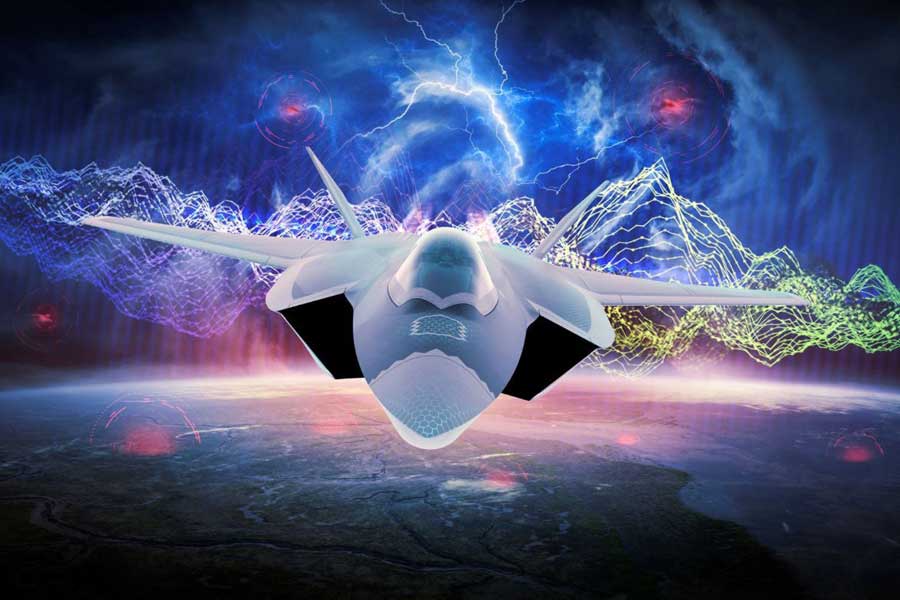
ICS, or Integrated Communications System, focuses on how information is shared across the force.
Together, they are intended to provide pilots with a level of situational awareness beyond anything currently available in service.
The ambition is not simply to gather more information but to ensure the right information reaches the right operator at the right moment.
Future combat aircraft will be required to operate in environments saturated with data, electronic interference and rapidly changing threats.
Managing that information effectively may prove just as important as carrying weapons.
Excalibur Boeing 757 helps derisk the future GCAP fighter
One of Excalibur’s most important roles is acting as a bridge between laboratory development and operational reality.
Ground-based simulations remain essential, but some technologies can only be properly evaluated in flight.
Sensors behave differently at altitude. Communications links encounter real-world interference. Mission systems must process information generated in complex operational environments.
EXCALIBUR – ZKUŠEBNÍ STOLICE PRO TEMPEST 6. GENERACE.
— 🍀Tomáš Doupal 🇨🇿 (@TomasDoupa39474) March 22, 2026
Modifikovaný Boeing 757, "Broadsword25" (Registr – G-FTAI), nedávno prošel testovacím střediskem ministerstva obrany v rámci testování programu Tempest 6. generace. pic.twitter.com/2kSZUU0DMG
Excalibur allows engineers to expose developing technologies to those conditions without waiting for a future fighter to become available.
In many respects, the aircraft serves as a risk-reduction platform. Every issue discovered aboard Excalibur is one less problem engineers will have to solve later in the GCAP programme.
Excalibur moves from airframe modification to systems testing
The aircraft itself continues to evolve.
Earlier modification work focused on structural changes and flightworthiness assessments. Initial test flights were designed to validate handling qualities and confirm that the aircraft remained stable following extensive modifications.
Attention is now increasingly shifting towards mission systems and operational technology demonstrations.
That shift appears to be reflected in the aircraft’s recent activity. Public flight-tracking data and enthusiast sightings indicate that Excalibur has been active over South West England in recent days, including sorties on June 8, 9 and 10, 2026.
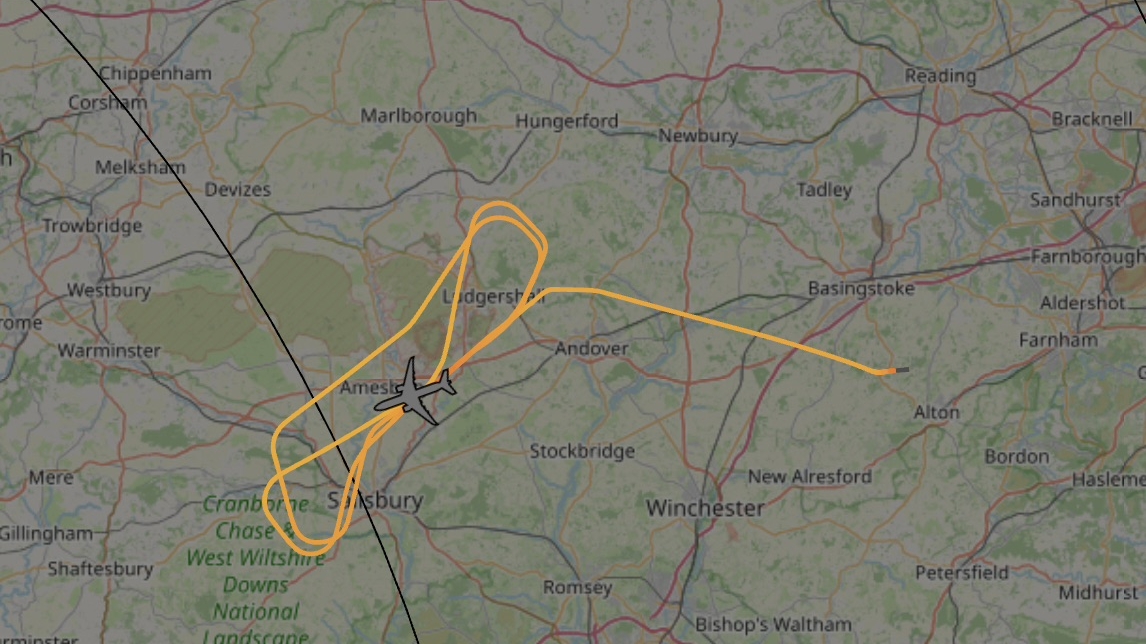
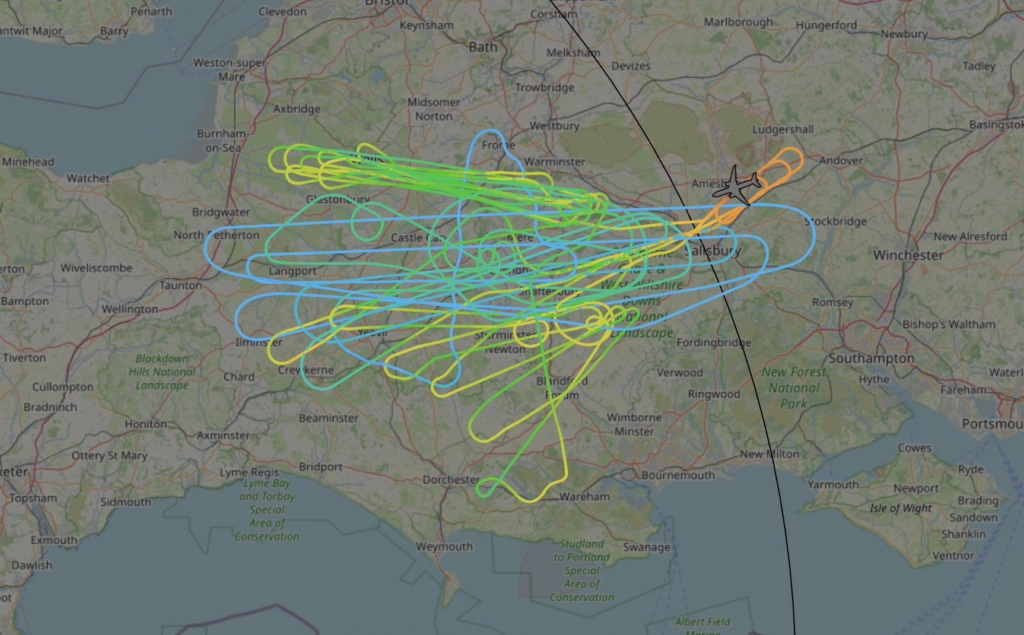
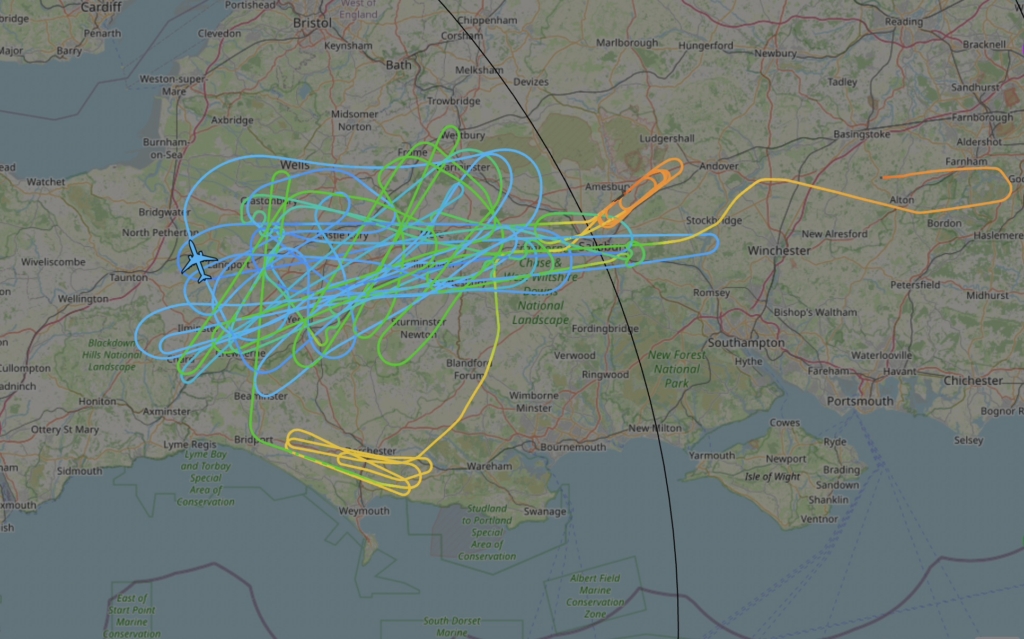
While the precise purpose of those flights has not been disclosed, the pattern suggests the modified 757 is becoming increasingly active as the programme moves deeper into its test campaign.
Observers tracking the aircraft’s activities have noted the growing number of external modifications appearing on Excalibur. In February this year, the aircraft appeared with new modifications, suggesting progress in its journey for GCAP.
The Boeing 757 Excalibur just got a new nose
— Fahad Naim (@Fahadnaimb) February 17, 2026
This bad boy, run by UK's 2Excel Aviation (reg G-FTAI), sports a radio-transparent fairing for radar tests, plus extra bits for comms and electronic warfare. It's all for the GCAP program… UK, Italy, Japan teaming up on the Tempest… pic.twitter.com/OTX3HeAlXn
While officials have revealed little about the specific technologies being evaluated, the aircraft’s changing appearance reflects the programme’s gradual progression from airframe modification to systems testing.
A glimpse of future air combat
The aircraft flying over the South West of England recently offers a glimpse into how future combat aircraft programmes are being developed.
The future GCAP fighter will undoubtedly attract most of the attention when it eventually emerges.
Boeing 757 out of Boscombe Down exploring the low speed envelope over my garden.@c_mperman @PicklePair @IoanaLogafatu @clark_aviation @julieinthesky @AviationMarlene @alan_shropshire @jjmmli @LindaMiller_Am @LNorqueen86186 pic.twitter.com/HOycLo72NG
— Dr Ron (@GbhvfRon) March 19, 2026
Its shape, performance and capabilities will dominate headlines. Yet many of the technologies that ultimately define the aircraft may first prove themselves aboard Excalibur.
That reality highlights a broader shift taking place across military aviation.
Future air superiority will not depend solely on speed, manoeuvrability or stealth. It will increasingly depend on the ability to gather information, understand it faster than an adversary and distribute it across a networked force.
The modified Boeing 757 now flying test missions for Britain’s future combat air effort is helping determine how that future will work.
It may not be a fighter aircraft, but it is already playing a role in shaping one.
Featured image: Leonardo


