


Passenger heat dummies and +1,000 sensors: How Airbus tests the A350-1000ULR cabin

3 min read
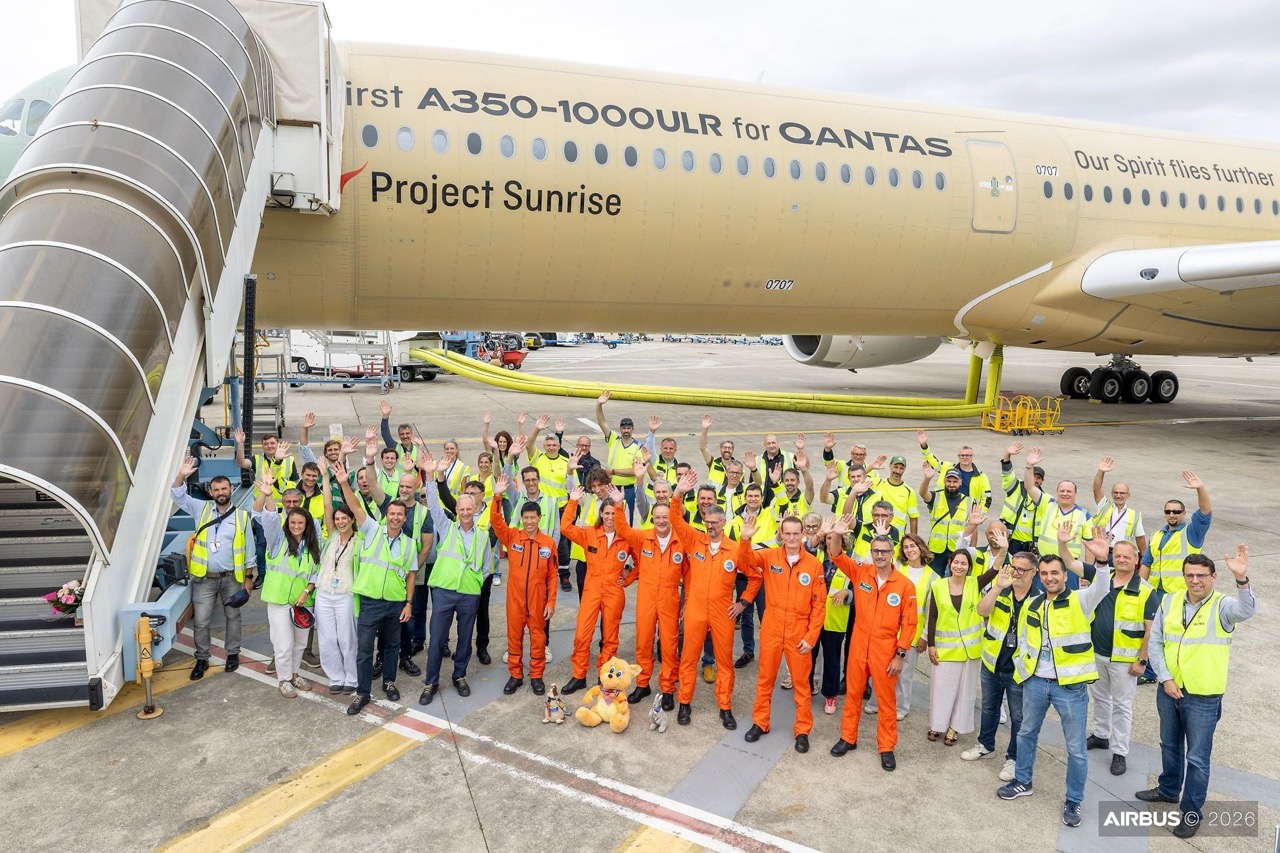
Airbus is using heat-generating passenger dummies and more than 1,000 specially designed sensors to validate the cabin environment aboard the new A350-1000ULR. This ultra-long-range aircraft will operate Qantas’ Project Sunrise flights.
The aircraft, MSN707, is currently undergoing a two-month certification campaign ahead of the launch of nonstop flights from Sydney to London and New York, with journeys lasting up to 22 hours.
Unlike traditional test aircraft, MSN707 is a production airframe that will eventually enter commercial service. That requirement has forced Airbus engineers to devise a unique, non-invasive approach to gathering data without damaging the finished cabin.
More than 1,000 specialised sensors installed
Airbus began planning the aircraft’s flight-test instrumentation in 2023, eventually installing around 5 tonnes of monitoring equipment. About 80% of the instrumentation, including over a thousand specially-designed sensors, was integrated as the aircraft moved through production.
Thousands of feet of highly visible orange cables run through existing cabin tracks and structural galleys, avoiding the need to drill new holes in the aircraft. Airbus also installed a dedicated flight test engineer workstation in the cabin.
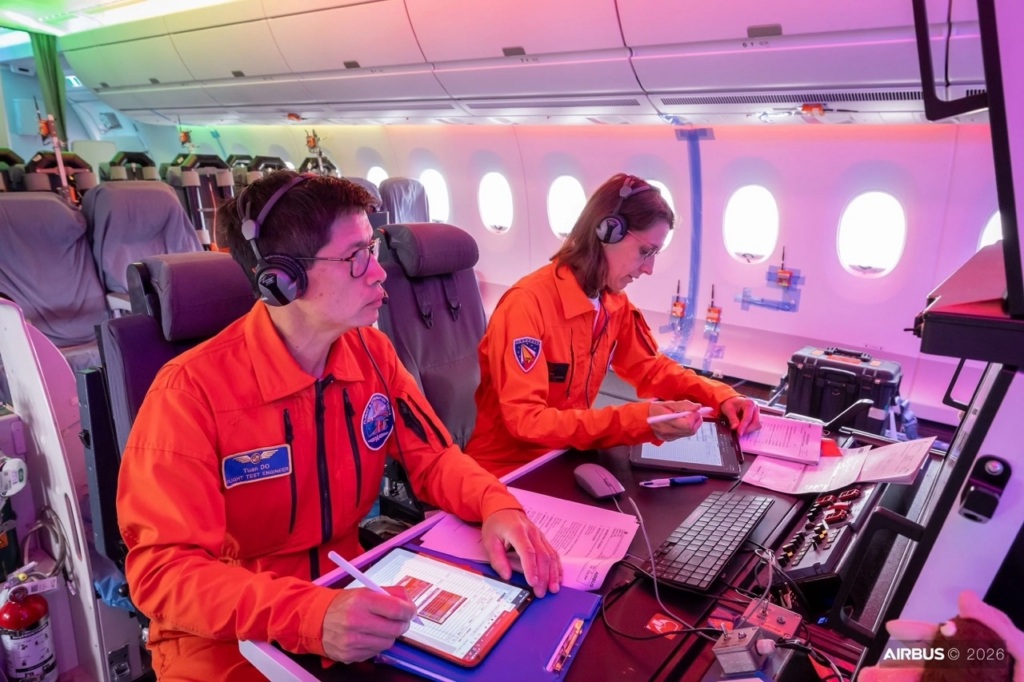
The sensor network monitors cabin temperature and oxygen concentration through all phases of flight.
Airbus will use the data gathered during testing to refine its digital models, reducing the need to repeat expensive physical tests on future cabin configurations.
Heat-generating passenger dummies simulate a full cabin
One of the biggest changes on the A350-1000ULR is a new localised refrigeration architecture known as the New Generation Air Chiller (NGAC).
Unlike the baseline A350, which relies on a centralised refrigeration system, the new aircraft provides dedicated cooling to each galley. Airbus must demonstrate that the system can maintain a comfortable cabin environment during flights lasting nearly a full day.
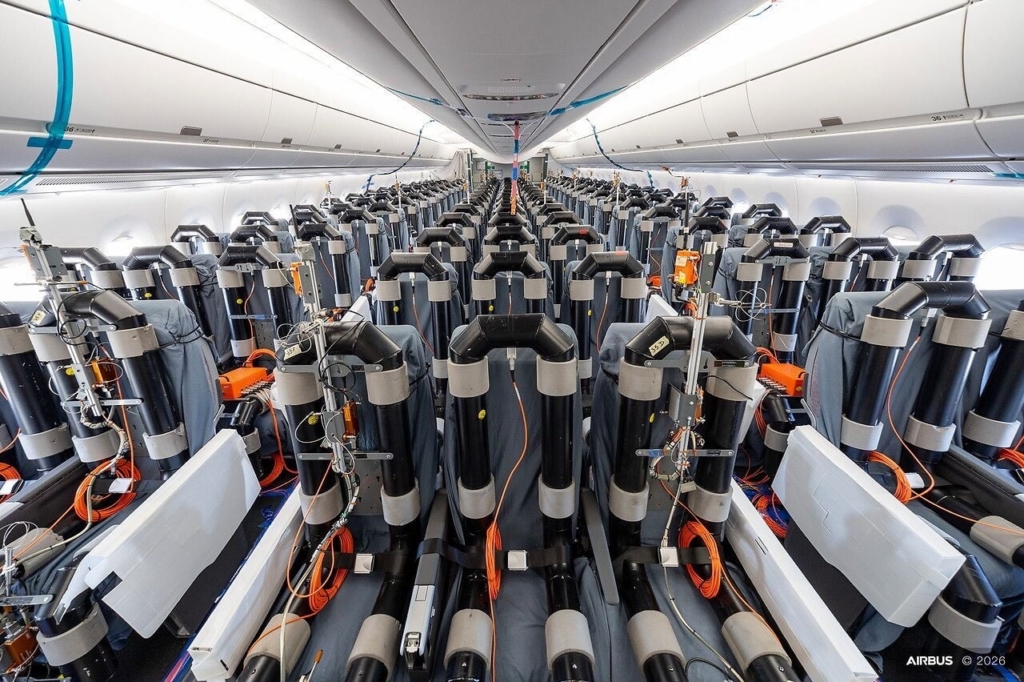
To do that, engineers have populated the cabin with special “passenger heat dummies.”
These devices generate the same thermal load as real travellers, allowing Airbus to study how heat builds up inside a fully occupied cabin and confirm that temperatures remain within comfort limits.
According to Airbus, a full cabin behaves very differently from an empty one, making simulated passengers essential for validating passenger comfort before anyone actually steps on board.
Testing a customer aircraft adds extra pressure
Because MSN707 will ultimately fly paying passengers, Airbus engineers are treating the aircraft with exceptional care.
“Flight testing a production aircraft adds a layer of extra pressure,” Airbus test flight engineer Laurent Rossignol said.
“You are sitting inside the actual product. The customer is trusting us with their future flagship. Every switch we flip, every check we carry out, every manoeuvre we perform has to be executed with the passenger experience and operational reliability in mind.”
Supporting Project Sunrise
The A350-1000ULR gains much of its range through the addition of a 20,000-litre rear-centre fuel tank and modifications to the fuel-system architecture.
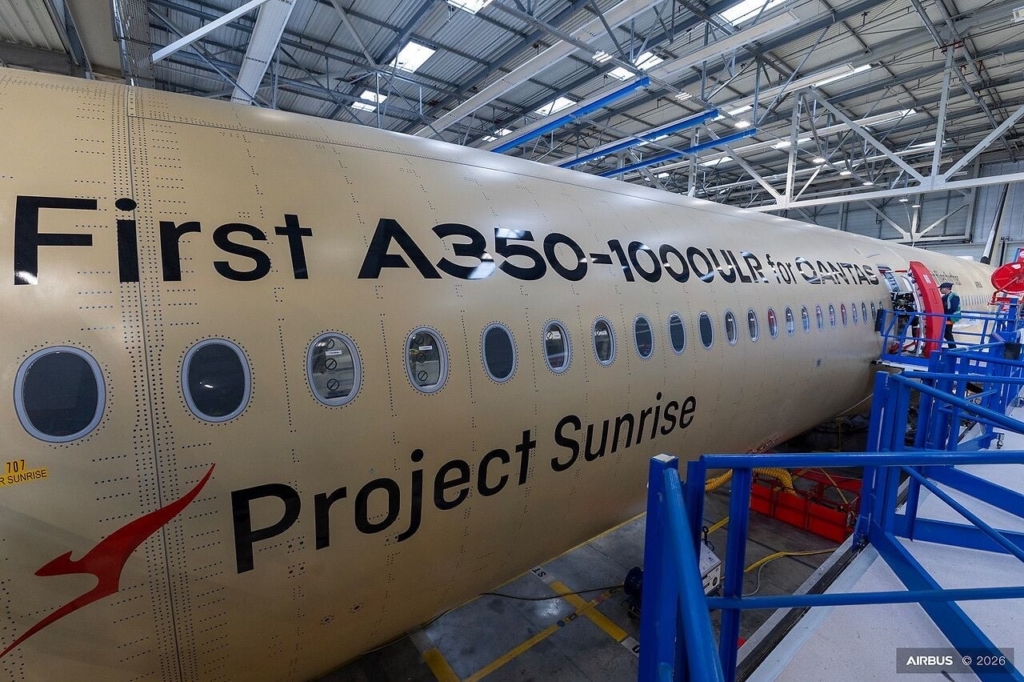
The variant is designed specifically for Qantas, which has ordered 12 aircraft for Project Sunrise. The airline plans to operate non-stop services between Australia and London and New York, routes approaching 10,000 nautical miles and flight times of up to 22 hours.
Following completion of the flight-test programme, MSN707 will be made ready for Qantas’ long-anticipated launch of commercial service.
Featured Image: Airbus


