


Airbus-led Team Gen 6 targets sixth-generation fighter after FCAS collapse

6 min read

Germany‘s aerospace industry has formally unveiled Team Gen 6, an Airbus-led alliance of eight aerospace and defence companies that is positioning itself to lead a German-backed sixth-generation fighter aircraft. The announcement follows the collapse of the fighter element of the Franco-German-Spanish FCAS programme.
The initiative was launched on 11 June at the ILA Berlin Air Show, where Airbus Defence and Space and seven leading German defence firms signed a strategic positioning paper intended to support what the company described as a new and more agile approach to fighter aircraft development.
The move marks one of the most significant developments in Europe’s combat aviation sector since FCAS was launched in 2017 and provides the clearest indication yet of how Germany’s aerospace industry sees its future role in European next-generation air combat.
Airbus-led Team Gen 6 targets FCAS fighter role
At the centre of the announcement is a notable shift in emphasis.
Rather than presenting Team Gen 6 as a separate aircraft programme, Airbus framed the alliance as a response to an evolving FCAS structure.
“The German and French governments have announced a realignment of the European Future Combat Air System (FCAS),” Airbus said. “While the development of the overarching System of Systems is progressing as before, the sixth-generation fighter aircraft integrated within it requires a new, agile industrial setup.”
An exciting step for European sovereignty at ILA Berlin: "Team Gen 6", a group of eight leading German defence and aviation companies signed a strategic positioning paper. The German and French governments have announced a realignment of the European Future Combat Air System… pic.twitter.com/aZcjAaO6dE
— Airbus Defence (@AirbusDefence) June 11, 2026
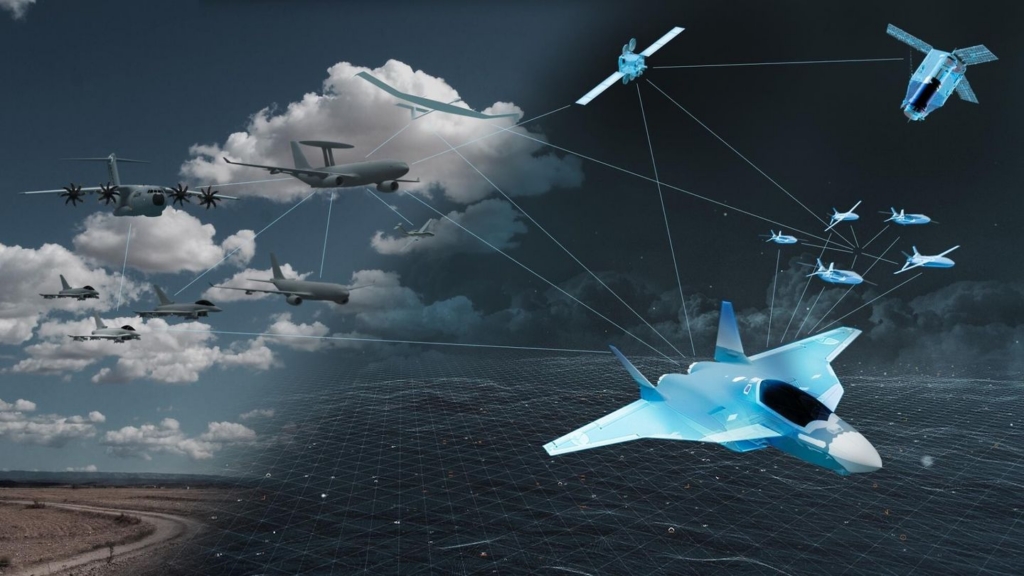
FCAS was never conceived as just a fighter programme alone. The concept is a family of interconnected systems centred on a Next Generation Fighter, supported by autonomous remote carriers, advanced sensors, weapons, communications networks and a digital combat cloud capable of linking assets across the battlespace.
While France and Germany have agreed to scrap FCAS as originally conceived, the work on the related systems, such as drones, sensors and data networks, continues.
Germany’s aerospace giants join Team Gen 6
The alliance brings together Airbus Defence and Space, MBDA Deutschland, Hensoldt, MTU Aero Engines, Diehl Defence, Liebherr, Rohde & Schwarz and Autoflug.
Collectively, the companies cover every major discipline required for a modern combat aircraft programme.
Airbus provides aircraft design, integration and systems engineering expertise. MTU Aero Engines contributes propulsion capabilities. Hensoldt brings radar, sensor and electronic warfare technologies, while MBDA and Diehl Defence add missile and weapons expertise.

Rohde & Schwarz contributes secure communications and networking technologies. Liebherr provides aircraft systems and environmental control technologies, while Autoflug specialises in safety and life-support systems.
The structure of the consortium reflects Germany’s desire to demonstrate that it possesses the industrial depth needed to lead the development of a future combat aircraft rather than simply participate in one. Airbus made that ambition clear.
“Together with AUTOFLUG, Diehl Defence, HENSOLDT, Liebherr, MBDA Deutschland, MTU Aero Engines and Rohde & Schwarz, we at Airbus Defence and Space stand ready to take on the responsibility for a sixth-generation fighter aircraft.”
That wording is likely to attract attention across Europe’s aerospace sector.
FCAS tensions shape Germany’s fighter push
The unveiling of Team Gen 6 comes after years of industrial disagreements within FCAS, particularly concerning responsibility for the Next Generation Fighter.
Since the programme’s launch, Airbus and Dassault Aviation have differed over governance, leadership structures, intellectual property and workshare arrangements.
Dassault has consistently argued for a prime contractor model similar to traditional fighter programmes, while Airbus has advocated a structure reflecting the multinational nature of the project. Those tensions repeatedly slowed progress despite political backing from France, Germany and Spain.
While the wider FCAS concept may survive through drones, combat cloud and other networked systems, the original joint Next Generation Fighter element has reached the end of the road. The creation of Team Gen 6 shows Germany’s aerospace industry preparing for a new fighter path built around national industrial leadership rather than the previous Franco-German-Spanish structure.
Spain forms its own future fighter industry team
Germany is not the only country organising around a new fighter path. Airbus revealed that Spanish industry is also organising around a parallel grouping that includes Airbus, Indra, Grupo Oesía, GMV, ITP Aero and Sener.
That development points towards a broader effort to strengthen national industrial participation while preserving the possibility of future European cooperation.
Rather than a single integrated FCAS fighter structure, the emerging model appears to be one of stronger national industrial teams that could either support a reworked European programme or form the basis of separate sixth-generation fighter efforts.

The concept aligns with growing discussions across Europe about technological sovereignty, defence resilience and reducing strategic dependencies in critical military technologies.
Airbus described Team Gen 6 as “an exciting step for European sovereignty” and linked the initiative directly to collective European security.
“As Team Gen 6, we have the capabilities and the capacities. Now, we are looking for close alignment with policymakers and the Air Force to drive forward a superior European air combat system for collective security,” Airbus said.
Team Gen 6 is about more than one aircraft
Like FCAS itself, Team Gen 6 is ultimately about more than a single aircraft.
The future air combat model envisaged by European defence planners is built around highly connected systems operating across multiple domains, with a crewed fighter acting as one node in a wider network of drones, sensors, weapons and command systems.
That means any future sixth-generation aircraft is expected to combine low observability, advanced sensors, electronic warfare, artificial intelligence, long-range weapons and the ability to operate alongside collaborative autonomous systems.
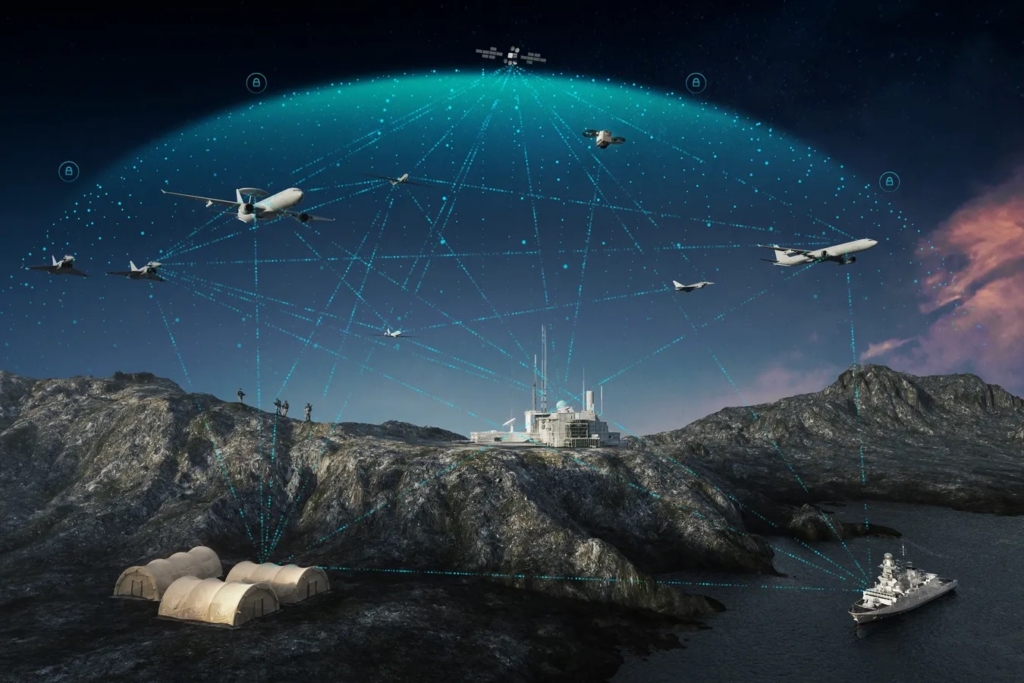
Many of those technologies remain central to Europe’s future combat aviation roadmap, even if the original FCAS fighter structure has fractured.
One of the most important elements is the Combat Cloud, the digital architecture intended to connect aircraft, drones, weapons and sensors in real time.
As military operations become increasingly networked, future air superiority may depend as much on information sharing, data processing and coordinated effects as on the performance of the fighter aircraft itself.
A new phase for FCAS
The launch of Team Gen 6 does not settle every question surrounding Europe’s future fighter ambitions.
Funding arrangements remain to be clarified. The final industrial structure has yet to be agreed, while the precise relationship between Team Gen 6, Spain’s emerging industrial grouping and any surviving elements of FCAS will continue to evolve.
What the announcement does reveal is that Germany’s aerospace industry intends to play a far more prominent role in shaping whatever sixth-generation fighter effort follows the collapse of the original joint FCAS fighter model.
For nearly a decade, FCAS was presented as a single vision for Europe’s next-generation combat aviation capability.
The emergence of Team Gen 6 suggests that vision is now entering a more fragmented phase, one in which industrial leadership, technological sovereignty and national capability are becoming just as important as the aircraft itself.
Sign up for our newsletter and get our latest content in your inbox.


More from

September 26, 20263 min read


September 25, 20264 min read


September 25, 20264 min read

September 24, 20262 min read


