


Specialist oil spill response Boeing 727 makes rare landing at Doncaster Sheffield

3 min read
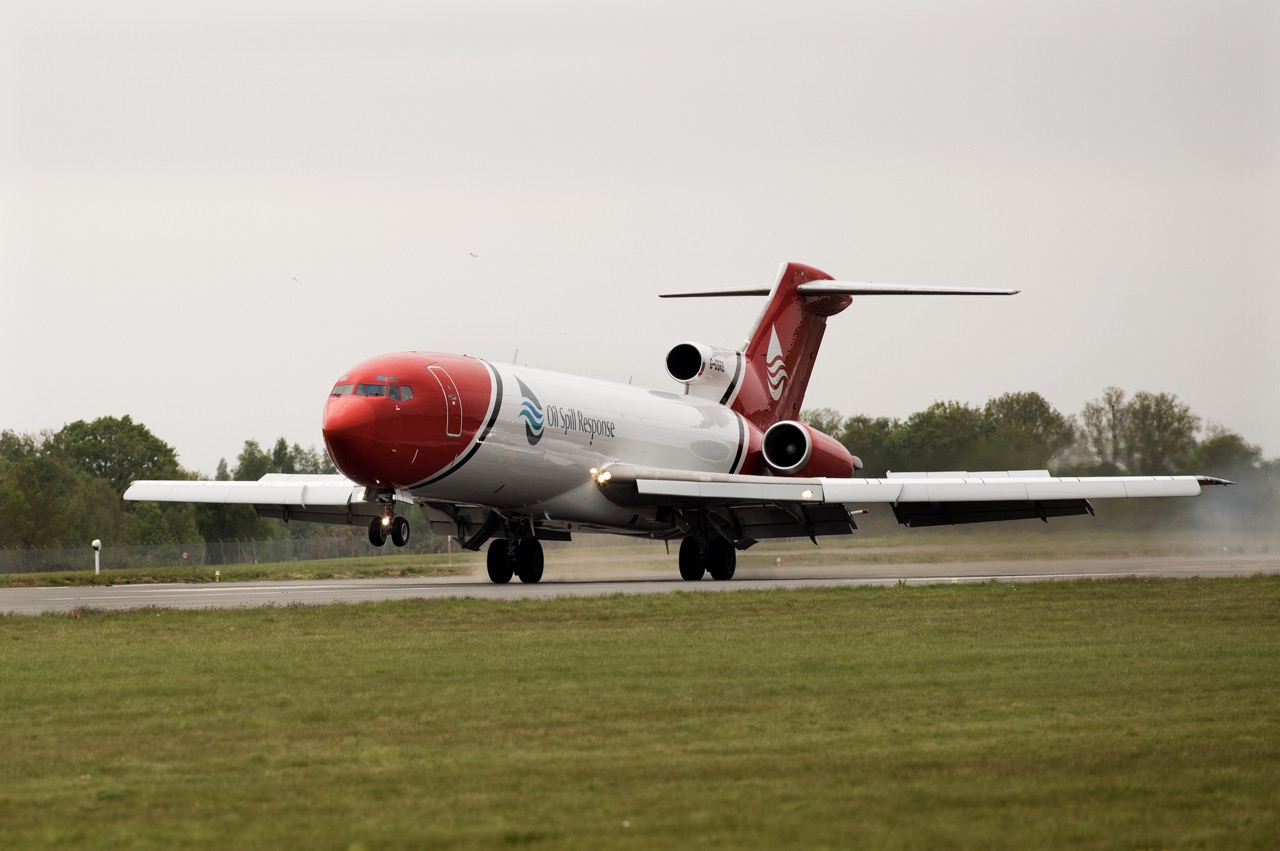
2Excel Aviation has showcased its specialist Boeing 727 – which is kept on constant standby as a response aircraft to oil spills worldwide – with the ageing jet paying a rare visit to its former home in the north of England.
The aircraft, which is fitted with the TERSUS system comprising seven tanks holding almost 15,000 litres of dispersant plus pumps and a spray boom, touched down at Doncaster Sheffield Airport this week.
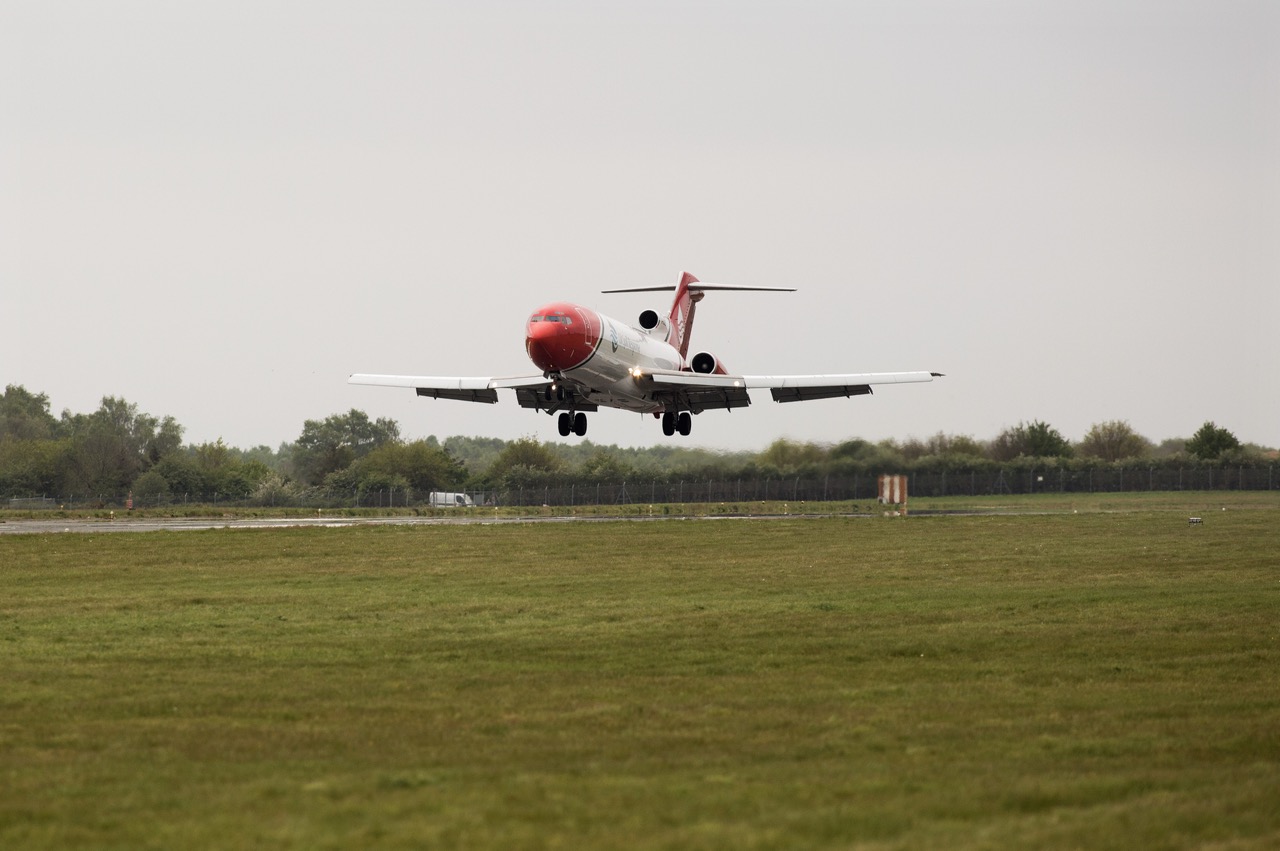
The Boeing 727: A specialist oil spill response aircraft
The Boeing 727-2S2F Adv, registered G-OSRB (c/n 22929), is a crucial part of the interconnected web of oil spill response specialists that involve both air and maritime operators.
2Excel Aviation’s Boeing 727s are on-call 24/7, 365 days, and can be deployed anywhere in the world at short notice.
The aircraft are equipped for aerial dispersant operations, with the flight crew trained to fly at just 150 ft over an oil spill or other disaster area to drop the dispersant at a speed of 150kts.
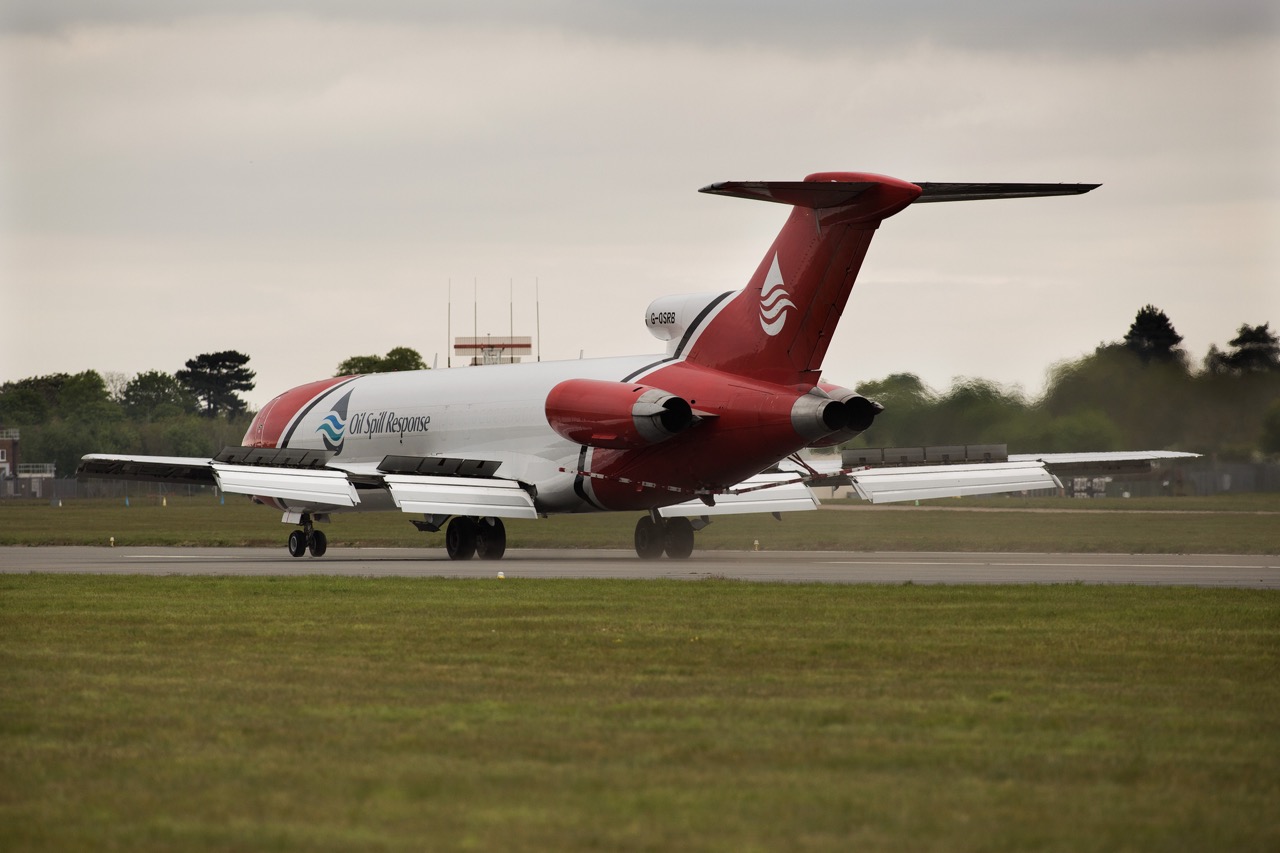
The Boeing 727’s metal frame makes it easier to modify than later-generation composite aircraft.
It is also capable of taking off and landing on shorter runways, meaning 2Excel Aviation can deploy the airframe to smaller airports that may be closer to the affected oil spill areas.
Finding a successor to the L-382 Hercules
UK-based 2Excel Aviation, which was founded in 2005 by two Royal Air Force pilots. The Boeing 727 aerial dispersant business unit was created in 2013 and the company now has two in its fleet – a pair of former FedEx Boeing 727-2S2F (RE) aircraft.
The aircraft were commissioned for oil spill response work after the Macondo oil spill in 2010, when the oil and gas industry sought a replacement for the former oil spill responder, the L-382 Hercules.
The aircraft, operated by 2Excel Aviation on behalf of Oil Spill Response Limited (OSRL), a global oil spill response co-operative that provides preparedness, response, and intervention services, are among the few remaining active Boeing 727s.
2Excel began working together with OSRL when the first of the Boeing 727s was delivered to them in June 2013. The second aircraft was delivered in August 2014. Alongside G-OSRB is G-OSRA (c/n 22938).
They have been used on a wide range of oil spill exercises and responses across three continents. The dispersants dropped by the Boeing 727s break down oil spills into smaller droplets which can biodegrade more easily.
Boeing 737s to replace the Boeing 727s from 2028
Last year, 2Excel Group was awarded a 20 year contract by OSRL which will see the Boeing 727s replaced by more modern Boeing 737s.
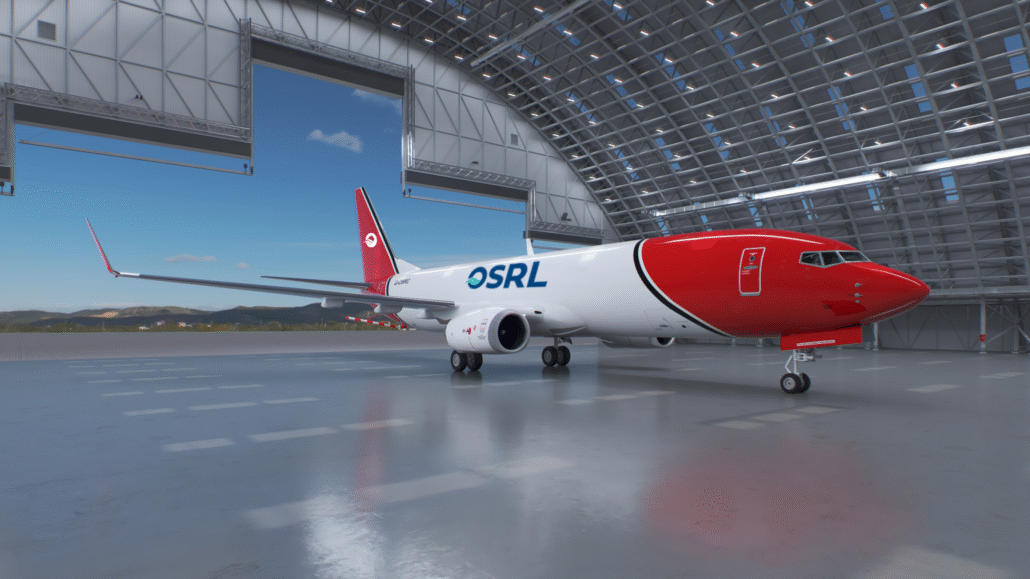
Beginning in 2028, a pair of specially modified Boeing 737-800s will enter service, which 2Excel Aviation said would also offer lower fuel burn and emissions than the current fleet.
The aircraft will be ready to be deployed with just six hour’s notice, and will come fitted with an updated TERSUS II system, which offers improvements including a modification that will allow the aircraft to operate in icing conditions.
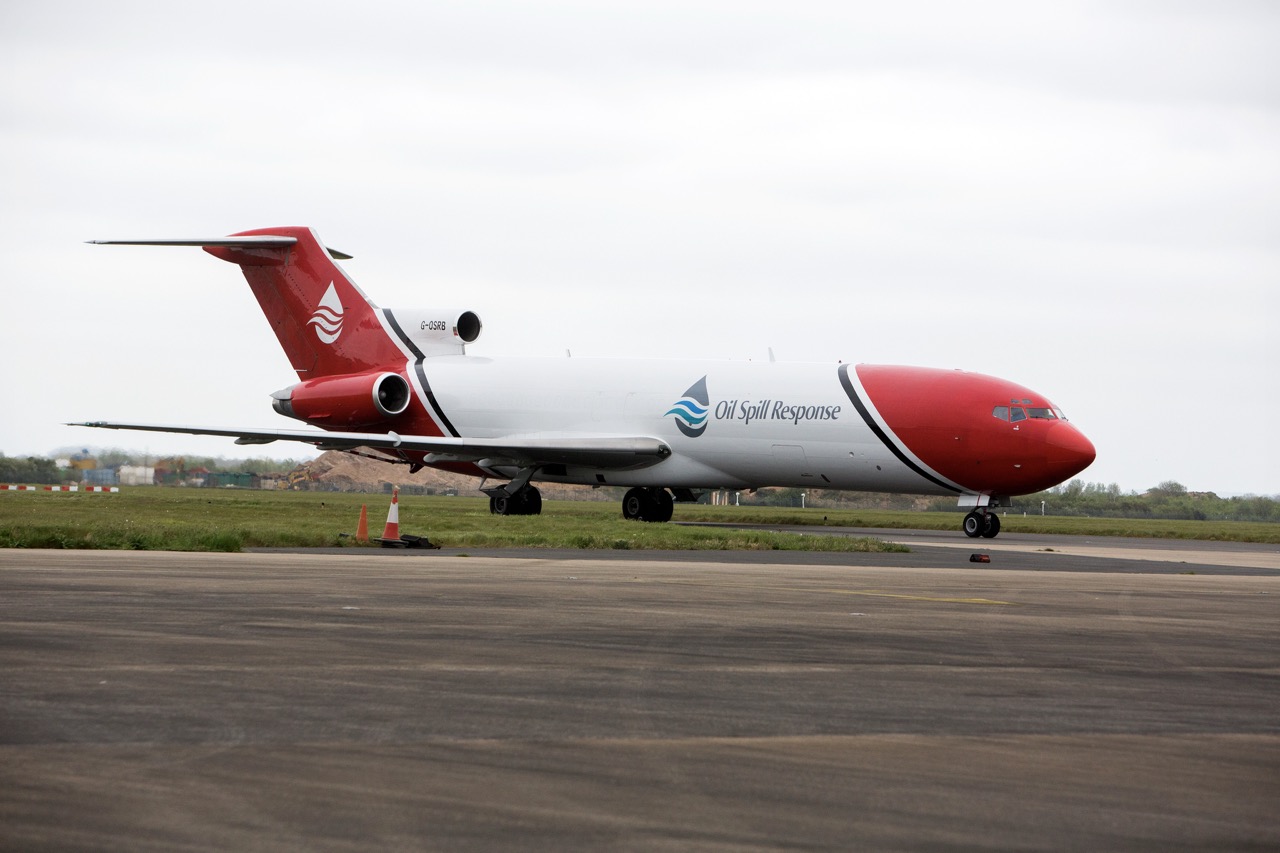
For now, the Boeing 727s remain the oil spill first responders, and one of 2Excel’s two airframes touched down at Doncaster Sheffield Airport on Tuesday, becoming the first large jet to arrive at the airport since its closure in 2022.
The arrival also came 21 years to the day since the first flight departed DSA when it opened in 2005.
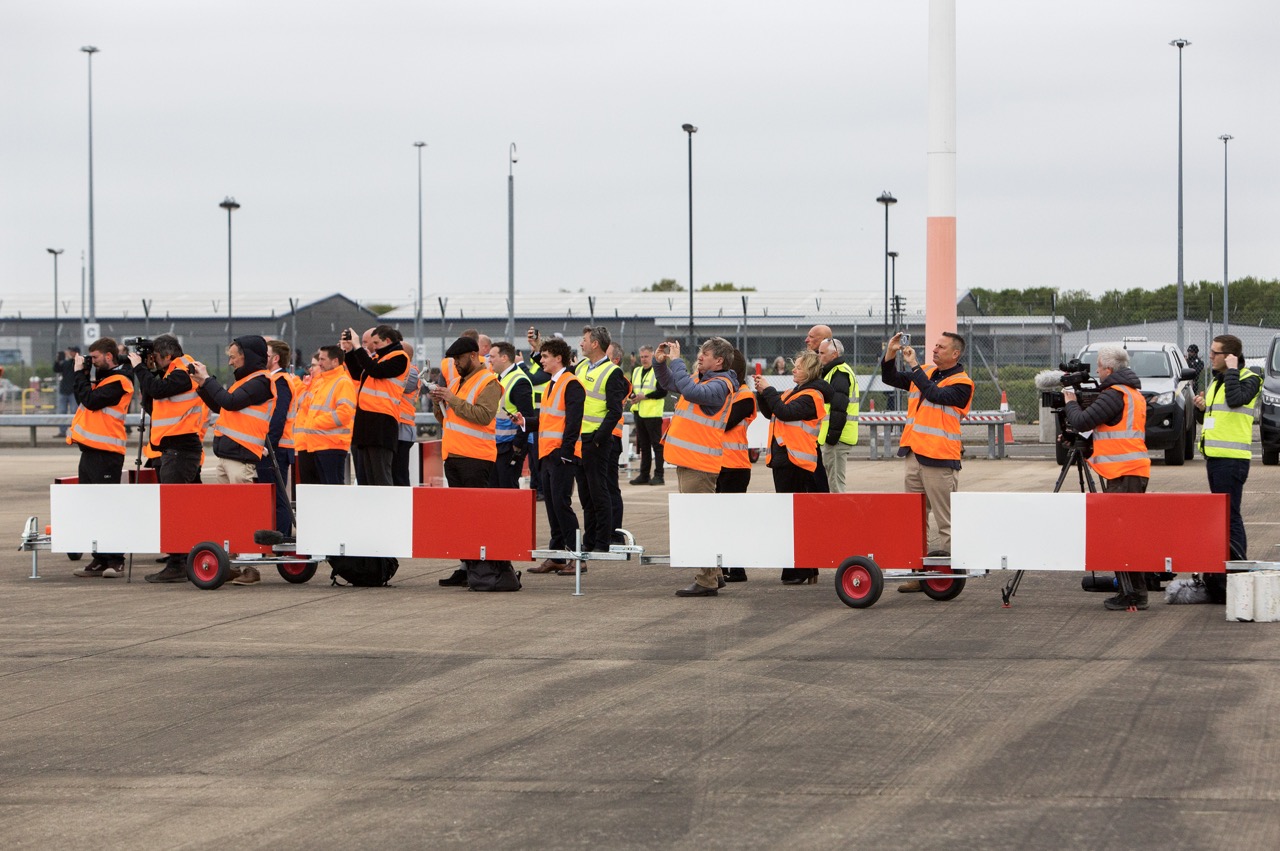
The 727 oil spill response fleet was stationed at Doncaster Sheffield Airport before the airport’s closure, and was subsequently sent to London Southend Airport.
Featured image: DSA


