Poland eyes transfer of last MiG-29s to Ukraine in exchange for drone technology

4 min read
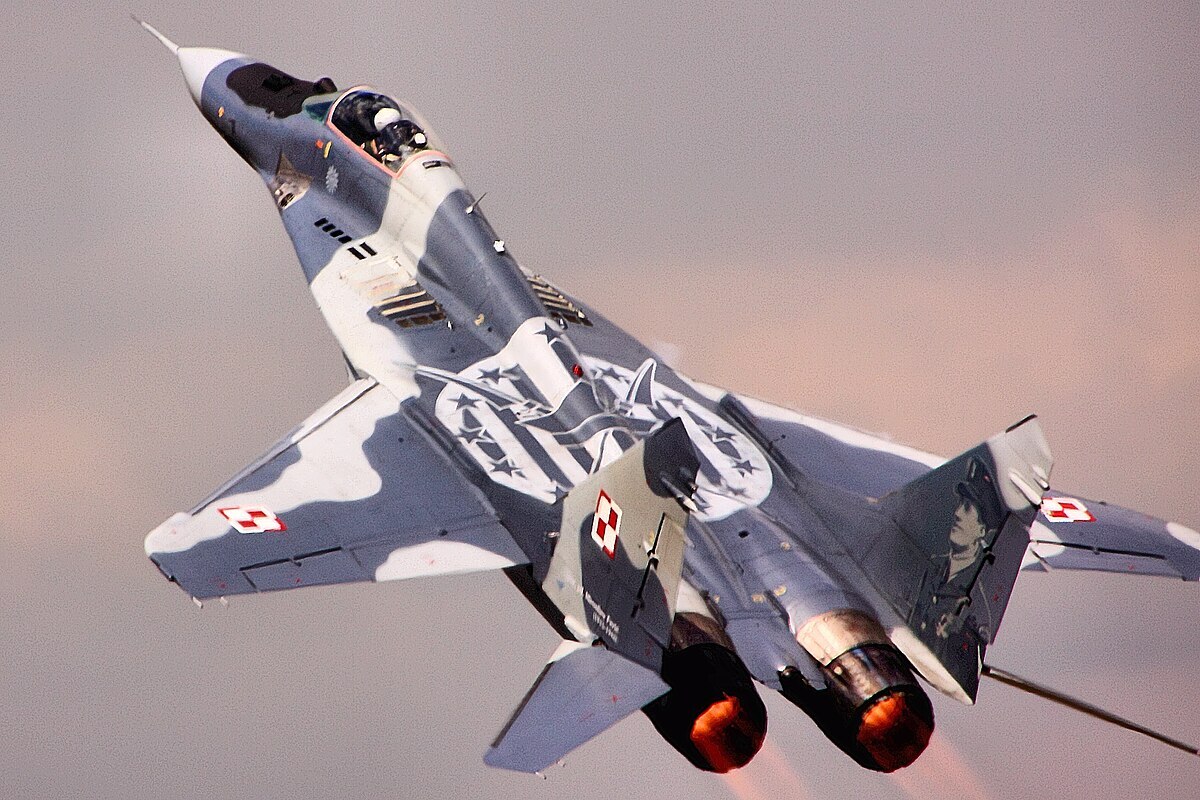
After donating 14 of its MiG-29s to Ukraine in 2023, Poland is now discussing transferring the remaining 14 in exchange for Ukrainian drone and missile technology.
Poland in talks to send remaining MiG-29s to Ukraine
As a surprise to no one, Poland is reportedly in advanced talks to transfer its remaining MiG-29 Fulcrums to Ukraine.
Informujemy, że trwają rozmowy ze stroną ukraińską na temat przekazania samolotów MIG-29. Przekazywanie samolotów związane jest z osiąganiem przez nie docelowych resursów eksploatacyjnych oraz brakiem perspektywy ich dalszej modernizacji w Siłach Zbrojnych RP. Informujemy… pic.twitter.com/35obeH37rP
— Sztab Generalny WP (@SztabGenWP) December 9, 2025
The General Staff of the Polish Armed Forces posted, “We inform that negotiations are ongoing with the Ukrainian side regarding the transfer of MiG-29 aircraft.” It added that no final decision has yet been made.
Poland previously donated half of its Soviet-era MiG-29s to Ukraine in 2023, but held the other half, as transferring them all would have resulted in an unacceptable gap in Poland’s capabilities.
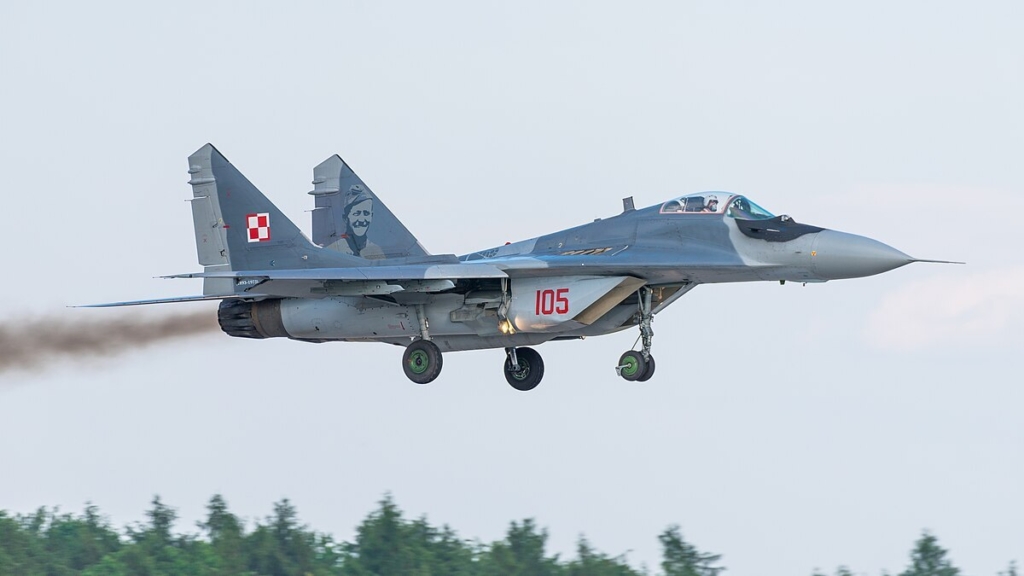
Ukraine has previously asked for Poland to supply its remaining MiG-29s, only for Poland to rebuff the request, saying it needs to first receive replacement aircraft to take over their role. These old ex-East German jets have no place in Poland’s modernised air force.
Not a straightforward donation
But whereas Poland previously donated its old jets, these jets are expected to be part of a trade. The deal is reportedly to be in exchange for Ukraine transferring drone and missile technology.
Ukraine has become one of the world’s leaders in countering drones and developing small FPV and other types of drones. These should not be confused with the high-end Collaborative Combat Aircraft being developed in the United States.
Poland and Ukraine share a checkered past, although both see Russia as an existential threat. Poland fears it could be next should Ukraine fall.
Even so, the mood of donating aid to Ukraine free of charge has soured somewhat. At the same time, Ukraine has amassed an enormous amount of real-life battlefield knowledge. So much so that European wargames with Ukraine have been reported to be somewhat problematic as Ukrainian drone operators wreak havoc on European formations.
For the second time this week, a pair of MiG-29As with the Polish Air Force were scrambled earlier this morning from the 22nd Tactical Air Base in Malbork, in order to intercept and track a Russian Il-20M “Coot-A” Electronic Surveillance Aircraft operating over the Baltic Sea.… pic.twitter.com/ZQdlYN9RKV
— OSINTdefender (@sentdefender) October 30, 2025
All this means that the two countries are now in a more positive position to engage in somewhat reciprocal exchanges rather than one-sided donations.
Get the latest aerospace defence news here on AGN.
Polish Air Force in transition
The Polish Air Force, along with the Army, is ungoing a dramatic transformation. The country donated much of its legacy Soviet-era equipment to Ukraine, and now it is racing to replace that gear with modern Western systems (including South Korean weapon systems). However, this takes time.

It currently has 47 F-16s in service, and these are expected to be upgraded. The country’s most high-end acquisition is 32 F-35s, and it has now taken delivery of the first seven examples. These are used for training, and it will be some time before the F-35 reaches operational capability (starting in 2027).
Replacing the old MiG-29s for patrolling Polish skies are 36 South Korean KAI FA-50 light multirole fighters. The first twelve are now in service.
Ledwie miesiąc temu informowaliśmy, że nasze #F35 o numerach 3506 (AZ-06) i 3507 (AZ-07) zjechały z taśm produkcyjnych, a już po testach producenta zostały przebazowane do bazy Gwardii Narodowej USA – Ebbing w Arkansas, gdzie rozpoczną szkolenie kolejnego pokolenia polskich… pic.twitter.com/GfDLjbd0bV
— Sztab Generalny WP (@SztabGenWP) December 6, 2025
Polish is also currently considering purchasing 32 Eurofighter Typhoons or Boeing F-15EX fighter jets.
Just as the Polish Air Force is in transition, so too is the Ukrainian Air Force. Soviet-era MiG-29s are a stopgap to keep its attrited and worn-out air force operating as it transitions to a post-war fleet of Saab Gripen Es, Dassault Rafales, and F-16s.
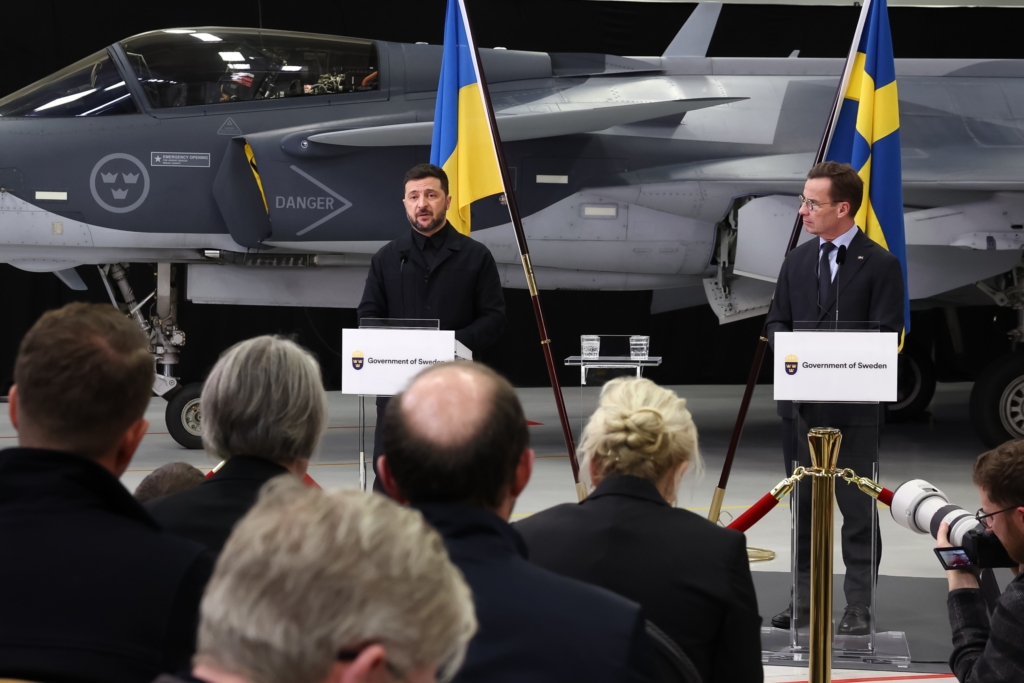
Ukraine has also taken delivery of a few dozen F-16s and a handful of Dassault Mirage 2000s received from France. Once Western fighter jets are delivered in enough numbers, whatever is left of Ukraine’s legacy fleet of Su-27s, Su-24s, Su-25s, and MiG-29s is expected to retire.
Featured Image: Wikimedia Commons