


“I don’t think we’re going to be running out of fuel”: Wizz Air boss hits back at O’Leary bankrutpcy remarks

8 min read
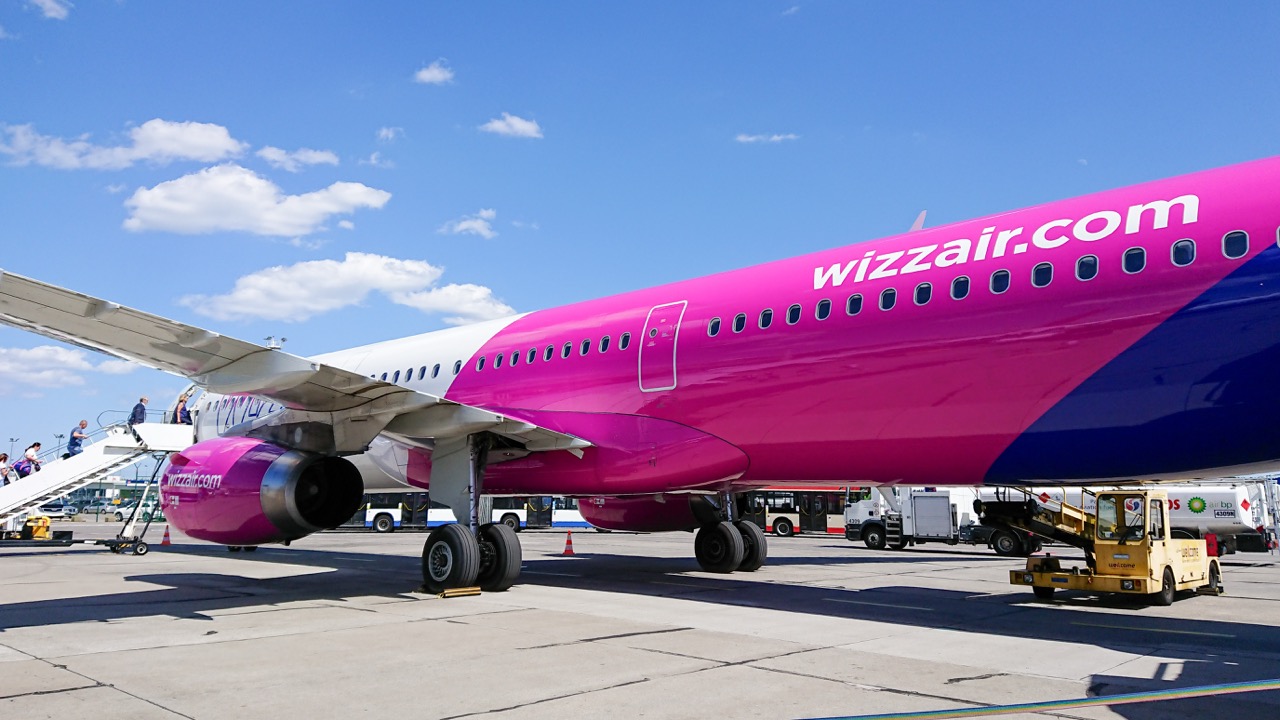
Wizz Air has pushed back against recent claims by Ryanair’s chief Michael O’Leary that the Hungarian low-cost carrier could run out of fuel this summer—and face collapse by winter. Wizz Air’s CEO József Váradi insists the airline’s fuel supply is adequate and its operations and finances remain solid.
The exchange comes as the ongoing Iran conflict has shut down the Strait of Hormuz, limiting fuel shipments and destabilising the oil market, leading to a sharp spike in the cost of jet fuel for global airlines.
O’Leary: “Two or three European airlines … could go bankrupt”
O’Leary raised concerns over what sustained higher fuel costs might mean for European air travel, suggesting a potential summer disruption due to low fuel stocks and warning that some European carriers, including Wizz Air and airBaltic, may not survive 2026 if fuel prices remain elevated.
“If oil stays at these levels, two or three European airlines in October or November could go bankrupt like Wizz Air, which wants to sue me but won’t have enough time to do so, and airBaltic,” O’Leary said during a press briefing last week, as reported by Italy’s Il Sole 24 Ore. “A good thing for our business’ because there will be fewer competitors.”
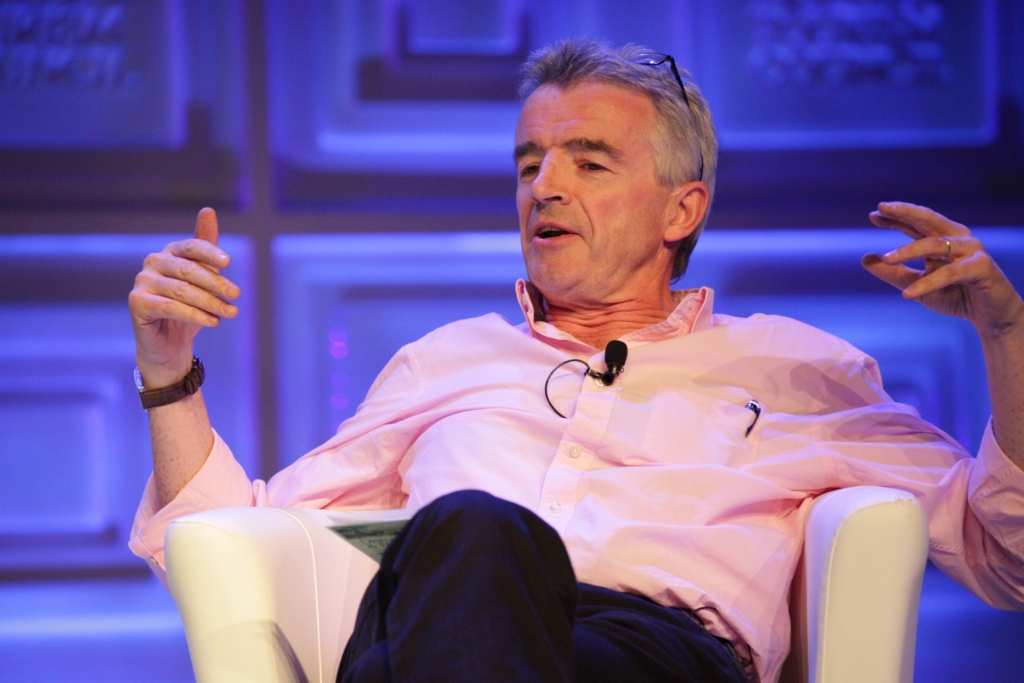
Of Ryanair’s own fuel supply woes, O’Leary said, “The war has already cost us $50 million more in fuel in April alone. If it continues and the price stays at $150 a barrel, within a year, this could rise to $600 million.”
Ryanair hedged 80% of its fuel at $67 per barrel before the conflict, with the hedge covered through March 2027. That still leaves the airline purchasing 20% of its fuel supply at market prices, which have doubled from $75 before the conflict to $150.
O’Leary also spoke of ongoing uncertainty around fuel costs if the Middle East conflict is extended. “Nobody knows what will happen. At the moment, what seems clear is that if the war ends at the end of April or beginning of May, there will be no problems with fuel supply during the summer, but if it continues, we don’t know,” he said.
Wizz Air CEO sees no jet fuel shortage and predicts a strong summer
Wizz Air CEO József Váradi has rejected O’Leary’s claims about the uncertain future of his airline outright, saying Wizz Air does not expect to run out of jet fuel and is adequately hedged against higher jet fuel prices.
As reported by Reuters, the airline expects its summer schedule to be 17% larger this year, despite the current fuel crisis.
“We are much stronger on summer bookings this year than last year,” Reuters quotes Jozsef Varadi as saying during a recent press briefing.
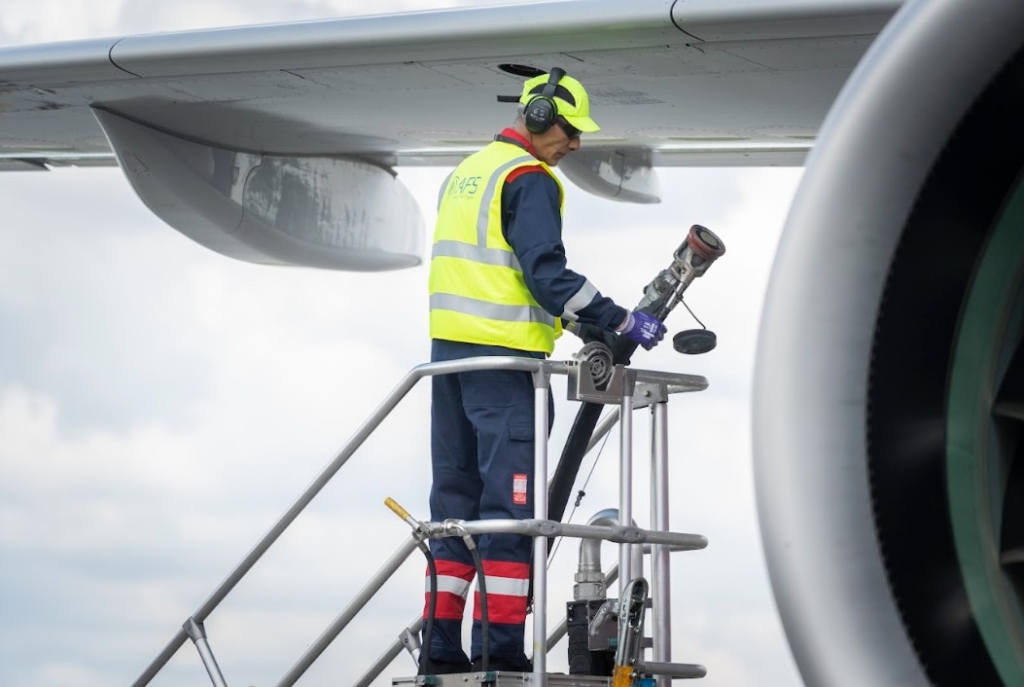
Wizz Air has hedged 70% of its summer jet fuel requirements at $700 per metric ton over the next 10 months and will renew some of its hedges when they expire.
As Aviation Week reported, Varadi expressed confidence in the airline’s continued operations throughout the critical summer months and well into the end of the year.
“We are not taking capacity out because I think the other guys will take capacity out,” Aviation Week quotes Wizz Air CEO József Váradi as saying during the CAPA Airline Leaders Summit in Berlin last week. “You don’t have to run faster than the bear, but faster than the guy next to you.”
Váradi dismissed concerns over a shortage of jet fuel in Europe, noting that four weeks ago, some predicted four weeks of jet fuel supply remaining, and it has not yet run out.
“Jet fuel traders will find alternative solutions, other sources. I don’t see disaster coming,” Váradi said.
Still, Varadi sees a need for Europe to reconsider its current reliance on Middle Eastern jet fuel supplies. “If you look at the very nature [of] how Europe is accessing jet fuel, I mean, we are far over-dependent on the Middle East. I mean, that’s kind of crazy,” Reuters quotes Varadi as saying.
Fuel risk poses uncertainty from June, O’Leary says
O’Leary sees potential supply disruption starting in early summer, if fuel transport through the Strait of Hormuz remains unstable.
“Right now, the oil companies say there will be no supply risks for May, but for June, we are not sure,” he said. “If the war ends in April or early May, then there is no risk of cancelled flights, but if the flight is cancelled because there is no fuel at the airport, there are not many solutions.
“People are waiting to see what happens. I recommend booking because it might be too late; 10%-20% of our fuel supply is at risk, but none of us knows for sure. And in any case, even if the war ends tomorrow, it will take at least three or four months to return to normal.”
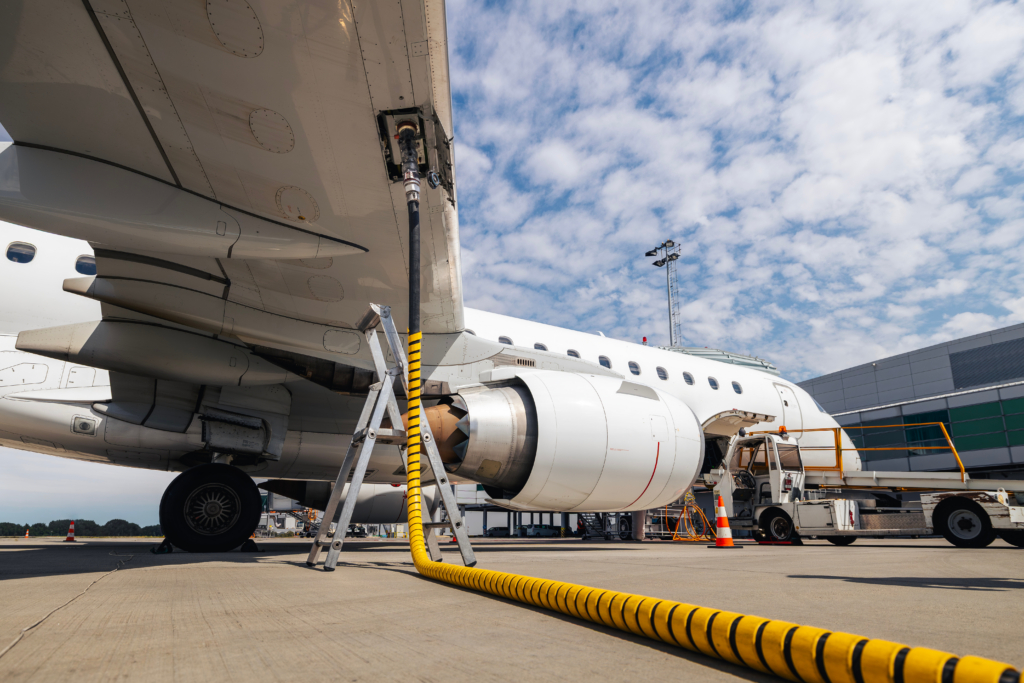
O’Leary speculated that the price of jet fuel might drop below $100 per barrel by September.
ACI Europe has previously warned of potentially depleted jet fuel stocks with kerosene reserves running out, unless the Strait of Hormuz reopens and supplies from the Middle East resume.
European Commission announces jet fuel distribution plan
The airport group’s warning prompted the European Commission to formulate a plan to better track and optimise jet fuel distribution, which was introduced as part of the AccellerateEU strategy announced last week.
- The plan established an EU Fuel Observatory to map the supply and available jet fuel stocks in the EU.
- It ensures coordination with Member States, fuel suppliers, airlines and airports on alternative jet fuel sources and on proposals to optimise jet fuel distribution and ensure availability across all regions and airports.
- It clarifies EU legislation for anti‑tankering and the use of other imported fuels to address potential jet fuel shortages.
- It assessed a need to review EU rules on strategic stocks to include specific jet fuel requirements, which are not presently covered.
“No airport in Europe is currently facing jet fuel shortages, and flight operations are proceeding normally,” Olivier Jankovec, Director General of ACI EUROPE, said in a statement on the AccellerateEU announcement.
“But the plan adopted today is an adequate strategy and response to mitigate potential jet fuel shortage risks, given how uncertain the situation remains over the resumption of the safe and stable passage through the Strait of Hormuz. Europe’s airports are fully committed to supporting its implementation and to cooperating with all stakeholders involved, which will certainly require more transparency on the side of fuel suppliers.”
“This is all about protecting vital air connectivity for citizens and businesses, not least the wider tourism sector, which air travel enables. And for that, in addition to what the Commission has laid out, we need Member States to urgently suspend their aviation taxes, so as to cushion price impacts.”
Sound and fury and competitive positioning
The recent jet fuel clash is part of a long-running rivalry between the heads of Ryanair and Wizz Air.
O’Leary has repeatedly called Wizz Air’s financial resilience into question, and, in an interview published by Hungarian news outlet, telex, this January, Varadi said:
“I think we’ve gone bankrupt at least ten times as far as he is concerned. One needs only to look at our numbers: we have two billion euros in cash, which is higher than Ryanair’s liquidity ratio. I don’t know what he’s talking about. I get what he would like to see, which is to be the only airline, so they can take over the entire market.
“But that’s not the case anywhere, and it never will be. I don’t know what to say to that, except that if he keeps blabbering on, we’ll eventually file a complaint against him, and then he’ll think twice about what he says.”
It was these remarks that likely prompted O’Leary to say that Wizz Air would not have time to sue him.
Wizz Air is firmly rejecting O’Leary’s dire predictions of its summer fuel shortage and bankruptcy by the end of the year. But O’Leary’s full remarks focused less on taking jabs against competitors and more on the pressure the airline industry faces as the Iran conflict goes on.
Whatever the back-and-forth between the low-cost leaders, the global aviation industry is contending with a jet fuel crisis. Fuel prices have surged, and while supply remains intact, uncertainty over the conflict’s duration is keeping costs high and putting pressure on airline margins.
“Everything was going great”, O’Leary claims, until Trump decided to “rip Iran apart”
The combative Ryanair chief blamed US President Donald Trump for the current predicament global airlines face with jet fuel supply. “As long as this war in the Middle East drags on and Trump continues to handle it so poorly, surely fuel prices will remain higher,” O’Leary said.
In a more targeted critique, O’Leary added, “Business was exploding this year, everything was going great. Then, Trump decides in mid-March to rip Iran apart and sends the world into a tailspin. You want to know what’s going to happen? The answer is that we don’t have a clue,” he said.
“I can’t predict the future. Our share price has dropped from €32 to €25 since Trump started bombing Iran. This means the market expects a drop in our profits, but making predictions now is impossible because we have no visibility on fuel prices in June, let alone for the winter.”
O’Leary noted that, looking forward, the best prediction for airlines is that the US President won’t hold power indefinitely. “Between now and 2028, anything can happen, but the only good news is that from 2028, Trump will no longer be in the White House; hopefully, there won’t be someone who can do as much damage as he did,” O’Leary concluded.
Featured Image: CuteIdeas | stock.adobe.com


