The surprising reason aircraft seats don’t face backwards

4 min read

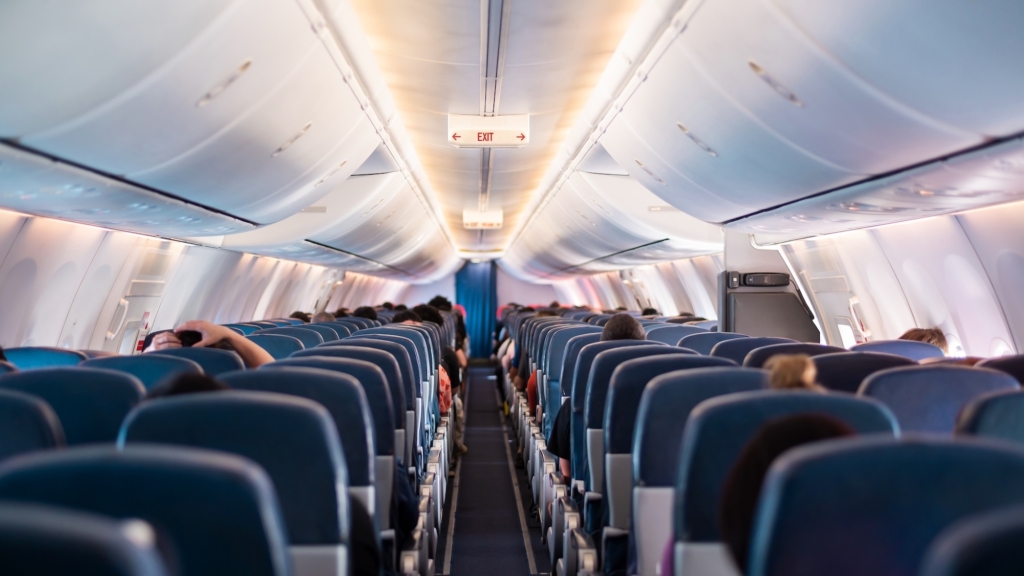
Whenever you step onto a passenger aircraft, there is one feature of the onboard environment that is almost always identical regardless of the aircraft type or cabin configuration – the fact that the seat faces forwards.
Yet, while there are a small number of examples of rear-facing aircraft seats on aircraft, the overwhelming majority of seats on today’s airliners face forward.
From a crashworthiness perspective, there is a compelling argument for having people face backwards. In a sudden deceleration, a passenger facing backwards is pushed into the seat-back, rather than being thrown into the thin fabric strap of their seat belt.
There are, however, several reasons why airlines haven’t adopted rear-facing seats as standard.
Are rear-facing aircraft seats safer?
During a high-energy deceleration, the restraint system in most airliner seats involves a small waist strap that has to control and limit the movement of the passenger’s body.
Whereas a rear-facing occupant is supported by the seat-back over a larger part of the torso, potentially reducing some of the loads experienced by the head, neck and upper body.
This is one reason why rear-facing seating has been used in some military transport aircraft.
Research by the Japanese Civil Aviation Bureau (JCAB) in 1995 found that rearward-facing seats would improve passenger safety.
This would have a bigger impact than using a shoulder harness, similar to those fitted in most cars, the researchers said. It would also be more beneficial to passenger safety than the adoption of the brace position, the JCAB added.
Why don’t airlines use rear-facing aircraft seats?
Notably, the Japanese study also found that rearward-facing seats risked exposing passengers to injury from objects which would be propelled forward on impact.
Rear-facing seats would also result in “discomfort” for passengers during take-off due to the forces which would push them into their belts. With forward facing seats, passengers are pushed into their seatbacks during the take-off manoeuvre.
In addition to the safety considerations, both for and against, rear-facing seating configurations would come with a weight penalty.
Backwards seats would need to be more structurally robust, and there would be additional weight added by the process of strengthening of seat floor anchor points.
The JCAB study, published more than 30 years ago in FlightGlobal, found that on a 440-seat Boeing 747, rearward-facing seats would likely weigh 7,040kg more, not including weight added by additional seat floor connections.
Indeed, modern aircraft seats are engineered as complete systems, including their attachment to the cabin floor and the way they are designed to perform during a crash.
A seat made for forward-facing occupants cannot just be rotated 180 degrees, and therefore installing rear-facing seats would come with significant cost.
Why British Airways used backwards-facing aircraft seats
There are examples of airlines having experimented with the concept of rear-facing seats.
British Airways‘ Club World business-class cabin is the notable example.
The distinctive reverse arrangement, which is still fitted to its A380s, sees some passengers face forwards while others travel backwards.
The configuration was driven primarily by the challenge of creating a fully flat business-class bed within a conventional aircraft cabin, and the need to fit more of those seats into the aircraft cabin.
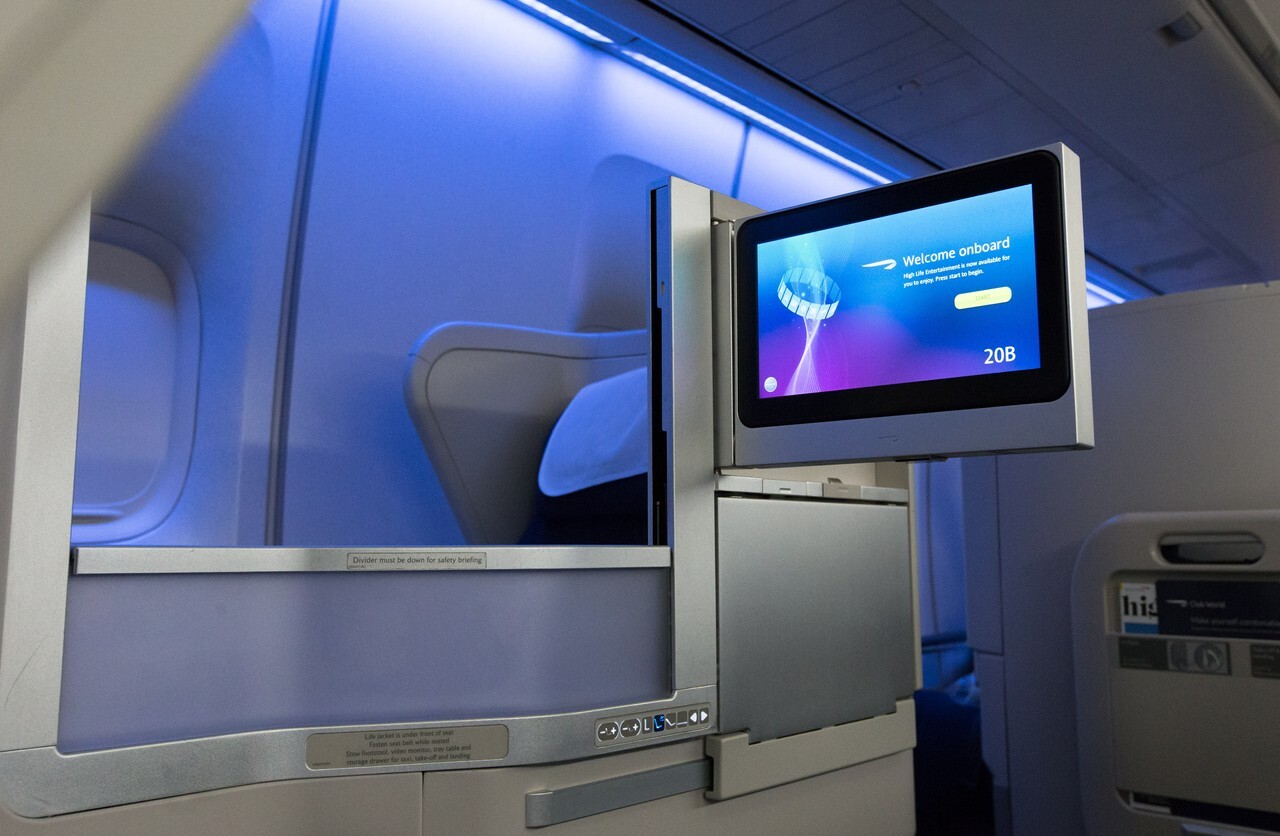
While it demonstrated that passengers would tolerate travelling backwards, the seat has generally been regarded as not a preferred option and the airline plans to remove the last of them in favour of forward facing seating in the near future.
The concept of rear-facing seating has not confined to premium cabins.
Southwest Airlines once operated aircraft with its distinctive “love seat” arrangement, with rows of seats facing each other. Depending on the aircraft type, Southwest operated configurations with up to 14 rear-facing seats.
“These seats have been particularly popular on flights to Las Vegas, where groups would grab the lounge sections to talk,” a Southwest spokeswoman said at the time. “I have heard of love relationships starting up while people were staring at somebody across from them.”
The cabin layout was phased out in 2001, apparently due to the cost of maintaining them, as well as the extra weight they were associated with.
Passengers also complained about the lack of a fold down tray, and crucially some passengers did not like flying backwards.
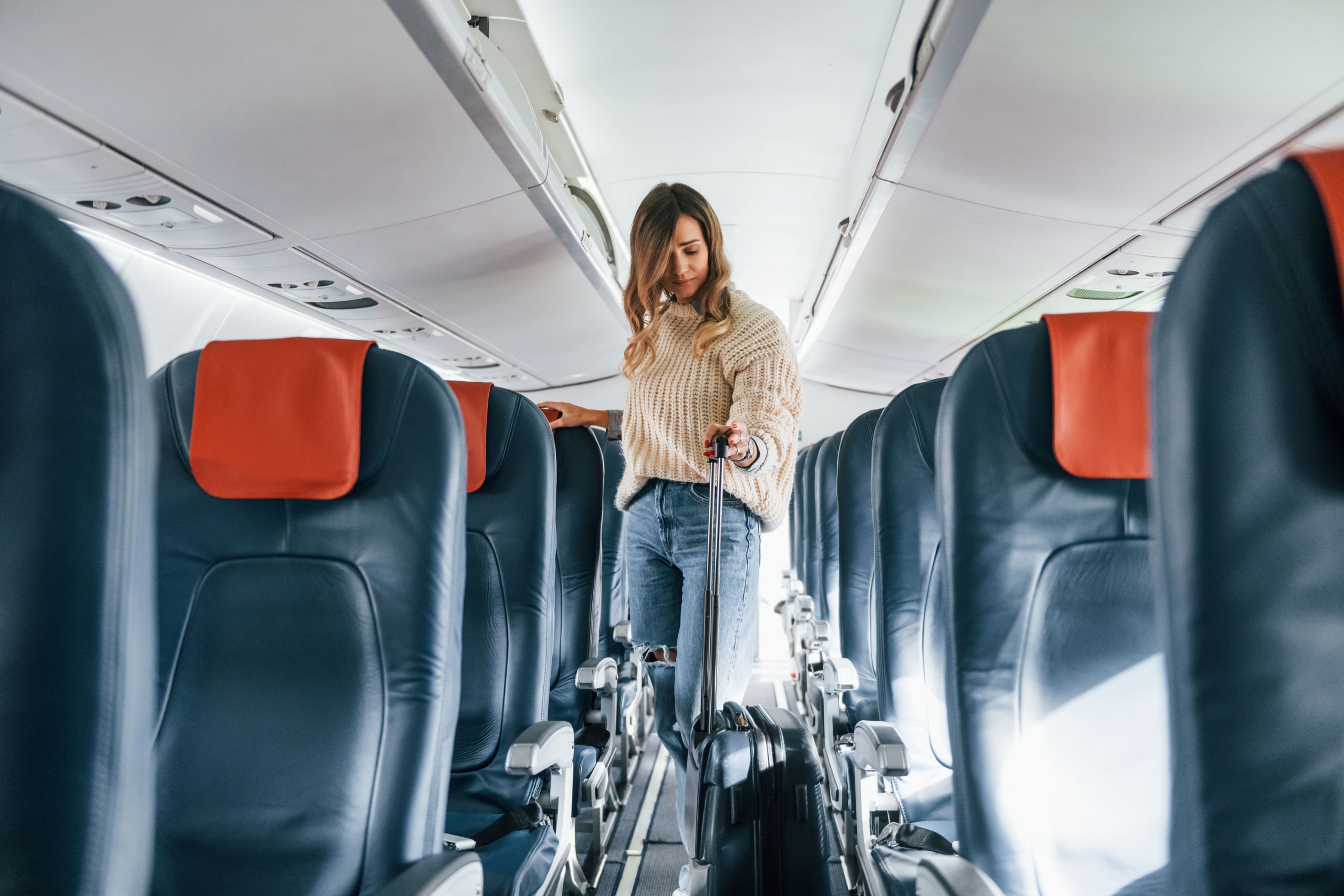
Why do passengers prefer forward-facing aircraft seats?
This highlights an important element of the forward versus rear-facing seat debate: passenger acceptance. The likes and dislikes of the flying public, however irrational, are a major part of the reason rear-facing seats have not become more widespread.
One issue with the seating is that passengers may associate the orientation with motion sickness, even though the experience is different from travelling backwards in a train, where the large windows provide a continuous visual reference to the direction of travel.
There is also a psychological element. Just as a study found that passengers prefer sitting on the right side of the plane to the left, with no obvious explanation, some aspects of the travel experience just ‘feel’ right.
This includes, for many, facing the direction of travel, which can appear more natural to people – especially when flying at 37,000 feet and 500 mph can feel anything but.