


Vietnam Airlines Munich runway incident: Investigation reveals brakes activated during takeoff roll

6 min read
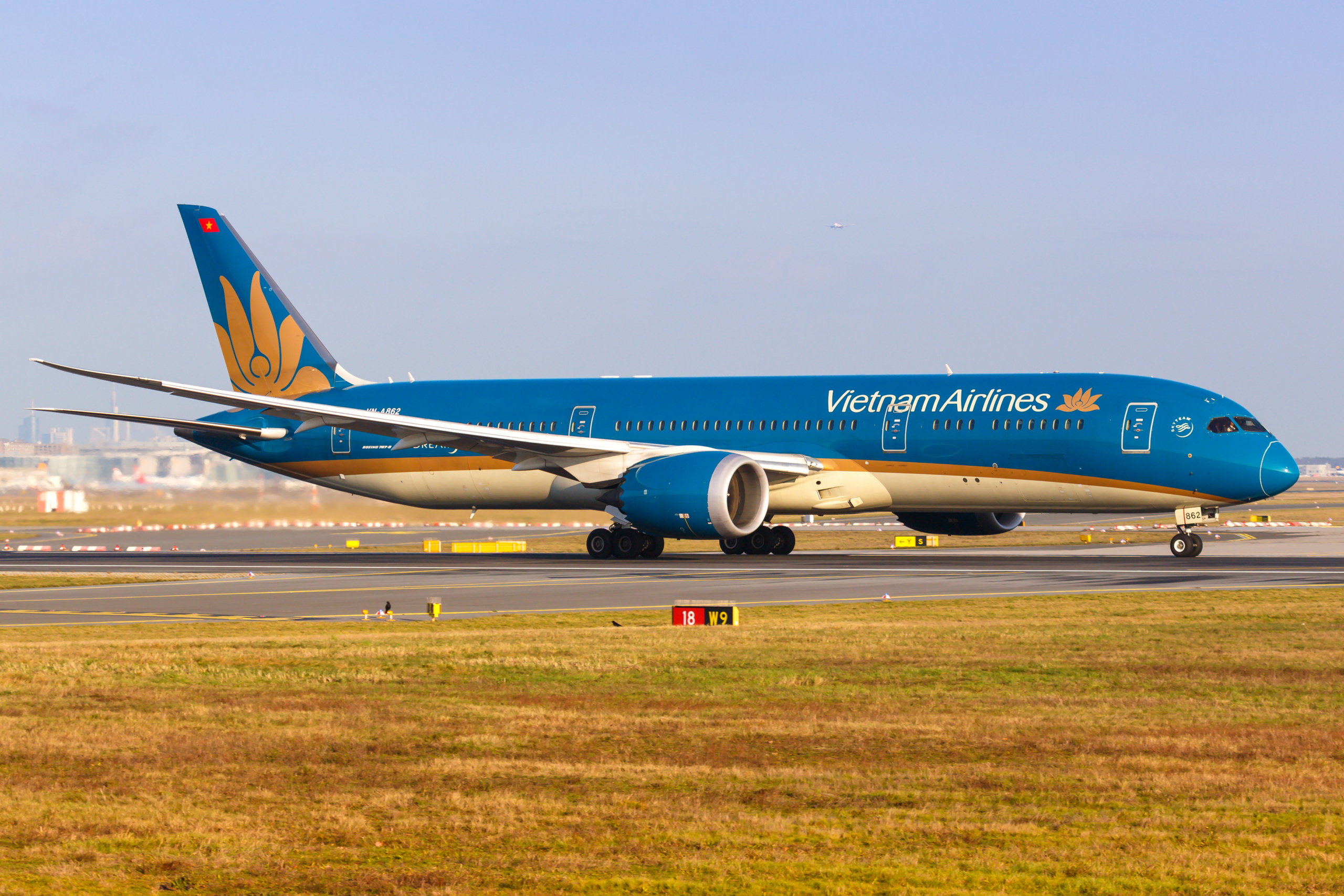
The investigation into a serious Vietnam Airlines runway incident at Munich Airport (MUC) has produced its clearest findings yet, revealing that the Boeing 787-9’s brakes were applied during the take-off roll and that the aircraft only became airborne after running beyond the paved runway surface.
The German Federal Bureau of Aircraft Accident Investigation (BFU) has now published an interim report into the 15 August 2026 accident involving Vietnam Airlines flight VN34, which was departing Munich for Hanoi (HAN).
The report establishes a detailed sequence of events, although the BFU stresses that it has not yet reached a final conclusion about the cause of the accident. The incident also highlights an increasingly important issue in aviation accident investigation – the value of retaining much longer cockpit voice recordings.
BFU investigation reveals braking during Boeing 787 takeoff roll
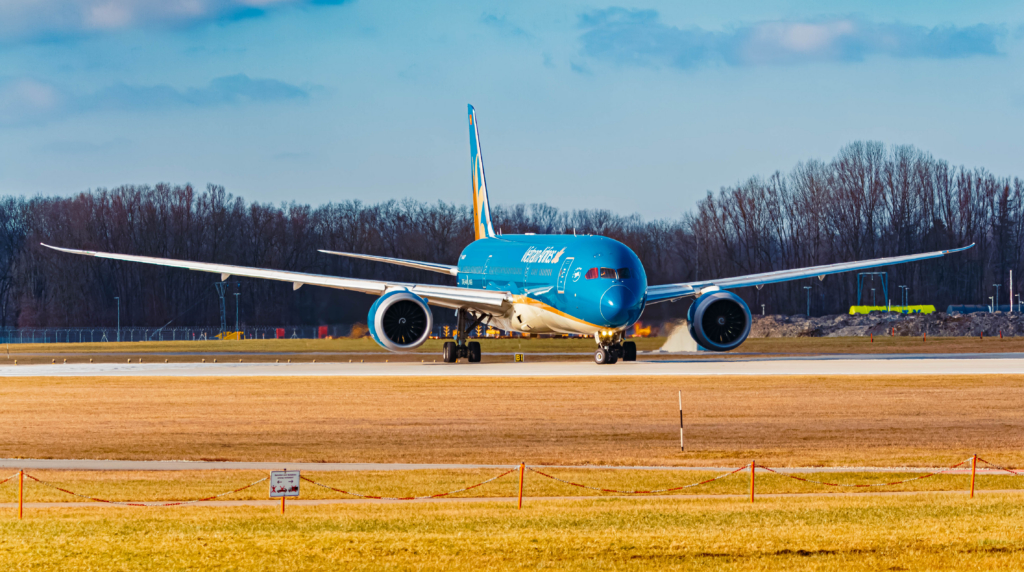
Flight VN34 was operated by a Boeing 787-9 registered VN-A867. It was carrying 271 passengers and 16 crew members when it began its take-off from Munich on 15 August.
According to the BFU’s interim findings, the aircraft’s take-off/go-around mode was activated and, approximately three seconds later, movement of both brake pedals on the left pilot’s position was recorded. The pilot occupying that seat was the 64-year-old captain who was the pilot flying during the take-off.
Investigators found the aircraft’s acceleration was affected by brake inputs, resulting in a significantly longer take-off run. The aircraft eventually passed the runway end and entered the area beyond it before becoming airborne.
The investigation found that the main landing gear and rear fuselage struck elements of the runway approach lighting system, damaging 20 lights. The aircraft also suffered a tail strike.
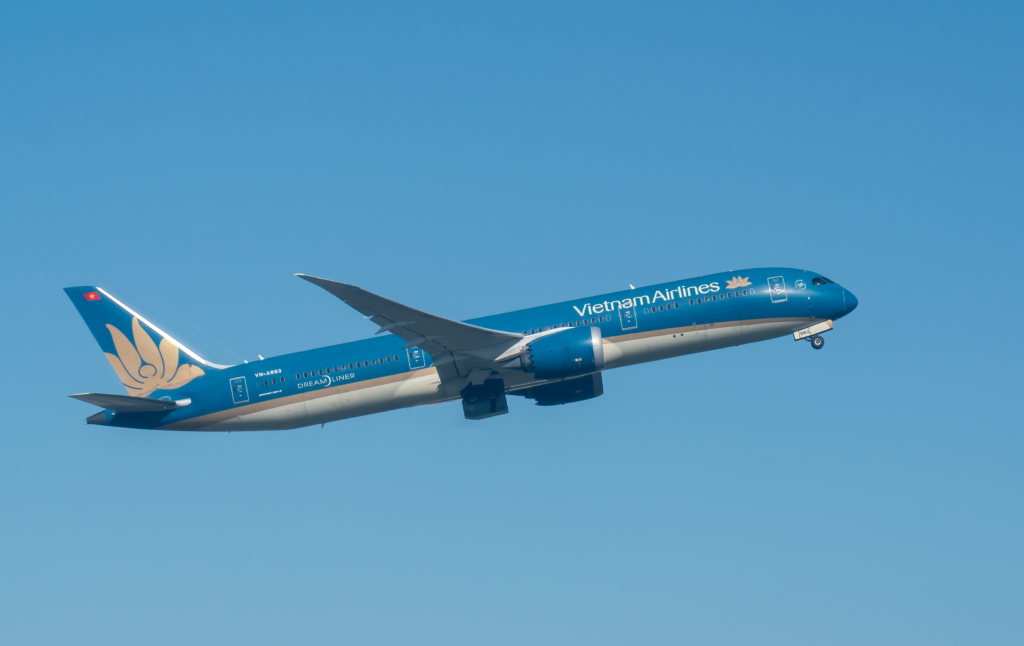
One particularly significant detail from the flight-data recordings is that V1 (the take-off decision speed) was not reached until the aircraft was already approximately three meters (11 feet) above the ground.
A second later, the aircraft’s angle of attack had reached around 14 degrees. The 787’s automatic stall-protection system then commanded full deployment of the leading-edge slats. The flight recorder also captured the tail strike. Despite the extremely late departure from the runway, the aircraft successfully climbed away.
Why the Vietnam Airlines crew returned to Munich
Once airborne, the crew reported the situation to air traffic control and decided to return to Munich. The aircraft was carrying a substantial quantity of fuel for its planned long-haul flight to Hanoi.
To reduce its landing weight, the crew subsequently spent around 45 minutes dumping fuel.
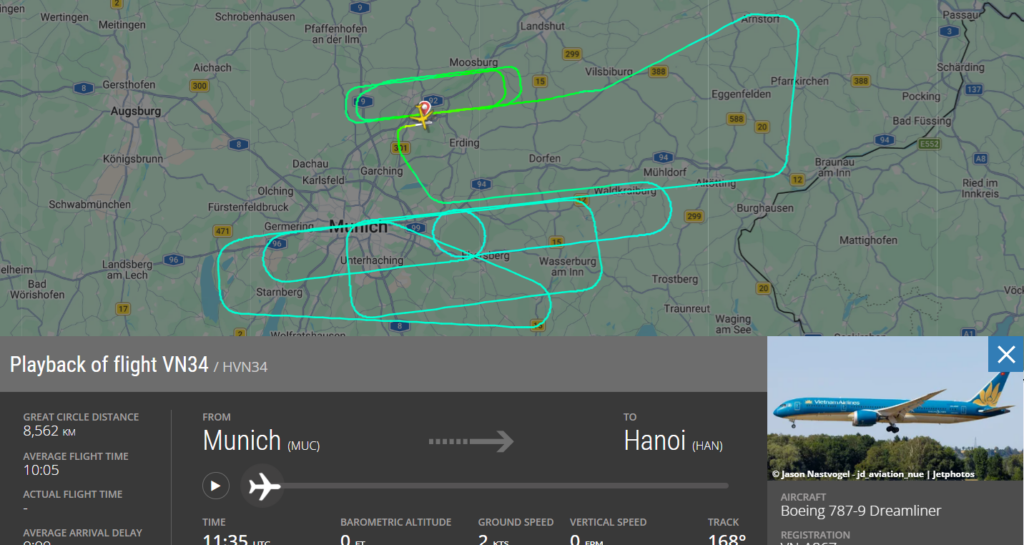
The aircraft also had apparent landing-gear and tyre problems following the take-off. The crew conducted two approaches to runway 26R with the landing gear extended.
These were intended to allow personnel on the ground to inspect the main landing gear visually before the aircraft committed to landing.
The Boeing 787 eventually touched down at approximately 15:56 local time, roughly two hours after its departure. Four tyres on the left main landing gear were damaged.
Smoke was seen from the landing gear, although investigators found no evidence of a fire. All 271 passengers, 12 cabin crew and four pilots were safely evacuated, with no injuries reported.
The evidence investigators don’t have
One of the most intriguing aspects of the investigation concerns what the investigators cannot hear. The Boeing 787’s cockpit voice recorder (CVR) retained only the most recent two hours of cockpit audio.
Because the aircraft remained airborne for approximately two hours before landing, the recording of the take-off and the critical moments immediately afterwards had already been overwritten by the time the aircraft returned to Munich. That means investigators do not have the cockpit conversations from the most important part of the flight.
The flight-data recording was still available and provided extensive information about what the aircraft was doing. But flight-data parameters cannot necessarily answer the same questions as cockpit audio.
For example, the data can show that brake pedals moved. It can show aircraft speed, configuration, engine performance, flight-control inputs, and other parameters. It cannot, by itself, reproduce the conversation between the pilots, their understanding of what was happening, what warnings they may have discussed, or why particular decisions were made.
That distinction could become an important part of the longer-term safety discussion surrounding this accident. According to Flightradar24, the aircraft involved in the incident, VN-A867, remains at Munich Airport and has not flown since.
Could this lead to longer cockpit recordings?
The idea of extending CVR recording duration is not new, and importantly, aviation authorities were already moving in that direction before the Vietnam Airlines Munich accident.
International standards already provide for 25-hour cockpit voice recording on certain newer large aircraft. ICAO’s current Annex 6 provisions require aircraft over 27,000 kg whose individual certificates of airworthiness were first issued from 1 January to have CVRs capable of retaining at least 25 hours of recording. European rules likewise provide for 25-hour CVR retention for qualifying newer large aircraft.
Dim/ stock.adobe.com
The United States also moved further in 2026, with the FAA adopting a final rule increasing CVR recording requirements from two hours to 25 hours for affected future manufactured aircraft.
The FAA specifically cited the benefit to investigators, operators, and aviation authorities of having substantially more cockpit audio available when determining the causes of accidents and incidents.
The Munich investigation therefore illustrates the practical reason behind those changes. Had a longer recording been available on VN34, investigators could potentially have had direct access to the cockpit conversations surrounding the take-off, the braking event, the decision to continue the take-off and the immediate response after becoming airborne.
That does not mean a longer recording would necessarily have solved the investigation. The BFU still has substantial flight-data evidence and crew testimony to analyse.
Nor does the missing audio establish that the crew’s conversation would have revealed a particular cause. But it demonstrates the evidential value of retaining more than the final two hours.
What happens next in the BFU investigation?
The investigation remains open, and investigators will continue analysing the aircraft, recorded data, witness accounts and other evidence before issuing their final report.
For aviation safety, the significance of the Munich accident may ultimately extend beyond the question of exactly why the brakes were applied during the take-off.

The event provides another real-world example of why accident investigators need to preserve as complete a picture as possible. Flight-data recorders can reveal what an aircraft did. Cockpit voice recorders can help reveal what its crew was hearing, saying, and discussing while it happened.
In Munich, those two sources of evidence do not fully overlap because the aircraft’s return flight lasted long enough for the crucial cockpit audio to disappear from a two-hour recording loop.
As regulators and manufacturers continue moving towards 25-hour cockpit voice recording, the incident offers a powerful illustration of the safety principle behind the change – when an accident unfolds over an extended period, investigators may need to understand not just the final minutes, but the chain of events and decisions that began much earlier.


