


VietJet gives up on COMAC C909 after just 6 months of operations

6 min read

Vietnam’s low-cost carrier Vietjet has stopped operating its two COMAC C909 aircraft after a six-month lease agreement expired on 18 October. The lack of renewal fo the agreement will be a setback to China’s push to establish its home-grown aircraft in Southeast Asia’s competitive aviation market.
The lease, which started in April this year, days after Chinese President Xi Jinping’s state visit to Hanoi, was widely seen as a diplomatic gesture to strengthen economic and strategic ties between the two neighbours.
But the aircraft’s departure marks an abrupt end to what had been billed as a milestone in China’s commercial aerospace diplomacy.
Lease termination marks setback for COMAC’s Southeast Asia strategy
Two sources familiar with the matter told Reuters that Vietjet chose not to extend the lease and has no immediate plans to acquire COMAC jets, opting instead to continue expanding its Airbus and Boeing fleets.
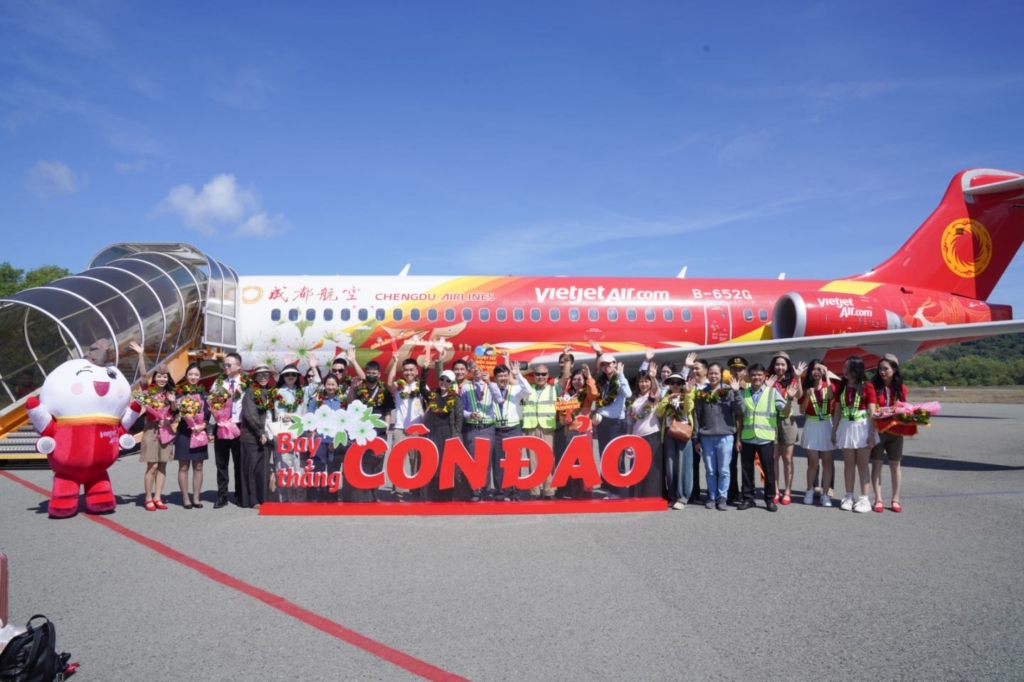
The aircraft, supplied under a wet-lease arrangement by China’s Chengdu Airlines, operated domestic routes connecting Hanoi, Con Dao and Ho Chi Minh City. Under this model, Chengdu Airlines provided the aircraft, flight crew, maintenance, and operational support.
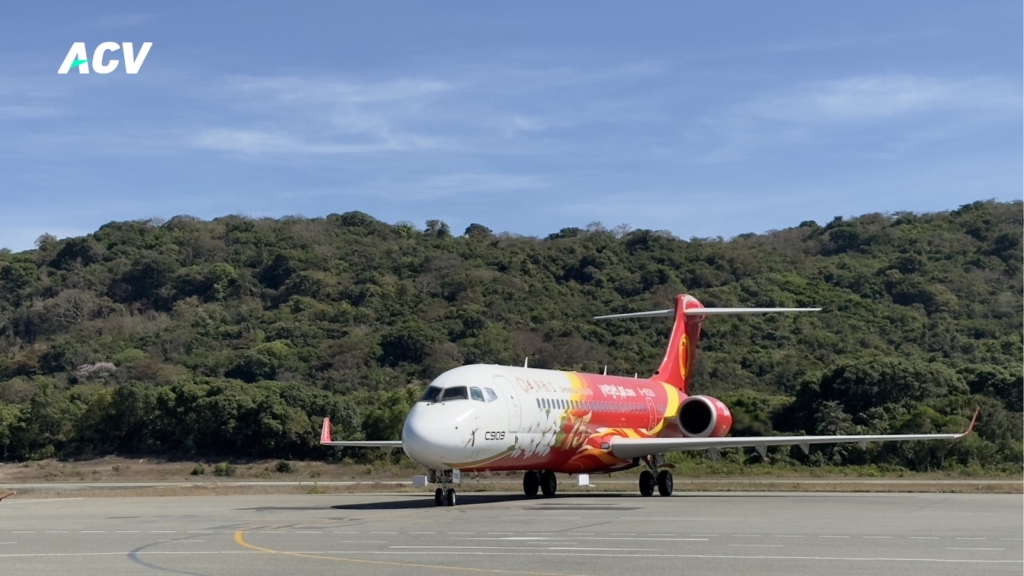
By all accounts, the operation ran smoothly and the aircraft performed acceptably. However, other issues incluyding expenses linked to the foreign crew, mtinanenace support and regulatory restrictions meant the contract was not renewed.
The C909s have already made their final flights for VietJet, according to FlightRadar24 data. Both B-652G, a three year old aircraft, and B-656E, a two year old jet, flew into Hanoi on 17 October from Con Dao. Neither has flown since.
Both Vietjet and COMAC declined to comment on the development, while Chengdu Airlines did not respond to inquiries.
VietJet’s COMAC C909 dalliance was short lived
When the lease began in April, the deployment of the two C909s was hailed as a breakthrough for COMAC. It marked the first time Chinese-made commercial aircraft had operated regular routes in Vietnam, a market traditionally dominated by Airbus and Boeing.
The jets were expected to bolster connectivity to Con Dao Island, an increasingly popular tourist destination that had seen reduced air service after Bamboo Airways suspended operations.
Vietjet’s short-term use of the C909s ensured continuity of flights on the route, temporarily filling that gap.
The arrangement followed Vietnam’s regulatory reforms that, for the first time, allowed the import of aircraft certified by China, Brazil, Canada, Russia, and the United Kingdom expanding the list beyond those certified by the United States or the European Union.
Although Vietnam’s regulator has approved Chinese-certified aircraft to operate domestically, several hurdles remained around certification alignment and maintenance support. Wet-lease (ACMI) arrangements are also notoriously expensive, a problem exacerbated in today’s market as airlines face shortages of both aircraft and spare parts.
For VietJet, maintaining the two C909s proved particularly costly, since replacement components had to be shipped from China in the absence of any local support network. Combined, these factors made the arrangement unsustainable for a lean, low-cost operator.
The end of the lease also means VietJet will withdraw entirely from Con Dao, as the airline has no other aircraft capable of operating from the island’s short runway. Despite ongoing discussions about a potential extension, Con Dao Airport remains suitable only for regional jets and turboprops.
COMAC’s trick pathway to becoming an Airbus and Boeing rival
For COMAC (Commercial Aircraft Corporation of China) the end of the Vietjet lease is a symbolic blow.
The company has spent years attempting to position its C909 and larger C919 aircraft as credible alternatives to the dominant Boeing, Airbus and Embraer families. While some inroads have been made, particularly in Asia, China is facing an uphill struggle to get its aircraft into overseas markets.

COMAC has admitted that deliveries of the C919 are progressing more slowly than expected, with 2025 production targets reportedly reduced from around 75 aircraft to just 25 due to supply chain bottlenecks. While the C919 has received domestic certification in China, international approvals from regulators such as the European Union Aviation Safety Agency (EASA) and the U.S. Federal Aviation Administration remain pending; a process expected to take between three and six years.
For operators outside China, the limited development of COMAC’s maintenance, repair, and overhaul (MRO) and parts support network continues to pose a significant barrier to wider adoption. And although the company markets both the C909 and C919 as cost-effective alternatives to Western models, their operational and support costs, particularly in overseas markets, remain a clear challenge.
The C909, previously known as the ARJ21, is China’s first domestically produced regional jet. It carries between 78 and 97 passengers and has a range of 1,190 to 2,000 nautical miles. The type entered service in 2016, with Chengdu Airlines as the launch operator, and has since been introduced in Indonesia, Laos and Vietnam. COMAC has orders in from operators in Republic of Congo, Brunei and Cambodia.

According to COMAC, the C919s operated by TransNusa, Lao Airlines, and Vietjet have collectively carried more than 250,000 passengers on 15 Southeast Asian routes.
These achievements had underpinned China’s growing confidence in exporting its aircraft to regional markets with similar operational conditions.
However, the loss of the Vietjet partnership highlights the commercial and operational barriers facing COMAC’s expansion from certification constraints and maintenance logistics to economic viability compared with Western aircraft.
Vietjet maintains Western fleet strategy amid regional growth
Vietjet currently operates more than 100 aircraft, primarily Airbus A320 and A321 models, as well as the widebody A330. It has significant orders in for Boeing 737 MAX jets (although just one has been recieved so far).
The airline has pursued rapid growth across the Asia-Pacific region, focusing on cost efficiency, fleet commonality, and regional network optimisation.
The carrier’s reluctance to adopt COMAC aircraft more permanently suggests a continued preference for Western-built models, which offer well-established global maintenance support and easier regulatory compliance.

Industry analysts note that unless COMAC can reduce costs and secure broader certification particularly from aviation regulators in Europe and North America, it will remain a niche supplier in developing markets, rather than a true global competitor.
Beijing has long viewed commercial aviation exports as a strategic pillar of its “Made in China 2025” industrial policy, positioning COMAC as a symbol of technological self-reliance.
The brief operation of Chinese jets in Vietnam was therefore not merely commercial but also politically symbolic, showcasing China’s ability to challenge Western dominance in advanced manufacturing.
As COMAC moves forward with the C919 narrowbody and the planned widebody C929, the company’s experience in Vietnam offers a cautionary example of the complex interplay between politics, economics, and engineering in the global aircraft industry.


