


How the US Air Force is rebuilding its path to future air superiority

7 min read
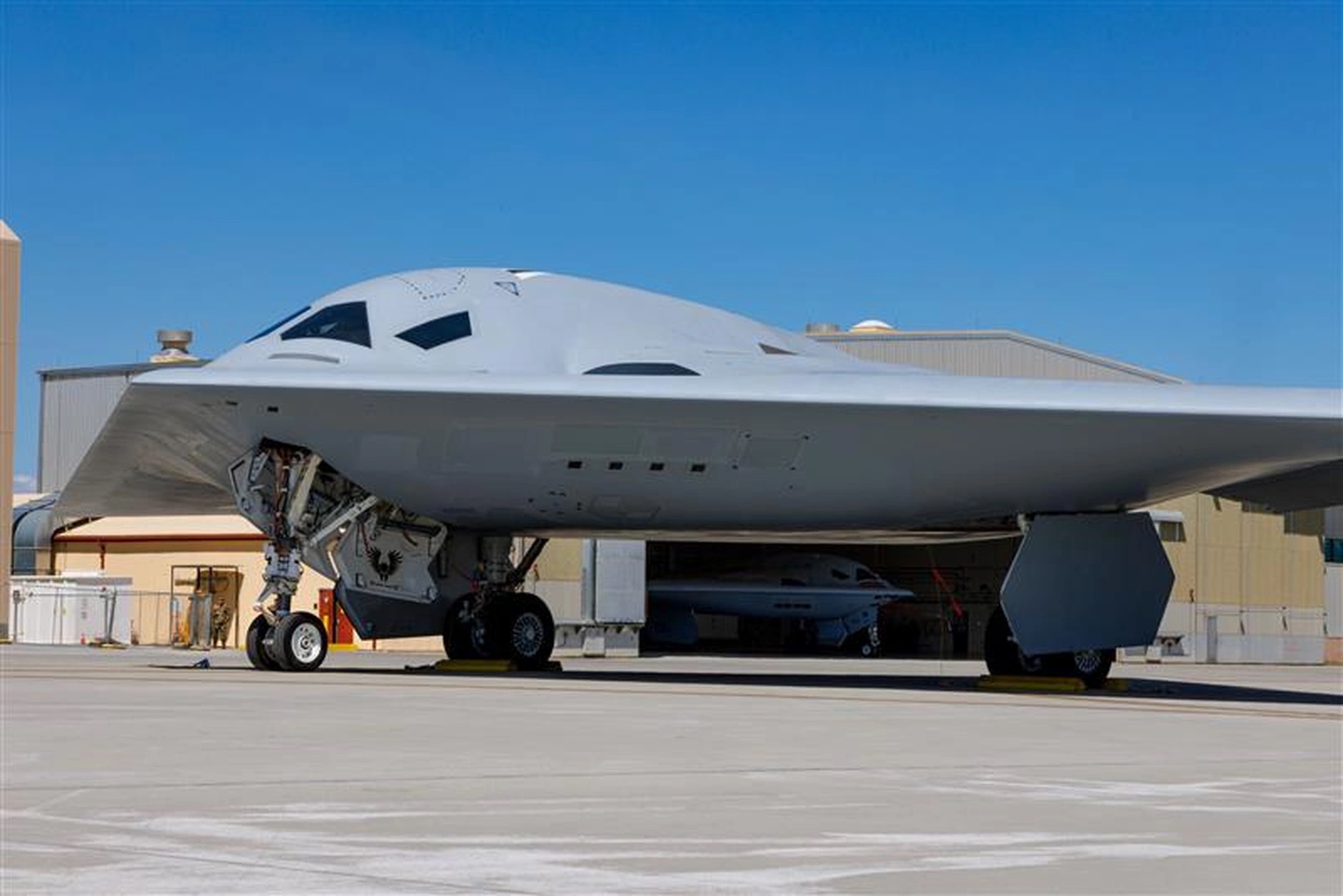
The US Air Force has warned that decades of underinvestment, an ageing aircraft fleet and a slow defence industrial base are threatening its ability to maintain air superiority, even as it accelerates development of sixth-generation aircraft and adaptive propulsion technologies for future combat.
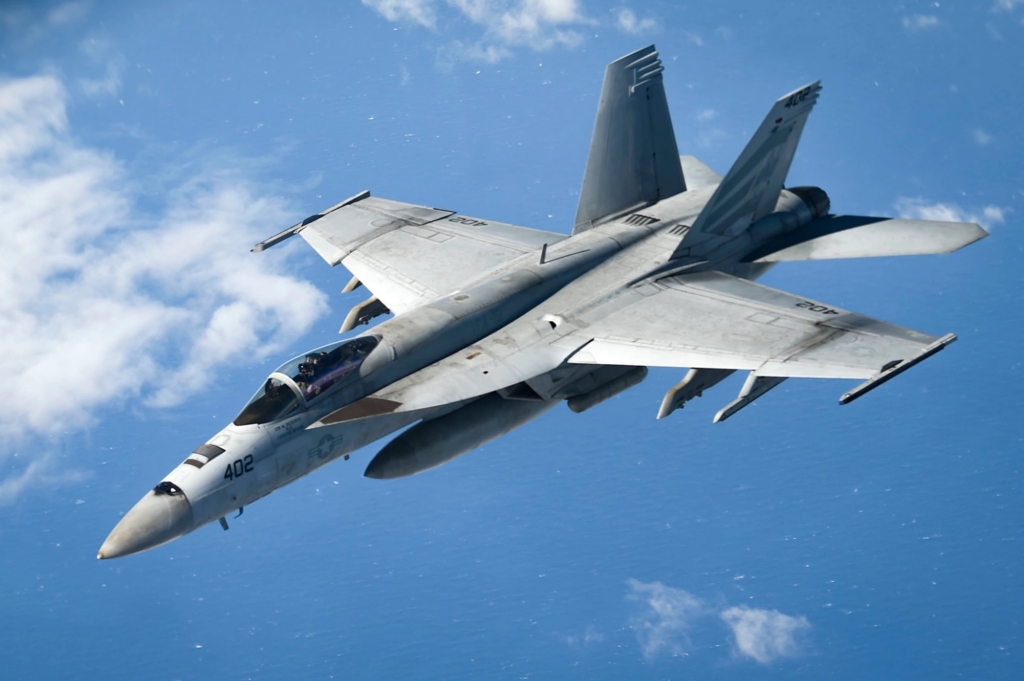
Delivering a keynote address at the Air Force Life Cycle Management Center’s (AFLCMC) Life Cycle Industry Days conference in Dayton, Ohio, Under Secretary of the Air Force Matthew Lohmeier said the service must modernise far more rapidly if it is to keep pace with increasingly capable adversaries, particularly China.
His remarks offered one of the clearest public assessments yet of the structural challenges facing the Air Force as it tries to recapitalise its combat fleet while preparing for a new era of networked and autonomous air warfare.
Despite recent operational successes, Lohmeier cautioned that past performance offered little guarantee for the future.
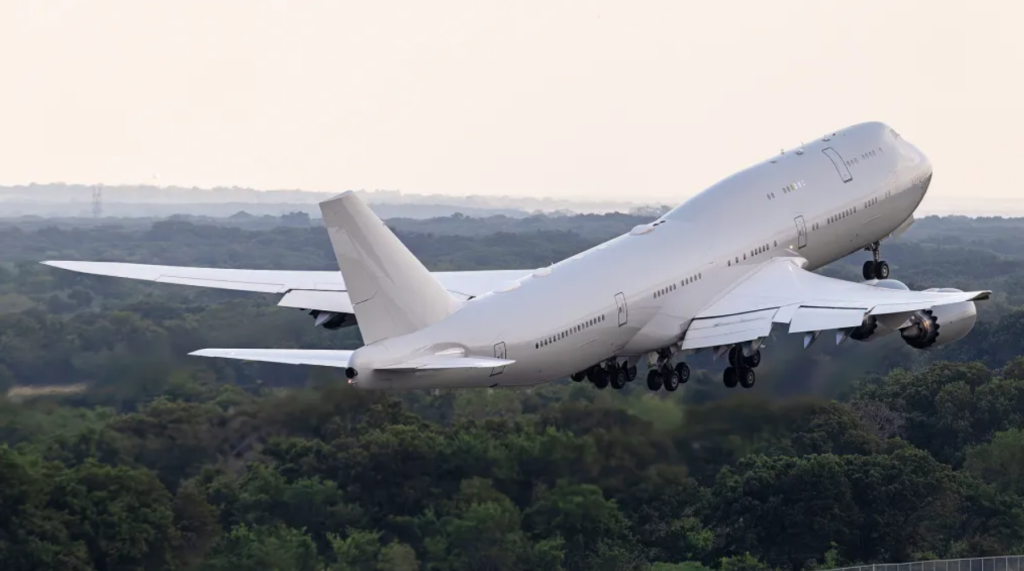
Quoting former US Defense Secretary Donald Rumsfeld’s observation that “you go to war with the army you have”, he argued that maintaining America’s technological edge now depends as much on industrial capacity and acquisition speed as on advanced aircraft themselves.
An ageing fleet is shrinking faster than it can be replaced
The scale of the challenge is reflected in the Air Force’s inventory.
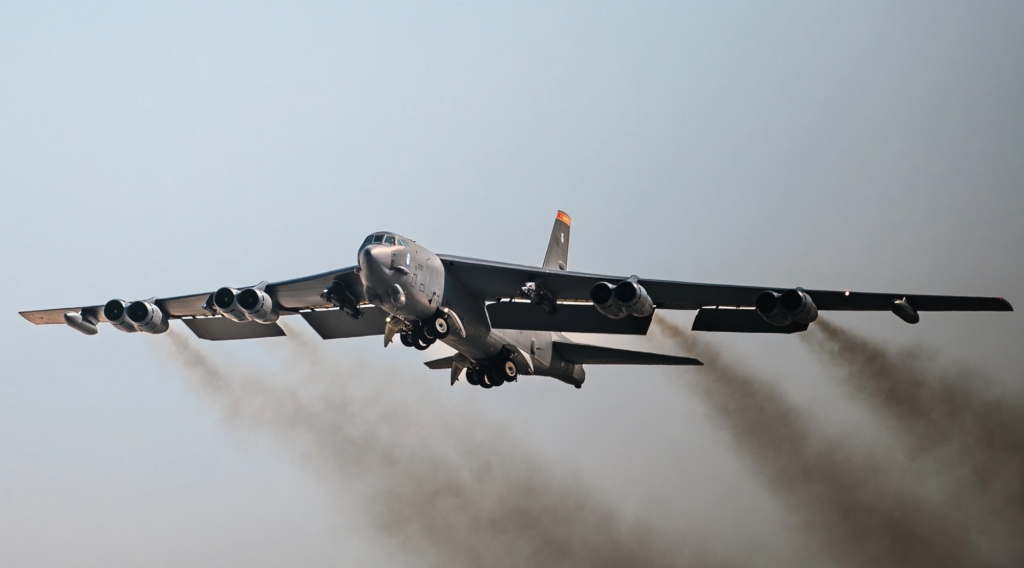
According to Lohmeier, almost half of the service’s aircraft are now more than 40 years old, while over 60% have exceeded three decades of service. Aircraft such as the B-52 Stratofortress bomber and KC-135 Stratotanker continue to perform operationally, but sustaining increasingly elderly fleets has become progressively more difficult as spare parts become harder to source and maintenance demands continue to grow.
At the same time, new aircraft are entering service at a pace that does not offset retirements.
The Air Force continues to field modern platforms including the F-35A Lightning II, F-15EX Eagle II, B-21 Raider and the future F-47 sixth-generation fighter, but Lohmeier acknowledged that the overall fleet continues to contract.
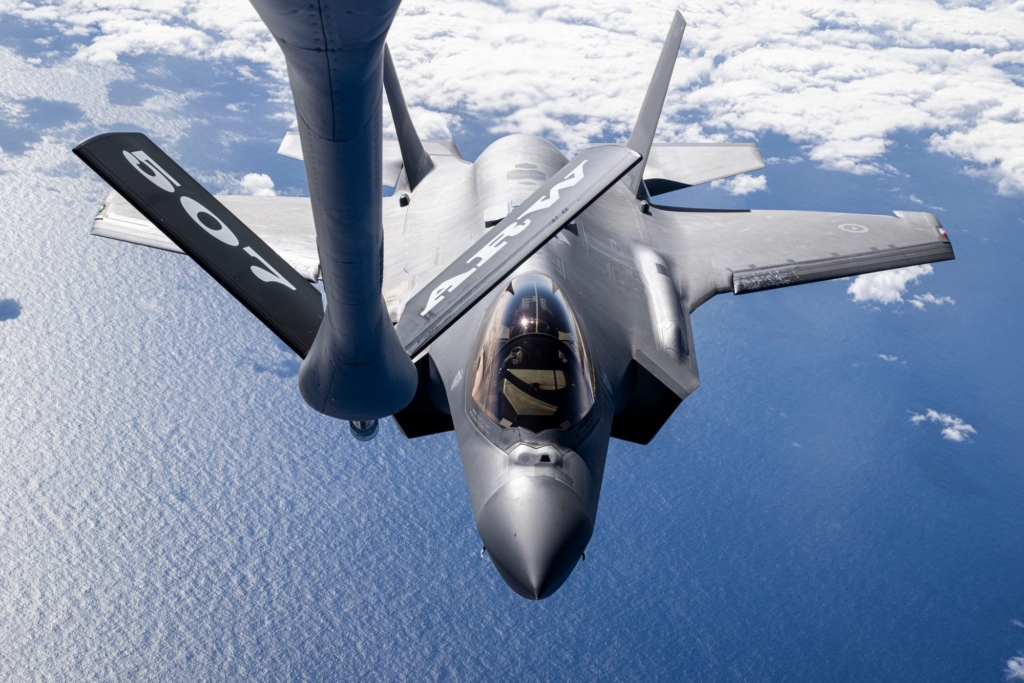
“If we can’t recapitalise our platforms at the rate that we’re forced to retire them, the math is simple: We will continue to get smaller,” he warned.
Those figures illustrate a dilemma confronting the Air Force. While individual aircraft entering service are considerably more capable than the platforms they replace, their introduction has not been sufficient to reverse the steady decline in overall fleet numbers.
That challenge has become increasingly important as military planners examine the scale of air power that could be required during a prolonged conflict in the Indo-Pacific.
Industrial capacity is as important as military capability
Lohmeier argued that rebuilding America’s defence industrial base must now become a strategic priority rather than simply an economic objective.
Drawing comparisons with President Franklin D. Roosevelt’s call for the United States to become the “Arsenal of Democracy” before the Second World War, he said industrial production and manufacturing resilience have once again become central elements of military power.
“We have incredible systems, platforms and munitions,” Lohmeier said. “But we need more of just about everything. We have to keep the quality, increase the quantity, decrease the cost and accelerate delivery.”
To support that objective, the Air Force is restructuring how it manages procurement programmes through a new Acquisition Transformation Strategy.
Rather than overseeing individual programmes independently, the service is shifting greater authority to newly established Portfolio Acquisition Executives and Direct Reporting Portfolio Managers, allowing decisions to be taken across entire capability portfolios instead of within programme-specific structures.
According to Lohmeier, around 85% of contracting authority will move to this new level, giving programme leaders greater flexibility to accelerate procurement and respond more rapidly to operational requirements.
The transformation is intended to change not only organisational structures but also acquisition culture.
Lohmeier said the Air Force must become more willing to field capabilities earlier rather than waiting for perfect solutions.
An “85% solution in the hands of our armed forces today,” he noted, is “infinitely better than an unachievable 100% solution endlessly undergoing testing.”
The emphasis reflects a broader shift across the Pentagon, where speed of delivery has increasingly become as important as technological sophistication in responding to rapidly evolving threats.
Keeping legacy engines flying is as critical as developing new ones
While the Air Force continues investing in next-generation aircraft, it also faces the less visible challenge of sustaining the propulsion systems that power today’s operational fleet.
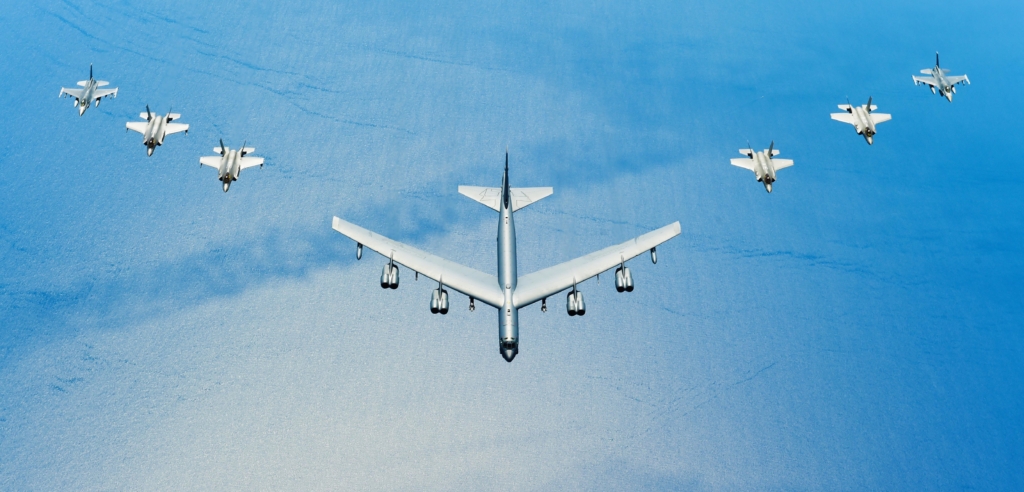
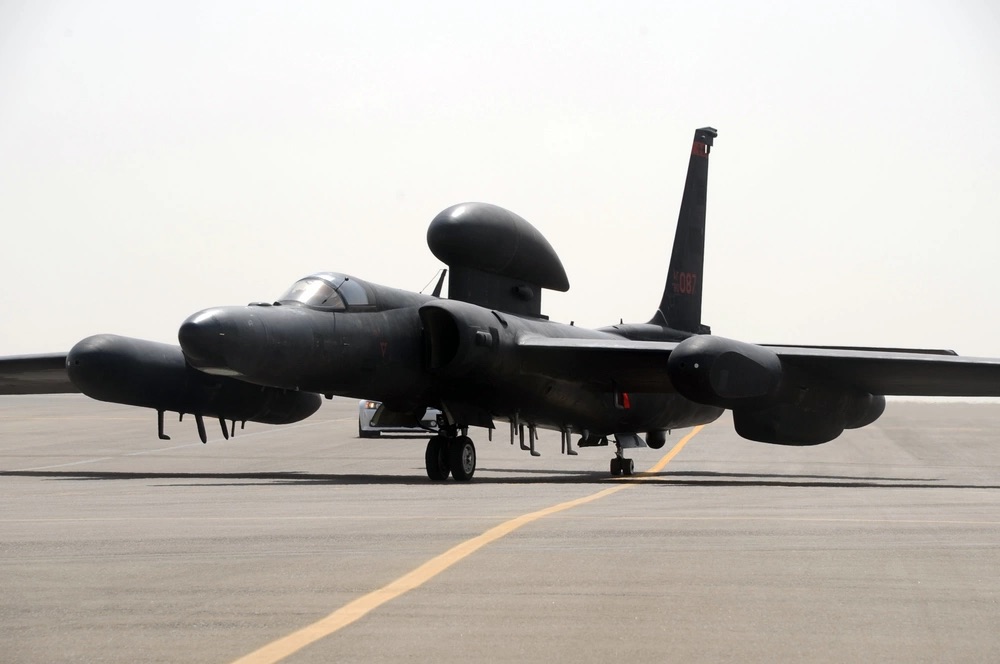
Speaking at the conference, John Sneden, Director of Propulsion at the Air Force Life Cycle Management Center, said the service is managing one of the world’s most diverse military engine portfolios, supporting platforms ranging from the B-52 Stratofortress and C-130 Hercules to the F-15 Eagle, F-16 Fighting Falcon, and A-10 Thunderbolt II.

Many of these engines entered service decades ago but are expected to remain operational well into the coming decades. Keeping those aircraft mission-ready increasingly depends on more than routine maintenance.
Sneden said the Air Force is adopting digital engineering, artificial intelligence, and predictive maintenance tools to identify potential engine failures before they occur. By analysing operational data collected during flights, engineers can better anticipate component wear, reduce unplanned maintenance, and improve aircraft availability.
Rather than relying solely on scheduled inspections, the approach enables maintenance to be carried out when data indicates it is needed, reducing downtime while making more efficient use of spare parts and engineering resources. The Air Force believes the approach will become increasingly important as older fleets remain in service alongside new aircraft.
The propulsion enterprise is also being reorganised around digital engineering principles, allowing engine manufacturers, suppliers, and sustainment organisations to work from common digital models throughout an engine’s life cycle. The objective is to shorten development timelines, simplify upgrades, and improve long-term support for both existing and future propulsion systems.
Adaptive engines could redefine propulsion for sixth-generation combat aircraft
At the other end of the capability spectrum, the Air Force is continuing work on propulsion systems designed for future combat aircraft.
Unlike conventional fighter engines, adaptive-cycle propulsion can automatically vary airflow through a third stream, allowing engines to switch between fuel-efficient cruising and high-performance combat modes. The technology is also expected to generate substantially more electrical power and improve thermal management, both of which are becoming increasingly important as future aircraft carry larger sensors, electronic warfare suites, and high-powered computing systems.
Those capabilities are regarded as essential for aircraft such as the F-47, which is expected to operate in highly contested environments while managing large volumes of sensor data and coordinating with autonomous collaborative combat aircraft.

Industry is continuing to mature, competing engine designs for that requirement.
RTX, through Pratt & Whitney, is developing the XA103 adaptive engine, while GE Aerospace is advancing the XA102, both under the Air Force’s Next Generation Adaptive Propulsion (NGAP) programme.
The engines are intended to deliver greater range, improved fuel efficiency, and significantly enhanced cooling capacity compared with current fighter propulsion systems, supporting the increasing electrical demands of sixth-generation aircraft.
Next-generation propulsion remains a long-term investment despite programme delays
Even as adaptive-engine technology progresses, fielding the next generation of propulsion systems will take longer than originally expected.
The Air Force has pushed the planned service entry of NGAP-powered aircraft to around 2031, several years later than earlier projections, reflecting both the complexity of the technology and the broader challenges associated with developing sixth-generation combat systems. Both RTX and GE continue advancing their respective engine designs while the Air Force prepares for a future down-selection.
The extended timeline highlights the balancing act facing the service.
It must continue sustaining aircraft powered by engines designed during the Cold War while simultaneously investing in propulsion technologies intended for an entirely different generation of warfare. That means maintaining reliable support for mature fleets while accelerating research into engines capable of powering highly networked combat aircraft operating alongside autonomous systems.
Taken together, the presentations at Life Cycle Industry Days offered a clear picture of the Air Force’s priorities. Modernisation is no longer centred solely on acquiring new aircraft. It increasingly depends on strengthening the industrial base, transforming procurement, digitising sustainment, and delivering propulsion technologies that can support the demands of future air combat.
For the Air Force, maintaining air superiority over the coming decades will depend not only on the aircraft it introduces but also on its ability to keep today’s fleets flying while developing the engines that will power tomorrow’s military jets.
Sign up for our newsletter and get our latest content in your inbox.


More from

October 3, 20267 min read


