


Congress questions US Air Force combat rescue readiness as HH-60Ws shift to Washington role

6 min read

For generations of American aircrew, one promise has underpinned combat operations: if they are forced down in hostile territory, a rescue force will come for them.
Few missions embody that commitment more than combat search and rescue, among the most demanding and complex tasks undertaken by the US Air Force.
Now lawmakers on Capitol Hill are questioning whether the service still has enough dedicated rescue forces to carry out that mission during a major conflict.
The concern surfaced in the Senate Armed Services Committee’s version of the Fiscal Year 2027 National Defense Authorization Act, where lawmakers directed the Air Force to undertake a comprehensive review of its combat search and rescue force.
The committee said it believes current decisions have left the service unable to adequately support combat search and rescue operations during a major contingency and has urged the Air Force not to make further changes to its rescue force structure until the review is complete.
The move places renewed attention on a mission set that rarely attracts headlines but remains central to the Air Force’s culture and operational planning.
Iran rescue mission puts US Air Force CSAR back in focus
The debate arrives only months after Air Force rescue forces were involved in recovering two airmen following the loss of an F-15E Strike Eagle during operations over Iran.
A resolution introduced in the US House of Representatives praised the personnel involved in the operation.
According to the measure, one airman was recovered shortly after ejecting, while the second evaded capture for nearly 48 hours before rescue forces brought him home.
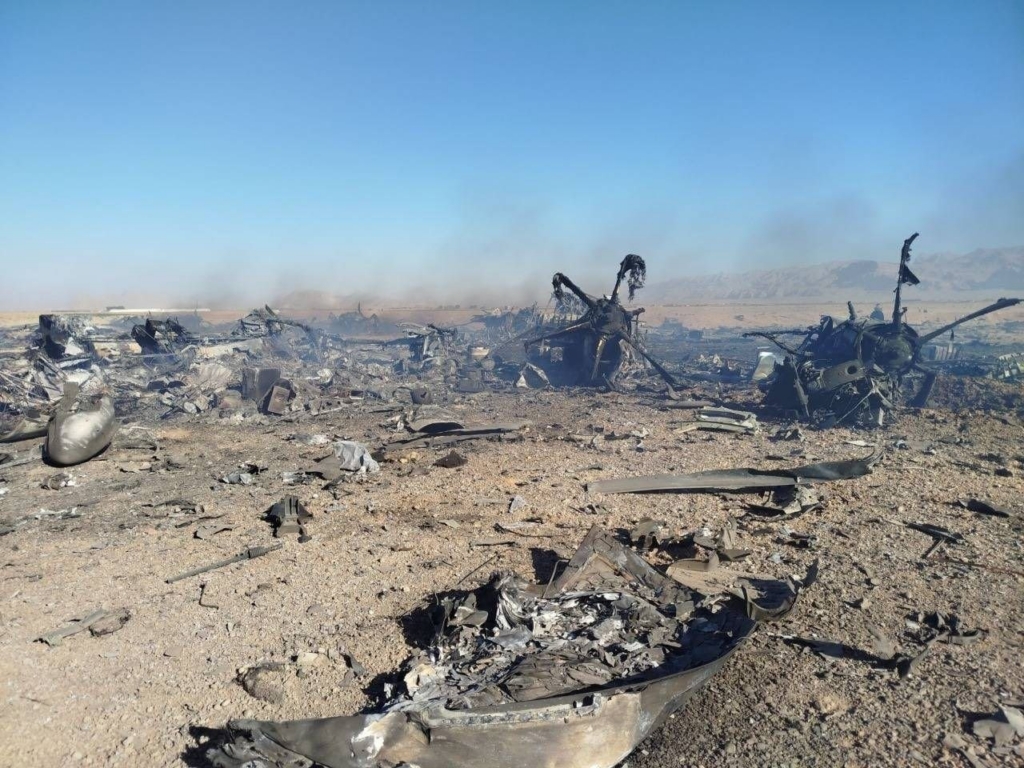
The February 2026 operation involved aircrew, pararescue specialists, intelligence personnel, mission planners, maintainers and special operations forces working together under challenging conditions.
While few operational details have been released, the incident served as a reminder that combat search and rescue remains a real-world requirement rather than a Cold War relic.
For rescue crews, the mission begins where others end.
When an aircraft is lost, the immediate challenge is not simply finding the crew. It involves locating isolated personnel, establishing communications, assessing threats, coordinating aircraft and ground forces, and conducting an extraction before hostile forces can intervene.
Those missions can unfold across vast distances and under intense pressure.
HH-60W Jolly Green II sits at the centre of USAF combat rescue
At the centre of the Air Force’s modern rescue capability is the Sikorsky HH-60W Jolly Green II.
Developed as the successor to the HH-60G Pave Hawk, the aircraft was designed specifically for combat search and rescue missions.

Although based on the widely used Black Hawk family, the HH-60W incorporates substantial changes tailored to the rescue role.
The helicopter carries significantly more fuel than earlier variants, giving it greater range and endurance during long-distance recovery operations.
It is equipped with advanced communications systems, defensive equipment, navigation systems and mission-management tools designed to support operations in contested environments.
The aircraft’s name also carries considerable history.
The HH-60W received its name as the “Jolly Green II” during a ceremony in February 2020, honouring the Jolly Green crews of previous generations who established the excellence and capability expected of the USAF combat rescue crews today.
“Jolly Green” traces its lineage to the HH-3E Jolly Green Giant helicopters that became synonymous with combat rescue operations during the Vietnam War, when rescue crews routinely flew into heavily defended areas to recover downed airmen.
Today’s HH-60W was designed to continue that mission in a very different threat environment.

Its primary task remains straightforward in concept but exceptionally difficult in practice: finding and recovering isolated personnel in hostile territory.
The first units to receive and field the new aircraft were the 41st Rescue Squadron, Moody AFB, Georgia, and the 512th Rescue Squadron, Kirtland AFB, New Mexico.
Moody AFB was the first across the USAF to deploy the new HH-60W Jolly Green II for its first rescue mission by the 38th and 41st Rescue Squadrons, Sept. 7, 2022.
HC-130J Combat King II gives rescue helicopters longer reach
The helicopter rarely operates alone. Supporting many rescue operations is another aircraft that receives far less public attention: the Lockheed Martin HC-130J Combat King II.
Derived from the C-130 Hercules transport family, the HC-130J serves as the airborne command-and-control and refuelling platform for Air Force rescue forces.
One of its most important roles is extending the reach of the HH-60W through aerial refuelling.

By taking fuel from the HC-130J in flight, rescue helicopters can travel significantly farther than would otherwise be possible, a capability that can prove critical when personnel are isolated hundreds of miles from friendly territory.
The aircraft also helps coordinate rescue efforts, manage communications and provide situational awareness across the rescue package.
Together, the HH-60W and HC-130J form the backbone of the Air Force’s personnel recovery enterprise.
Congress questions US Air Force HH-60W and HC-130J numbers
The Senate committee’s concern centres on whether enough of those aircraft will remain available in the future.
The Air Force originally planned to acquire 113 HH-60W helicopters. That figure was later reduced to 91 aircraft.
Lawmakers have also questioned plans to transfer 26 HH-60Ws to the Air Force District of Washington, where they are expected to replace ageing UH-1N helicopters used for continuity-of-government, homeland security and National Capital Region support missions.

In its report, the committee stated that these decisions have left combat rescue forces “unnecessarily short” of the aircraft needed to support operations during a major contingency.
As a result, lawmakers have directed the Air Force to review its requirements for both HH-60W helicopters and HC-130J aircraft and provide a detailed assessment to Congress by March 2027.
Until that review is completed, the committee has urged the service not to make additional force-structure changes affecting combat rescue units.
Combat search and rescue rests on a promise to recover aircrew
Combat search and rescue occupies a unique place within the Air Force.
Few missions demand such close integration between aircraft, intelligence assets, communications networks and highly specialised personnel.
The Air Force’s pararescue community, whose motto is “That Others May Live”, has built its reputation on recovering personnel under some of the most difficult conditions imaginable.
From Vietnam to Iraq, Afghanistan and more recent operations in the Middle East, rescue forces have repeatedly been called upon to recover isolated personnel when events have gone wrong.
That responsibility carries operational importance far beyond the individuals being rescued.

Military planners have long argued that aircrew are more willing to undertake difficult missions when they know a dedicated recovery force exists should they be forced down.
The capability also sends a message to allies and adversaries alike that the United States intends to recover its personnel whenever possible.
That is why the Senate committee’s warning has attracted attention.
The debate is not simply about helicopters or budgets. It is about whether one of the Air Force’s most enduring wartime commitments can still be met if a future conflict demands rescue operations on a far larger scale than those seen in recent years.
Congress has now asked the question. Over the next year, the Air Force will be expected to provide the answer.
Featured image: DVIDS


