Inside the US 170-aircraft mission to rescue a downed F-15 crew deep inside Iran

7 min read
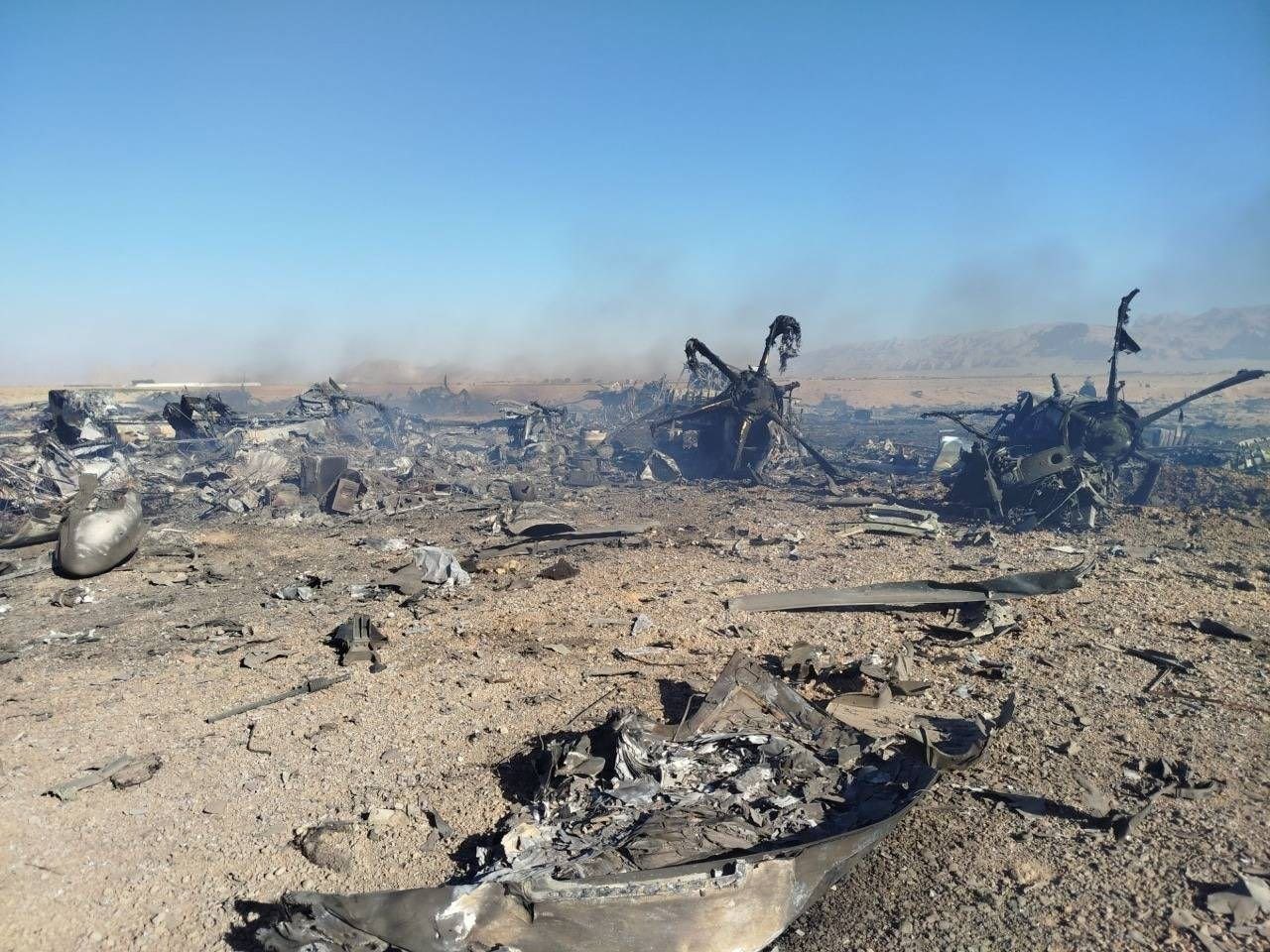
The United States has revealed new details of a high-risk combat search and rescue operation deep inside Iran, involving more than 170 aircraft and spanning nearly two days, to recover two downed F-15E Strike Eagle crew members.
“We’re here today to celebrate the success of one of the largest, most complex, most harrowing … search and rescue missions ever attempted,” US President Donald Trump said.
A day after the rescue on 6 April, speaking at a White House press conference alongside Defence Secretary Pete Hegseth, Chairman of the Joint Chiefs of Staff General Dan Caine, and CIA Director John Ratcliffe, Trump outlined how US forces launched successive rescue missions-first sending 21 aircraft to recover the pilot, before mounting a far larger operation involving 155 aircraft to extract a second airman who had evaded capture for nearly 48 hours.
US launches first rescue mission with 21 aircraft under fire in Iran
The incident began when the aircraft was hit by what Trump described as a shoulder-fired, heat-seeking missile, forcing an immediate ejection.
At those speeds, the separation between crew members was inevitable. “When you’re going at those speeds … it’s miles and miles away,” Trump said.
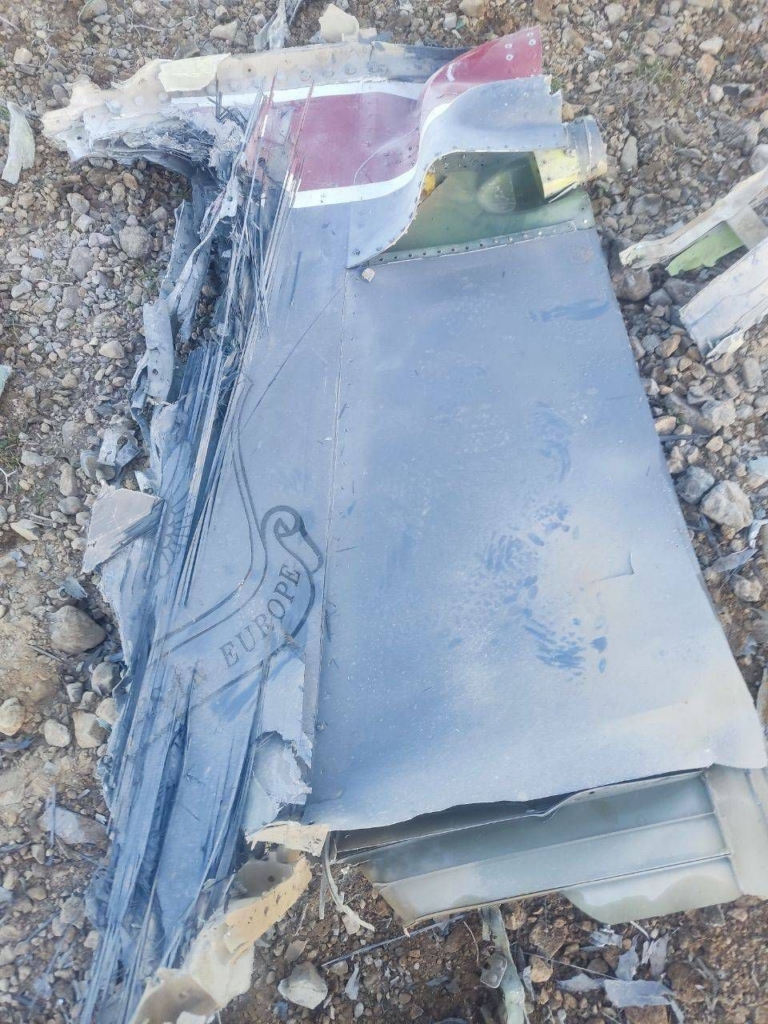
The pilot and weapons systems officer landed in different locations, alone, disoriented and surrounded by hostile terrain. The environment offered both concealment and danger, slowing movement while complicating any rescue effort.
Within hours, US commanders authorised an initial rescue attempt, deploying a force of 21 aircraft into Iranian airspace despite the risks of operating in daylight under hostile conditions.
“I ordered the US Armed Forces to do whatever was necessary,” Trump commented, “a risky decision because we could have ended up with 100 dead.”
Helicopters flew low through valleys and over ridgelines, taking sustained fire from the ground as they moved towards the downed pilot. Ahead of them, A-10 Warthogs provided close air support.
🇺🇸🇮🇷 An American A-10 Atack aircraft, flying over southern Iran, joined a search-and-rescue support operation for pilots. pic.twitter.com/s4jItfppkA
— Visioner (@visionergeo) April 3, 2026
“A-10 aircraft led the mission,” said Gen. Dan Caine, “violently suppressing and engaging the enemy in a close-in gunfight to keep them away from the isolated pilot.”
Behind this protective screen, HH-60 rescue helicopters pushed in to complete the extraction. Defence Secretary Pete Hegseth later described it as: “An audacious daylight thunder run right up the middle.”
The pilot was located and extracted under fire, the first success in what was already becoming a layered operation.
Downed F-15E airman evades capture in Iran for nearly 48 hours
The second airman was not so fortunate.
“He was injured quite badly… in an area teeming with terrorists,” Trump said.
Following standard evasion procedures designed to avoid immediate capture, he moved quickly away from the crash site. Climbing into elevated terrain, he sought concealment while treating his own wounds and activating a locator beacon.
“You want to be as far away as you can…,” Trump said. “Scaled cliff faces… bleeding rather profusely.”
What Search and Rescue Operations Over Iran Reveal
— Patricia Marins (@pati_marins64) April 3, 2026
In the last few hours, at least one A-10, two helicopters, one C-130, and one RQ-9 drone were spotted flying with relative freedom over an Iranian province.
These are five much easier targets to shoot down than an F-15. Yet… pic.twitter.com/2PkyszMwBf
For nearly 48 hours, he remained hidden in mountainous terrain that both shielded and restricted him, as search efforts intensified around him.
Caine later highlighted the importance of survival training in such scenarios, noting that “their will to survive, their will to evade… is everything.”
Iran launches mass search for downed US airman after F-15E crash
Iranian authorities rapidly expanded the search effort, with thousands of personnel, including military units, irregular forces and civilians, combing the terrain.
According to Trump, incentives were offered for the airman’s capture, accelerating the scale of the hunt and narrowing the window for a successful recovery. “Thousands – thousands of people were looking,” he said.
Search and rescue by locals in southern Iran trying to locate the American F-15 crew members in order to secure the 10 billion tomans ($7,000) reward offered by merchants in Kohgiluyeh and Boyer-Ahmad province pic.twitter.com/4irfycvzB3
— Fazel Hawramy (@FazelHawramy) April 3, 2026
Search teams moved through villages, ridgelines and access routes, increasing pressure on the isolated airman as time passed. The window for rescue narrowed with every passing hour.
CIA uses intelligence and deception to locate downed US airman in Iran
Locating a single individual in such terrain presented a significant intelligence challenge.
CIA Director John Ratcliffe described the task as akin to “finding a single grain of sand in a desert.” The agency deployed “exquisite technologies that no other intelligence service in the world possesses,” combining signals, surveillance and human intelligence.
Close-up footage shows a U.S. C-130 transport aircraft refueling two UH-60 Black Hawk helicopters over southwestern Iran as the search and rescue operation for the missing F-15E crew continues.#BreakingNews #MiddleEastConflict #USMilitary #Iran #F15E #SearchAndRescue #WarNews… pic.twitter.com/c9lvwK2jFl
— Bùi Mai Hương (@Mhuong_fitness) April 3, 2026
At the same time, a deception plan unfolded across the battlespace. The US moved to misdirect Iranian search efforts. Aircraft movements and operational patterns were deliberately altered to create false signals, drawing attention away from the airman’s actual location and buying time for the rescue.
“We were bringing them all over… a lot of it was subterfuge,” Trump said. “We wanted to have them think he was in a different location.”
Iranian search elements were pulled in multiple directions, time gained, pressure eased, but only briefly.
US deploys 155 aircraft in second rescue mission to recover F-15E crew
Once the airman’s position was confirmed, the scale of the operation expanded dramatically.
A second rescue mission involving 155 aircraft was launched. Combined with the earlier effort, the total force exceeded 170 aircraft.
The formation included: strategic bombers, dozens of fighter aircraft, aerial refuelling tankers, and dedicated rescue platforms.
U.S. C‑130s fly low over southern Iran, evading radar and air defenses during a risky rescue mission for a downed F‑15E. pic.twitter.com/kjlQe2RH0Z
— Open Source Intel (@Osint613) April 3, 2026
Secretary Hegseth described it as: “High risk, high stakes… conducted in the heart of enemy territory.” Back in Washington, the operation ran without pause. “For 45 hours and 56 minutes… the call never dropped, the meeting never stopped,” he said.
The final phase came fast.
Aircraft moved in first, fighters suppressing ground threats, clearing approach corridors. Then the helicopters.
“In a breathtaking show of skill and precision,” said Trump. “America’s military descended on the area, engaged the enemy, and rescued the stranded officer.”
Despite continued engagement from hostile forces, the aircraft successfully lifted off and exited Iranian airspace without casualties.
US destroys stranded aircraft after extraction from Iran rescue mission
Even then, the mission was not over. At the extraction point, a rough, improvised strip, conditions deteriorated. Heavy aircraft became stuck in wet, unstable ground.
“This was not much of a runway … it’s a farm,” Trump said. “We had two large planes … and they got pretty well bogged down.”
A contingency plan followed. Smaller aircraft were brought in, landing and departing in rapid succession to evacuate personnel. The stranded aircraft were destroyed to prevent them from falling into hostile hands.
“We blew them up to smithereens,” Trump said. “We didn’t want anybody examining our equipment.”
US President blames media leak for increasing risk to Iran rescue mission
The operation was further complicated by an apparent media leak, which Trump said revealed the presence of a second downed airman.
“We didn’t talk about the first one… then somebody leaked something,” Trump said. “All of a sudden, the entire country of Iran knew… There was a pilot, somewhere on their land, that was fighting for his life.”
According to the president, the disclosure intensified the search effort and increased the risks faced by the isolated crew member. He also suggested potential action against the outlet responsible, citing national security concerns.
“So whoever it was, we think we’ll be able to find it out,” he said. “Because we’re going to go to the media company that released it and we’re going to say national security, give it up or go to jail.”
Officials framed the mission as a demonstration of US doctrine in combat search and rescue. Ratcliffe described it as a “no fail mission”, underscoring the integration of intelligence, airpower and special operations under extreme conditions.
For Trump, the conclusion was direct. “In the United States military, we leave no American behind.”
Featured image: Iranian state media