USMC targets 2029 delivery of MQ-58 Valkyrie CCA prototypes for F-35 teaming

5 min read
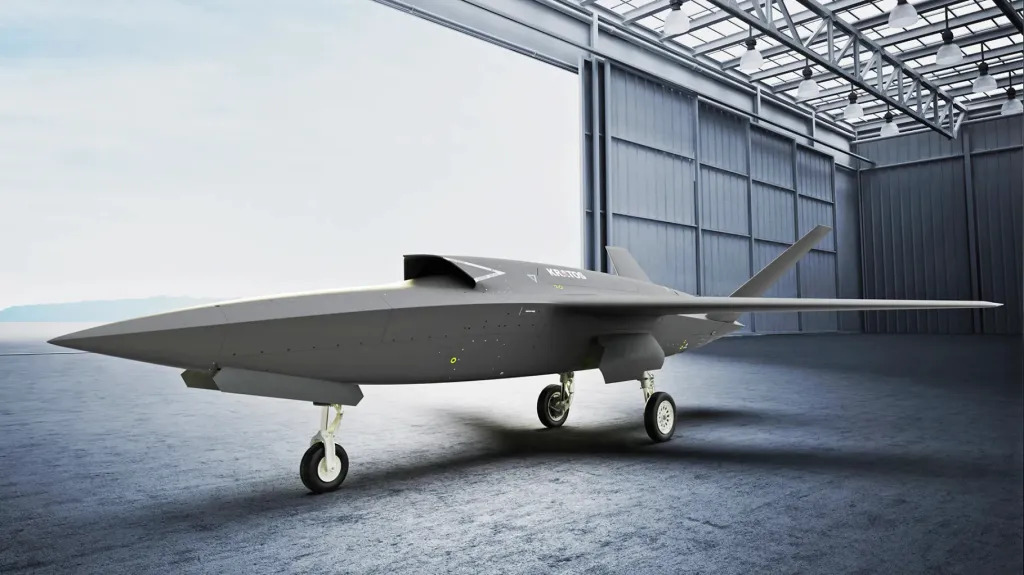
The US Marine Corps (USMC) plans to field its first Collaborative Combat Aircraft (CCA) prototypes – namely Kratos’ conventional take-off and landing (CTOL)-configured MQ-58 Valkyrie unmanned combat air vehicle (UCAV) – from 2029, kickstarting a new era in which the drones are paired with crewed tactical jets in contested battlespace to expand combat mass while reducing pilot risk.
The development comes after the USMC recently outlined its plan for the MQ-58 – and potentially more CCA platforms – to be paired with the service’s growing fleet of fifth-generation F-35B/C Lightning II fighters as a ‘bridge’ to an entire family of next-generation air combat capabilities. Such developments could also include a crewed sixth-generation fighter in the future.
This fielding update was revealed by Col Scott Shadforth, a programme manager for the USMC’s Expeditionary and Maritime Aviation Advanced Development Team (XMA-ADT), during the Corps’ annual Modern Day Marine conference, which was held in Washington DC from 28-30 April.
Speaking during the event and initially reported by The War Zone, Shadforth explained that the ultimate goal for the USMC’s ongoing MQ-58 effort is for the service to receive its first “deliverable prototypes” in mid-2029.
He noted that, in an ideal scenario, the prototype Valkyries would be delivered to Marine Operational Test and Evaluation Squadron 1 (VMX-1) at Marine Corps Air Station (MCAS) Yuma in Arizona.
VMX-1 operates several different types of USMC platforms and is charged with conducting the operational test and evaluation efforts required to validate the capabilities of every aircraft type in the Marine Corps’ inventory and their associated mission systems.
The Yuma-based test unit also supports the wider development of operational tactics, techniques and procedures (TTPs) for the USMC’s various aircraft fleets.
As quoted by TWZ, Shadforth said that the delivery of these MQ-58 prototypes to VMX-1 would allow the USMC to “fly the aircraft in a tactical environment and develop the CONOPS (Concept of Operations) for how they’re actually going to employ [the platform].”
This latest update remains consistent with the Marine Corps Aviation Plan 2026, which has identified the MQ-58 as a priority capability within its broader transition toward greater distributed and networked air combat capabilities.
MUX TACAIR: The USMC’s quest to develop and field low-cost CCAs
The USMC’s ongoing CCA development efforts – including the activities surrounding these MQ-58 prototypes – fall under the Corps’ wider Marine Air-Ground Task Force (MAGTF) Uncrewed Expeditionary Tactical Aircraft (MUX TACAIR) programme.
The initiative aims to develop and field low-cost, attritable uncrewed aircraft alongside manned fighters (such as the F-35B/C) to serve as a force-multiplying asset that can enhance overall air combat capabilities in contested environments.

As was recently announced by the USMC, these future uncrewed CCAs will primarily collaborate with the service’s crewed F-35B/C fighters – and perhaps its legacy F/A-18 Hornets – to not only increase combat mass, but also to enhance the overall survivability and lethality of the Lightning II fleet across a wide range of developing threat environments in growingly contested battlespaces.
While the USMC has outlined plans to field its first CTOL-configured MQ-58 prototypes from Kratos in mid-2029, the MUX TACAIR programme does not solely centre around the Marine Corps-derived variant of the Valkyrie family.
The USMC is also exploring more CCA candidates through its MUX TACAIR initiative with several defence firms, including Anduril and General Atomics Aeronautical Systems Inc (GA-ASI).
MQ-58 Valkyrie: A modular approach to the USMC’s CCA requirements?
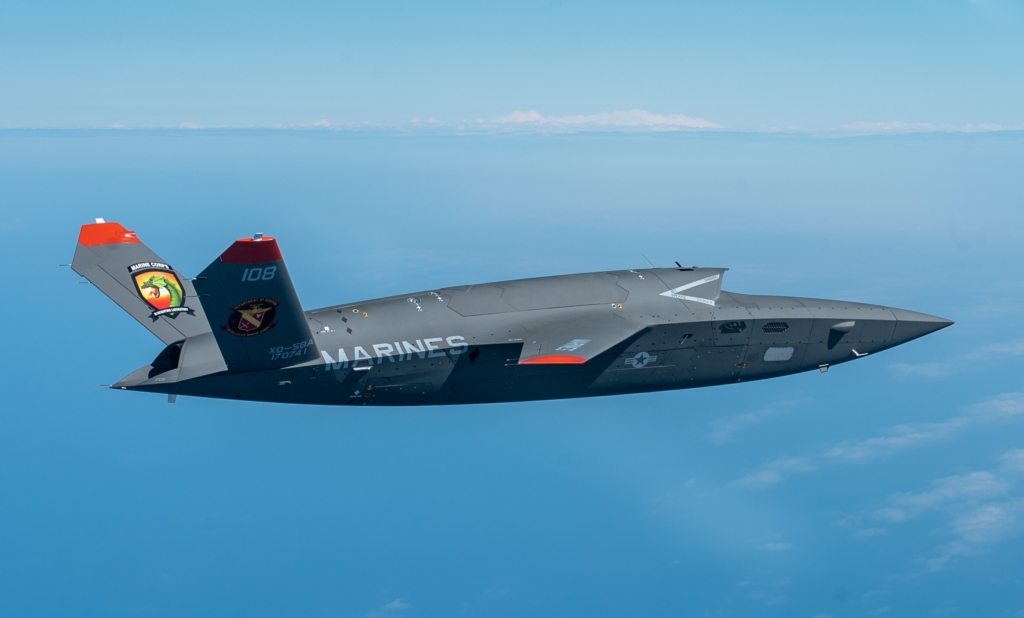
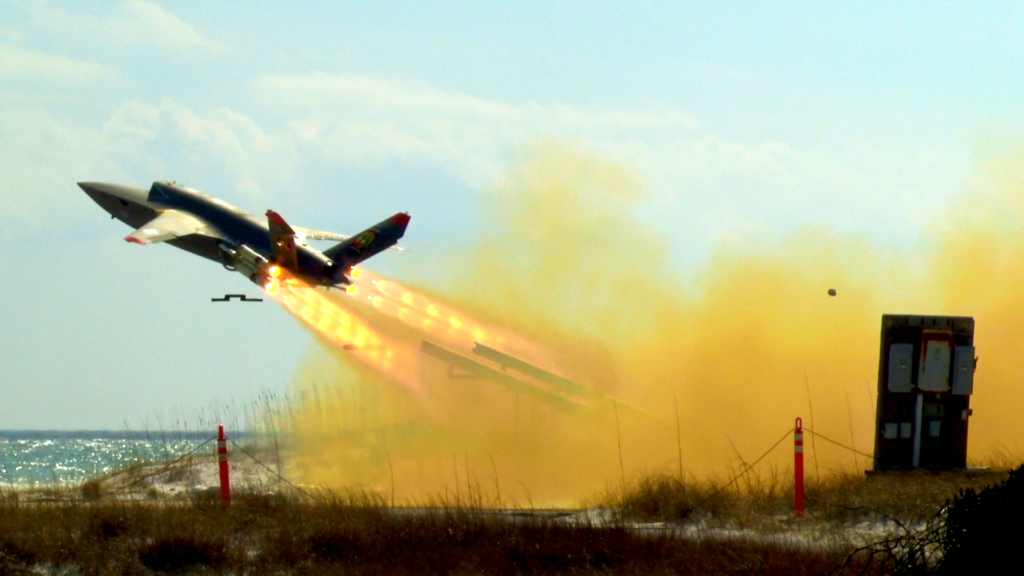
The MQ-58, which is a USMC-specific landing gear-equipped derivative of Kratos’ initial rocket-assisted take-off (RATO)-configured XQ-58 Valkyrie drone, is designed to perform a variety of missions, including reconnaissance, strike support and electronic warfare (EW) operations. These missions will be carried out while the platform is paired with crewed tactical jets.
In 2024, the USMC demonstrated the manned-unmanned teaming (MUM-T) capabilities of the RATO-configured XQ-58 drone across four experimental flights. While such test efforts have relied on the existing RATO-configured prototypes to date, the USMC presently targets the first flight of a CTOL-designed MQ-58 – complete with a tricycle landing gear – this summer.
In January 2026, the USMC awarded a $231.5m contract to Kratos, which has partnered with Northrop Grumman for the Valkyrie effort, to undergo mission development work as part of the MUX TACAIR programme.
Development has continued at a steady pace since the flights in 2024, with payload integration tests having been conducted at Naval Air Weapons Station (NAWS) China Lake in California. These tests have reportedly focused on validating the mission systems that will be employed by the CCA operationally. In terms of capability, the MUX TACAIR initiative is initially focusing on an EW payload.
While the programme is initially focusing on EW capabilities, the MQ-58’s modular architecture will enable it to rapidly receive and employ new payload packages and sensor systems as they are developed.
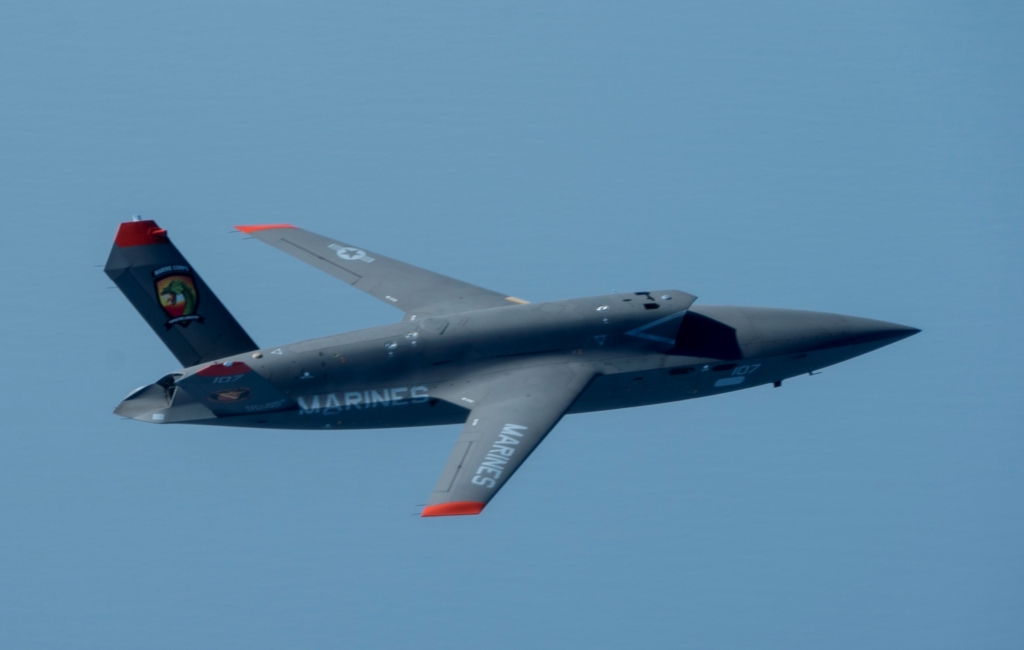
The platform also features an internal weapons bay that can carry munitions, such as the GBU-39 Small Diameter Bomb (SDB), along with external hardpoints for additional payloads and sensor pods.
An effort to integrate the AIM-120 Advanced Medium-Range Air-to-Air Missile (AMRAAM) on the Valkyrie has also been undertaken, which will offer a beyond-visual-range (BVR) air-to-air combat engagement capability while supporting crewed aircraft in contested environments.
In addition, Kratos is developing a miniature cruise missile, known as Ragnarok, that is designed to fit within the MQ-58’s internal weapons bay and offer additional precision strike options at stand-off ranges.
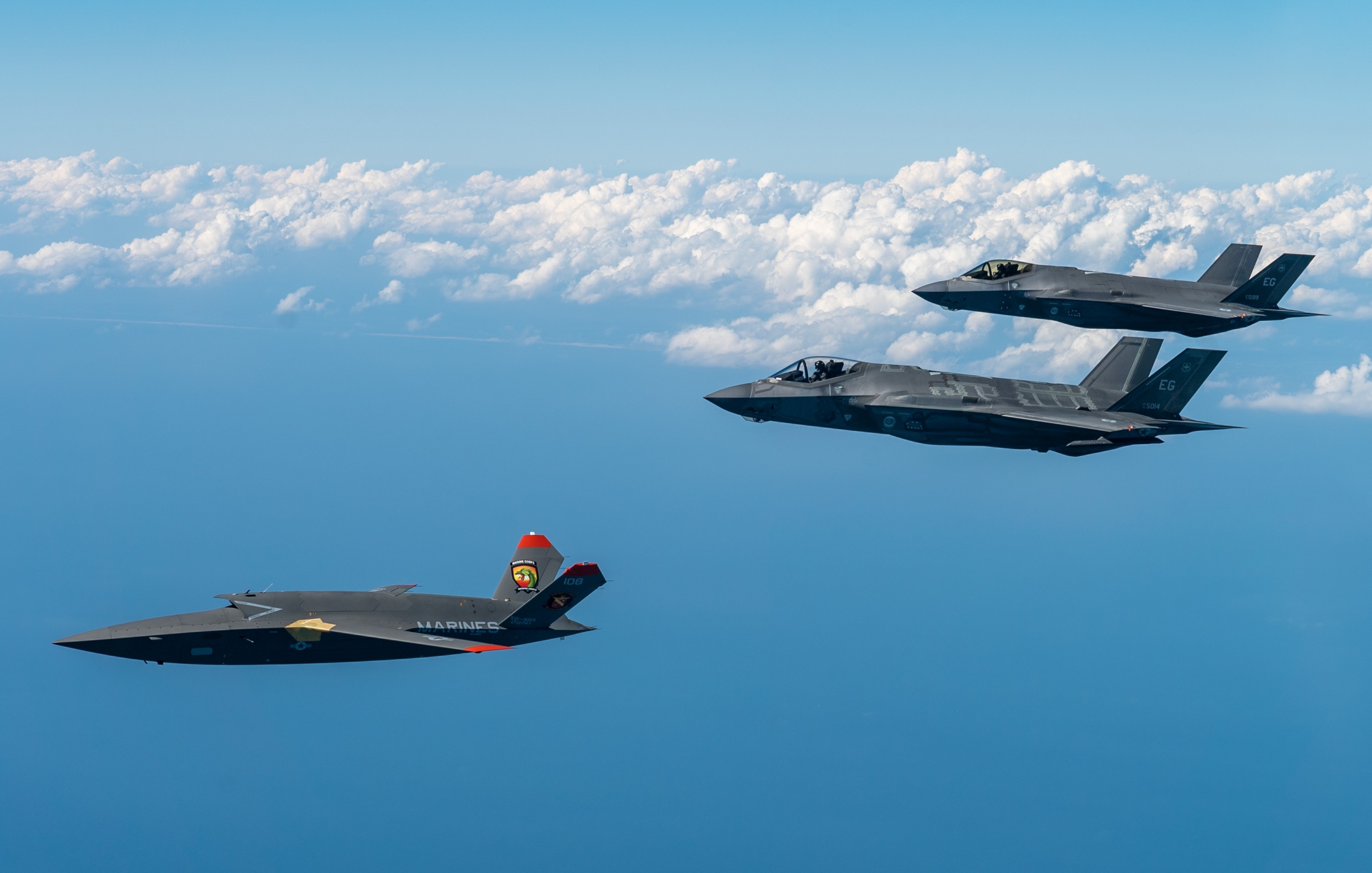
Featured Image: One of the USMC’s RATO-configured XQ-58A Valkyrie prototypes is seen in formation with a pair of USAF-operated F-35A Lightning IIs during a test mission from Eglin AFB, Florida, on 23 February 2024. Image: USAF/Master Sgt John McRell