First of 66 new F-16V fighters departs for Taiwan after delays

3 min read
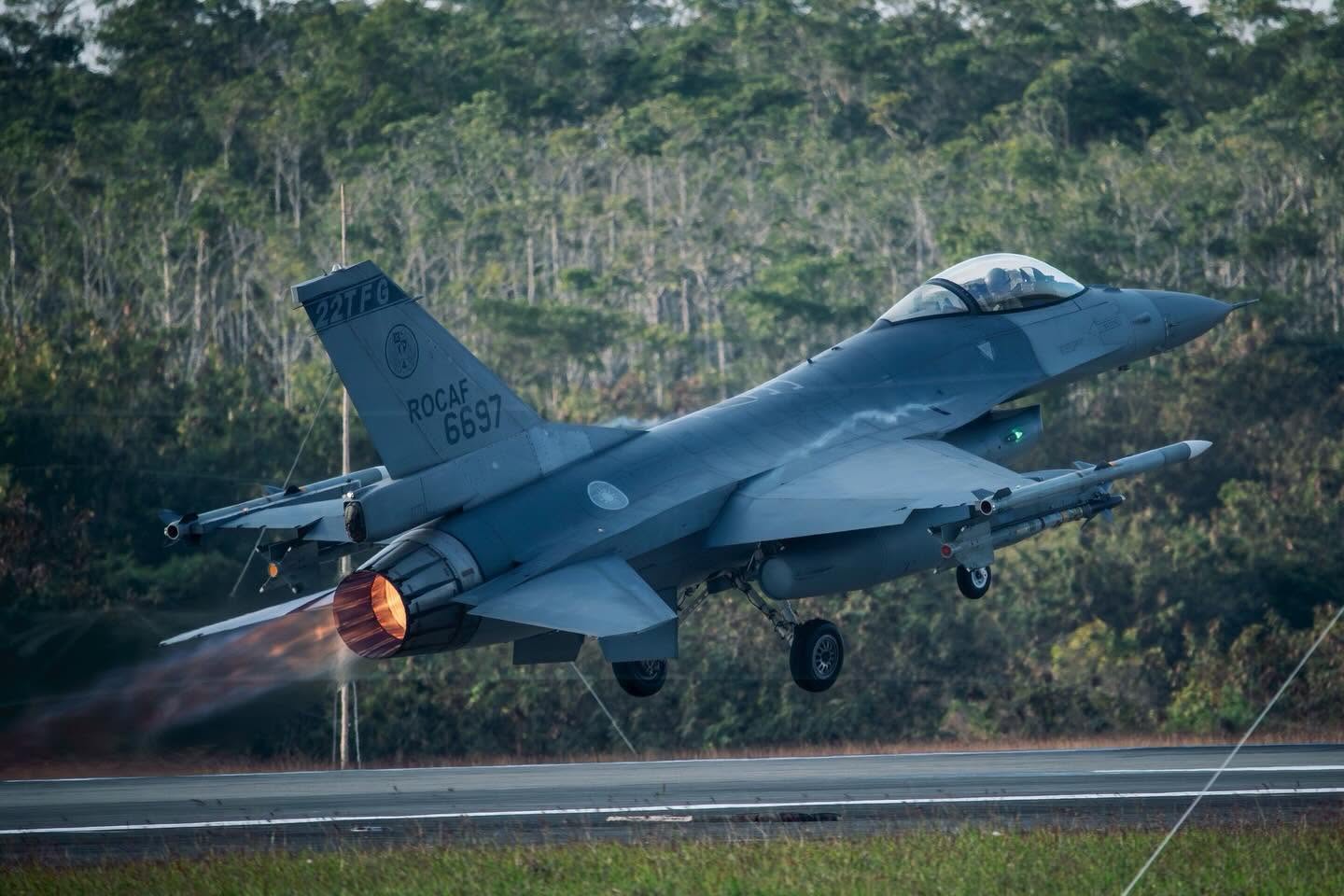
The first two of 66 new Lockheed Martin F-16V fighter jets are en route to Taiwan. According to existing forecasts, the remaining 63 fighters should start arriving in growing numbers through 2027 and 2028. Lockheed is expecting to keep the F-16 flying and fighting to 2060 and beyond.
Two new-build F-16V fighters on the way to Taiwan
According to Taiwan’s Liberty Times, the first two of Taiwan’s order for 66 new F-16V Block 70 fighter jets are finally on their way to Taiwan. Those airframes (serial numbers 6727 and 6728) have been seen transiting through Hawaii and are now in Guam.
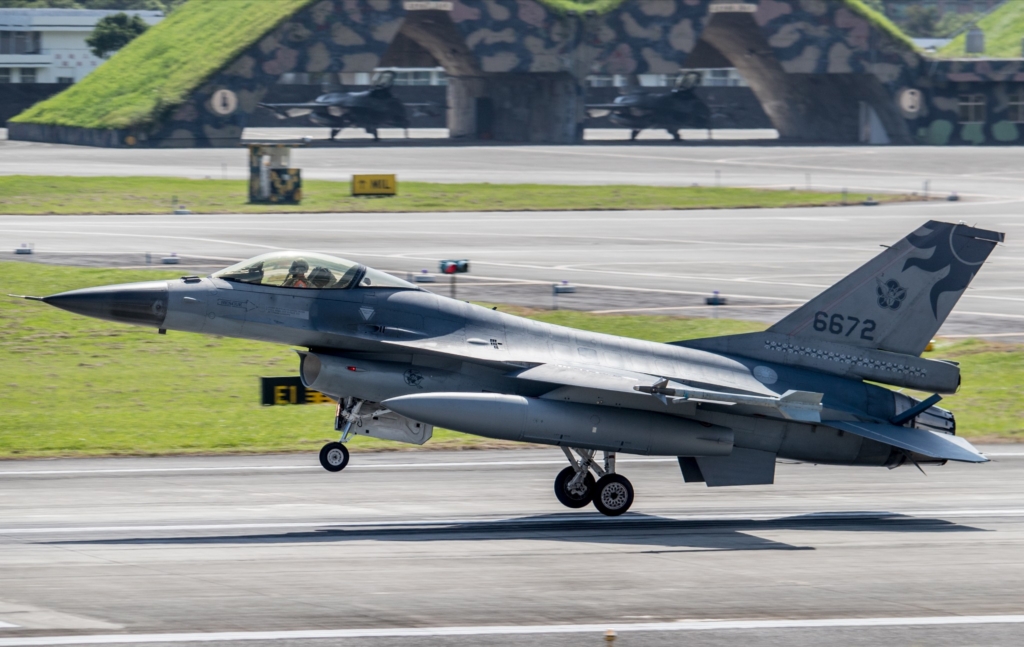
As of the time of writing, it appears the two jets remain in Guam, and they are currently awaiting favourable weather conditions to fly to Taiwan’s Taitung Air Force Base. After they arrive in Taiwan, they will immediately begin ground testing and conversion training.
Taiwan opened a new F-16 maintenance centre in its central city of Taichung to maintain the fleet in 2020.
Besides F-16s, Taiwan has around 130 domestically produced AIDC F-CK-1 Ching-Kuo, also known as the Indigenous Defense Fighter (IDF), as well as around 50 legacy French Dassault Mirage 2000 fighter jets in service.
Taiwan F-16V deliveries delayed until 2028
Lockheed Martin restarted F-16 deliveries in 2023 after a hiatus as the production line was moved and the company transitioned to the latest Block 70/72 variant. Five examples were delivered in 2023, followed by 16 in 2024 and again in 2025.
With Lockheed now expecting to deliver the remaining 63 over the next 2-2.5 years and Lockheed delivering F-16s to other customers, production is expected to ramp up in 2026 through 2028.
A planespotter observed two F-16C Block 70s built for the 🇹🇼 Republic of China Air Force, "6727" and "6728," at Daniel K. Inouye International Airport in Honolulu during their delivery ferry flight to Taiwan on 8/20.
— Taiwan Defense News Tracker 🇹🇼 (@TaiwansDefense) August 21, 2026
(@/dose_of_aerospace_a330 on Instagram) pic.twitter.com/YnJxiVtBCs
Production ramp-up has been slow and delayed, resulting in delays to Taiwan’s orders. All 66 F-16s were expected to be delivered by the end of 2026, when Taiwan initially placed the order in 2020.
The US has promised to expedite the production of the remaining 63 F-16Vs for Taiwan, and Lockheed has reportedly put two shifts on to speed up the process. The remaining F-16Vs are now expected to arrive in 2028.
Taiwan is paying NT$247.23 billion (US$7.7 billion) under its Feng Hsiang Project for the new Vipers. Other countries, including Bahrain, Slovakia, Bulgaria, Turkey, Jordan, and Morocco, have new-build F-16s on order.
Upgrading legacy F-16s and Taiwan’s area denial
Under the separate Feng Chan Project, some 140 legacy Taiwanese F-16A/B fighters were upgraded to the F-16V Block 20 standard by Lockheed Martin and Taiwan’s Aerospace Industrial Development Corp. Those upgrades were completed in December 2023.
The upgrade means Taiwan’s entire F-16 fleet now possesses AESA radar capability, dramatically improving detection, tracking, and resistance to jamming.
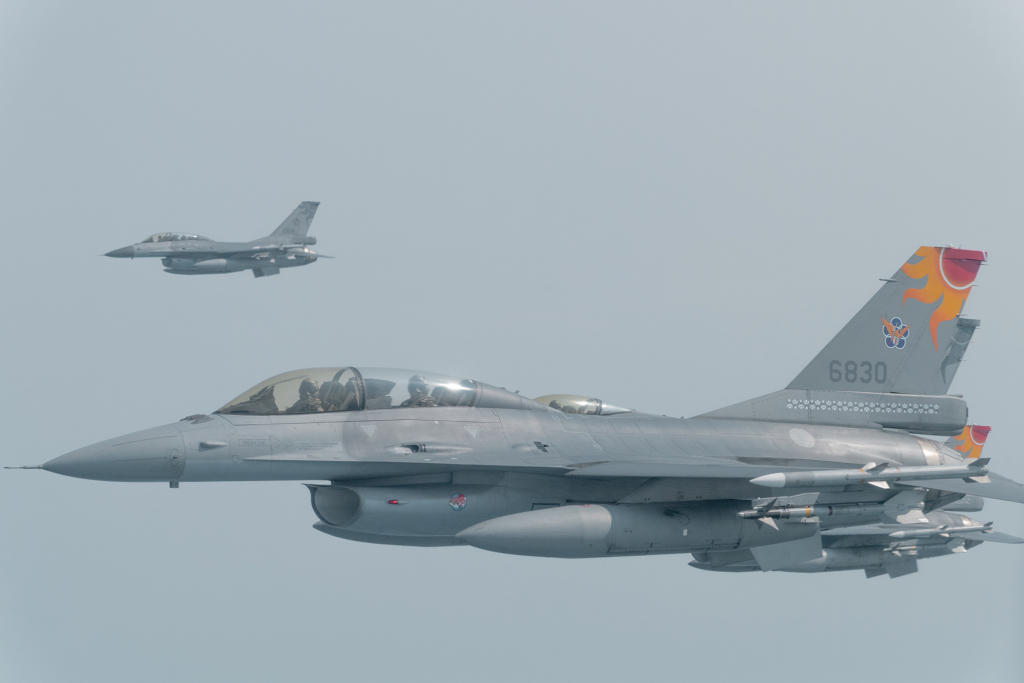
While the F-16Vs may be outclassed by their much more numerous Chinese counterparts, including J-20s, Taiwan’s strategy is focused on area denial. The F-16Vs need to make it more difficult for China to establish air superiority over the island; they are not intended to project power into Mainland China.
In wargaming, it is a challenge for Taiwan’s fighter jet fleet to survive the expected initial surprise missile barrage. That said, some of Taiwan’s air bases have shelters cut deep into the mountains.
During Operation Epic Fury in 2026, satellite imagery and official statements suggested that many Iranian aircraft parked in the open or in conventional hangars were destroyed or damaged.
Aircraft sheltered in hardened mountain tunnel complexes appeared to survive the initial strikes. Iran was able to recover many of them later on.