Could flights be grounded due to solar flares? New research warns of growing aviation risk

5 min read
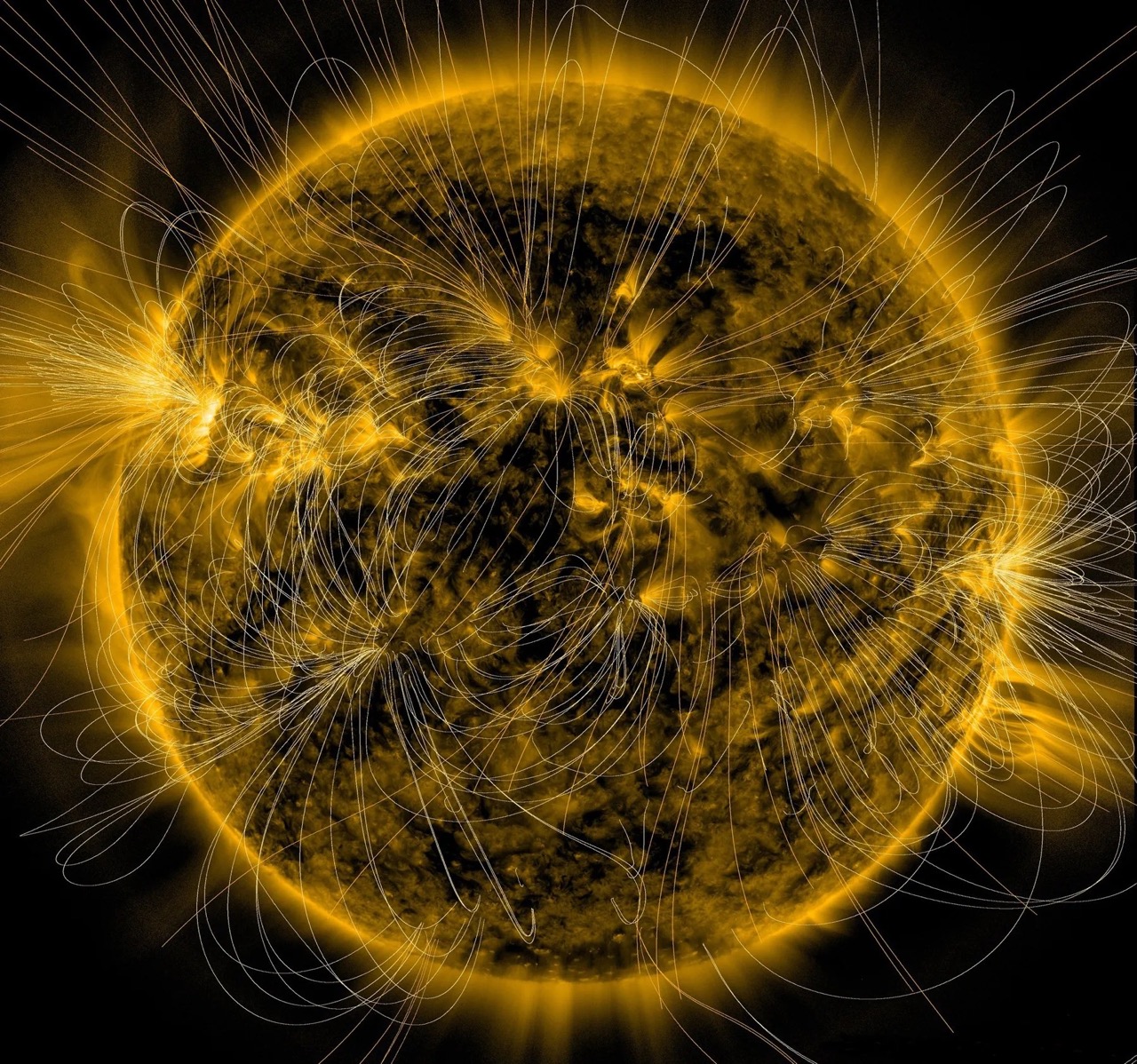
New research led by the University of Surrey has examined what happens when unusually powerful bursts of energetic particles from the Sun reach the atmosphere. Scientists warn space weather poses a greater risk to aviation than current procedures fully account for. Their findings were published in the Journal of Space Weather and Space Climate.
The researchers found that extreme events could sharply increase radiation levels at normal cruising altitudes and interfere with aircraft electronics.
The risk does not mean an ordinary solar flare is likely to shut down airports. Grounding aircraft would be an extreme response to a rare event. But researchers argue airlines need clearer thresholds for deciding when to reroute, descend or keep aircraft on the ground.
How solar storms can affect aircraft
Commercial aircraft normally cruise at around 8-14 km above the Earth, where passengers and crew receive more cosmic radiation than people at ground level.
Earth’s atmosphere and magnetic field provide substantial protection. However, that protection becomes less effective at higher altitudes and towards the poles.
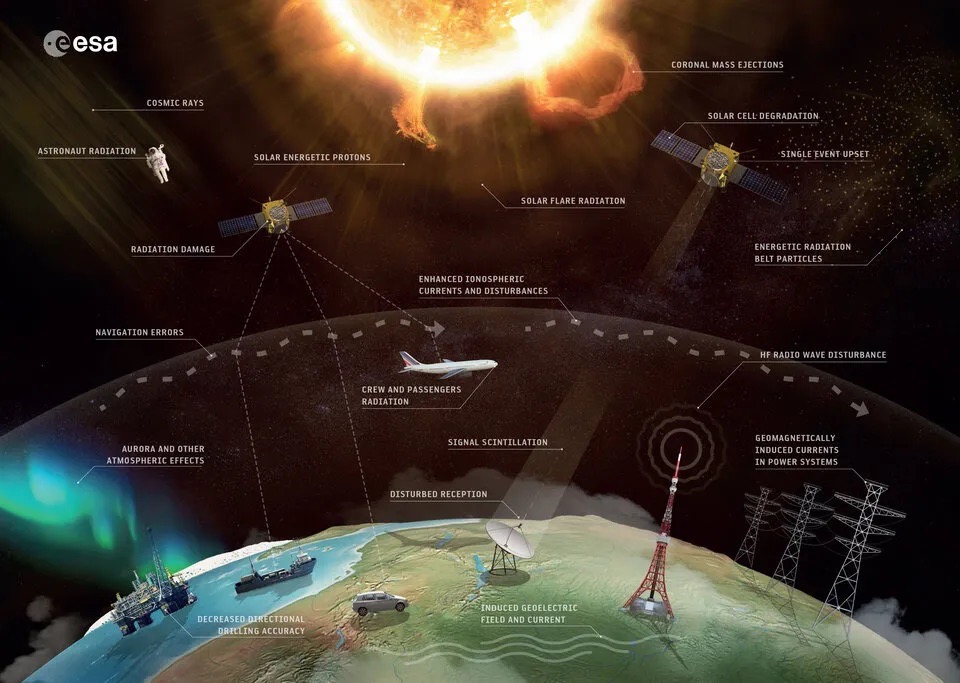
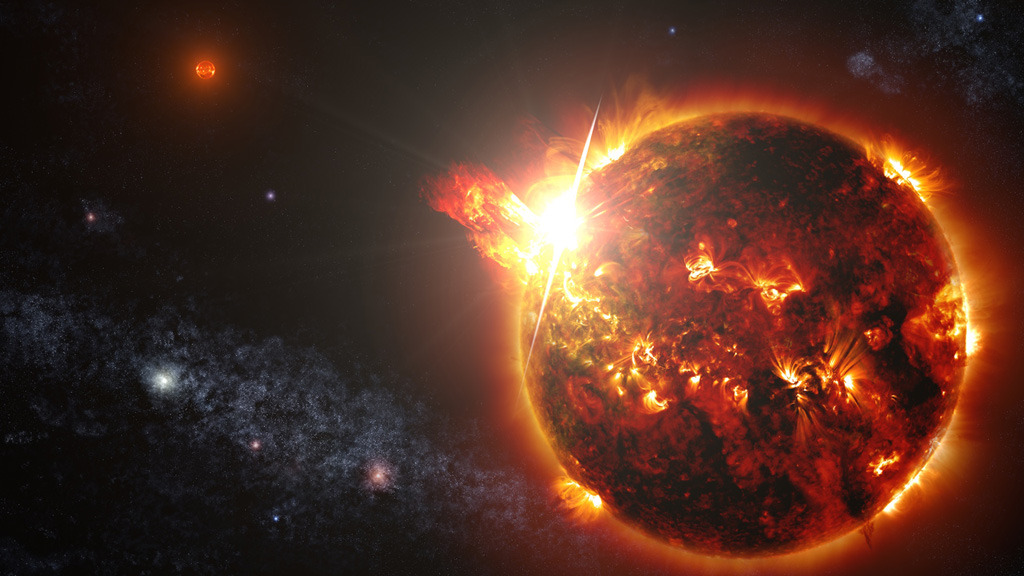
A powerful solar event can cause high-energy particles to penetrate the atmosphere, increasing radiation at altitude.
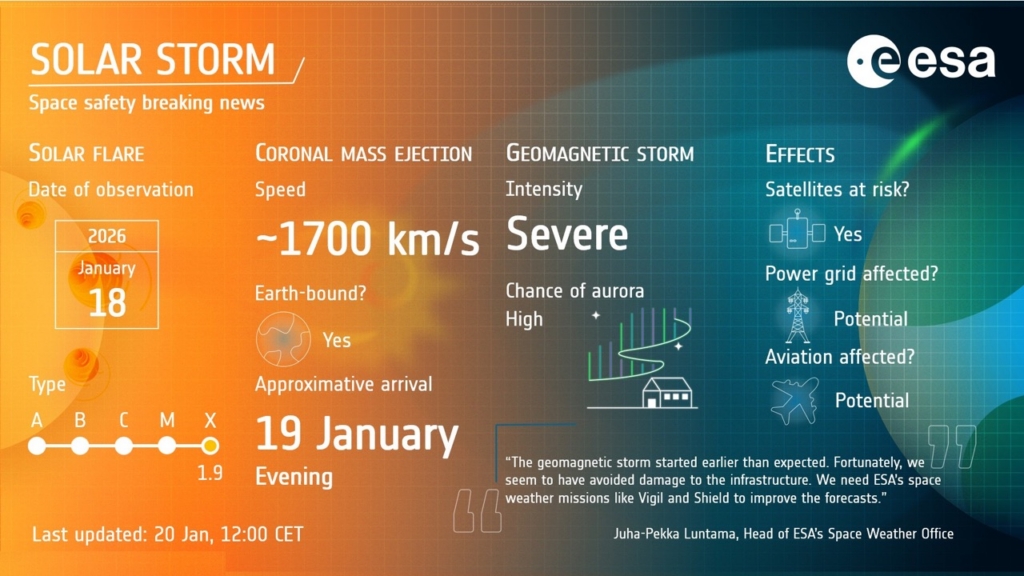
Researchers at the University of Surrey note that high-altitude radiation measurements reached almost ten times normal levels during the major solar storm in November 2025.
They also examined the much more powerful February 1956 solar event. Researchers estimate that an event of comparable strength could expose passengers to radiation equivalent to around a year’s normal flight-related cosmic radiation.
Solar storm impact on aircraft electronics is a concern
For airlines, the effect on aircraft electronics could prove more challenging operationally in addition to the risks of radiation exposure to passengers and crew.
High-energy particles can trigger Single Event Upsets, or SEUs, also known as “bit flips.” The radiation can alter the states of electronic circuits, affecting computer operation or corrupting data.
ICAO’s space weather manual notes that semiconductor avionics can malfunction during solar radiation events and that a single event upset can cause a computer system to reset.
Aircraft are designed with redundancy and fault-tolerant systems to cope with individual faults. However, researchers warn that an extreme radiation event could dramatically increase the frequency of SEUs.
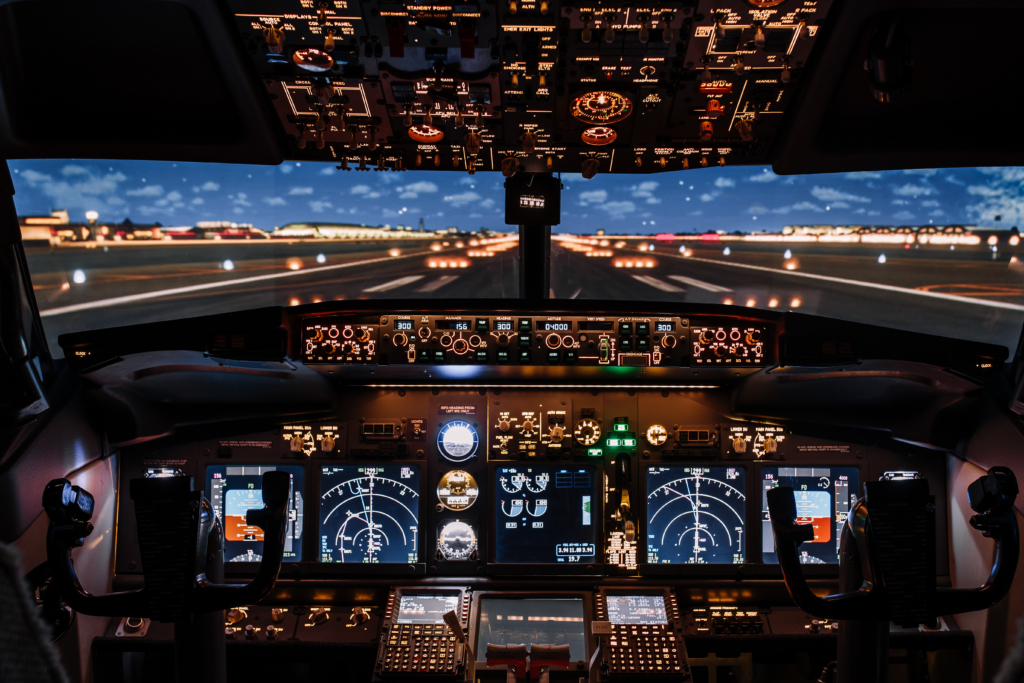
The Surrey study estimates that rates could rise from a few events per hour under normal conditions to thousands during an extreme space weather event. That could put greater pressure on existing system defences.
The risk is becoming critical as modern aircraft increasingly depend on sophisticated semiconductor-based electronic systems.
“The recent Airbus A320 grounding linked to cosmic radiation shows that space weather is not a theoretical risk; it is already affecting aviation”, said Dr Fan Lei, Senior Research Fellow at Surrey Space Centre and lead author of the study.
“As aircraft systems become more advanced and increasingly reliant on electronics, understanding and preparing for these events will be critical to maintaining flight safety.”
Polar flights face the greatest risk
Solar activity poses a particular risk to flights near the poles, where the Earth’s magnetic field provides less shielding from energetic particles that can penetrate deeper into the atmosphere.
ICAO says polar and near-polar flights are therefore the most exposed during solar radiation storms. Geomagnetic storms can also push the region of increased radiation towards lower latitudes.
That makes long-haul routes across the Arctic potentially more vulnerable than flights at lower latitudes.
The problem is not limited to radiation. Space weather can also disrupt high-frequency radio communications and degrade satellite-based navigation and surveillance systems.
ICAO contingency guidance for the North Atlantic identifies possible effects including loss of communications, degraded GNSS performance, avionics anomalies and increased radiation exposure. These conditions could result in aircraft changing altitude, rerouting, turning back or diverting.
Would airlines actually ground flights during solar storms?
Researchers see grounding as one of the most severe measures rather than the first response.
Depending on the event, an airline could reduce exposure by rerouting a flight or adjusting altitude. ICAO notes that protection against radiation generally increases at lower altitudes and lower latitudes.
However, an exceptionally powerful solar event could make those measures insufficient. It could create simultaneous problems with communications, navigation and aircraft electronics. In those cases, delaying or grounding flights could become an option.
The Surrey researchers have proposed a new aviation-specific atmospheric radiation scale intended to give operators clearer thresholds for action. Responses could progress from increased monitoring to rerouting and, in the most serious circumstances, grounding aircraft.
Professor Keith Ryden, head of the Surrey Space Centre, said there is currently “no consistent way for the aviation sector to assess and respond to extreme space weather risks.”
Improving how aviation monitors space weather
Space-weather information already reaches airlines, flight crews and air traffic management organisations.
ICAO introduced a global space weather information service in November 2019. Dedicated centres monitor solar activity around the clock and issue advisories when conditions could affect HF communications, GNSS navigation and surveillance or radiation levels aboard aircraft.
What the Surrey team proposes is a more aviation-specific system for translating radiation measurements into operational decisions.
“An atmospheric radiation scale has been needed for a long time, as current alerts based on low-energy proton events give at least ten false alerts for every true alert,” said Professor Clive Dyer, Visiting Professor at Surrey Space Centre and a co-author of the study.
The proposed atmospheric radiation scale would link events with potential responses based on severity, allowing operators to make more informed, proportionate decisions.
“We’ve introduced a clearer, aviation-specific radiation scale to help support more informed decision-making in aviation, helping operators act quickly to protect passengers, crew and critical onboard systems,” Professor Ryden said.
For passengers, the prospect of flights being grounded by the Sun remains remote. Extreme solar particle events capable of producing the most serious aviation effects are rare. But the consequences could be significant enough that researchers believe airlines and regulators should prepare for them before the next major event arrives.
Sign up for our newsletter and get our latest content in your inbox.


More from


October 17, 20264 min read