


Best SeatGuru alternatives: How to find the best seats on any flight

7 min read
SeatGuru was once the go-to website for aircraft seats, helping millions of travellers avoid bad seats and find the best places to sit on a flight. But after the site was shut down last year, passengers were left searching for reliable SeatGuru alternatives.
Fortunately, there are other tools which provide accurate seat maps, essential cabin information and seat recommendations. Whether you’re trying to avoid a windowless window seat, find extra legroom or secure the best seat on the aircraft, these are the top SeatGuru alternatives in 2026.
Why did SeatGuru shut down?
Launched in 2001 by frequent business traveller Matthew Daimler, SeatGuru offered aircraft seat maps, user reviews, and colour-coded seat ratings (green = good, red = avoid) across hundreds of aircraft and dozens of airlines.

In 2007, the website was acquired by TripAdvisor (then part of Expedia) with the intent to integrate seat–selection advice into its broader travel reviews and recommendations.
For many years, it was the go-to resource for frequent flyers seeking to optimise their seat choice, avoid misaligned windows, bulkheads, seats near toilets or galleys, poor recline, and other aircraft cabin bugbears.
The decision to abandon SeatGuru came long ago, when TripAdvisor failed to keep the site up to date. Tracking changes to aircraft layouts and cabin interior equipment is precise, labour-intensive work that requires a dedicated team. TripAdvisor evidently didn’t find the expense worthwhile.
Aircraft re-configurations weren’t reflected in the ageing database, new cabins weren’t added, and old seat maps didn’t match the actual layout of the aircraft currently flying. That was bound to happen, with no one checking. Airlines introduce new aircraft and generally refurbish existing planes, sometimes changing seat density, on a 7- to 10-year cycle.
What is the benefit of using seat maps on flights?
With airlines increasingly charging seat-selection fees, the importance of accurate seat map information has grown.
Passengers want to be confident in their seat choice when booking and don’t want to pay extra for a ‘premium’ window seat that turns out to have no window.
Many airlines include seat maps in their reservation flow, but they don’t always provide the information that discriminating passengers need most. After all, why would airlines draw attention to their own problematic seats?
But there are reliable alternatives to SeatGuru that travellers can use.
Is AeroLOPA better than SeatGuru?
AeroLOPA provides the most comprehensive set of up-to-date seat maps and does a fine job of keeping them current.
The site, which has long been a reliable go-to resource for aircraft interiors details, has recently updated its features to be more useful to passengers, including its own version of SeatGuru’s ‘problem seat’ colour-coding. It provides all the information you need to help you judge your seat appropriately, and more.
You can use aeroLOPA to look up your airline and the aircraft that will operate your flight, then review its detailed diagram of the location of passenger accommodation (LOPA), more commonly known as a seat map, for that aircraft. The website even helps you find the right aircraft, with a flight lookup feature on the home page.
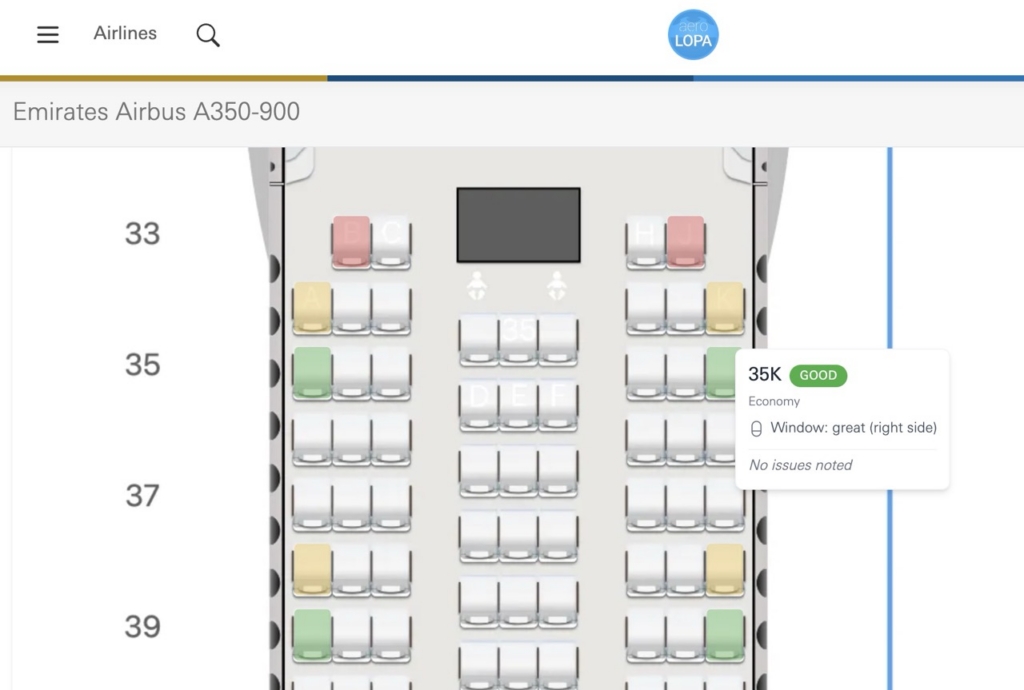
The aeroLOPA colour coding is simple, though you must switch on the “Seat Recommendations” feature near the top of the aircraft’s listing to see it:
- Red seats are ones to avoid, with known issues
- Yellow seats may have some disadvantages
- Green seats are exceptionally good
When you hover over a colour-coded seat, aeroLOPA provides details explaining its advantages or disadvantages.
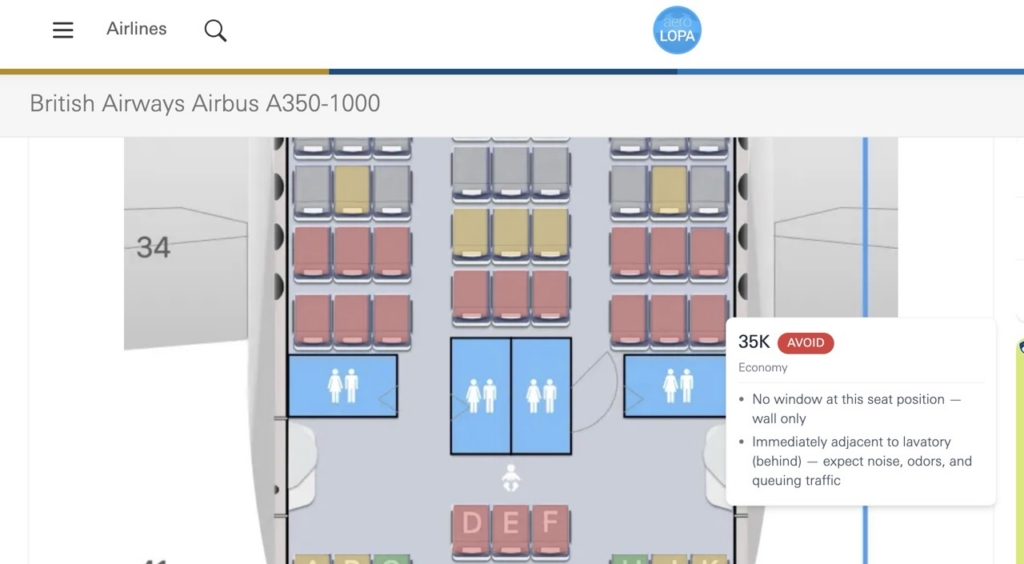
As an added feature for those who value their window view, aeroLOPA also provides a listing of the best window seats on the aircraft.
AeroLOPA also offers a rating for the quality of the in-flight WiFi, where installed. The speed of connections is reflected in bars under the WiFi details, ranging from one bar for basic connectivity, sufficient for messaging, to three bars for better connectivity that allows browsing and light streaming, to five bars for the most advanced in-flight connectivity that supports video calls and streaming.
Get more from aeroLOPA by registering as a user
If you closely track developments in aircraft interiors, aeroLOPA also provides details on the type of seat installed as well as other passenger experience elements, including in-flight entertainment equipment and power supply. To access this additional information, you need to register as a user with your email address, but registration is free.
Registered users can also help keep aeroLOPA accurate by sending suggestions to the site’s editors. Simply click “Suggest an update” at the bottom of any aircraft page.
You can also keep a quick-reference list of your favourite or most frequently flown aircraft by clicking on the heart to the right of the aircraft type in the LOPA header. Your list of saved aircraft is accessible in the drop-down menu of your user profile.
An added treat for AvGeeks
Avid aviation fans may enjoy perusing the website’s historic LOPA collection, which includes a selection of vintage seating diagrams for iconic retired aircraft. The British Airways collection includes the LOPAs for the 1959 BEA Vickers Viscount 800 and Concorde.
Does SeatMaps replace SeatGuru?
SeatMaps also follows the SeatGuru model, with colour-coded seat maps, basic seat dimensions, and crowd-sourced ratings. The site includes pictures and 360º panoramic views of the aircraft interior, for some airlines.
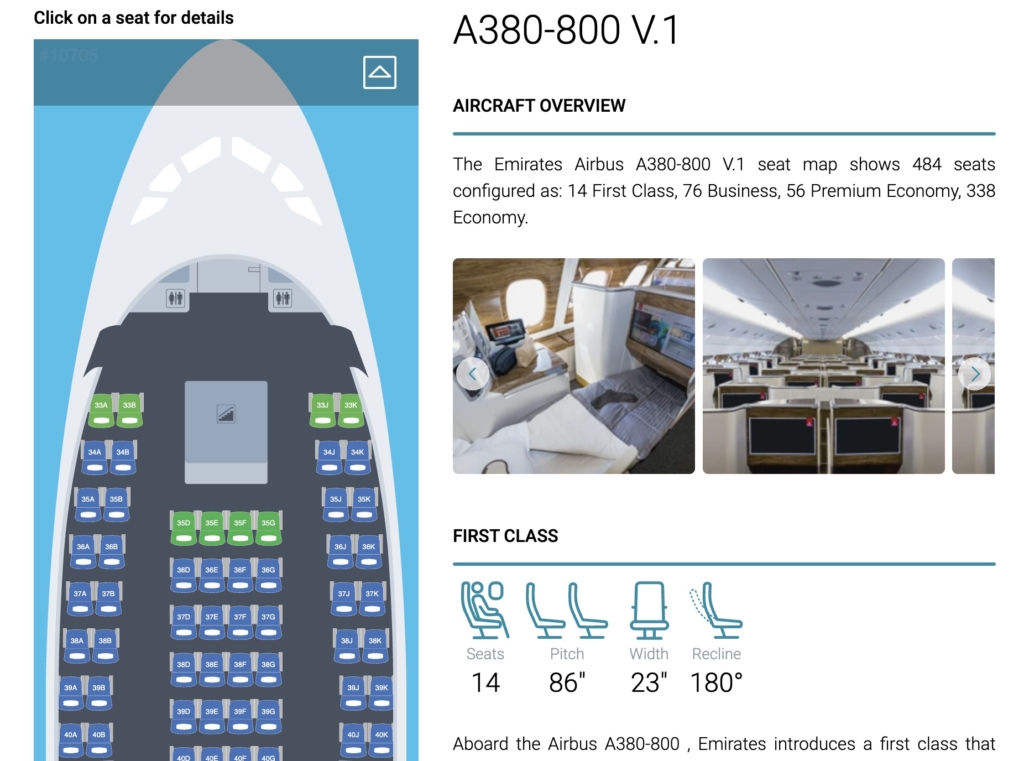
It doesn’t dive into all the cabin equipment details that AeroLOPA publishes (which appeals to those of us who track the aircraft interiors business closely). Still, it provides other information, including airline policies on baggage, pets, and the check-in process, which travellers might find helpful.
How do I find the exact aircraft operating my flight?
Always check the specific aircraft operating your flight before you head over to these sites, as they are organised by aircraft type. Most booking engines will list the aircraft type in the flight search result details. Keep in mind that seat maps vary; even on the same aircraft type, there can be multiple variants. Both sites provide seat maps of the variants.
How can I avoid a windowless window seat?
Aircraft windows are set at a specific separation for each aircraft, and some rows have wall panels in place of windows to hide necessary wiring and pipes. Since airlines adjust the interior of their aircraft in different ways, with a varying seat mix and seat separation, the seats do not always align exactly with the window. In rows with wall panels, there is no window by the window seat at all. In other cases, the window may be just slightly forward or behind the seat.
11A on @Ryanair last month. No window.
— Jayne (@sooperted) March 20, 2023
Seat 58 on @AvantiWestCoast today. No window ☹️🤦♀️🤦♀️🤦♀️🤦♀️😂😂😂😂 pic.twitter.com/CrQElAt8mz
Airlines try to avoid a large number of problematic window seats in their cabins and plan the cabin layouts carefully, but some compromises are inevitable. In its defence of a lawsuit from passengers, United Airlines expressly stated that ‘window seat’ merely refers to a seat’s placement on the LOPA and in no way guarantees a window.
Still, those to whom the pleasure of flying is essentially linked to the view of the skies can check the seat map in advance on either of the sites recommended and book with greater confidence.
SeatGuru’s demise isn’t the end of seat visibility for passengers
The shutdown of SeatGuru marked the end of a widely used travel tool that, for over two decades, shaped how flyers thought about seat selection. The good news for air travellers is that there are still resources available for seat map intelligence that offer greater accuracy, more up-to-date layouts, and richer insights.
Flyers who want to know what they’re getting before paying fees for seat selection can find plenty of information on all cabin classes, whether they check AeroLOPA.com, SeatMaps.com, or both.
It never hurts to double-check your seat before you book. Keep in mind that airlines may change equipment on the day of travel, so nothing is 100% guaranteed.
Whichever tool you choose, checking an aircraft seat map before paying for your seat selection can help you avoid unpleasant surprises and make the most of your flight.
Featured Image: Finnair
Sign up for our newsletter and get our latest content in your inbox.


More from

October 4, 20264 min read


