


Why do cabin crew sit on their hands during takeoff and landing?

3 min read
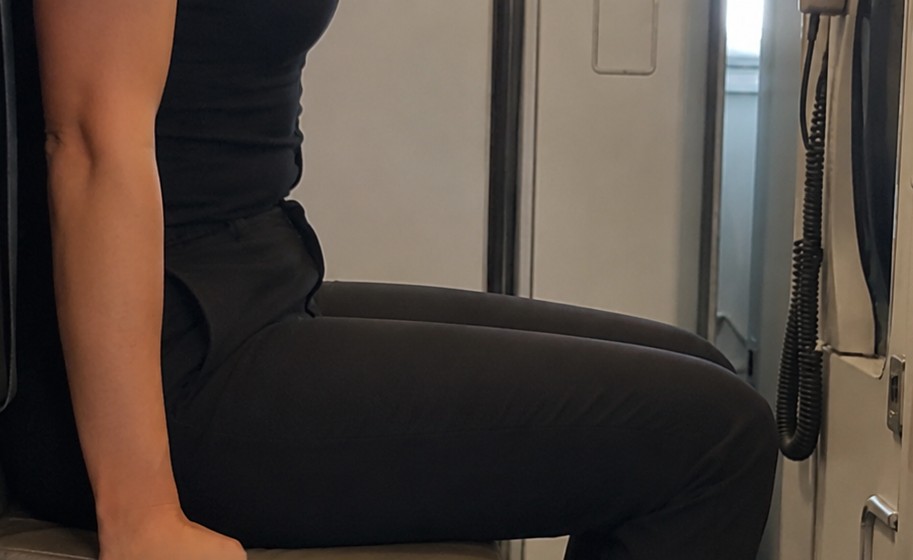
Your flight’s about to depart or land and you spot something curious. Cabin crew are strapped into their jump seats, sitting upright, with their hands tucked neatly under their thighs.
It can look a little unusual, like when children are trying really hard not to move. But actually, there’s a very good reason for it.
What is the cabin crew brace position?
The position is known within the industry as the “brace position” for cabin crew, and it’s part of the aviation safety procedures followed during the critical phases of flight – takeoff and landing.
While passengers are asked to sit upright, fasten their seatbelts and secure loose items, cabin crew are preparing for something else entirely: the unlikely event of an emergency.

Although flying remains one of the safest forms of transport, takeoff and landing are statistically when incidents are most likely to happen. For that reason, cabin crew adopt a posture designed to reduce injury and help them react quickly if something goes wrong.
How are hands and feet placed?
Sitting on their hands isn’t quite as simple as it sounds. Crew members place their hands flat, palms up, beneath their thighs while sitting upright with their feet firmly on the floor.
The exact position can vary slightly between airlines and aircraft types, but the principle remains the same. It’s basically about stability.
By securing their arms and hands, crew reduce the risk of flailing limbs if a sudden impact occurs. Injuries to the hands or arms could make it difficult to open emergency exits, operate safety equipment or help passengers during an evacuation.
In an emergency, those first few moments are crucial, so protecting the parts of the body needed to perform essential duties is a priority.
Cabin crew and the “silent review”
There’s also a mental aspect to the procedure. During takeoff and landing, cabin crew are not simply sitting and waiting. Many are silently reviewing emergency commands, evacuation procedures and aircraft-specific safety drills.
Sitting in the brace position can help them focus and prepare for any scenario, however unlikely.
This period is often referred to as “silent review”. It’s a final opportunity for crew members to mentally rehearse their actions should an emergency arise, from directing passengers to the nearest exit to managing an evacuation on the ground.
Heightened awareness
Cabin crew often describe takeoffs and landings as periods of heightened awareness. While passengers might be reading a book, scrolling through their phones or gazing out of the window, cabin crew are scanning for anything unusual. This could be an unexpected sound, smoke, a warning light, or signs that passengers may need assistance.
It’s a reminder that the role is about far more than serving drinks or welcoming passengers onboard. Cabin crew are trained safety professionals whose primary responsibility is the safety and wellbeing of everyone on the aircraft.
A small action for a big reason
So the next time you see a member of the cabin crew sitting on their hands before takeoff, you’ll know they’re not just trying to get comfortable. They’re following a carefully designed safety procedure, just in case the unexpected happens.
Most of the time, of course, nothing happens at all. And that’s exactly how everyone in aviation likes it.
Featured image: Emma Lewis


