


China now has two ways to recover rockets, and neither uses SpaceX-style chopsticks

8 min read
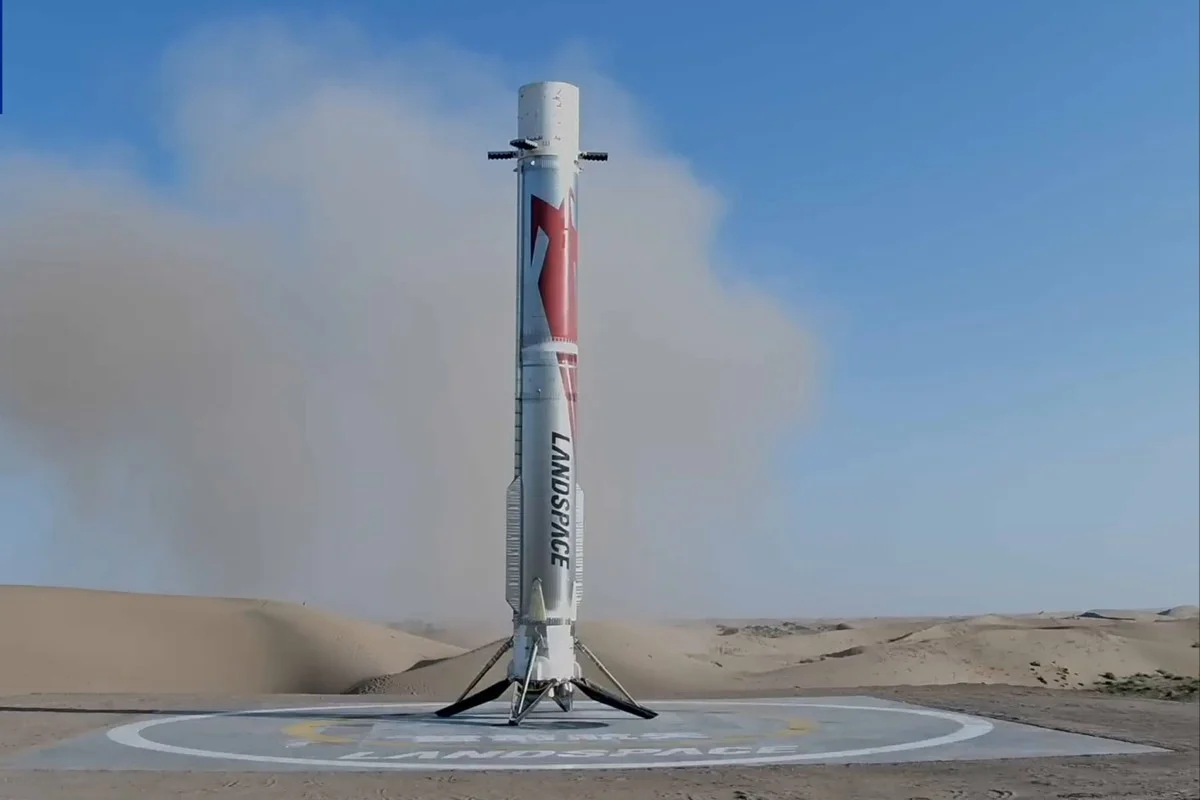
China’s commercial space sector has crossed another important milestone, with LandSpace successfully recovering the first stage of its Zhuque-3 rocket after placing a satellite into orbit.
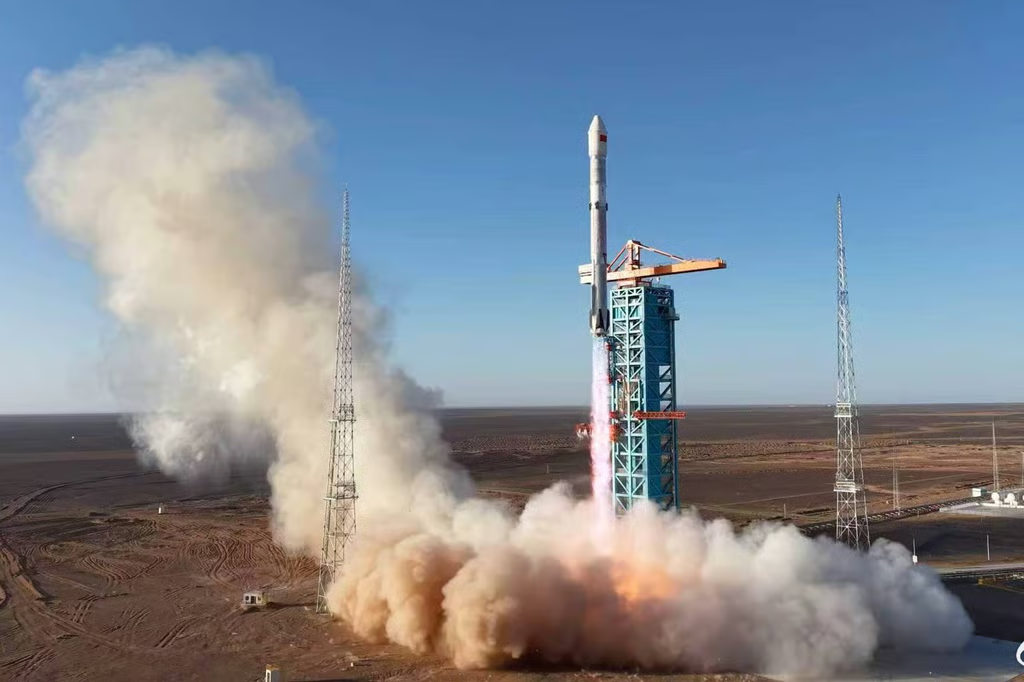
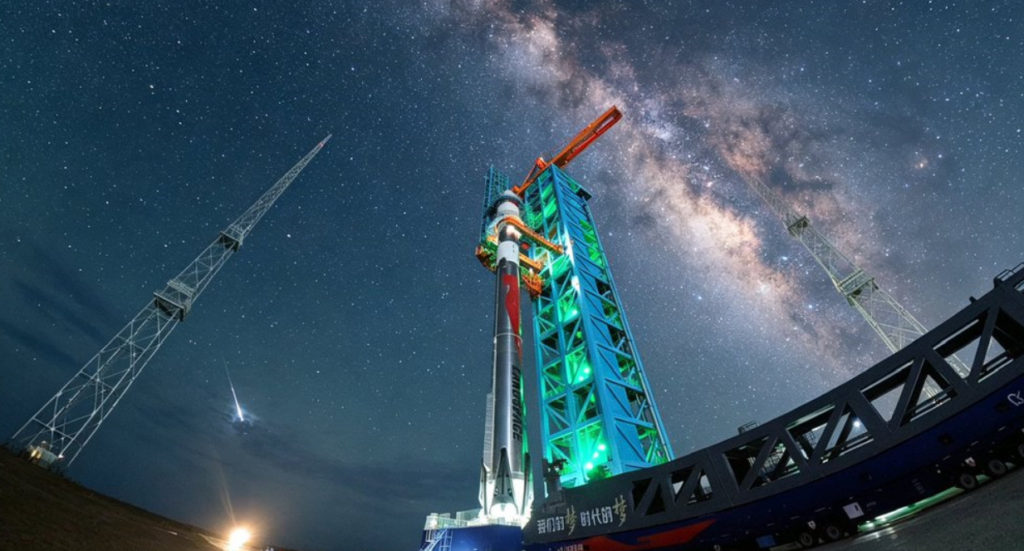
The 66.1-metre launcher lifted off on 19 August from the Dongfeng Commercial Space Innovation Pilot Zone in northwest China. Its upper stage delivered the Honghu-03 internet satellite into orbit, while the first stage reversed course and returned to a recovery site in Minqin County, Gansu province, touching down vertically on deployable landing legs.
MISSION SUCCESS | ZhuQue-3 Y2 Reusable Launch Vehicle Achieved Full Success in Orbital Insertion and First-Stage Recovery
— LandSpace (@LandSpace_Tech) August 19, 2026
On August 19, 2026, at 07:35 (UTC+8), the ZhuQue-3 (ZQ-3) Y2 reusable launch vehicle lifted off from the Dongfeng Commercial Space Innovation Pilot Zone.… pic.twitter.com/fshijOxgtc
The flight marks China’s first successful land-based recovery of an orbital-class booster using landing legs. It comes little more than a month after the country’s Long March-10B demonstrated a completely different recovery approach, using a net-equipped vessel to capture a descending booster at sea.
The Zhuque-3 uses a stainless-steel structure rather than the aluminium alloys more commonly associated with reusable orbital boosters. Chinese media have described yesterday’s event as the world’s first successful recovery of a stainless-steel booster following an orbital launch. That claim needs some qualification.
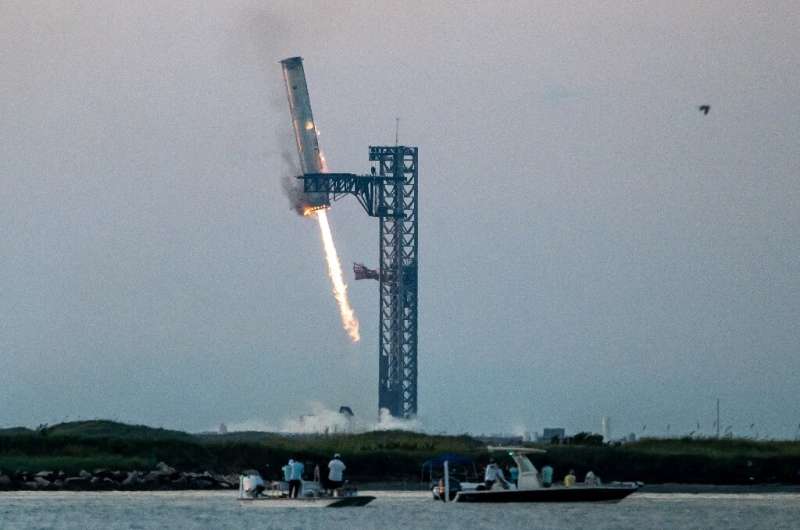
SpaceX’s much larger Super Heavy booster is also constructed primarily from stainless steel and was first caught by the mechanical arms of its Starbase launch tower in October 2024.
But Starship’s test programme and flight profiles differ from an operational satellite launch vehicle such as Zhuque-3, making simple “world first” comparisons problematic.
SpaceX itself described the October 2024 flight as a test aimed at demonstrating technologies required for a fully reusable system.
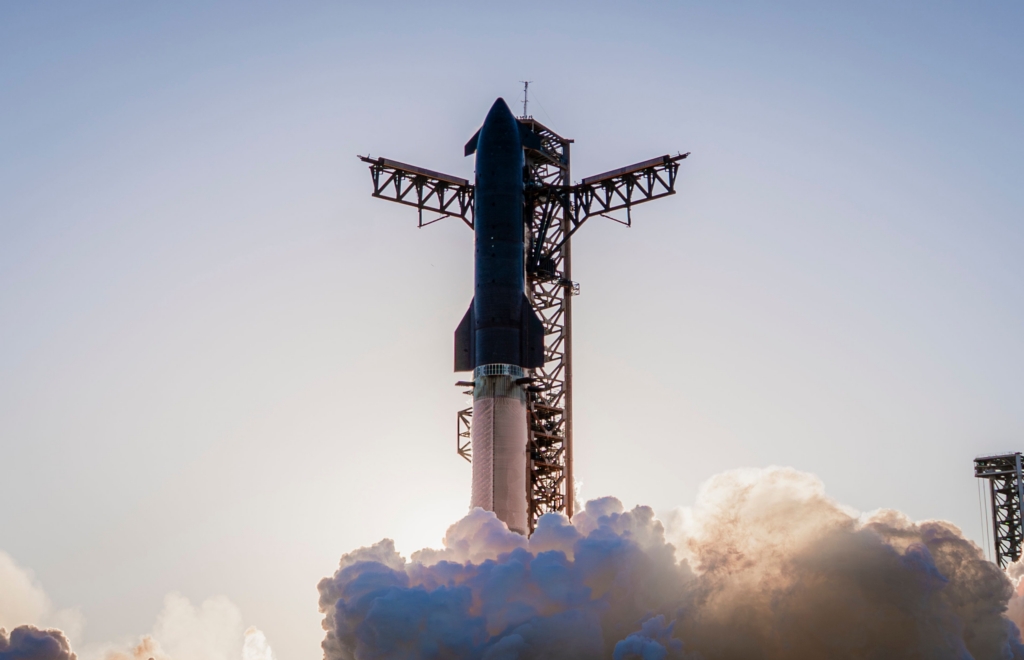
What is less ambiguous is what LandSpace has now achieved: it has put a payload into orbit and brought its stainless-steel first stage back intact for inspection and, eventually, another flight. And that second flight will matter far more than the landing itself.
How LandSpace achieved China’s first orbital booster landing on land
Zhuque-3 had tried this before.
Its maiden orbital flight in December 2025 successfully sent the second stage towards orbit, but the booster was lost during its final descent. Zhuque-3 project chief Dai Zheng subsequently told Chinese state broadcaster CCTV that the engine had failed to reignite as required when the stage was about 3km above the ground. CNN reported that the vehicle crashed near the landing area.
LandSpace went back to the drawing board.
For Wednesday’s second flight, the company reduced the number of engines used during the landing burn, modified its return-control strategy and improved the autonomous flight-termination system. Thermal protection was also strengthened to cope with the mechanical loads and heating encountered during re-entry.
This time the sequence worked.
After separating from the upper stage, the booster reoriented itself, conducted a re-entry burn, descended through the atmosphere and then performed its final landing burn. Its legs deployed shortly before touchdown.
“This mission marks China’s first-ever successful recovery attempt of the first stage of an orbital-class launch vehicle using landing legs, and China’s first successful booster recovery on land,” LandSpace said.
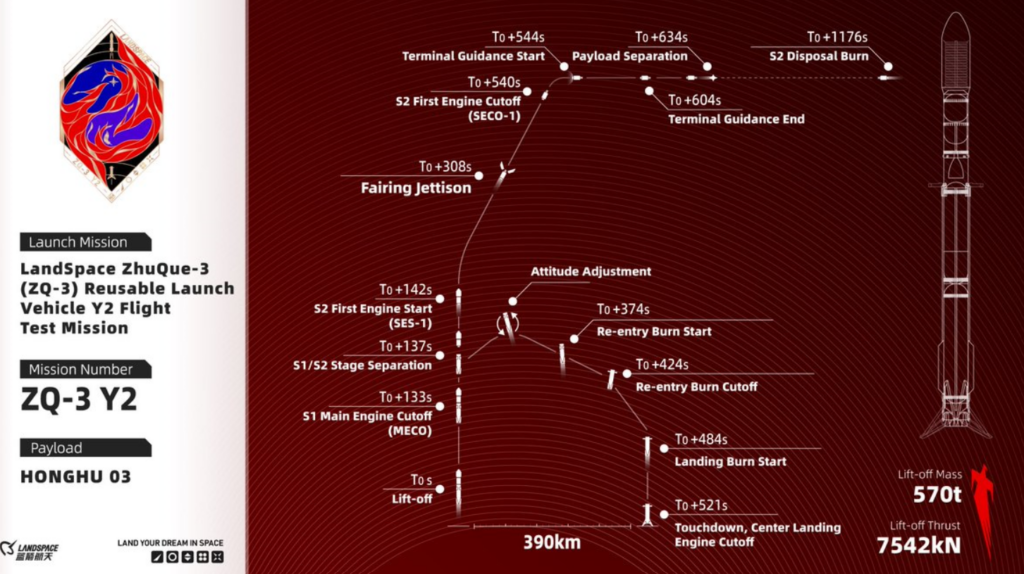
The company said the flight moved Zhuque-3 beyond technology demonstration towards the engineering phase of reusability.
Chinese foreign ministry spokeswoman Mao Ning called the flight a “historic breakthrough”, saying it paved the way for reusable Chinese rockets “both on the sea and on land”.
Why the Zhuque-3 rocket uses a stainless-steel design
LandSpace’s choice of material is one of Zhuque-3’s more interesting features.
SpaceX’s Falcon 9, the benchmark against which virtually every new reusable orbital launcher is measured, uses an aluminium-lithium alloy. Zhuque-3 instead has a stainless-steel primary structure.
Dong Kai, Zhuque-3’s deputy chief designer, has said stainless steel is cheaper, offers good heat resistance and is easier to weld than aluminium alloy.
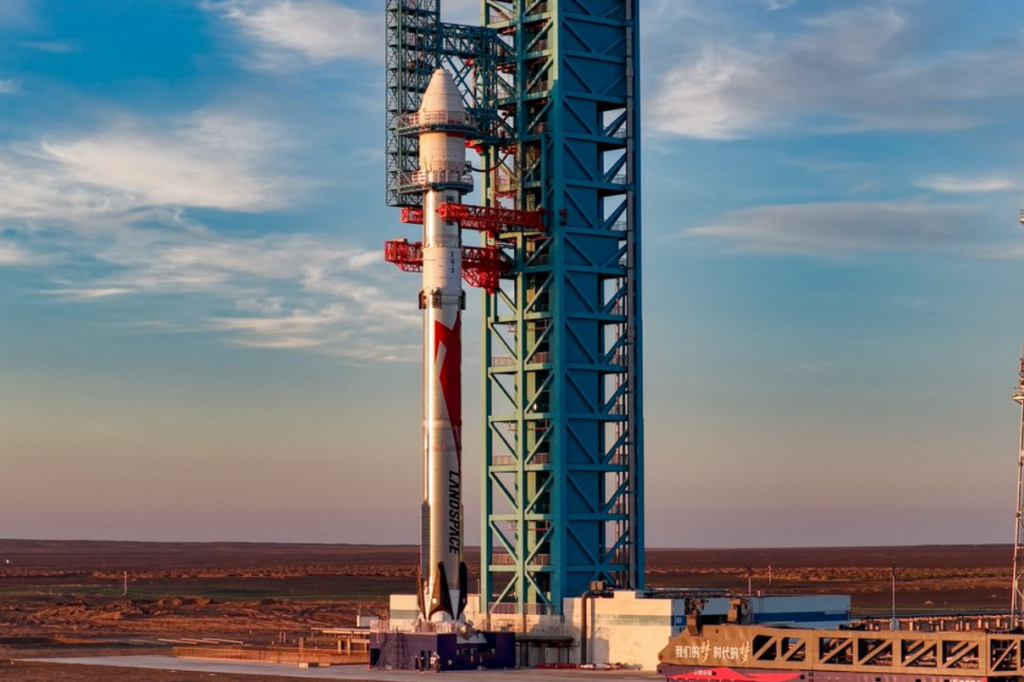
There are trade-offs. Stainless steel is relatively dense, so using it efficiently requires careful structural design. But a reusable rocket has different priorities from one that flies once and is discarded.
Resistance to heating, ease of manufacture and the ability to survive repeated flights can become as important as minimising structural mass.
Zhuque-3 is also powered by liquid methane and liquid oxygen, another choice made with reuse in mind. Methane burns relatively cleanly compared with kerosene, potentially reducing deposits inside engines and easing some maintenance between flights.
LandSpace says reusability was designed into the rocket from the beginning, including its propulsion, return controls, stainless-steel structure and ground-support system.
China now has two very different ways of bringing boosters home
The Zhuque-3 landing comes barely a month after China demonstrated a very different recovery system.
On 10 July, the state-developed Long March-10B flew from the Hainan Commercial Space Launch Site. After placing its payload into orbit, its first stage descended towards a recovery vessel in the South China Sea.
It did not have landing legs.
Instead, hooks deployed from the booster engaged tensioned steel cables on a purpose-built vessel. A hydraulic damping system absorbed the remaining energy and the stage was secured aboard the ship. Chinese state media described it as the world’s first successful net-based recovery of an orbital-class booster.
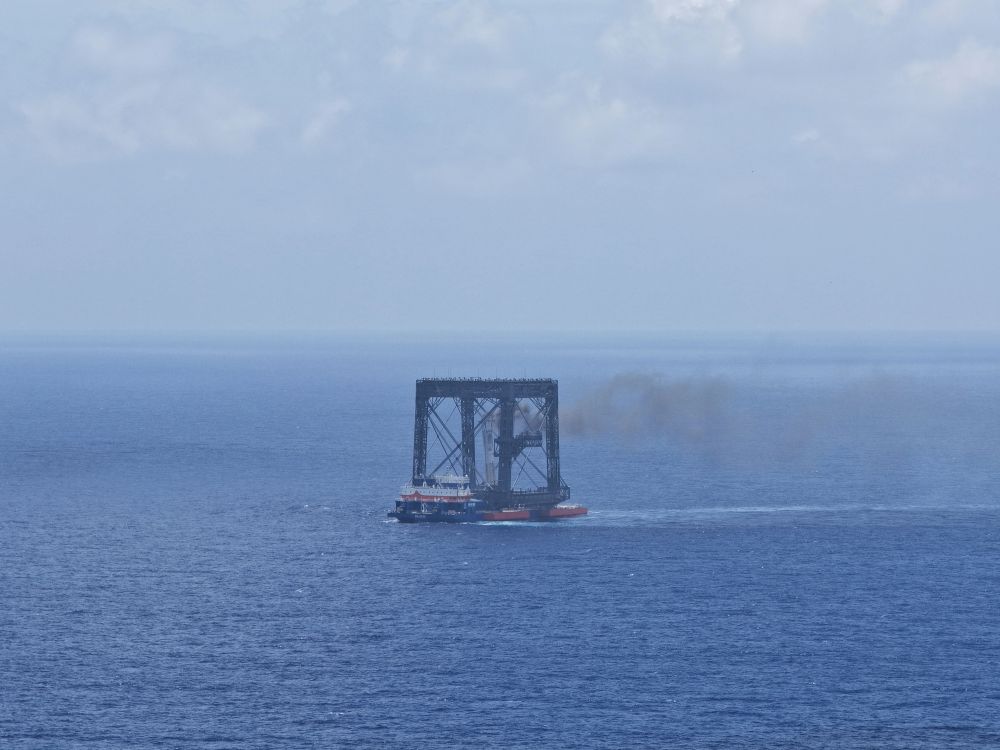
That means China’s two successful orbital-booster recoveries have followed different engineering routes.
The state-owned China Aerospace Science and Technology Corporation’s Long March-10B transfers some of the recovery hardware from the rocket to the ship. LandSpace’s Zhuque-3 carries landing legs and returns to solid ground, much closer to the approach established by Falcon 9.
There are advantages and penalties to both.
Removing landing legs saves weight on the rocket, potentially freeing capacity for payload or propellant. But it requires an elaborate recovery vessel and places a premium on guiding a descending booster accurately into a relatively small capture structure at sea.
Landing legs add weight to the vehicle but allow the booster to return to a conventional pad.
China is now developing experience with both.
The benchmark remains Falcon 9
For all the significance of the two Chinese recoveries, SpaceX remains far ahead in the part of reusability that ultimately counts commercially: doing it repeatedly.
Falcon 9 first stages routinely return either to land or to autonomous drone ships and are then flown again. Individual boosters have accumulated numerous missions. That experience has allowed SpaceX to combine recovery with a launch cadence that no other orbital launch provider currently matches.
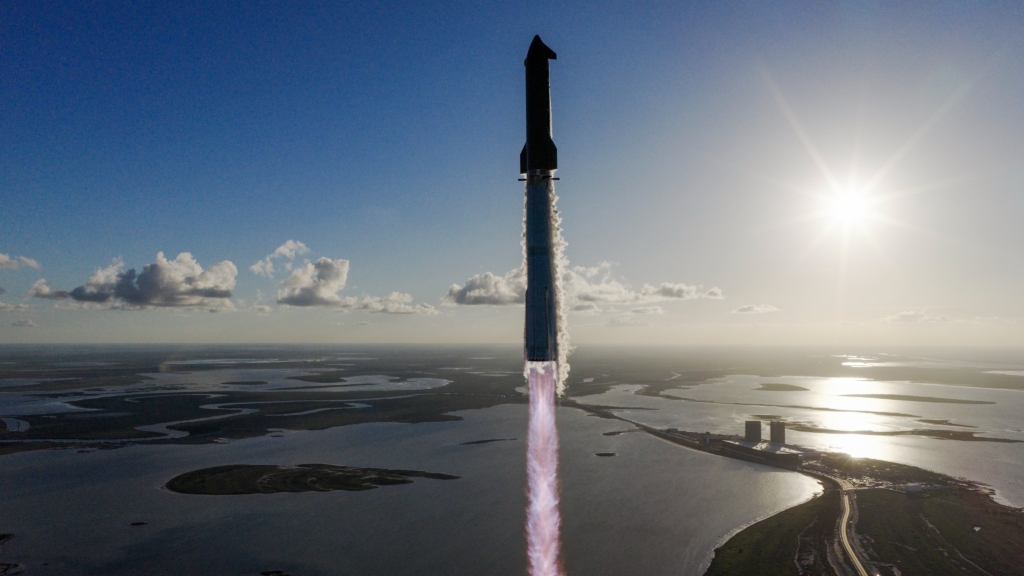
SpaceX is simultaneously pursuing a different solution for Starship.
Super Heavy does not use conventional landing legs. On Starship’s fifth flight test in October 2024, the booster returned directly to Starbase, where two mechanical arms on the launch tower caught it in mid-air. SpaceX said thousands of vehicle and launch-pad criteria had to be satisfied before controllers committed to the catch.
The comparison is useful because it shows there is no settled answer to the question of how reusable rockets should return.
Falcon 9 lands on legs. Super Heavy can be caught by a tower. Long March-10B has demonstrated a sea-based cable-and-net system. Zhuque-3 has now returned to land on legs.
The engineering is different. The objective is the same: stop throwing away the most expensive part of a rocket after every flight.
Reuse could unlock China’s satellite ambitions
For China, there is considerable urgency behind that objective.
Beijing is building large broadband constellations including Guowang and Qianfan, both ultimately envisaged as networks numbering thousands of satellites. Their deployment requires not simply powerful rockets but a sustained stream of launches.
China has built formidable launch capacity, but it has lacked an operational reusable workhorse comparable with Falcon 9.
Zhuque-3 and Long March-10B are attempts to close that gap.
The two vehicles are broadly in the same payload class. In expendable configuration, Zhuque-3 is designed to carry about 21 tonnes to low Earth orbit, while Long March-10B can lift about 22 tonnes. Recovery reduces those figures to roughly 18 tonnes and 16 tonnes respectively.
LandSpace wants to move quickly. South China Morning Post quoted Dong Kai, the rocket’s deputy chief designer, telling the LatePost news that the company hoped eventually to launch Zhuque-3 about 10 times a year and wanted to reuse recovered stages as soon as possible.
That ambition is also tied to the company’s finances.
LandSpace filed earlier this year for an initial public offering on Shanghai’s STAR Market, seeking to raise around 7.5 billion yuan (about $1 billion). It said the proceeds would support reusable-rocket development and production expansion. The company remains loss-making while the Zhuque family moves from development towards higher-volume commercial operations.
Landing it once is not the finish line
There is an important distinction between recoverable and reusable.
China has now shown that two orbital-class boosters can be brought back intact using two different methods. Neither programme has yet demonstrated the routine cycle that made Falcon 9 transformative: launch, recover, inspect, refurbish, refly and then do it again.
That is the real test awaiting Zhuque-3.
LandSpace says Wednesday’s recovery will allow engineers to inspect the vehicle and develop maintenance and refurbishment procedures ahead of future reflights.


