How cabin lighting affects jet lag, relaxation and even your sense of taste

3 min read
Most of us step onto an aircraft, find our seats and push our bags into the overhead locker without paying much attention to the cabin lighting.
Airlines, however, never do anything by accident.
Those shifting colours and dimmed lights are carefully timed to help passengers sleep, wake up and generally feel less exhausted after long-haul flights. Cabin lighting is fast becoming a key part of the onboard experience.
The evolution of cabin lighting
For years, aircraft cabins relied on fluorescent lighting designed mainly for visibility and practicality rather than passenger wellbeing.
But the latest Boeing 787 and Airbus A350 models are now being fitted with programmable LED systems capable of changing colour temperature and brightness throughout a flight.
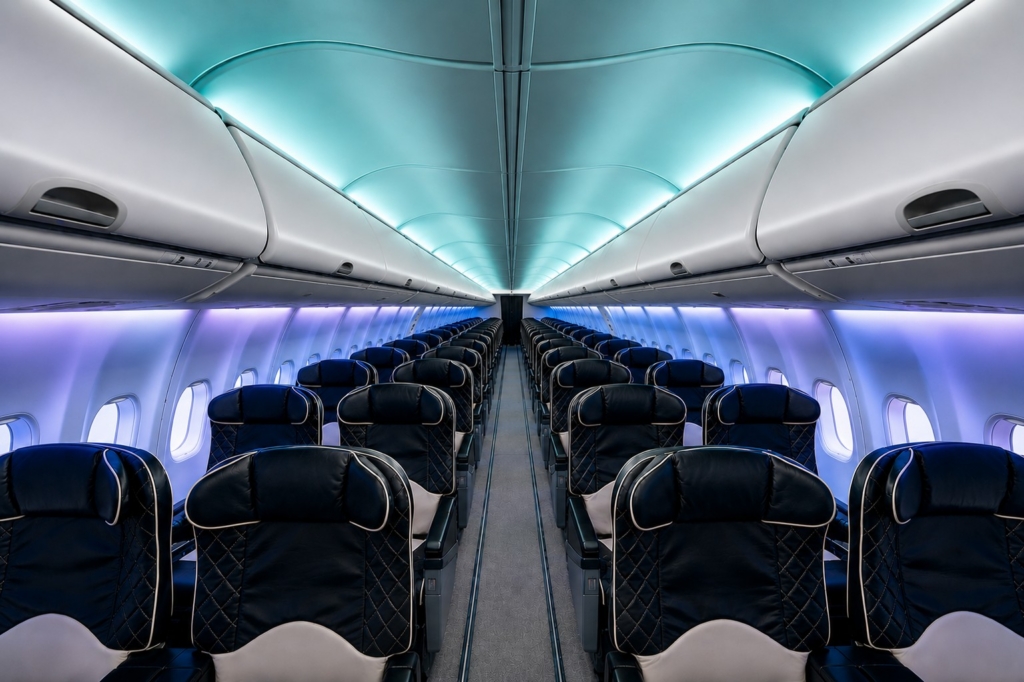
One designer is Cobalt Aerospace, which has been steadily evolving its Spectrum LED Mood Lighting products since 2015.
Devised as a plug-and-play replacement for fluorescent tubes, the system allows airlines to upgrade to full-colour LED lighting without major aircraft modifications or rewiring.
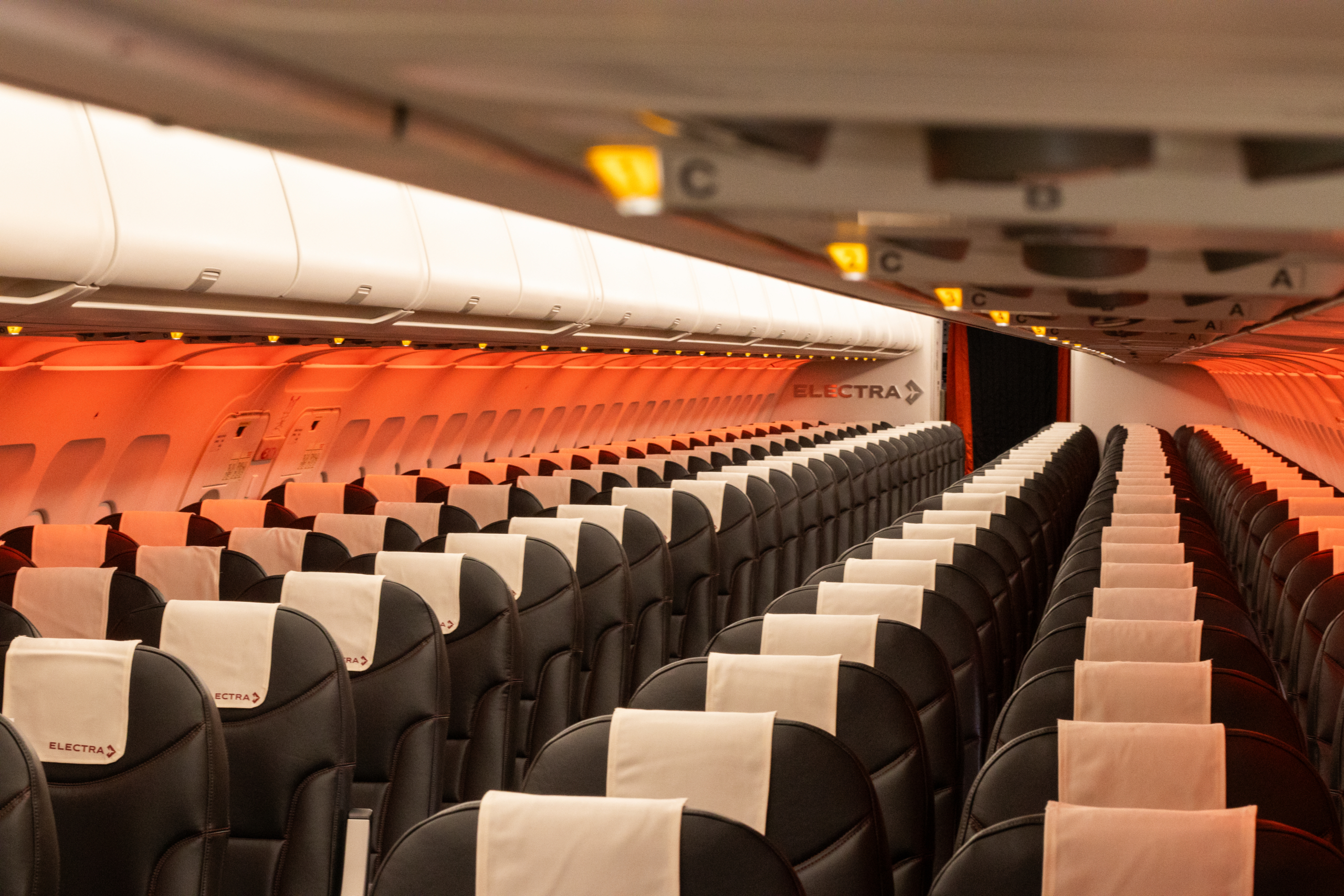
Each lighting unit communicates with the next to create a fully programmable cabin environment. Warm amber tones can encourage relaxation, while cooler blue-white lighting helps stimulate alertness.
Carefully timed lighting changes may also support passengers’ circadian rhythms, the body clock that regulates sleep and wakefulness.
“Using lighting to support circadian rhythm alignment is one of the most powerful ways light can be used to enhance passenger wellbeing,” said Dan Rust, Head of Design at Cobalt.
“The ability to influence how passengers feel, helping reduce fatigue and offset the effects of jet lag, delivers obvious benefits that extend far beyond the flight itself.” Systems like Cobalt Spectrum also reduce power consumption, minimise maintenance requirements and can often be installed during a single maintenance shift, making them commercially attractive as well as passenger-friendly.
Can cabin lighting really reduce jet lag on long-haul flights?
Jet lag remains one of the biggest frustrations of long-haul travel. Crossing multiple time zones disrupts melatonin production, often leaving travellers groggy and unable to sleep properly for days.
Cabin lighting clearly can’t get rid of jet lag completely, but studies suggest it can help reduce its effects by gradually guiding the body towards a new time zone.
Airlines including Qatar Airways, Emirates, Singapore Airlines and Virgin Atlantic now use lighting sequences that mimic natural sleep and sunrise patterns by adjusting brightness and colour temperature throughout the flight.
Overnight eastbound services may dim earlier and gradually introduce warmer sunrise tones before landing, while daytime flights often use brighter lighting to help passengers stay awake.
The role of mood lighting in passenger comfort
Lighting also has a strong psychological effect. Soft lighting can make cabins feel calmer and less clinical, particularly during overnight sectors. Designers increasingly see lighting as part of a wider sensory experience alongside quieter cabins, improved air systems and more ergonomic seating.
Some airlines, including Finnair and Qantas, are even experimenting with immersive biophilic-inspired scenes that recreate natural phenomena such as the Northern Lights.
“Aircraft cabins are no longer designed purely around function,” Rust added.
“Airlines are recognising that wellbeing, relaxation, and emotional comfort are essential parts of the passenger journey, and lighting can play a pivotal role in them achieving that.”
How can cabin lighting affect the taste of airline food?
Recent research has also explored how lighting affects taste perception. At cruising altitude, low humidity and cabin pressure actually reduce sensitivity to sweet and salty flavours, helping explain why airline food often tastes blander than expected.
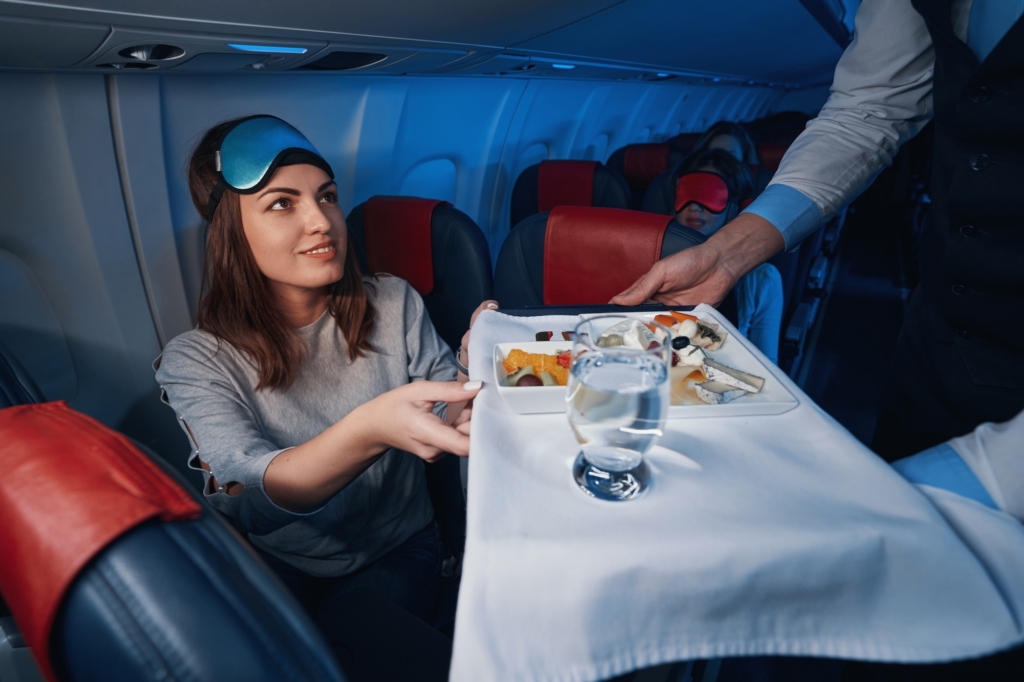
Lighting may influence that experience further. Different lighting scenes during meal services can subtly shape how passengers perceive flavour intensity and texture.
Warmer tones are often linked with sweetness and richness, while cooler lighting may make food appear fresher.
While mood lighting will not transform economy travel into a luxury retreat, airlines are seeing it more and more as a practical way to improve passenger comfort. After all, sometimes the smallest, least obvious things make the biggest difference.
Featured image: Cobalt Aerospace