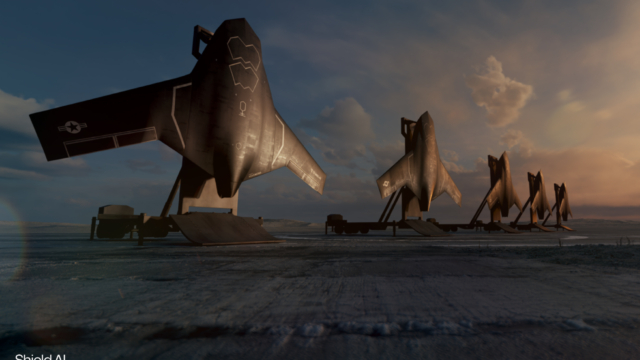
Saab’s A3-001 unveiled as Gripen wingman as collaborative combat aircraft race gathers pace

7 min read
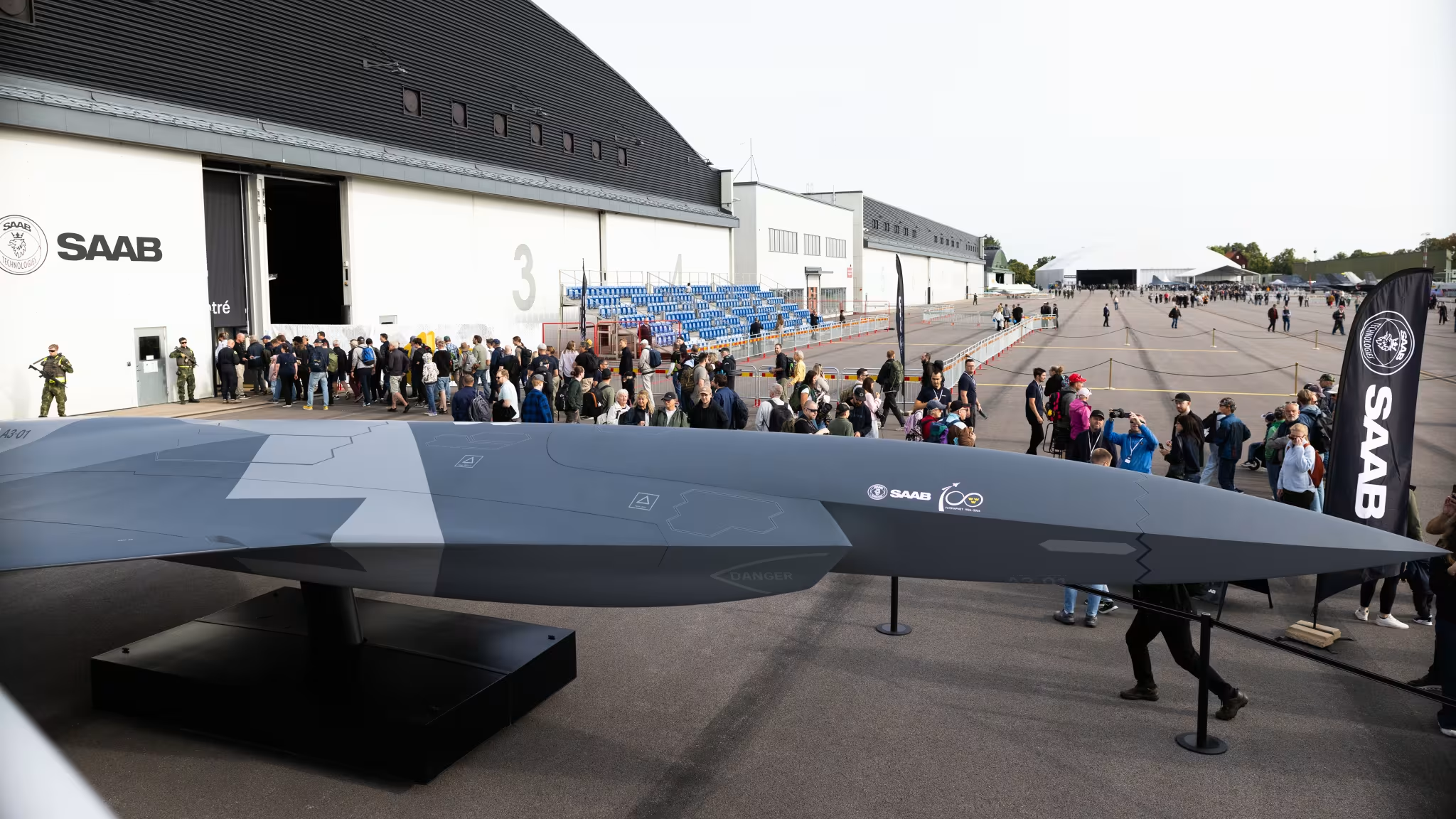
Saab has unveiled a full-scale model of a new uncrewed combat aircraft designed to operate alongside the Gripen, putting Sweden into an increasingly crowded race to develop autonomous partners for crewed fighters.
Called A3-001, the low-observable aircraft was shown publicly at the Swedish Armed Forces’ Jubilee Air Show at Malmen Air Base in Linköping on 22 August. Saab envisages it taking on some of the jobs commanders may be reluctant to give a crewed fighter, including electronic warfare, suppression of enemy air defences and precision strikes in heavily contested airspace.
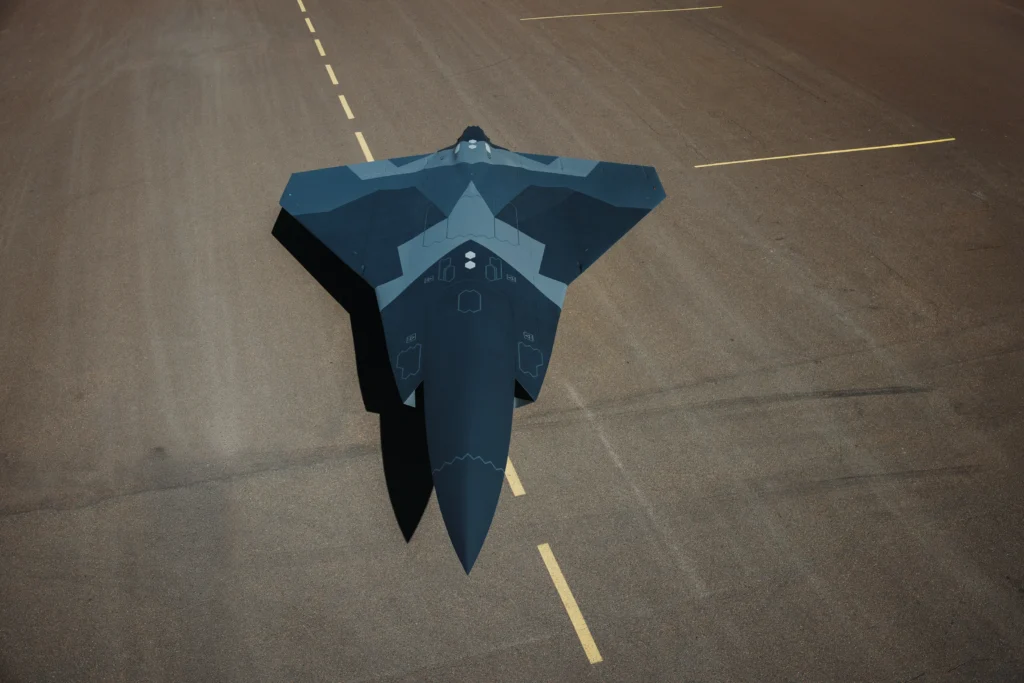
For now, A3-001 is a concept rather than a flying aircraft. Saab says it intends to fly uncrewed demonstrators with fighter-like characteristics before 2030. The A3 system unveiled at Malmen represents what could follow in the mid-2030s if Sweden decides to take the programme further.
That puts Saab behind aircraft such as Boeing’s MQ-28 Ghost Bat in terms of maturity, but alongside a rapidly growing European field that now includes BAE Systems’ Brontanax and Airbus’ U760 Ravenstorm.
The differences between them are becoming as interesting as the similarities.
Saab sees A3-001 as an autonomous partner for Gripen
A3-001 is intended to complement Gripen and whatever crewed combat-air capabilities Sweden eventually operates beyond it, rather than replace the fighter.
Saab describes the aircraft as low observable, highly autonomous and capable of operating across multiple domains. It has not disclosed its range, speed, payload, engine or weapons capacity, making direct performance comparisons with rival designs impossible at this stage.

The principle behind it is clearer. A crewed fighter would remain the decision-making centre while autonomous aircraft could be sent farther into contested airspace to find targets, jam radars, attack air defences or carry out strikes.
“We intend to fly uncrewed demonstrators with fighter-like characteristics before 2030,” said Peter Nilsson, head of Saab’s Advanced Programs business unit.
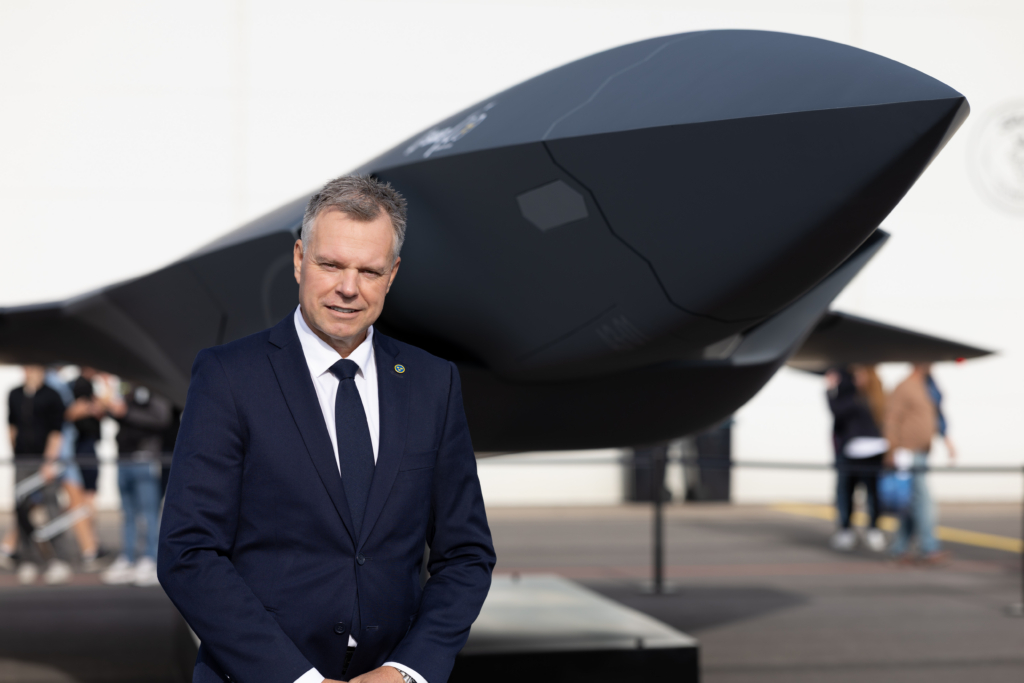
Nilsson said A3 is Saab’s concept for what could follow in the mid-2030s as Sweden weighs its future combat-air options.
The timing is significant. Collaborative Combat Aircraft (CCA), once usually discussed under the looser “loyal wingman” label, are moving quickly from PowerPoint concepts towards hardware.
Australia’s Ghost Bat has a substantial head start
The Boeing MQ-28 Ghost Bat provides perhaps the clearest comparison because Australia has been developing the aircraft specifically around human-machine teaming for several years.
Unlike A3-001, Ghost Bat is already flying.
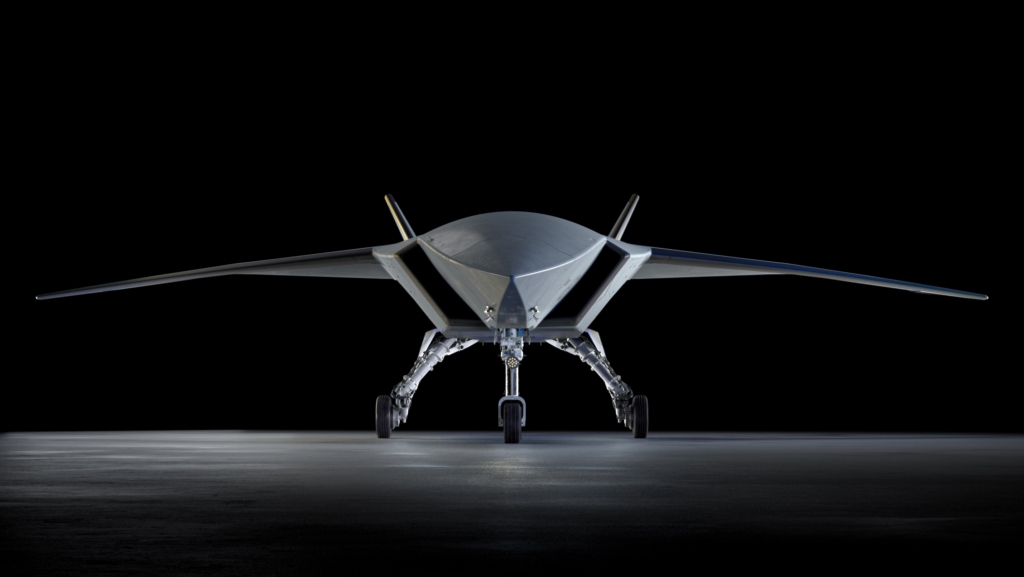
Developed by Boeing Australia with the Royal Australian Air Force, the aircraft is intended to operate alongside crewed platforms while carrying different mission payloads. Australia describes it as a pathfinder for integrating autonomy and artificial intelligence into human-machine teams.
It also has one major specification that Saab has not yet provided for A3-001: range.
The RAAF puts Ghost Bat’s range at more than 3,700km, giving an indication of the distances Australia expects autonomous aircraft to cover across the Indo-Pacific. More than 35 Australian companies have contributed to the programme, which is also the first military combat aircraft designed, engineered and manufactured in Australia in more than half a century.
The Australian programme has increasingly shifted from proving that an autonomous aircraft can fly towards demonstrating how useful it can be alongside other aircraft.
That maturity gives Ghost Bat an obvious advantage over newer European entrants. Saab, however, is developing A3-001 around a different geography and an established Swedish combat-air ecosystem centred on Gripen.
Britain wants Brontanax flying next year
BAE Systems has meanwhile moved quickly with Brontanax, Britain’s first domestically designed autonomous CCA.
Unveiled at the Farnborough International Airshow in July, Brontanax is being developed at BAE Systems’ Warton site in Lancashire. More than 500 employees and over 75 British companies have been involved in the programme.
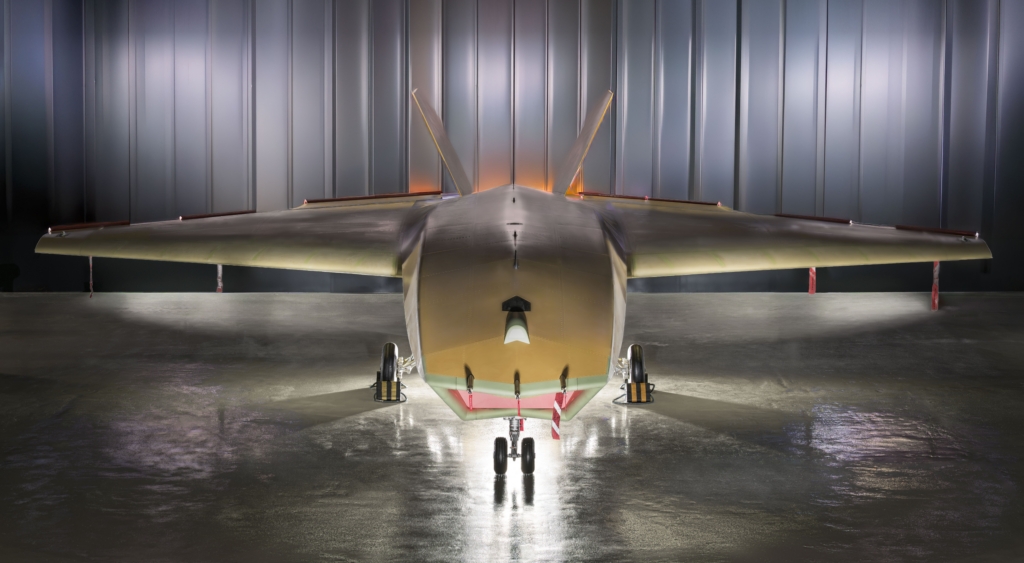
Roughly comparable in size to a Hawk trainer, Brontanax is intended to provide electronic-warfare and precision-strike capability against air and ground targets. BAE Systems is pitching it as its answer to the Royal Air Force’s StormFighter CCA programme.
Its timetable is ambitious.
Power-up of the prototype is planned this year, followed by ground trials during the first half of 2027 and first flight in the second half. If selected by the RAF, the aircraft is intended to achieve an initial operational capability before 2030.
That puts Brontanax on a faster publicly stated path than Saab’s A3 system.
It is also being developed with the UK’s longer-term combat-air plans in mind. A CCA that initially operates alongside Typhoon could ultimately form part of a wider force built around the crewed fighter being developed through the UK-Italy-Japan Global Combat Air Programme.
The British government has committed £300 million ($410 million) to StormFighter, while BAE says Brontanax uses an open, modular architecture intended to allow the aircraft to evolve as missions and threats change.
Airbus is taking a two-aircraft route to autonomous combat
Airbus is following yet another path.
Instead of waiting for its own clean-sheet European CCA, it plans first to put an existing American aircraft into German service.
The U740 Valkyrie is based on Kratos’ XQ-58A Valkyrie but will receive Airbus’ Multiplatform Autonomous Reconfigurable and Secure, or MARS, mission system. Airbus is targeting an operational capability for the German Air Force by 2029, initially including air-to-ground missions and teaming with Eurofighter. The first two aircraft acquired for the programme are due to make their initial flights later in 2026.
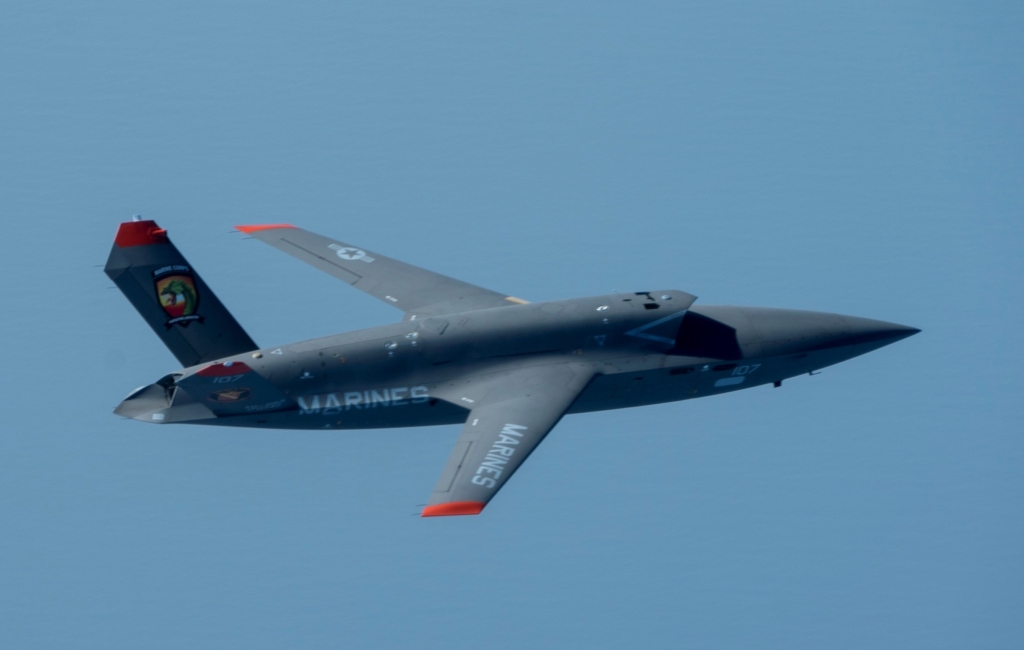
That is effectively the bridge.
Behind it sits Airbus’ larger U760 Ravenstorm, unveiled at ILA Berlin in June.
At 13 metres long with a 10-metre wingspan, Ravenstorm is intended to undertake precision air-to-surface strikes, air-to-air missions with medium- and long-range missiles, electronic warfare, suppression of enemy air defences and offensive counter-air missions using non-kinetic jamming. Airbus is aiming for availability in the early 2030s.
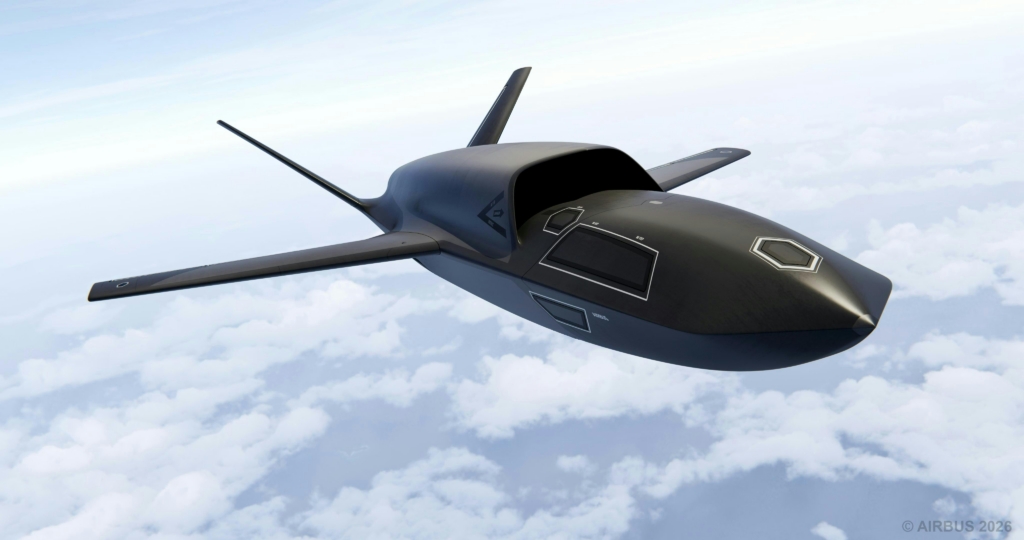
Both aircraft are intended to use MARS. The mission software is important because Airbus sees CCAs as aircraft that are tasked rather than remotely flown. A pilot might order one to scan a particular area, for example, leaving the autonomous aircraft to calculate its route, operate its sensors and return the information without requiring continuous control.
That distinction increasingly defines the CCA concept.
The US is already moving towards production
Europe is accelerating, but the United States remains further ahead in turning the concept into an operational force.
In June, the US Air Force awarded engineering, manufacturing development and production contracts for its first CCA increment to General Atomics’ FQ-42 and Anduril’s FQ-44. Both designs had already flown, and the Air Force plans to acquire 150 Increment 1 aircraft by the end of the decade.

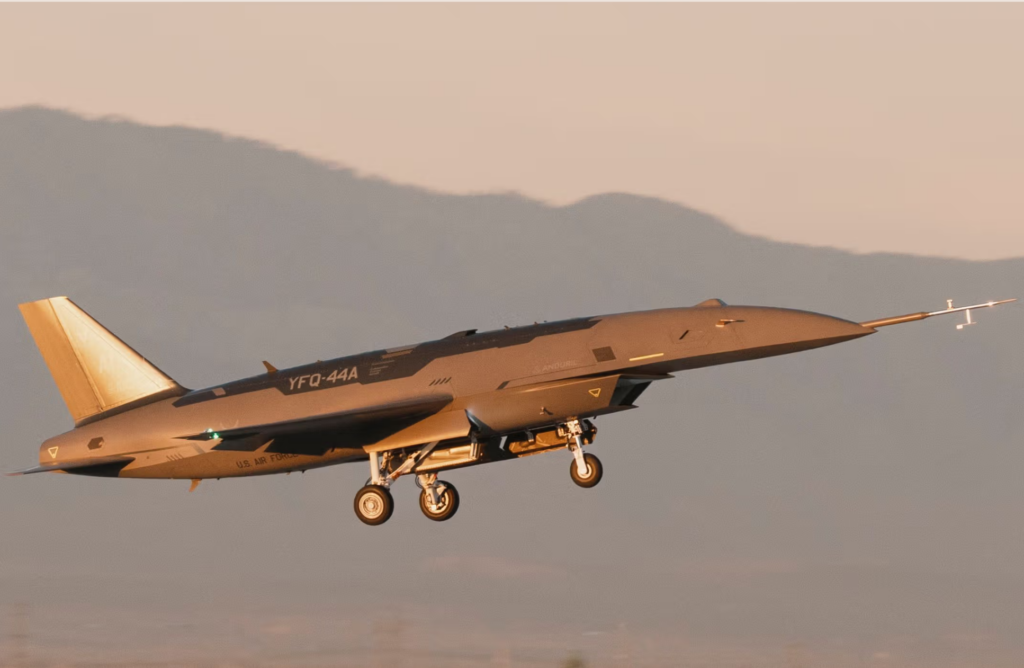
The programme is also deliberately separating the aircraft from the software that gives it autonomy. Six companies are competing to provide mission-autonomy software, allowing the Air Force to avoid tying the “brain” of its CCA fleet permanently to one airframe manufacturer.
That is an important distinction as European programmes take shape. The competition is no longer simply about who builds the best unmanned aircraft. Mission software, secure communications, sensors, weapons integration and the ability to continue operating when links to a crewed fighter are disrupted may prove just as important as the airframe itself.
Saab joins a CCA race with no single winning formula
What is emerging is not one standard loyal-wingman design.
Australia has Ghost Bat, a long-range aircraft already deep into development and intended for the distances of the Indo-Pacific.
Britain’s Brontanax is being pushed towards a first flight in 2027 and possible service before the end of the decade. Airbus is using the Valkyrie to get autonomous capability into German hands earlier while developing the larger Ravenstorm for the 2030s.
The US has gone further, selecting two competing aircraft for production while separately developing their autonomy software.
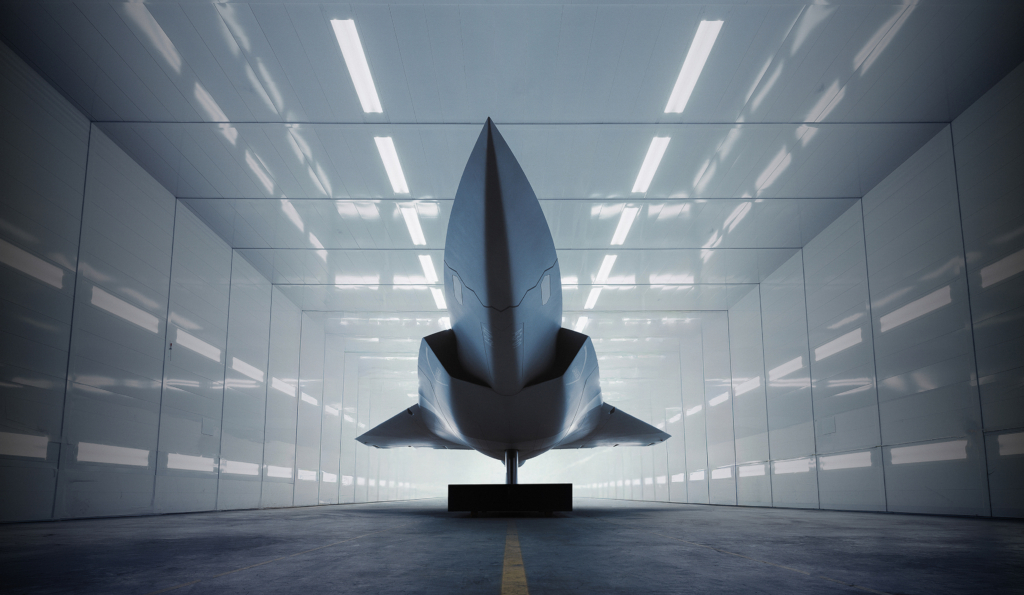
Saab is arriving later with A3-001, but it brings something different: decades of experience building Gripen around dispersed operations, electronic warfare and tightly integrated combat networks. Its challenge now is turning the full-scale aircraft displayed at Malmen into something that flies.