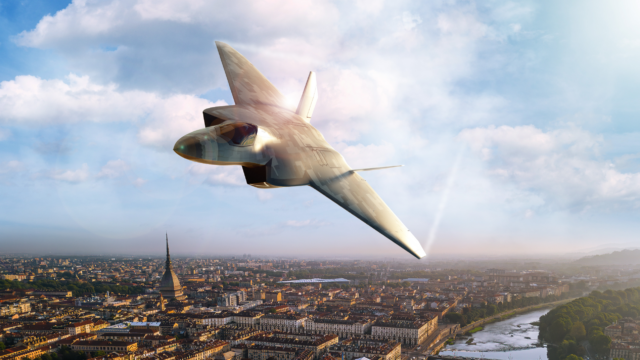
Brontanax: Britain’s first autonomous CCA unveiled by BAE Systems

5 min read
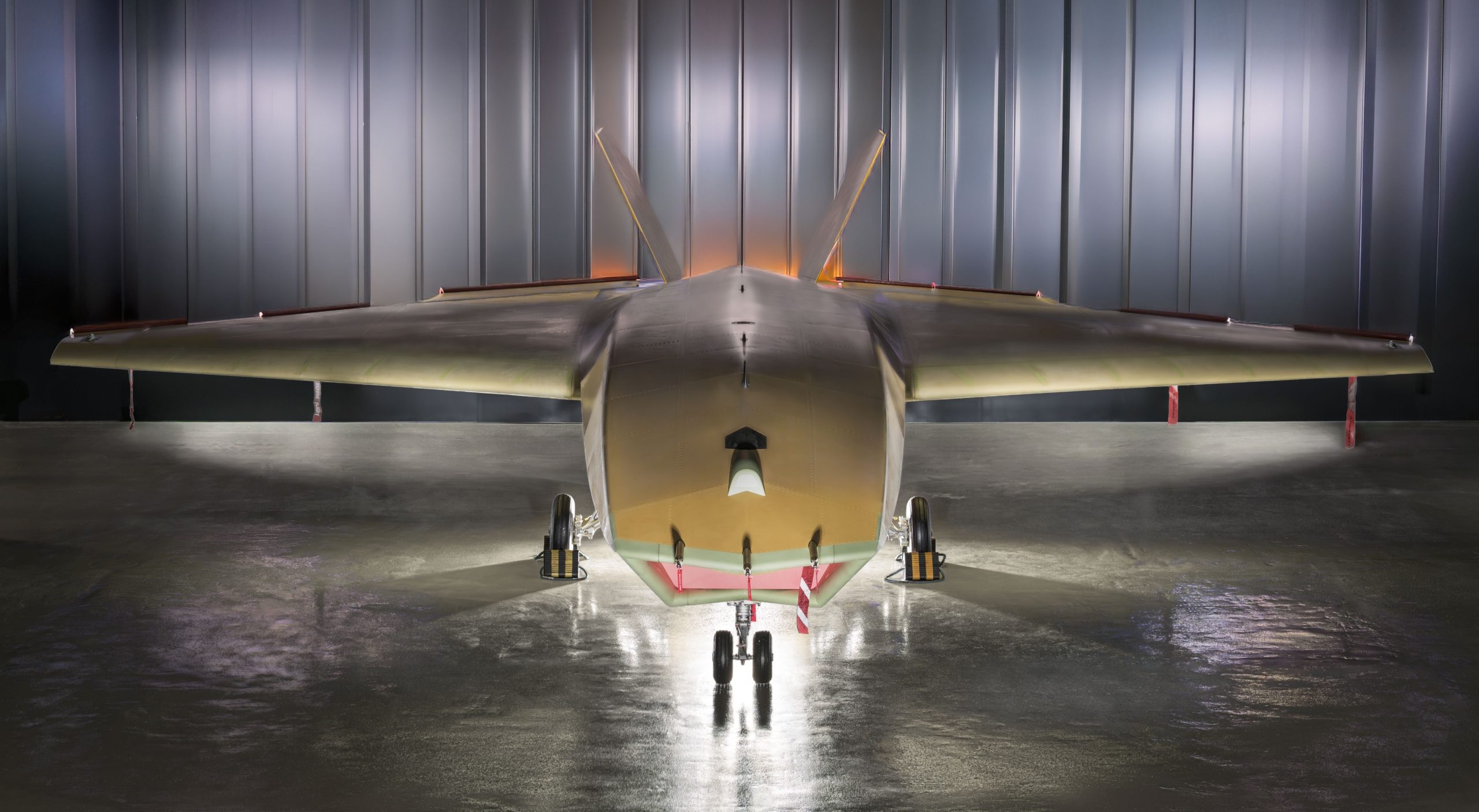
BAE Systems unveiled Brontanax – the UK’s first uncrewed autonomous Collaborative Combat Aircraft (CCA) – during the third day of the Farnborough International Airshow (FIA) on 22 July.
This unveiling comes amid a growing focus on the rapid development and fielding of CCAs to facilitate greater Crewed-Uncrewed Teaming (CUC-T) – also known as Manned-Unmanned Teaming (MUM-T) – operations and to significantly increase air combat mass over the future battlespace.
The modular, uncrewed platform, which is roughly the size of a Hawk jet trainer has been rapidly developed for use by the Royal Air Force (RAF) and will complement both existing fast-jets (such as the Eurofighter Typhoon and F-35B Lightning II) and future crewed combat aircraft (namely Tempest) to deliver greater airpower capabilities at low cost.
The future of combat air is here.
— BAE Systems (@BAESystemsplc) July 22, 2026
Today we unveiled the UK’s first British-designed Collaborative Combat Aircraft at @FIAFarnborough.
Built in Britain. Ready for the fight 🔗 https://t.co/6ERLuSAUep pic.twitter.com/KBMbb4Yd82
In a press release, BAE Systems said: “The first-of-its-class CCA – named Brontanax – is intended to provide electronic warfare (EW) and precision strike capabilities against airborne and ground targets…
“Operating with frontline combat aircraft, such as Typhoon, it will enhance combat mass and operational effectiveness, with planned availability to enter service before the end of the decade,” the firm added.
A full-scale mock-up of the Brontanax platform was unveiled by newly appointed Secretary of State for Defence Wes Streeting at FIA 2026. While a mock-up was displayed during the event, BAE Systems confirmed that a production-standard demonstrator had been built and is currently being worked on by engineers at its Warton facility in Lancashire.

Commenting on Brontanax – a name derived from the ancient Greek words for ‘Thunder King’ – Streeting highlighted the importance of the programme, calling it a “testament to the extraordinary talent and innovation across our sovereign defence industry…
“Built at BAE Systems in Warton by British engineers, backed by British businesses large and small, this aircraft demonstrates that the UK has the skills, the technology and the determination to lead the world in combat airpower,” he added.
The development and eventual fielding of Brontanax falls under the UK Ministry of Defence’s (MOD’s) wider StormFighter portfolio. “We’re investing £300m in our StormFighter programme to develop an autonomous combat aircraft here in the UK. This launch shows the depth of industrial capability we have here in Britain to help deliver our ambition to become Europe’s first sixth-generation air force,” Streeting concluded.
First flight set for 2027, with initial fielding planned by 2030
Following the launch, BAE Systems confirmed several additional details about Brontanax. Development of the platform began in 2022 and was self-funded by the firm, with some of the design and genus of Brontanax being heavily informed by the work BAE Systems did on its Taranis technology demonstrator project through the 2010s.
The aircraft is currently driven by an unspecified engine produced by the US-based Williams International, which is known for producing jet engines for cruise missiles and small aircraft. Despite this, BAE Systems is actively working with Rolls-Royce on an indigenous programme to replace the Brontanax’s current powerplant. The partnership will Rolls-Royce will enable BAE Systems to upscale the thrust output of the CCA.

In terms of current capability, Brontanax boasts a maximum take-off weight (MTOW) greater than 5 tonnes and has been designed to employ any of the RAF’s current weapons arsenal. While designed for British use, the platform will also be available to export customers and its modular design will enable the rapid integration of a variety of current and new munitions, special mission systems – such as electronic attack/warfare (EA/EW) payloads – and sensor suites.
BAE Systems representatives stressed that the Brontanax that has already been built at its Warton facility is not a prototype and is “an operational platform that will start to evolve from its first flight”. The firm also laid out a timeline for Brontanax’s continued development over the coming months and years, outlining plans for the platform to achieve ‘power on’ by Q3 of 2026, followed by ground trials during the first half of 2027 with flight trials expected to start in the second half of next year.
The firm added that the platform is expected to take part in the NATO-led Exercise Steadfast Defender in late-2027, although the capacity of its involvement was not shared.
The RAF is pushing to field its first Brontanax CCAs by 2030, moving at a pace that highlights the air arm hierarchy’s ambition to become Europe’s first sixth-generation air force.
RAF Chief of the Air Staff, AVM Harv Smyth, said: “The RAF is determined to become Europe’s first sixth-generation air force, driving innovation and accelerating the adoption of cutting-edge technology to stay ahead in an increasingly complex and contested battlespace…
“Backed by £300m through the Defence Investment Plan (DIP), our StormFighter programme is transforming future capability, while the launch of Brontanax, the UK’s first autonomous uncrewed [CCA] shows how sovereign defence industry is delivering at pace to support us in being agile, integrated and ready to fly, fight and win,” he added.
BAE Systems confident of carrier-based capability for Brontanax?
During a post-reveal Q&A session with journalists, the panel of BAE Systems representatives confirmed their confidence in Brontanax being capable of operating from the Royal Navy’s two Queen Elizabeth-class aircraft carriers, HMS Queen Elizabeth (R08) and HMS Prince of Wales (R09), without requiring the use of catapults.
Such operations would require certain design tweaks, such as the addition of an arresting gear and other systems/equipment, but the firm’s confidence in the new platform’s modular design indicated that such an endeavour could be achieved, if desired.
Sign up for our newsletter and get our latest content in your inbox.


More from


October 17, 20264 min read