F-117 Nighthawk: Restored legendary stealth aircraft joins the Smithsonian Collection

4 min read
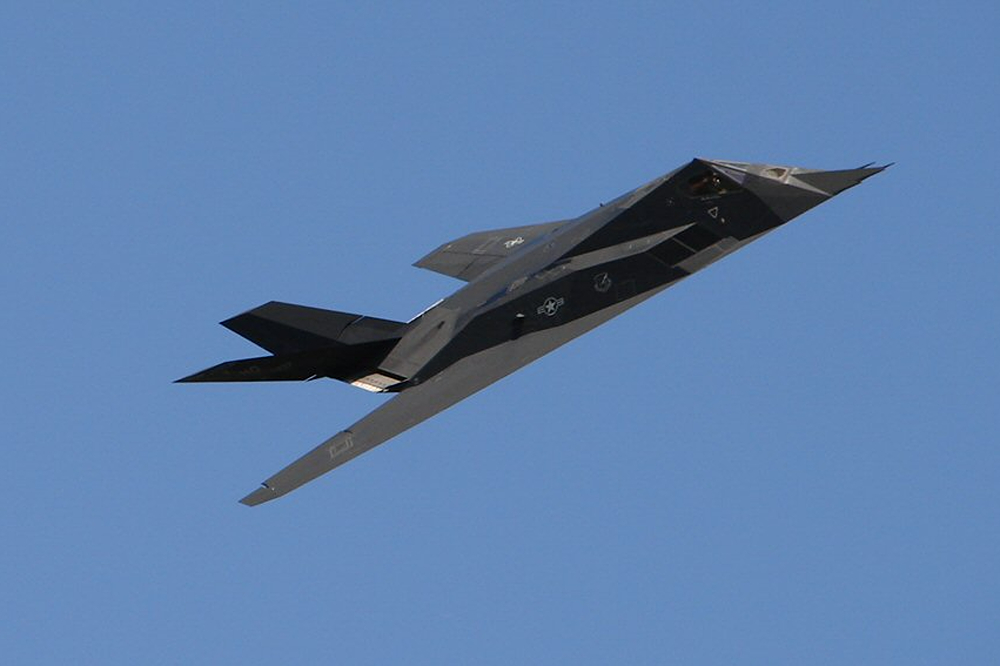
The Lockheed F-117A Nighthawk, one of the most revolutionary military aircraft ever developed, is preparing to take its place among aviation history’s most significant machines at the Smithsonian Institution’s National Air and Space Museum.
Nicknamed ‘The Overachiever’, the aircraft (serial number #818) has a remarkable operational record, having flown combat missions in all four major conflicts in which the F-117 participated.
The US Air Force (USAF) transferred the aircraft (serial number 818) to the museum in October 2026, following an announcement by Lockheed Martin and the Smithsonian in September.
After restoration and reassembly, it is expected to go on public display at the museum’s Steven F. Udvar-Hazy Centre in Chantilly, Virginia, near Washington Dulles International Airport (IAD).
A unique aircraft with a remarkable history
The F-117A Nighthawk holds a special place in military aviation as the world’s first operational stealth combat aircraft.
Developed in secrecy by Lockheed’s celebrated Skunk Works division, it introduced a new approach to aerial warfare, allowing the USAF to attack heavily defended targets while greatly reducing the likelihood of detection by enemy radar.
Aircraft 818 joining the Smithsonian collection is particularly significant. Known as The Overachiever, it is the only F-117 documented as having flown combat missions in all four major conflicts involving the type – Operation Just Cause in Panama in 1989, Operation Desert Storm in Iraq in 1991, Operation Allied Force over Yugoslavia in 1999, and Operation Iraqi Freedom in Iraq in 2003.
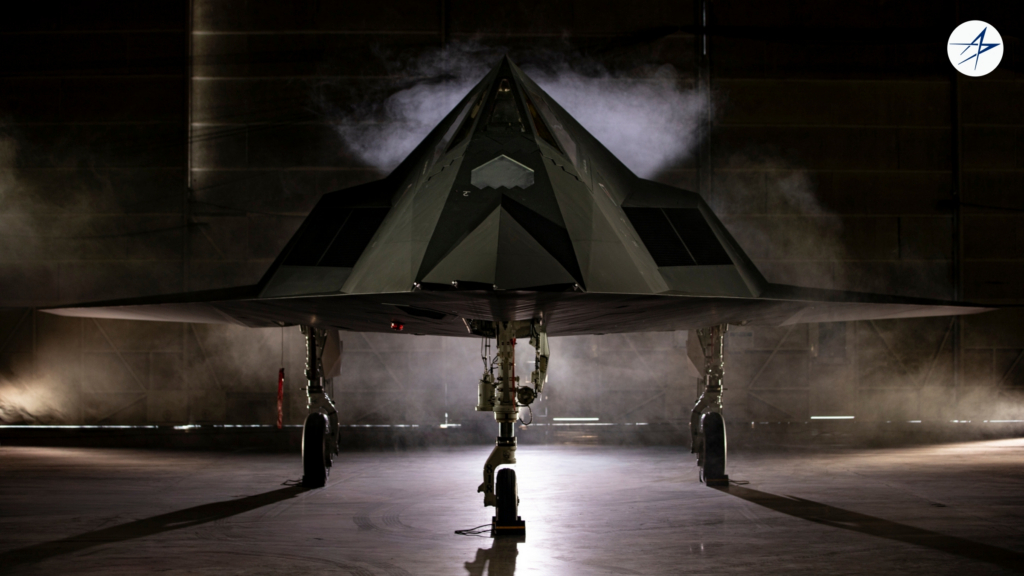
Its service during the 1991 Gulf War helped establish the F-117’s legendary reputation. Nighthawks penetrated Iraqi airspace to strike strategically important targets, including command facilities and air-defence installations.
Their ability to approach targets with a reduced radar signature gave commanders an important new option at the opening of an air campaign.
According to US military reporting, the featured aircraft flew 1,271 sorties during its participation in the 1991 conflict, achieving an 80% mission success rate without sustaining battle damage.
What was the F-117 Nighthawk?
Despite its official F-117 designation, the Nighthawk was not a conventional fighter designed to engage enemy aircraft in air-to-air combat.
It was a specialised, single-seat attack aircraft developed primarily to penetrate defended airspace and destroy high-value ground targets.
Its development began during the 1970s, when the US military sought ways to counter increasingly capable radar-guided surface-to-air missile systems.
Lockheed’s Skunk Works developed an aircraft whose distinctive angular surfaces helped deflect radar waves away from their source. Radar-absorbent materials further reduced its visibility to enemy detection systems.
The result was an aircraft that looked unlike anything previously seen in operational military service. Its sharply faceted black exterior, unusual planform and carefully shaped surfaces were designed around stealth rather than conventional aerodynamic elegance.
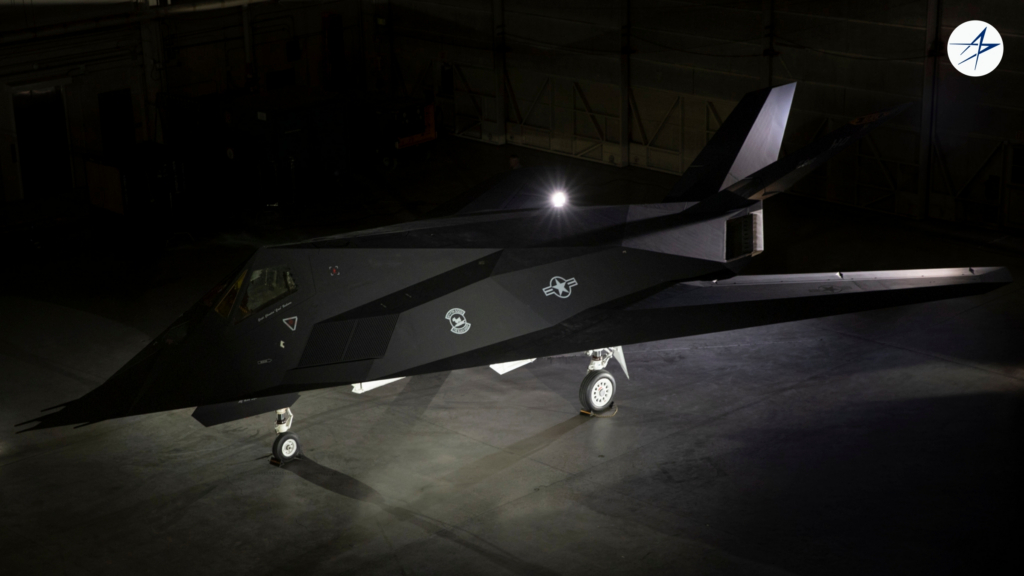
The F-117 first flew in 1981 and achieved initial operational capability in 1983. Its existence remained classified for years, with the US government publicly acknowledging the programme in 1988. The aircraft made its first formal public appearance in 1990.
Although the F-117 was officially designated a fighter, its actual role was precision ground attack. It was used to destroy command-and-control facilities, air-defence systems and other strategically important targets, often operating at night to further reduce the risk of detection.
When was the F-117 retired?
The US Air Force officially retired the F-117 fleet in 2008, following more than two decades of service. Its pioneering capabilities had helped pave the way for newer stealth platforms, including the B-2 Spirit bomber and the F-22 Raptor.
The F-35 Lightning II also belongs to the wider generation of aircraft benefiting from advances in low-observable technology.
Retirement did not mean the immediate disappearance of every Nighthawk. Some aircraft remained in storage and selected examples continued to appear in training and test activities after the fleet’s formal withdrawal from operational service.
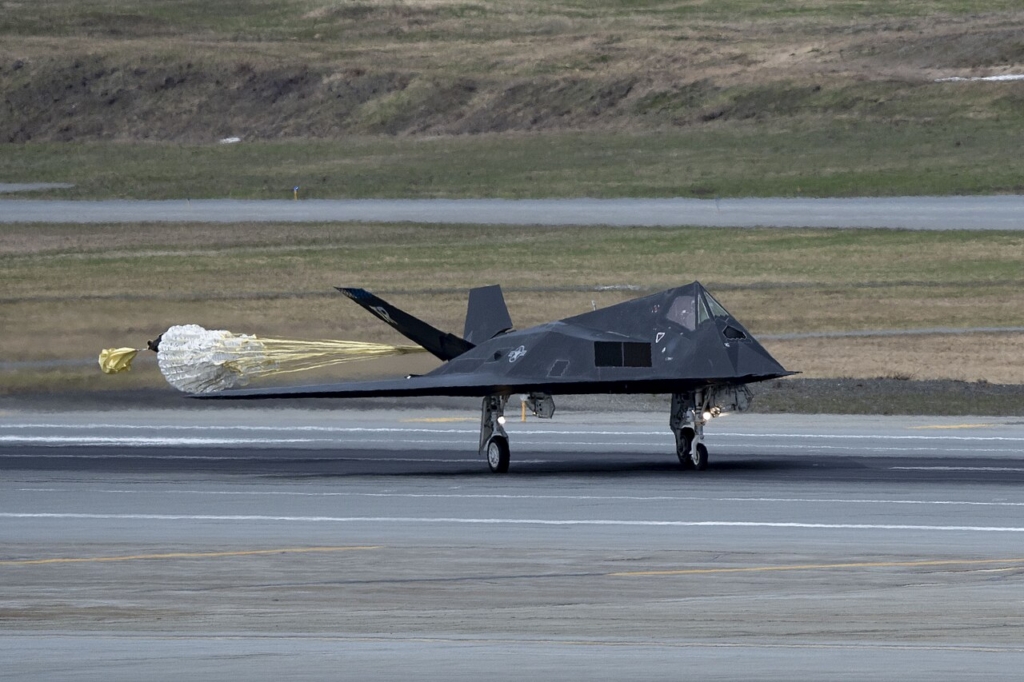
For The Overachiever, the move to the Smithsonian represents a new chapter. Before its transfer, Lockheed Martin’s Skunk Works team prepared the aircraft for public exhibition, removing sensitive military equipment and making the necessary changes to preserve its appearance without exposing classified technology.
Its wings and fuselage were transported separately aboard a USAF C-5M Super Galaxy before being delivered to Virginia.
Preserving a milestone in aviation history
The National Air and Space Museum’s acquisition ensures that visitors will be able to examine one of the aircraft that transformed modern military aviation up close.
The Udvar-Hazy Centre, located near Washington Dulles International Airport, houses a substantial collection of historic aircraft and spacecraft. The Nighthawk’s arrival adds an important example of the technological changes that shaped air power at the end of the Cold War and beyond.
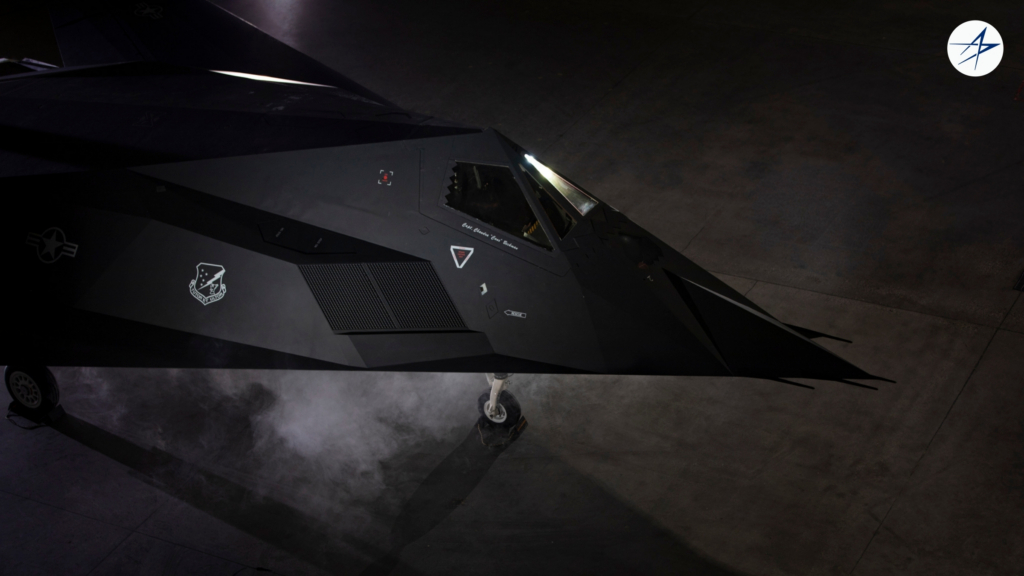
For aviation enthusiasts, The Overachiever is more than an unusually shaped aircraft. It represents the moment when stealth moved from an experimental concept to a practical combat capability, changing how military aircraft were designed and how air campaigns could be conducted.
Once hidden behind layers of secrecy, the F-117 will now be preserved for the public as a landmark in aerospace engineering. Its transition from frontline attack aircraft to museum exhibit provides a fitting tribute to a machine whose influence extends well beyond its years in active service.